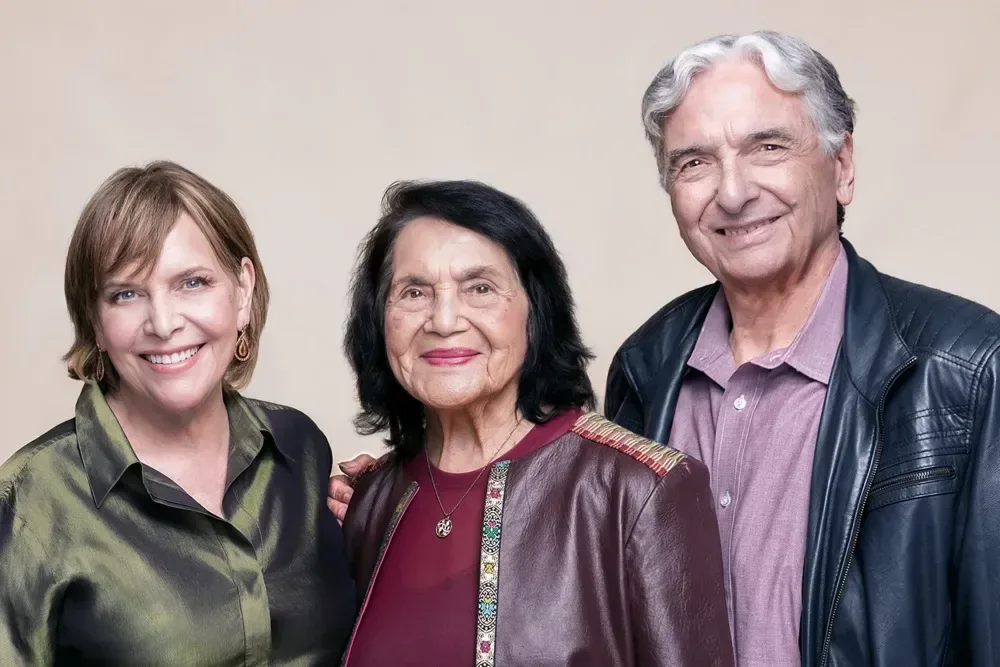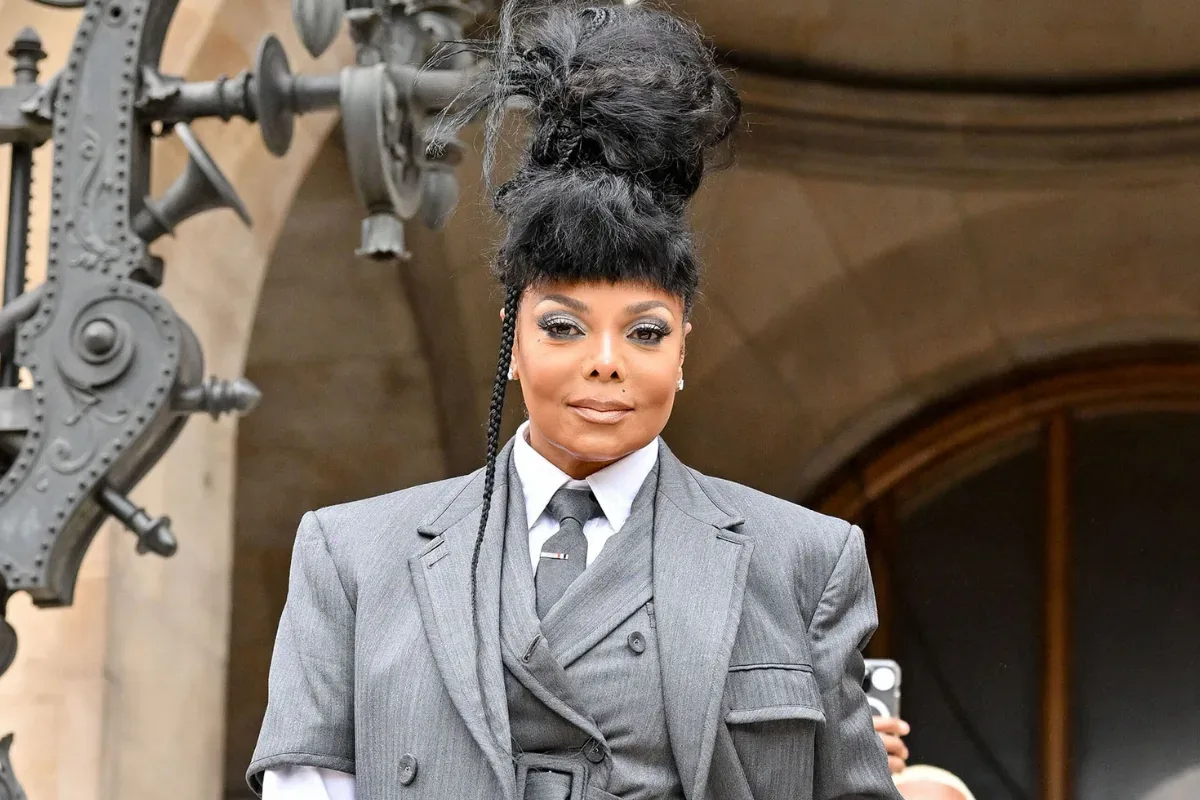
Becky G has shared a personal remembrance of Dolores Huerta following the labor leader’s death at age 96. The singer posted a black-and-white image of Huerta to Instagram Stories on October 28, pairing it with a message that emphasized their friendship as much as Huerta’s public legacy.
“Dolores, knowing you is one of my life’s greatest joys and inspirations,” Becky G wrote. She also remembered the laughter and dancing they shared, a notably intimate picture of a figure most often discussed through the scale of her organizing work and decades-long advocacy for farmworkers.
Huerta died at her Bakersfield, California, home with close family members around her. Her family asked for privacy, saying that plans to honor her life would be shared later. In place of flowers or gifts, Huerta requested contributions to the Dolores Huerta Foundation.
The tribute places a personal moment alongside the public mourning for an organizer whose work changed both the legal standing of California farmworkers and the broader understanding of how consumers, local communities and workers can exert pressure for change. Additional reporting on Becky G’s tribute likewise centers the warmth of that farewell.
For more context, explore Binance Says It Will Cover Losses After Reported $6.3 Billion Crypto Theft, Withdrawals Remain Suspended.
A friendship seen at a Latino culture celebration
Becky G and Huerta appeared together at La Cena’s Latino culture celebration at NeueHouse Hollywood on February 21, 2025. Huerta received the event’s Luminary Award, recognizing a lifetime of community leadership. Their presence together gave visible form to a connection between an artist with a major contemporary platform and an organizer whose influence reaches across generations.
That context helps explain why Becky G’s words were not limited to formal praise. Her message did not simply list honors or achievements; it described Huerta as someone whose company brought joy. For public figures whose legacies can become abstracted into slogans, institutions and historic milestones, those firsthand memories can preserve something different: the person behind the civic record.
Becky G has also appeared in high-profile spaces where Latino identity and immigration enforcement were part of the conversation. In April, she joined Karol G during the headliner’s Coachella set, where Karol G spoke about the Latino community and immigration enforcement. That does not make the performances equivalent to organizing, nor does it turn a tribute into a political program. It does, however, show why Huerta’s life and values remain resonant in cultural spaces that reach vast, multigenerational audiences.
Why Dolores Huerta’s organizing mattered
Huerta spent decades advocating for people who grew and harvested food in the United States. In 1962, she co-founded the National Farm Workers Association with Cesar Chavez. That organization later joined the Filipino-led Agricultural Workers Organizing Committee, forming the union that became the United Farm Workers.
The history matters because farm labor campaigns did not rest on a single kind of leverage. Organizing workers is essential, but Huerta’s work also extended beyond the fields and into the places where food was bought. During the grape boycott, she led the East Coast campaign. She moved to New York, worked with smaller stores and then directed pressure toward larger grocery chains.
A boycott is an organized decision to withhold purchasing or participation in order to demand change. In this case, the strategy gave shoppers a role in a dispute that might otherwise have seemed distant from their daily lives. A consumer could not bargain at a farm employer’s table, but coordinated decisions about which grapes to buy could influence the businesses selling them. Huerta’s East Coast work showed how a labor campaign could build power through networks connecting farmworkers, neighborhood stores, major retailers and consumers.
That approach also underscores a practical truth about organizing: rights on paper and power in daily life are not the same thing. Workers may need representation, public attention and economic leverage at the same time. The supplied record credits Huerta with helping secure better pay and improved working conditions at the bargaining table, while her public-facing boycott work expanded the pressure surrounding those negotiations.
From organizing campaigns to legal rights
Huerta’s efforts also reached California’s state government. She helped win the 1975 Agricultural Labor Relations Act, a law that gave farmworkers the right to organize and bargain collectively.
Collective bargaining means workers negotiating as a group with an employer over issues such as pay and conditions, rather than each worker having to negotiate alone. The distinction is fundamental. A worker acting individually can be limited by the immediate need for a job and by the unequal power between an employee and an employer. Acting together allows workers to establish shared demands and choose representatives to pursue them.
The 1975 law is therefore an important part of Huerta’s legacy not simply because it was a legislative victory, but because it recognized farmworkers’ ability to organize as a legal right in California. It connected the work of building a movement to a more durable public framework for worker representation.
It is also worth being precise about what that legacy represents. Huerta’s career was not only a story of one law or one boycott. The available record describes sustained work across field organizing, consumer campaigns, negotiations and state policy. Each function required a different form of leadership: bringing people together, communicating a cause to the public, seeking agreements with employers and pushing lawmakers to act.
Community organizing beyond farm labor
The Dolores Huerta Foundation continued that local, community-based work. Its programs have helped residents organize around schools, clean air, water and other needs in their communities.
Community organizing generally refers to residents working collectively to identify a local problem, develop shared goals and advocate for decisions that affect their lives. The issues cited here—education, air quality and water—demonstrate how that work can touch basic conditions of everyday life. It is not confined to one workplace or a single election cycle.
This continuation is a key part of understanding the foundation’s role. It carries forward a model in which people closest to an issue are supported in speaking and acting together. That is distinct from charity alone. The focus, as described by the foundation’s work, is on residents organizing around the institutions and conditions that shape their neighborhoods.
Huerta’s contributions received one of the United States’ highest civilian honors in 2012, when President Barack Obama awarded her the Presidential Medal of Freedom. The award marks national recognition, but the account of her work remains grounded in specific communities and concrete struggles: workers seeking better conditions, shoppers participating in a boycott and residents organizing around local necessities.
What comes next for Huerta’s legacy
The Dolores Huerta Foundation plans to open the Dolores Huerta Peace and Justice Cultural Center in California’s Central Valley in 2027. The planned center gives Huerta’s work a future-facing dimension. A cultural center can provide a place for people to encounter the history of a movement, but its title also signals the connection between remembering a legacy and continuing conversations around peace, justice and community action.
The Central Valley is especially meaningful in the context of Huerta’s life because her organizing was inseparable from California farmworker communities. The planned center is not described as a completed facility, and details beyond its intended 2027 opening have not been provided here. Still, the plan establishes a clear next landmark for the foundation’s ongoing work.
For those looking for an appropriate response to Huerta’s death, her own request offers direct guidance: contributions to the Dolores Huerta Foundation rather than flowers or gifts. It is a request consistent with the broader story of her life—channeling recognition toward an organization intended to support people working collectively in their own communities.
A tribute that keeps the human element in view
Becky G’s message is brief, but its details are telling. It honors Huerta as an inspiration while recalling laughter and dancing. That combination resists the tendency to remember historic figures only through formal achievements. Huerta was a co-founder, negotiator, organizer, campaign leader, legislative advocate, Medal of Freedom recipient and the namesake of an upcoming cultural center. She was also, in Becky G’s memory, a person with whom she shared happy moments.
There is no need to diminish either side of that picture. The personal recollection adds texture to a public legacy built through extraordinary persistence. Huerta’s work changed how farmworkers could organize and bargain in California, mobilized consumers during the grape boycott and continued through a foundation focused on local concerns. Becky G’s farewell adds another kind of testimony: the impact of a leader whose spirit and example were felt not only in movements and institutions, but in personal relationships.