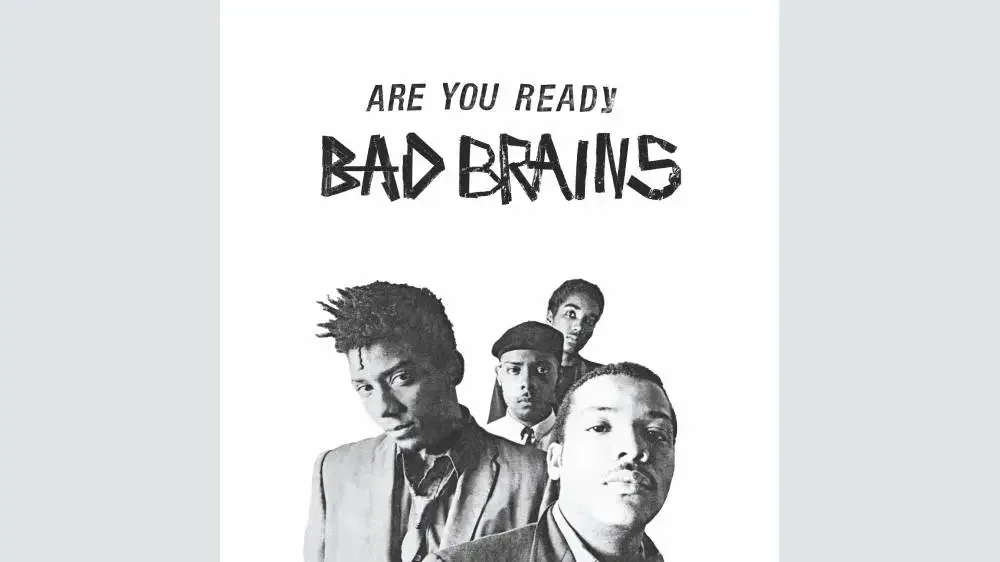
Bad Brains’ recorded history is gaining a notably early new chapter. Are You Ready: The First Studio Recordings, a six-song EP drawn from the band’s first session in a proper studio, is scheduled to arrive November 6 through Trust Recordings. Recorded at Inner Ear Studios in March 1979, the material predates the recordings later issued as the 1996 Black Dots album by three months.
That makes this a release with a particularly clear archival appeal: it is not simply another edition of a familiar record, but a document from an exceptionally formative point in the Washington, D.C. band’s development. The session was reportedly completed in an hour, a detail that gives useful context to both its place in the catalog and what listeners should expect. This is an early, concentrated snapshot rather than a modern reconstruction of a lost full-length album.
What is coming on November 6
Are You Ready: The First Studio Recordings will be released on vinyl, cassette, and digital platforms. Ian MacKaye remixed the recordings. MacKaye is a longtime friend of the band and a co-founder of Minor Threat and Fugazi, so his involvement ties the release closely to the D.C. community in which Bad Brains made their early impact.
The EP contains six tracks and includes a previously unreleased recording of “Pay to Cum,” the song associated with Bad Brains’ debut single. Footage from a Bad Brains performance at CBGB on October 24, 1979, filmed by Barry Masterson, accompanies the newly shared recording. The pairing is valuable context rather than a claim that the audio itself was recorded at that show: the studio session dates to March, while the performance footage comes from October.
For people who know the band chiefly through later releases, the distinction matters. Archival releases can sometimes be mistaken for a newly recorded reunion project or a newly found concert tape. This one is neither. It is presented as an early studio document, remixed for a contemporary release while retaining its 1979 origin.
Why this session matters in Bad Brains’ timeline
Bad Brains are widely recognized as pivotal pioneers of hardcore, the accelerated and intensely forceful form of punk rock that took shape around local scenes rather than a single commercial center. The group stood out not only for speed and musicianship, but for a musical range that brought convincing reggae into the same broader identity as their blistering punk songs.
That combination should not be reduced to a novelty. The evidence around the band’s early reputation points to a group whose identity was built from multiple influences and from an explosive live presence. Their Black membership was also significant in a punk environment described as overwhelmingly white, making Bad Brains’ visibility and accomplishments central to any honest account of the era’s scene.
The March 1979 session comes before Black Dots, the early-demo collection released in 1996. “Predates” is the most important word here. It means listeners and collectors interested in the band’s earliest recorded evolution have a chance to hear material from an even earlier point than the one represented by that later archival album. It does not automatically mean every song will be unrecognizable, nor does it establish a definitive hierarchy between releases. It means the tape has unusual historical placement.
The band’s catalog has also become easier to explore after periods when much of it was out of circulation. With reissues and streaming availability now in place, Are You Ready can function as a meaningful addition to a catalog rather than an isolated curiosity available only to dedicated physical-media hunters.
“Pay to Cum” and the band’s varied musical vocabulary
In reflecting on “Pay to Cum,” bassist Darryl Jenifer identified the Ramones, the Damned, and Return to Forever as inspirations for the riff. That is a revealing list. The Ramones and the Damned point toward punk’s direct, compact attack, while Return to Forever represents a very different musical reference point. Even without projecting extra stylistic claims onto a single quote, the selection reinforces how Bad Brains did not emerge from a one-note set of influences.
“The riff for ‘Pay to Cum’ started as a stream of punk rock vibes fueled by the Ramones, the Damned, and Return to Forever,” Jenifer said, describing it as a springboard toward the band’s own sound.
Jenifer characterized the resulting approach as straight-ahead three-chord mayhem, with breaks and a stop. In basic musical terms, a riff is a recurring instrumental phrase, often the hook that gives a song its immediate identity. A break is a deliberate interruption or shift in the established momentum, while a stop can create emphasis through a sudden halt. Those structural moves can make a short, fast song feel less linear and more volatile without requiring ornate arrangements.
He also said the title was simply a playful phrase and did not hold a deeper intended meaning for the band. That clarification is worth retaining because a title can invite interpretations that the musicians themselves never meant to attach to it.
Remixing an archival recording: what it does and does not mean
The new EP is described as remixed by MacKaye. A remix in this setting should be understood as work with the recorded elements of an existing session: adjusting the relationship among instruments and vocals, and shaping how the performance is presented for release. It is different from saying the material was newly recorded in 2026, and it is also different from assuming the performance has been fundamentally rewritten.
That distinction is especially useful with archival punk releases. A remix can improve presentation or bring out elements of a recording, but it does not change the historical fact that these are performances captured in March 1979. The core attraction is still Bad Brains at a remarkably early point, not the addition of modern material.
MacKaye’s presence also connects the release to his wider restoration work. He has recently worked with Henry Rollins on restoring the catalog of the Cramps. Restoration and remixing are related but not interchangeable terms: restoration generally centers on preserving or repairing older audio assets, while remixing concerns the balance and presentation of the recording. The supplied information confirms that MacKaye remixed Are You Ready; listeners should not assume additional technical processes beyond what has been specified.
A release with both listening and physical formats in mind
Vinyl, cassette, and digital availability gives this archival EP three notably different ways to enter a fan’s life. Digital availability makes the music readily accessible. Vinyl and cassette give the release physical forms that may especially appeal to listeners who value artifacts connected to punk’s original independent-label culture. But the formats are not evidence of different musical content, and no edition-specific extras or variations have been detailed.
For collectors, the practical takeaway is simple: the physical formats are confirmed, while pressing quantities, color variants, package details, and retailer allocations have not been specified here. It is best not to infer scarcity or collectibility claims before such details exist. The actual historical interest rests in the session itself, its early date, and its place before Black Dots.
The renewed visibility of historic recordings arrives in a broader digital-media landscape where music performance and discovery continue to shift. For one related example of how major platforms are pushing deeper into music programming, YouTube has secured exclusive free Coachella streams through 2030. Bad Brains’ release is a different proposition—an archival recording rather than a livestream—but both point to the continued importance of access, presentation, and preservation in how audiences encounter music.
Library conversation and archive exhibition
The day before the EP’s release, November 5, Jenifer and MacKaye are scheduled to appear in conversation at the Martin Luther King Jr. Memorial Library. Their discussion is set to address the session and Bad Brains’ formative years. That event provides an opportunity to hear directly from a band member and the person who remixed the material, although no promises about unrevealed track-by-track details or announcements should be read into the listing.
An exhibition of archival Bad Brains material will then run from November 6 through November 22. It will include contributions from the archives of Jenifer, Alison Braun, BJ Papas, Lucien Perkins, Alec MacKaye, Roger Gastman, and others. For a band whose live reputation is inseparable from its legacy, archival material can give shape to the surrounding scene: the people, documents, images, and material traces that recordings alone cannot fully provide.
More importantly, the exhibition and EP treat early punk history as something to be preserved rather than merely mythologized. Bad Brains’ long career involved repeated breakups and internal friction, but the force of their early output and live performances has endured. Are You Ready: The First Studio Recordings adds a tightly defined piece of that story: six songs, one hour in a studio, March 1979, and a release date of November 6.