YouTube will continue as the exclusive free streaming home of Coachella through 2030, extending its partnership with festival parent company Goldenvoice. The deal keeps one of music’s most recognizable live events on a platform that is simultaneously reshaping how viewers discover, organize and discuss video.
The extension arrives after the Sabrina Carpenter, Justin Bieber and Karol G-led Coachella edition became YouTube’s most-watched Coachella livestream. That milestone matters beyond a single festival weekend: it gives YouTube a high-profile, recurring live showcase while its product strategy increasingly joins live broadcasts, short-form video, music discovery and television viewing in one ecosystem.
For audiences, the clearest immediate point is straightforward. Coachella’s official stream will remain free to watch on YouTube through 2030. For YouTube, the longer agreement provides a dependable tentpole event that can bring global attention to its live-video offerings and potentially feed viewer interest into artists’ channels, Shorts and longer videos after performances end.
A major live event stays tied to YouTube
Coachella is a natural fit for a service built around video creators and music fandom. A livestream gives people who are not at the festival a way to follow performances in real time, while individual clips, reactions and artist content can sustain the conversation beyond the live window. An exclusive streaming arrangement means YouTube is the designated free destination for those official broadcasts, rather than one option among several free platforms.
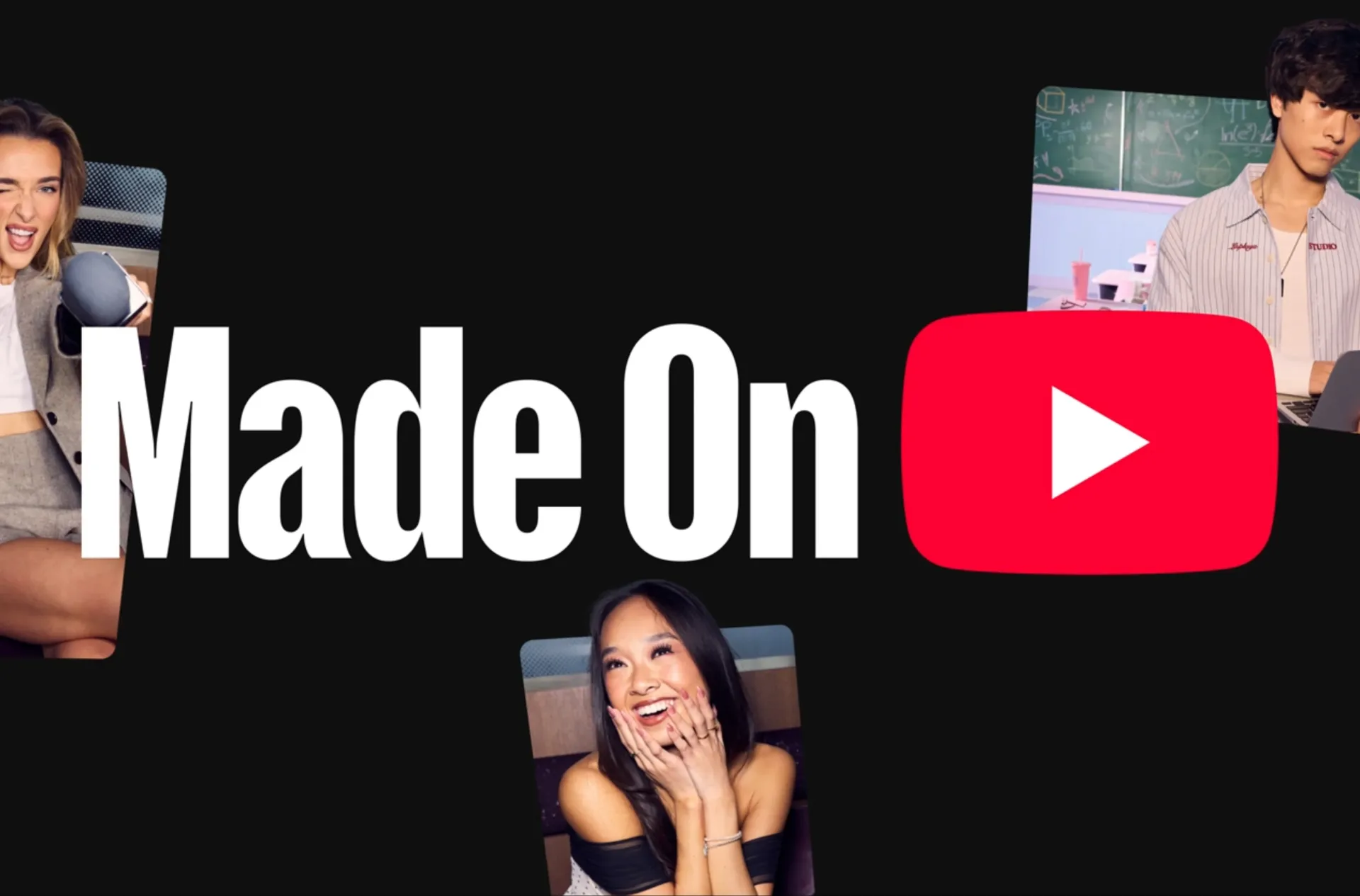
YouTube CEO Neal Mohan announced the extension at the company’s Made on YouTube event, saying the company wanted to bring the energy of the desert to music fans around the world. The agreement continues a relationship described as nearing 15 years.
Its timing also makes the broader product announcements relevant. YouTube did not present the Coachella extension in isolation; it paired the news with new viewer and creator tools across YouTube and YouTube Music. The common thread is a platform trying to make its enormous library feel more personal and more navigable, whether someone is tracking a festival set, looking for a new song, following a creator series or choosing what to watch on a television.
Shorts are being organized more like shows
One of the more consequential changes is an expansion of shows to YouTube Shorts. Creators will be able to arrange short-form videos into structured experiences with episodes laid out for viewers. YouTube described the format as microdramas: brief, serialized productions whose parts are presented as a connected show rather than a loose stream of clips.
Microdrama is a useful term to unpack here. It refers to short, episodic storytelling designed for quick viewing. Instead of asking a viewer to commit to a conventional long episode, the format breaks a narrative into much smaller installments. YouTube’s change is about presentation as much as duration: viewers can encounter a sequence with an episode structure, which may make it easier to follow a continuing story.
Related coverage includes YouTube Extends Exclusive Free Coachella Streaming Deal Through 2030.
YouTube said microdrama viewing surpassed 6.5 billion views in the first half of 2026, up more than 60% year over year. It also said microdrama viewing on TV screens rose 90% year over year during that same first-half period. More than 35% of YouTube’s living-room audience watched Shorts on TV in July.
Those figures challenge the idea that Shorts are only a phone-first discovery tool. A vertical, short video can now be part of a shared, big-screen viewing session. That is especially relevant for creators covering culture, music and games: short updates may be discovered in a feed, but a structured run of episodes could help audiences return for the next installment.
For gaming fans, a game’s community material rarely fits into one format. A short clip can capture a boss win, funny glitch, build tip or reveal reaction; longer videos can provide analysis and context; a livestream can support a communal event. Episode organization could give short-form series a clearer home between those extremes. The details of how creators will use the format will matter, but the direction is clear: Shorts are being treated as a content category in their own right.
That shift is explored further in our look at how YouTube’s custom feeds, GIF comments and episodic Shorts could affect gaming audiences.
AI features aim to make discovery conversational
YouTube also outlined an AI-powered feature called Ask for YouTube and YouTube Music. The feature is intended to let users pose queries to an AI agent about subjects including shoppable items appearing in videos, music recommendations and conversations that continue across different YouTube pages. It is scheduled to begin rolling out later in the year.
An AI agent, in this context, means a software assistant designed to respond to questions and help carry out discovery-oriented tasks inside the service. The stated use cases suggest YouTube wants users to move beyond typing keywords into a search box. Rather than independently locating videos, songs or details, users could ask a follow-up question and continue refining what they want.
That could be useful when a major live event generates a mountain of adjacent material. A Coachella viewer might move from a performance stream to an artist’s music, interviews, recommended clips or product-related information. The new tools do not change the core value of the live broadcast itself, but they could alter the pathways viewers take after watching.
YouTube Music is also slated to receive a podcast lineup feature. The AI-driven tool will offer spoken previews of shows and ask users why they like particular podcasts before recommending episodes. Testing is planned for later this year. The company demonstrated YouTube Music’s Ask function with creator Derrick Gee using it to explore Troye Sivan’s single She’s the Best and its influences.
These features are still framed as launches, rollouts or testing plans rather than completed, universally available tools. Viewers should therefore distinguish between the confirmed Coachella agreement, which runs through 2030, and the evolving availability of YouTube’s AI additions.
Custom feeds could offer a more deliberate homepage
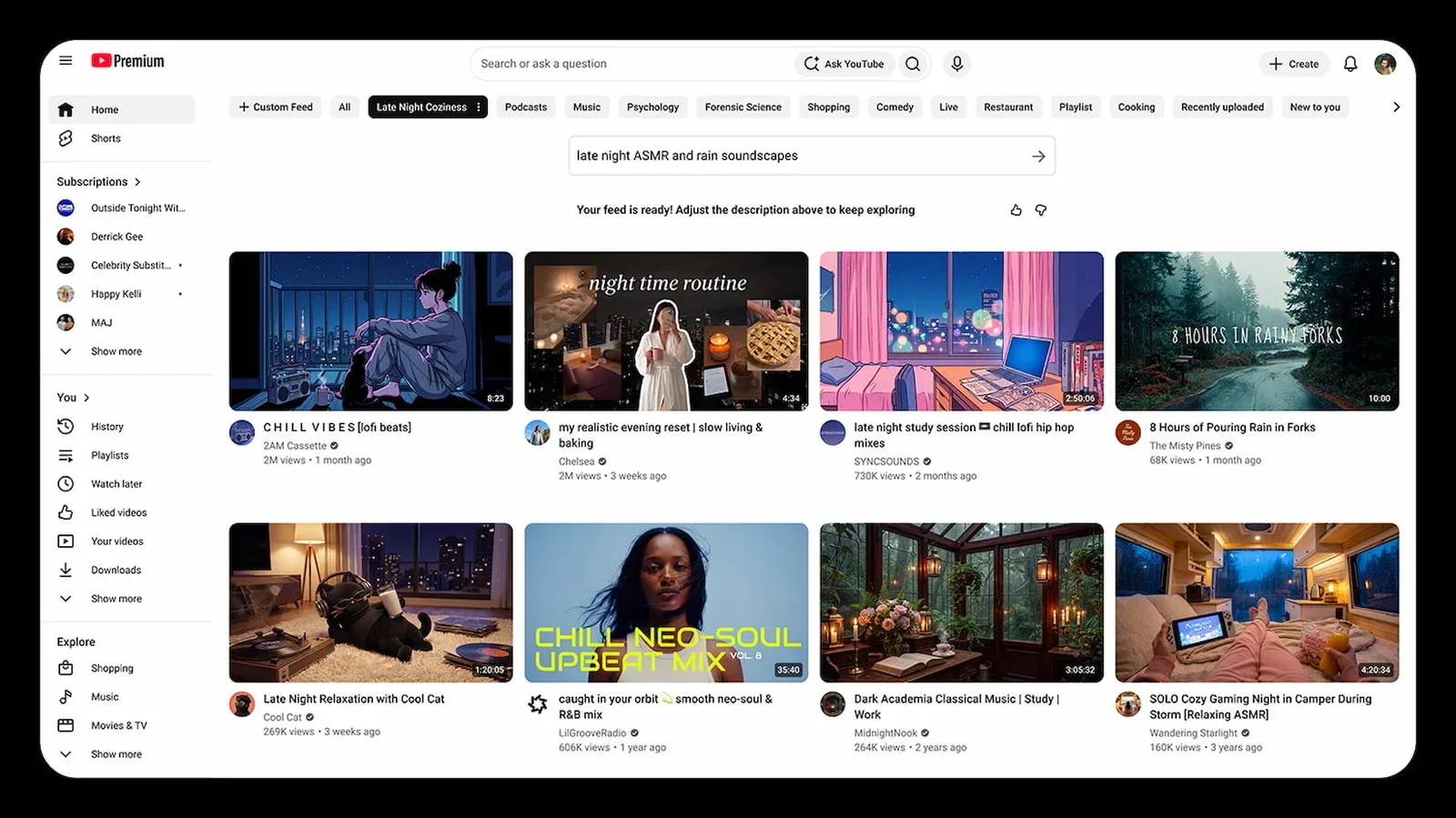
Another in-development feature, custom feeds, is designed to let viewers create dedicated recommendation channels around subjects they request. Those feeds would remain on the YouTube homepage, offering a recurring place for a particular kind of viewing instead of requiring a fresh search each time.
The company demonstrated feeds built around stationery videos and “late night coziness” ambient clips. The examples are niche by design: the feature appears built for viewers who know the kind of material they want but do not want their entire main recommendation feed dominated by it.
A recommendation feed is the set of videos a platform proposes based on signals such as viewing behavior and a user’s choices. The proposed custom-feed system would add a layer of direct user instruction. Instead of simply accepting one general-purpose homepage, a viewer could maintain separate spaces for different interests.
There is a practical appeal here for fans whose interests overlap without always mixing well. Someone might want a persistent stream for festival coverage, another for music performance videos, and another for game news or creator uploads. The effectiveness of that setup will depend on how precisely YouTube interprets requests and how much control users receive after a feed is created. But its purpose is not hard to see: less clutter and more intentional routes into a catalog too large to browse manually.
Creators are getting testing and thumbnail tools
For creators using YouTube Studio, the company is preparing a separate Ask feature meant to help with editing and video testing, including feedback. It also cited A/B testing, style-based generation of titles and thumbnails, dynamic thumbnails for differing audiences, and more specific video-performance insights.
A/B testing is a comparison method. In a video context, it generally means testing two alternatives—such as titles or thumbnail designs—to see which option performs better with viewers. It is a useful discipline because creative choices that appear obvious to a channel owner do not always communicate equally well to an audience.
Dynamic thumbnails refer to thumbnail variations tailored to different audiences. A thumbnail is the small preview image that helps viewers decide whether to click a video. If implemented as described, dynamic versions could allow a creator’s presentation to change based on the viewers being reached, rather than relying on one universal image.
These tools could make it easier to package videos, but they also reinforce a familiar reality of platform publishing: a video’s reach is influenced not only by what it contains, but by how people encounter it. For creators following an event as crowded as Coachella—or covering any fast-moving entertainment or game news cycle—better clarity about titles, images and audience behavior can be valuable. The tools do not replace editorial judgment or a genuine connection with an audience, but they may give creators more ways to examine what is working.
What the deal signals
The Coachella extension is a long-term vote of confidence in YouTube’s ability to serve a massive live audience without charging viewers for access. It also gives YouTube a repeatable cultural moment at a time when it is broadening the roles its platform can play: livestream host, music destination, television app, short-form hub, podcast service and creator-production toolkit.
Troye Sivan, who began on YouTube, spoke at the event about the platform’s direct relationship between creators and viewers, emphasizing the importance of community and authenticity. That perspective remains pertinent as the service adds more automation. AI can refine recommendations, answer questions and aid a creator’s workflow, but the reason viewers tune in to artists, performances and personalities is still the human work at the center of the video.
Through 2030, Coachella will be one of the clearest annual examples of that relationship at scale: a physical event translated into free global viewing, surrounded by the clips, music, discussions and creator responses that give online fandom its longer life.