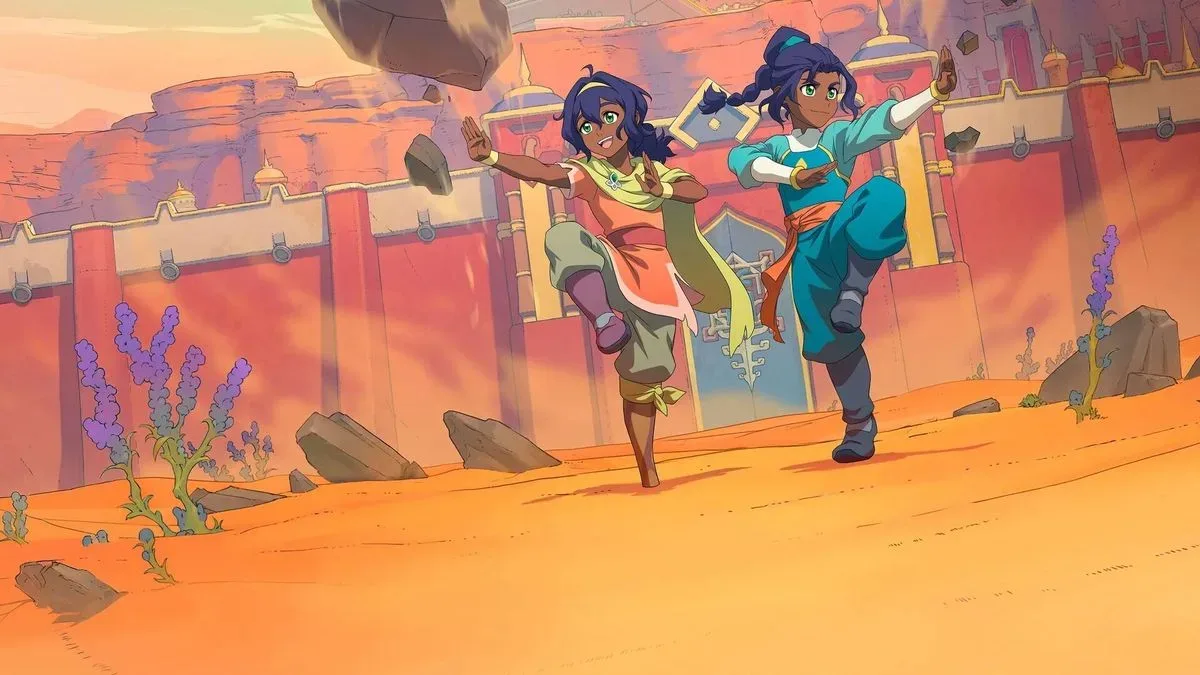
This review discusses a major reveal at the end of Avatar: Seven Havens episode 1.
Avatar: Seven Havens begins with the sort of premise built to spark questions. Set long after The Legend of Korra, it imagines an Avatar world reduced to seven surviving havens after an unexplained cataclysm. The people left behind hold the previous Avatar responsible. That setup gives the series an unusually tense inheritance: the Avatar is traditionally a figure of balance, but in this era the title carries blame, fear and the shadow of a world-ending failure.
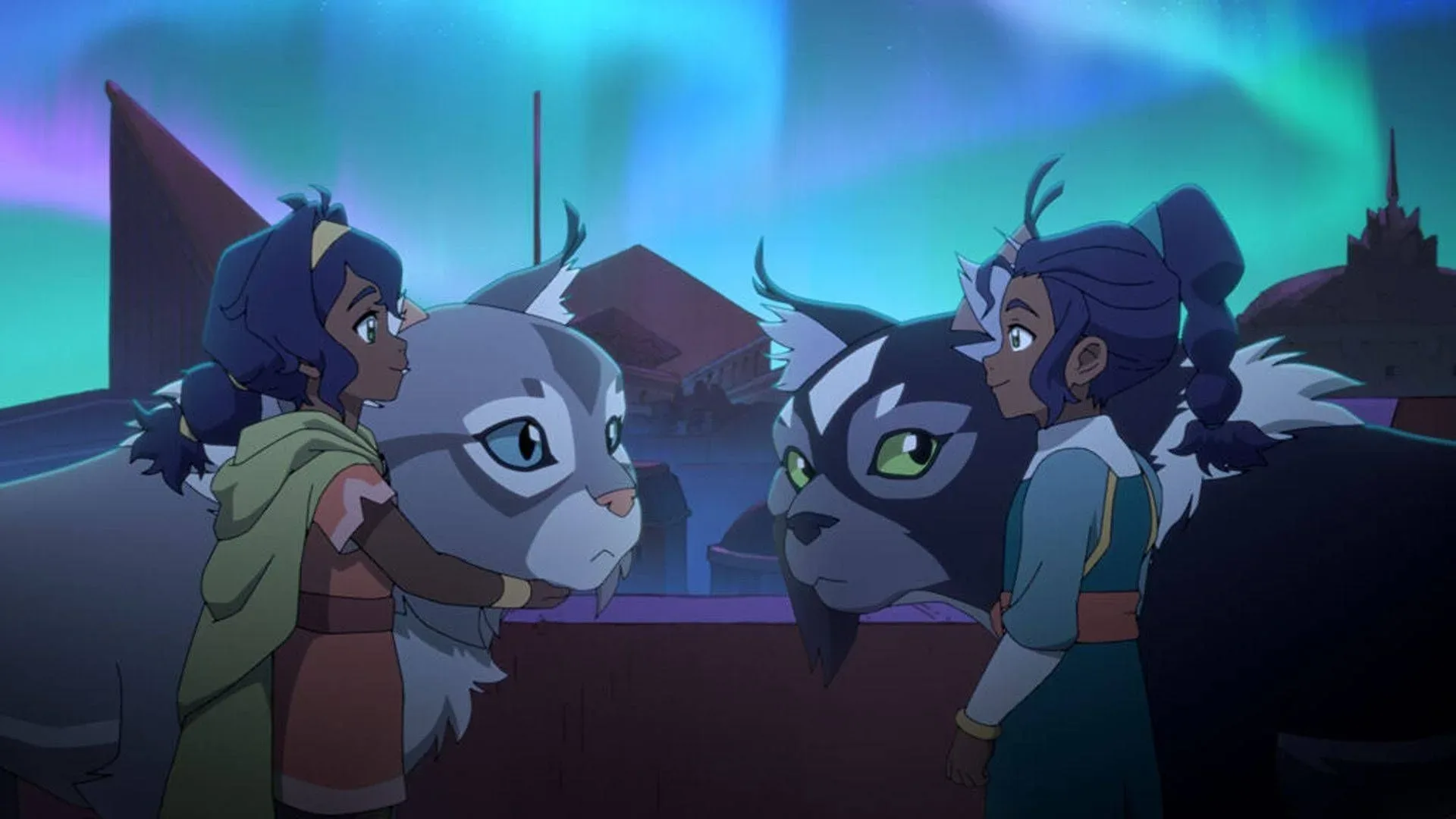
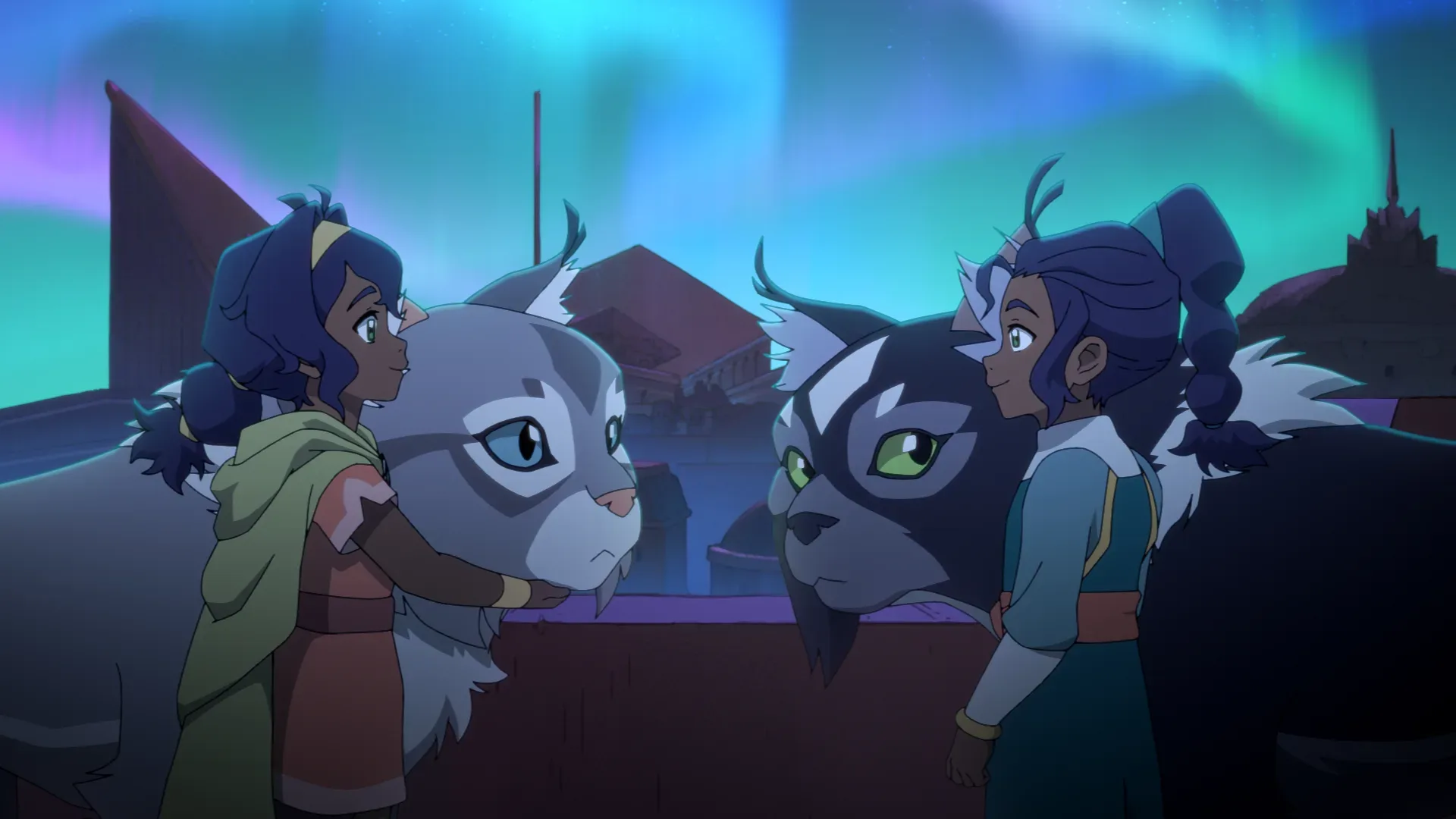
Then the show complicates the mythology further. Its young leads, long-separated twins Pavi and Nisha, appear to be Avatars—plural. If that is truly what has happened, it would be unprecedented within the story’s established rules. The mystery is immediately compelling, and it gives the first season several strong narrative engines at once: why there are apparently two Avatars, what became of the world, what happened to the twins, and how Ellora can endure amid the new reality.
Six episodes make clear that Seven Havens has ideas worth following. Unfortunately, its visual execution is too inconsistent in the places where an Avatar series most needs clarity. Rich environmental work and appealing leads are repeatedly undercut by flat-looking primary character designs and, more damagingly, fight scenes that are difficult to track from moment to moment.
A new Avatar era with real narrative weight
The seven-havens premise is more than a coat of post-apocalyptic paint. It creates a world in which survival, accountability and historical memory can all sit at the center of the drama. The catastrophe is still mysterious, but the fact that survivors blame the preceding Avatar changes the emotional starting point for Pavi and Nisha. Their possible destiny is not simply a heroic calling waiting to be embraced. It is a burden associated with disaster.
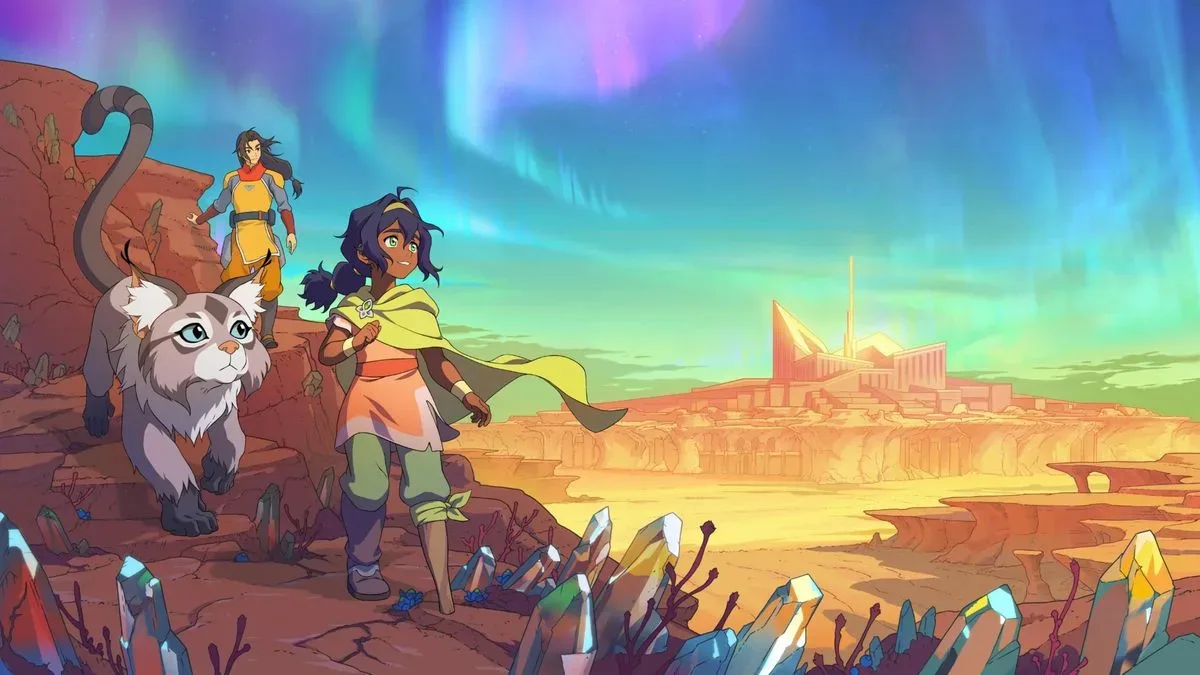
Ellora, the city at the heart of this story, is a particularly effective expression of that concept. Its wide views, elaborate scale and occasional lighting flourishes communicate a place trying to remain vibrant under severe pressure. The city often looks grand in the literal sense: its broad, sweeping shots establish a society that feels both impressive and precarious. Backgrounds and locations are consistently among the show’s most successful visual elements.
The twins also make a welcoming entry point to a generational franchise. New Avatar stories must usually ask viewers to invest in a fresh cast and a new setting rather than relying on prior protagonists. That is a difficult but necessary feature of a premise built around successive Avatars. Seven Havens meets the challenge well in its character writing early on. Nisha and Pavi are immediately likable, while Jae and Karthik register as meaningful supporting presences even before the group reaches the easy chemistry associated with past Avatar teams.
Aishu Devan and Saheli Khan voice Nisha and Pavi, respectively. Their youthful performances help sell the sense that the series has returned to a younger coming-of-age perspective. That matters for the show’s identity. The leads are facing enormous mythology and a fragile world, but their uncertainty and emerging rapport keep the material from becoming all lore, all the time.
The series also understands the power of its larger franchise language. When the familiar Avatar musical theme rises around Nisha and Pavi’s growing recognition of their role, it works. The music brings emotional continuity without requiring former heroes to dominate the narrative. For viewers who enjoy speculative threads and franchise mysteries, the question of the twins is the season’s most persuasive hook—much like the fan-driven search for connections in another evolving franchise mystery, the fun lies in considering what a surprising development could mean before every answer is available.
The animation issue is not simply a matter of detail
It would be simplistic to treat the criticism here as a demand that a television series look like a theatrical film. Animated series and animated films operate at different scales, and Avatar Aang: The Last Airbender, the franchise sequel movie released earlier this year, is not a directly comparable production. Nor does it help to assume reasons for the unevenness. The credited work involves Avatar Studios and Nickelodeon Animation Studios, with animation services from France’s La Chouette Compagnie, but the finished episodes alone do not establish why certain scenes land better than others.
What can be assessed is the result on screen. Seven Havens can look colorful and atmospheric. Its environments show care, and some lighting choices are striking. Yet the central character art too often feels visually flatter than the spaces those characters inhabit. Ellora can feel specific and awe-inspiring while major figures read as comparatively plain. The disparity is especially noticeable because crowds and incidental figures can still look appealing, suggesting that the problem is not a total lack of visual personality.
Character-design flatness does not automatically ruin an animated show. Clean, reduced shapes can support a strong style, improve posing and make action easier to read. Here, though, it combines with inconsistent movement and staging in a way that makes key sequences feel less impactful than their narrative stakes demand.
There are flashes of what the series can do. Jae’s clash with several bandits is among the action moments that stands out. It provides enough of a sense of individual movement and conflict to demonstrate that the show is capable of delivering a sharper burst of excitement. Those moments, however, are exceptions rather than the dependable standard over the episodes reviewed.
Why action readability matters so much in Avatar
The biggest issue is action readability. In animation, readability means that viewers can quickly understand the physical logic of a scene: who is where, what action has been initiated, what its target is, and how another character responds. This is not a call for slower animation. A rapid fight can be thrilling when its shots, poses and transitions preserve a clear chain of cause and effect.
That clarity is especially important to Avatar because bending is not merely visual spectacle. The franchise’s elemental combat is rooted in martial-arts-informed movement. A fighter’s body language, stance and timing should help the audience recognize the intent of an attack before or as the element takes shape. Earth, water, fire and air can have distinct rhythm and weight; a good action scene turns those differences into storytelling.
When the viewer cannot follow the sequence logically, the problem goes beyond whether an individual frame looks polished. It becomes harder to tell what a combatant accomplished, what danger another person escaped, or why a victory carries weight. The action can feel fast and busy without feeling dramatic. That is where Seven Havens repeatedly loses momentum. Its fights are often not easy to parse, and even outside the context of earlier Avatar action they do not consistently deliver a memorable visual payoff.
The practical consequence is significant for the season’s core story. Pavi and Nisha’s presumed status as Avatars should make their developing abilities feel monumental, frightening or wondrous. If the staging around those abilities is murky, a scene may still communicate its plot function but struggle to deliver its full emotional force. The score can swell, the mythology can expand and the dialogue can announce a turning point, but the image has to carry its part of the moment too.
An engaging season foundation, with a major caveat
Avatar: Seven Havens is not short on reasons to continue. The cataclysm is a strong long-term mystery, Ellora is an evocative setting, and the idea of twin Avatars is a genuinely intriguing disruption to the world’s rules. Pavi and Nisha are charming enough to make the investigation worthwhile, while the supporting cast gives the series room to form its own team dynamic rather than simply recreate an earlier one.
It also deserves credit for making its central questions feel consequential from the start. The past is not an ornamental piece of franchise continuity; it is an active wound affecting the survivors and shaping how a new Avatar might be received. That is fertile ground for a story about trust, legacy and whether a world can recover from the failure it attributes to its greatest protector.
Still, those strengths have to contend with a limitation that is difficult to ignore in an Avatar production. Bending battles and martial-arts action are part of the franchise’s storytelling grammar. They reveal character, establish danger and turn elemental power into a form of visual drama. When those scenes lack clarity and impact, the series can feel as though it has its most compelling ideas in place without always possessing the visual precision needed to bring them home.
The first six episodes leave Avatar: Seven Havens in a frustrating position. Its story is easy to recommend to viewers hungry for new Avatar mythology, a post-cataclysm setting and answers about Pavi and Nisha. Its presentation is harder to defend with the same confidence. The show has an engaging new era to explore; it now needs its action and animation to meet the scale of the tale it is trying to tell.
Avatar: Seven Havens is available on Paramount Plus, with new episodes releasing weekly. Michael Dante DiMartino, Bryan Konietzko, Ethan Spaulding and Sehaj Sethi are executive producers.