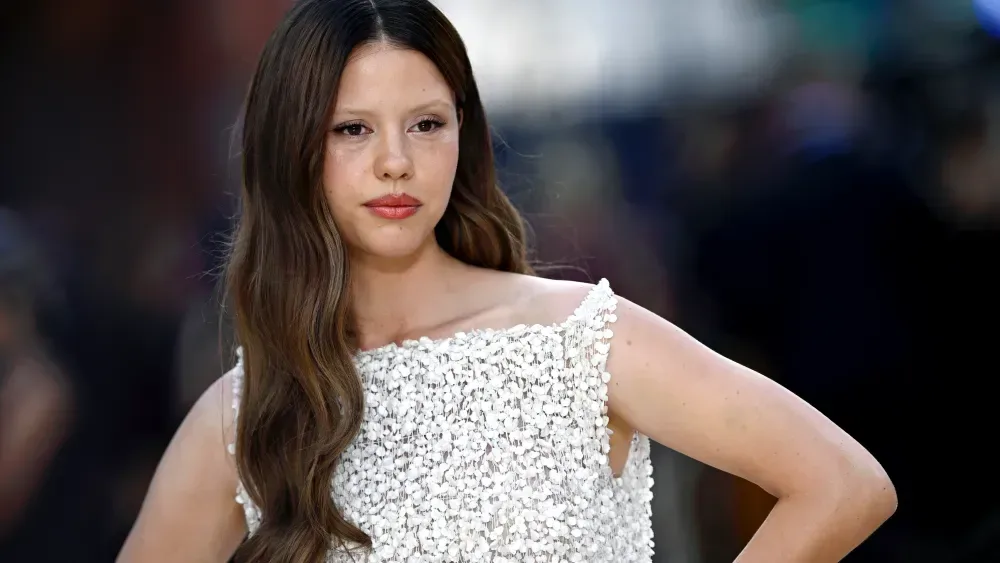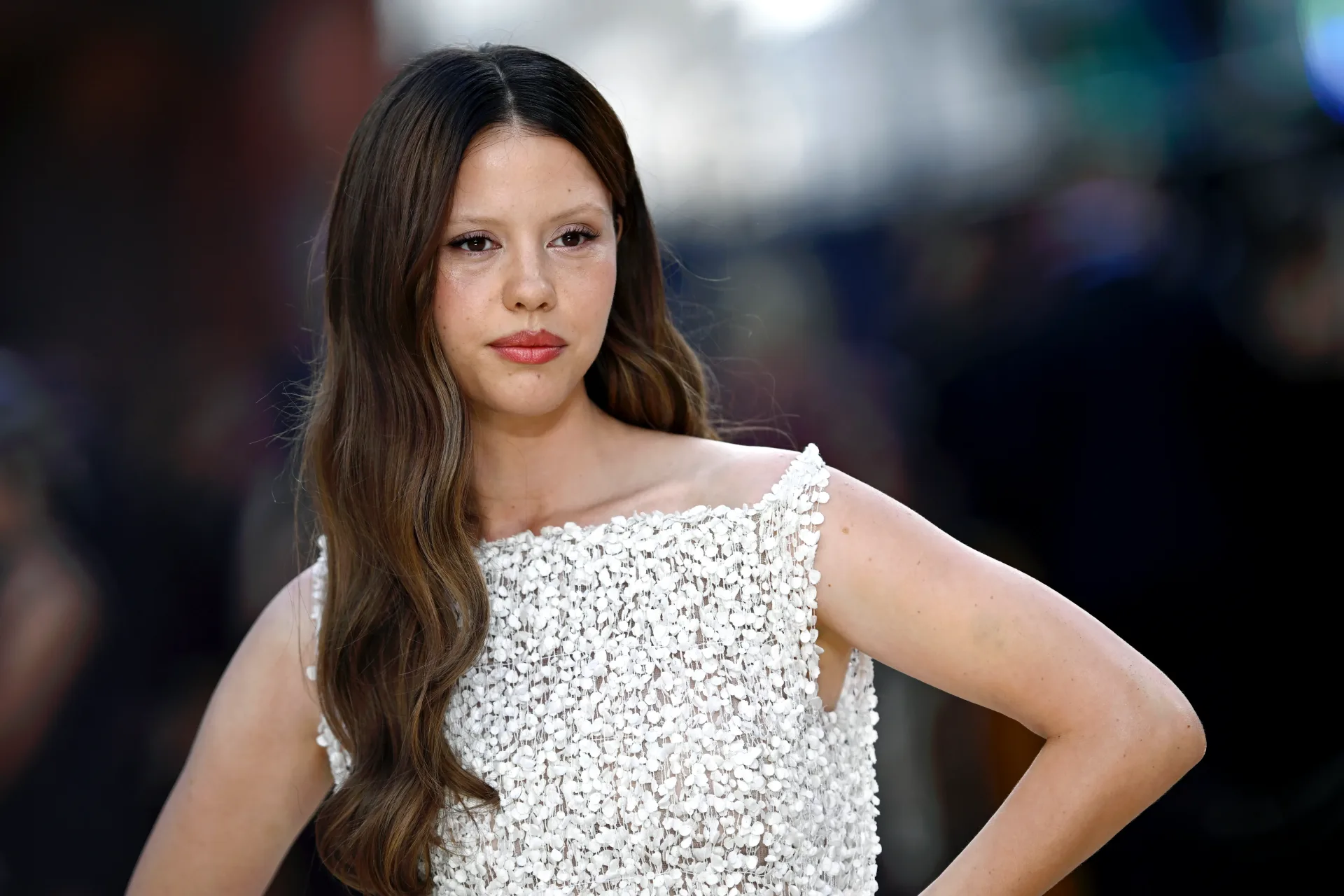
Mia Goth’s team has challenged Instagram over an account that posted AI-altered images presented in a way that could be mistaken for posts from the actor herself. The immediate flashpoint was a selfie showing Goth in a shirt bearing a message about an ex being her “biggest fan,” which spread after reports of her divorce filing from Shia LaBeouf. Goth did not post it: her spokesperson, Christine Tripicchio, said the actor has no social-media accounts at all.
That simple fact is what makes the episode more troubling than an ordinary mislabeled fan post. The account, miagoth_, had a blue verification check and about 1 million followers, although it was labelled as a fan account. A manipulated image arriving through a large, apparently authenticated account has the ingredients to be read as a direct statement—especially when its timing appears to connect it to a personal news event.
Goth’s team filed multiple complaints over what it described as counterfeit AI images. Tripicchio criticized the platform’s decision to grant the fan account a blue check, calling that “disconcerting on a fundamental level,” and argued that the distribution of manipulated images had been prioritized over the integrity of a public figure’s likeness. The account appeared to have been removed by Tuesday afternoon. Neither Meta nor Tripicchio provided an immediate response to follow-up requests.
The central issue is provenance, not merely a convincing picture
In this context, provenance means the history of a piece of media: who made it, where it was published, whether it was altered, and whether the account sharing it is genuinely controlled by the person viewers believe it represents. An AI image can be visually persuasive, but an image alone cannot establish that chain of origin.
That distinction is crucial in celebrity news. A screenshot may retain a platform logo, an account name and a verification symbol while being detached from the details that should cause viewers to pause: the account’s bio, its fan-account label, the actor’s known lack of social-media presence, or an AI disclosure. Once the post has been reposted elsewhere, those pieces of context may disappear entirely.
The Goth incident also illustrates how a fabricated image does not need to depict an impossible event to cause damage. The shirt’s slogan was plausible enough to seem like a pointed personal comment, and its circulation near a reported divorce filing gave audiences a ready-made narrative. That does not prove authenticity; it explains why the fake was easy to believe and easy to spread.
What a verification badge can—and cannot—tell audiences
A blue check is widely read as a shortcut for authenticity. But the situation described here demonstrates the limit of treating any badge as conclusive evidence that a post is a celebrity’s personal communication. A verification mark may encourage trust, while a separate fan-account label can signal that the profile is not official. Those two signals can conflict, and a fast-scrolling audience may notice the first one and miss the second.
For public figures who deliberately do not use social media, the risk can be particularly acute. There is no official feed for followers to compare against, and impersonating accounts can occupy the space where audiences expect a real presence to be. Scale matters too: an account with roughly a million followers can look established even when its identity is not what casual viewers assume.
The practical lesson is not that every fan account is deceptive. Fan communities often organize discussion, archive appearances and celebrate an actor’s work. The problem starts when presentation blurs the line between appreciation and representation—particularly when altered material is posted in a manner that invites readers to attribute it to the person being depicted.
A quick checklist before sharing a celebrity “post”
- Look for an explicit fan-account or parody label in the profile, not just the display name.
- Check whether the person is known to run social accounts at all. In Goth’s case, her representative says she does not.
- Do not treat a verification badge as standalone confirmation of authorship.
- Consider whether the image is making a timely, emotionally loaded claim that conveniently fits an existing news cycle.
- Watch for a label stating that content was modified with AI, but remember that the absence of a label does not establish that an image is real.
- Before reposting a screenshot, seek corroboration from an authenticated direct statement or the subject’s representatives.
AI labels are disclosure tools, not complete safeguards
Meta does not prohibit AI-generated depictions of real people as a blanket rule. Its approach includes labeling content that has been modified with AI and identifying profiles that are AI-generated. That policy creates a disclosure framework: the platform can tell people that an image or account involves AI rather than banning the material outright.
Disclosure is useful, but it does not resolve every problem exposed by Goth’s case. First, users may not see or understand the label before they encounter a repost. Second, labeling that an image was altered does not answer the separate question of whether the account’s overall look and verification status create misleading impressions of affiliation. Third, labels offer little reassurance to a person whose likeness has been used to construct a fake personal message in the first place.
AI-altered is also broader than the popular term deepfake. A deepfake generally refers to synthetic or manipulated media that imitates a real person, often convincingly. The reported Goth image is described as AI-altered; the information available does not establish the particular technical process used to create it. That distinction matters because the harm at issue is not a contest over software terminology. It is false attribution: an image circulated as though Goth herself had posted it.
Why timing turns an image into a reputational event
Celebrity likeness disputes are frequently discussed as a question of whether an image looks real. The more consequential question is often what audiences are led to infer from it. A purported selfie posted alongside sensitive personal news can be interpreted as a response, a joke, an admission or an attack. Even after it is disputed, the initial interpretation may continue circulating independently of the original account.
That is why Tripicchio’s objection focuses on the “protection and integrity” of Goth’s likeness, rather than solely on image quality. A likeness is not just facial appearance; in public life, it is bound up with name, perceived voice, personal relationships and control over what is presented as a person’s own statement.
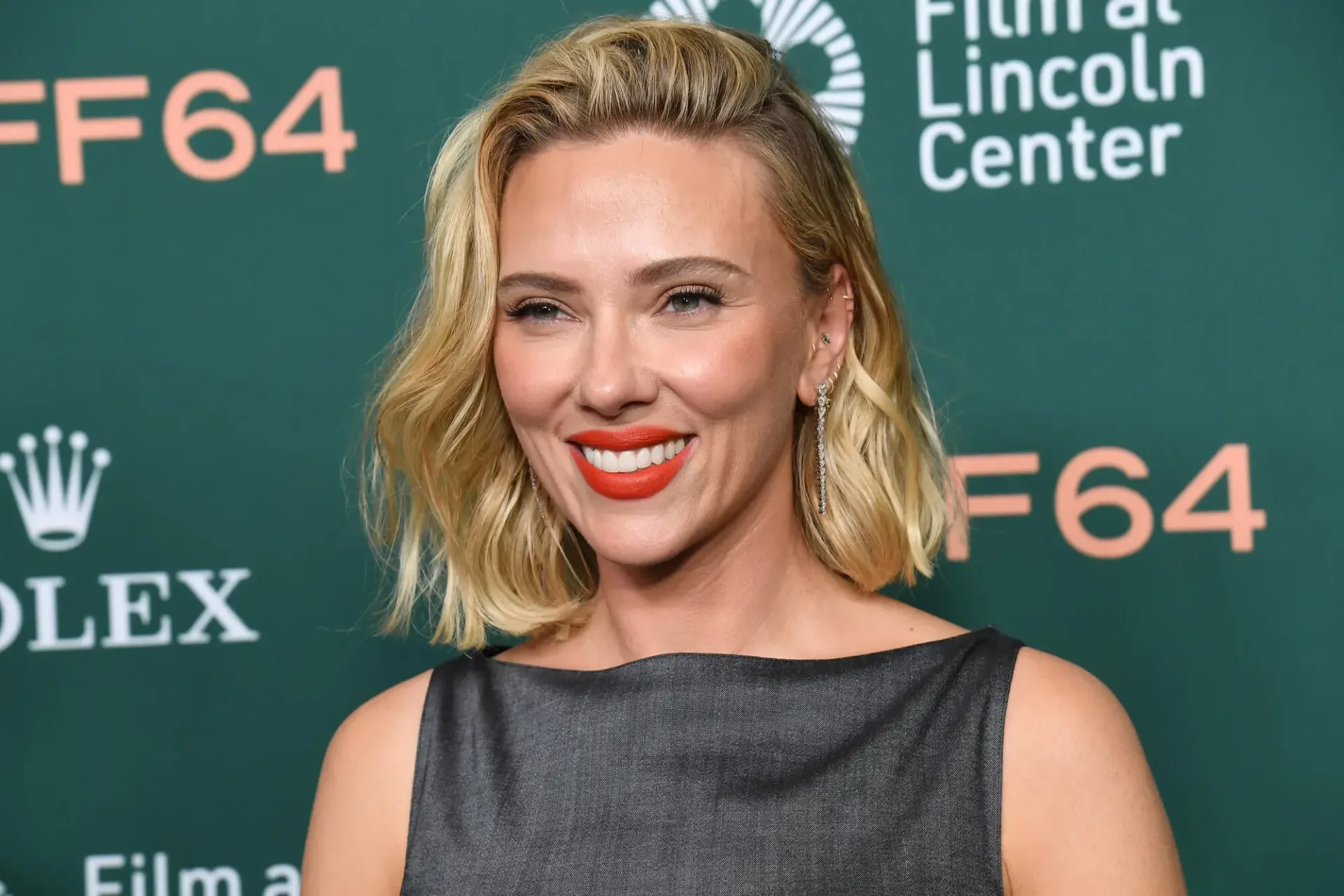
The wider entertainment space is already confronting that tension. Scarlett Johansson, Cate Blanchett and Steven Soderbergh are among figures who have spoken out about AI-driven deepfakes. Blanchett also co-founded the Human Consent Foundation, a nonprofit intended to help people register whether AI models may scrape their likenesses. “Scrape” in this setting refers to the automated collection of material from online sources for analysis or model development. A registration system cannot by itself eliminate every fake, but it reflects a push for clearer consent boundaries before a person’s identity becomes material for synthetic media.
These issues are not confined to films or actors’ feeds. The entertainment landscape is increasingly shaped by platforms, streaming projects and online participation, as shown by the ongoing growth of formats such as television competition built around a social playground game. As audiences move quickly between official programming, fan conversation, screenshots and algorithmically distributed clips, the ability to identify who is speaking becomes part of basic media literacy.
The policy question behind Goth’s complaint
Goth’s team is effectively raising two related but different questions for platforms. One concerns content moderation: how should a service respond when a person says AI-manipulated images of their likeness are counterfeit? The other concerns account design: should a verification signal be available in a way that can be confused with official representation when an account is explicitly a fan account?
The available facts do not establish why the account received its blue check, what review took place after the complaints, or precisely why it later appeared to be unavailable. They do establish that the account’s verification status and size made confusion a realistic concern. That is the practical fault line. A label can be technically present, while the total presentation—the name, checkmark, follower count, imagery and surrounding headlines—still creates a strong impression that a celebrity is speaking directly.
For audiences, the safest response is modest skepticism rather than blanket distrust. People do not need forensic expertise to avoid amplifying a dubious post. They need to separate the visual claim from its evidence, check whether the purported account is actually official, and resist treating a timely screenshot as a statement of record.
For platforms, Goth’s dispute adds pressure to make the distinction between verified account, fan account and official representative more legible. AI disclosures are one layer of information. Clear account identity, responsive reporting channels and safeguards around impersonation are another. When a fake image can become news before its provenance is checked, the cost of ambiguity is carried by the person whose face and reputation were used to make it persuasive.