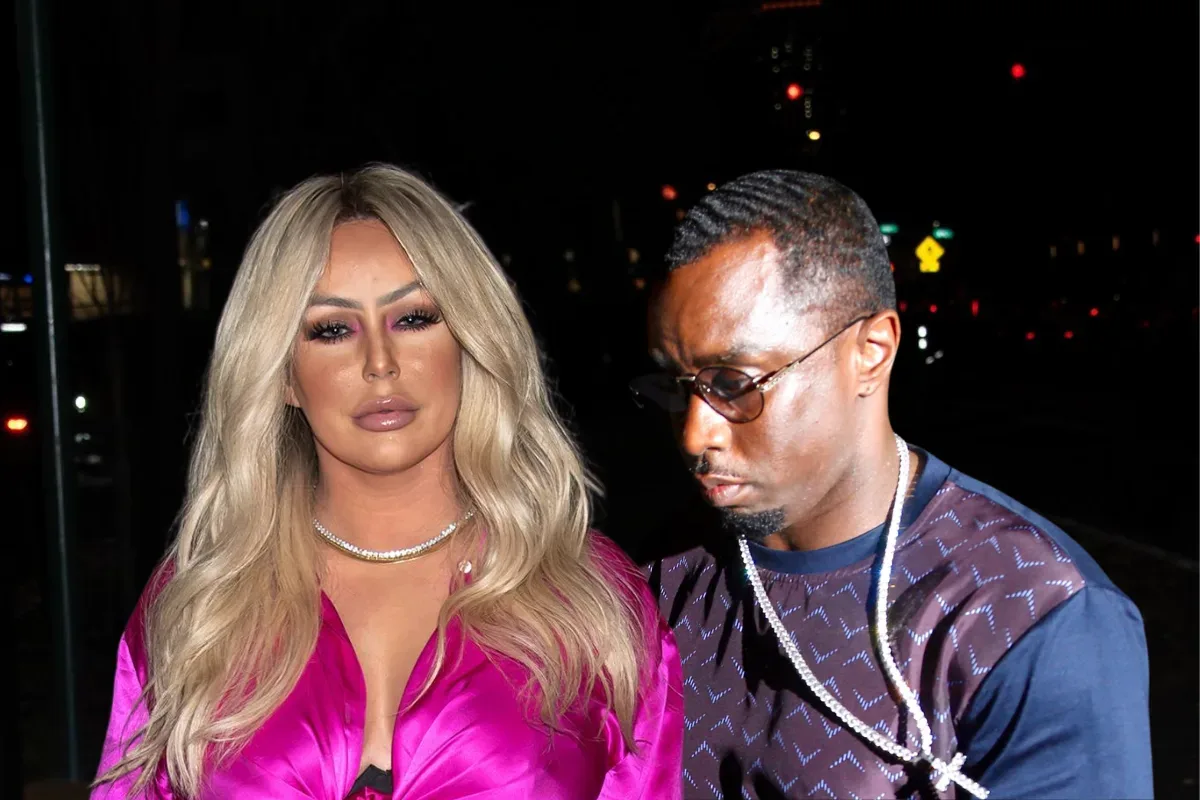
Aubrey O’Day has publicly connected Duane “Keefe D” Davis’ conviction in the 1996 killing of Tupac Shakur to wider questions of legal responsibility—questions that she framed around Sean “Diddy” Combs, her former Bad Boy Records boss.
The key distinction is essential: Davis has now been convicted, but Combs has not been charged in relation to Shakur’s death and has not been publicly identified by Las Vegas police as a suspect. Combs has also denied any involvement in the murder. The claims O’Day referenced concerning Combs are allegations, not findings made by the Clark County jury.
What the Davis verdict decided
A Clark County jury found Davis guilty of first-degree murder with a deadly weapon after an 11-day trial. It was the first murder conviction tied to the death of Shakur, who was shot in Las Vegas in September 1996 and died days later.
The case did not rest on an accusation that Davis fired the shots. Prosecutors instead argued that he supplied the gun and helped direct the retaliatory attack following an altercation at the MGM Grand involving Shakur’s entourage and Davis’ nephew, Orlando Anderson.
Jurors deliberated for nearly three hours before returning their verdict. The prosecution’s evidence leaned heavily on Davis’ own past statements: police interviews, passages from his memoir, and secretly recorded conversations. Physical evidence directly linking Davis to the shooting was limited.
That framework is why O’Day focused on a broad point of criminal accountability rather than solely on who was in the vehicle or who fired the weapon. In her response to the outcome, she argued that arranging, financing, encouraging, or knowingly setting a killing in motion should face scrutiny if evidence supports it.
“Justice cannot stop with the person in the car,” O’Day wrote, arguing that accountability should follow the evidence.
Her post was plainly aimed at the long-running claims involving Combs, though those claims were not required for the jury to decide Davis’ guilt. A criminal verdict can resolve the conduct of one defendant without making a judicial finding about every allegation aired around the same events.
The unresolved allegation involving Sean Combs
During a 2008 police interview, Davis claimed that Combs had offered $1 million for Shakur and Death Row Records co-founder Suge Knight to be killed. Retired Los Angeles Police Department detective Greg Kading testified about that interview, and prosecutors played recordings that included Davis making related claims.
Davis also previously said that he provided gang protection for Combs during the volatile Bad Boy Records and Death Row Records conflict of the 1990s. He further claimed that he expected money after Shakur’s death and sent Eric “Von Zip” Martin to seek the alleged payment.
Those statements are serious, but the public record described at trial did not establish that Combs paid anyone, communicated an instruction to murder Shakur, or took part in the Las Vegas attack. Davis also changed his position before trial, saying he did not believe Combs was involved in the killing.
Combs’ representatives have rejected the allegation categorically, saying that he had nothing to do with Shakur’s murder and did not either carry it out or arrange it. That denial matters as much as the distinction between Davis’ historic claims and evidence sufficient to support a charge.
A former federal prosecutor has noted that Nevada law can, in theory, extend murder liability beyond the person who uses a weapon. Someone who hires, commands, encourages, or otherwise obtains another person’s participation could potentially face liability. But a theoretical legal route is not a pending prosecution. No charge against Combs in the Shakur case has been announced.
Why O’Day’s response carries a separate history
O’Day’s comments are also inseparable from her own years-long allegations about her time with Danity Kane and Bad Boy. She has alleged that Combs exploited his professional authority over her and that her career opportunities were connected to sexual pressure. In Sean Combs: The Reckoning, O’Day said she believed she was fired because she would not participate sexually with “the boss.”
The documentary also includes sexually explicit emails said to have been sent by Combs, as well as an affidavit from an unnamed witness concerning an alleged sexual assault involving O’Day and another man. O’Day reacted emotionally to the account in the film and expressed uncertainty about what may have happened to her.
Combs has denied sexually assaulting anyone. He has criticized Sean Combs: The Reckoning as biased and unfair, objecting in particular to its use of anonymous accusations. None of O’Day’s claims about her own experience were issues decided in Davis’ murder trial.
That separation may sound procedural, but it is important in a story where several strands can easily become tangled: O’Day’s personal allegations; Davis’ evolving accounts over many years; the evidence presented to his jury; the separate public questions around Combs; and the legal threshold that would be needed for any future charge.
A verdict is not a blanket answer
The Davis verdict is a major development in a case that had remained unresolved for almost three decades. It establishes that a jury accepted the prosecution’s theory that Davis bore criminal responsibility for Shakur’s death despite not being alleged to have pulled the trigger himself.
It does not, by itself, establish the truth of every claim Davis made over the years. Nor does it transform O’Day’s suspicions into a criminal accusation by authorities, much less a conviction. The jury was tasked with reaching a verdict on Davis, not issuing a finding on Combs or adjudicating the broader history of the rap industry’s East Coast-West Coast conflict.
O’Day nevertheless presented the result as a reason for authorities and the public to examine whether anyone else helped initiate the killing. She urged people to watch the Netflix documentary and said the complete story deserves attention after 30 years.
Stories built around famous cultural figures often invite a desire for one clean reveal, like a mystery game finally unlocking its hidden ending. Real criminal proceedings work much more slowly and narrowly. Evidence has to be tested, claims have to be distinguished from proof, and a verdict about one defendant does not automatically settle responsibility for every other person mentioned in testimony, interviews, or documentaries.
That is especially relevant in media centered on allegations and traumatic accounts. The questions raised by a documentary can be culturally significant while remaining legally unresolved. Similar care is necessary when discussing difficult narratives in entertainment, including the way stories of tragedy can be shaped by spectacle without reducing the human stakes to a headline.
What remains known—and unknown
- Known: Davis was convicted of first-degree murder with a deadly weapon in connection with Shakur’s death.
- Known: Prosecutors argued Davis supplied the weapon and directed retaliation after the MGM Grand fight.
- Known: Davis had previously alleged that Combs offered money to kill Shakur and Knight, then later said he did not believe Combs was involved.
- Known: Combs has denied any role in Shakur’s murder and has not been charged or publicly identified by Las Vegas police as a suspect.
- Unresolved: Whether any evidence will lead authorities to investigate or charge another person in connection with the killing.
For now, O’Day’s message is a call for further accountability, not confirmation that another prosecution is imminent. The Davis case has moved a decades-old murder from unanswered history into a completed conviction for one defendant. It has also revived scrutiny of allegations that remain unproven, disputed, and outside the scope of what the jury was asked to decide.