The 77th annual ASCAP Foundation Deems Taylor/Virgil Thomson Awards have recognized an unusually wide range of music writing and music-focused media, from major film-composer biographies to a documentary following cult R&B artist Jerry “Swamp Dogg” Williams, a personal Frank Zappa box-set essay, podcasts, online video and reporting on endangered analog recordings.
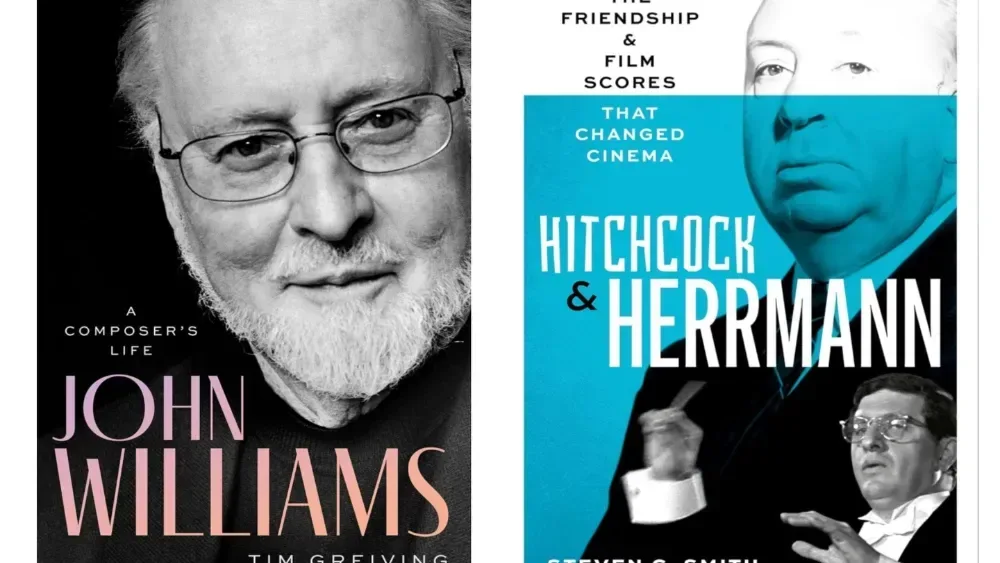
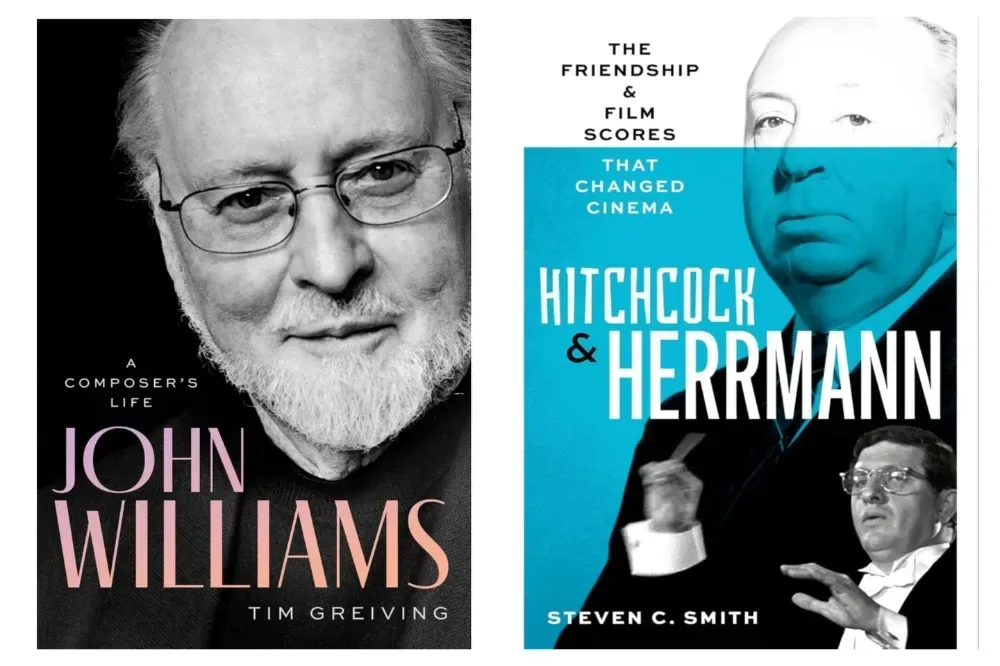
At the center of the book honors are Tim Greiving’s John Williams: A Composer’s Life, which received a Deems Taylor/Virgil Thomson Book Award in concert music, and Steven C. Smith’s Hitchcock and Herrmann: The Friendship and Film Scores that Changed Cinema, which earned special recognition in the same field. The choices underline the awards’ broad definition of music writing: the work being honored does not need to be about one genre, one format or even music on a page. It can examine creative partnerships, document a working artist’s life, preserve context around an archival release, or investigate the practical questions facing musicians and listeners.
The honors are selected by a four-member committee of ASCAP members. This year’s judges were Robbie Fulks, Julie Flanders, Carman Moore and Betsy Schramm.
Film-music books receive concert-music recognition
Greiving’s book is identified as the first biography of John Williams, a composer whose career has made film music a frequent entry point for audiences exploring orchestral writing. Its recognition in the concert-music category is a useful reminder that “concert music” in awards terminology is not simply a label for music performed in a concert hall. Here, it encompasses scholarship and writing concerning composers and musical traditions often discussed through classical or orchestral frameworks, including the work of a major screen composer.
Smith’s Hitchcock and Herrmann received the category’s Special Recognition Award. The book focuses on Bernard Herrmann and filmmaker Alfred Hitchcock, treating their friendship alongside the scores that emerged from their collaboration. The premise matters because it frames a score not as an isolated soundtrack album but as part of a relationship between filmmakers and a set of creative decisions around cinema.
Both honors reward books that give readers a route into film scoring through people, process and artistic context rather than merely cataloging credits. For anyone interested in why certain screen scores continue to be studied, biographies and collaboration histories can reveal how individual musical voices develop and how a director-composer partnership can shape the identity of a film.
Books honored across opera, children’s music and Broadway
Two additional concert and pop book awards make the winners list notably expansive. Lucy Caplan received a concert-music Book Award for Dreaming in Ensemble: How Black Artists Transformed American Opera. Published by Harvard University Press, the book examines Black innovation in American opera during the Harlem Renaissance.
In the pop-music book category, Gayle Wald was recognized for This Is Rhythm: Ella Jenkins, Children’s Music, and the Long Civil Rights Movement, published by the University of Chicago Press. The book tells the life story of Ella Jenkins, described as the “first lady of children’s music,” while connecting that work to the long Civil Rights Movement.
Related coverage includes ASCAP Music Writing Awards Honor Film Score Biographies and More.
James O’Leary also received a pop-music Book Award for The Middlebrow Musical: Between Broadway and Opera in 1940s America, from Oxford University Press. O’Leary’s study considers how musicals including Oklahoma!, Beggar’s Holiday and Street Scene took on more weighty stories in ways that had not been seen before 1943.
Together, these books show how an award category labeled “pop” can embrace serious historical research, and how a “concert” designation can include work on traditions whose stories have not always been centered in conventional accounts of American music. The distinction is organizational, not a claim that one form of music is more substantial than another.
Broadcast and video winners address musicians’ lives and modern creative issues
The Deems Taylor/Virgil Thomson Broadcast/Media Award in pop music went to directors Isaac Gale, Ryan Olson and David McMurry for the 2025 documentary Swamp Dogg Gets His Pool Painted. The film follows the musical creative life of Jerry “Swamp Dogg” Williams and his housemates in Los Angeles, with the pool serving as a focal point in its story.
The concert-music Broadcast/Media Award was awarded to radio host and producer Gail Wein for Classical Gas, a 2025 interview podcast series produced by Classical Voice North America and available across multiple platforms. An interview series earns its value from the space it gives artists to explain their own practices, careers and concerns in their own words; that makes this form distinct from criticism or biography, even when all three may illuminate the same music.
Rick Beato received special recognition in that category for his 2025 YouTube series Everything Music. The series explores music, technology and issues confronting creators in the current industry. Technology is not treated here as an abstract accessory to music: it is part of the conditions under which creators work, communicate and make decisions. The award’s inclusion of a YouTube series also reflects an ecosystem in which music discussion reaches audiences through books, audio programs, documentaries and platform-native video.
The breadth of the media winners has a practical implication for audiences: there is no single “right” way to deepen an interest in music. A reader who wants long-form historical argument may choose a book; someone seeking artists’ voices may prefer interview podcasts; viewers interested in creative life as it is lived may gravitate toward documentary; and people looking for discussion of technology may find video a more immediate format.
Liner notes and preservation reporting get their due
Percussionist Ruth Komanoff Underwood received the ASCAP Foundation Paul Williams “Loved the Liner Notes” Award for her personal essay accompanying Cheaper than Cheep, a box set built around a live 1974 concert film by Frank Zappa and the Mothers of Invention. Released on Zappa Records/UMe, the set demonstrates why liner notes remain meaningful in an era when music can easily circulate without physical packaging or accompanying documentation.
Liner notes are the written material supplied with a recording or archival release. They can provide credits, historical background, recollections and interpretive context. In Underwood’s case, the honored work is a personal essay, making it a direct connection between an artist associated with the material and listeners encountering it in a curated box-set form. For archival projects, that context can be as important as the restoration or presentation of the recording itself: it helps establish what listeners are hearing and why it matters.
Ben Sisario won the article award in pop music for “The ‘Race Against Time’ to Save Music Legends’ Decaying Tapes,” a report on efforts to restore analog tapes containing original recordings by Bruce Springsteen, Bob Dylan and others. Analog tape is a physical recording medium, and the award-winning article addresses the complex work involved when such masters deteriorate. The subject is an important counterpart to the liner-notes honor: one concerns contextualizing an archival release, while the other concerns the labor required to keep recorded history recoverable at all.
For readers interested in the cultural afterlife of recordings, these awards point to two connected realities. Preservation is technical work, involving fragile original materials; interpretation is editorial work, involving the writing that helps audiences understand those materials. Neither is incidental when music moves from an archive back into public life.
Articles honor criticism, performance questions and new orchestral voices
Esteban Meneses received the concert-music article award for “Revolución: Mexican Composers on the Rise,” a look at Mexican composers whose work is being performed, commissioned and recorded by orchestras around the world. Commissioning, in this context, means an organization or performer requests and supports the creation of a new work. It is one of the pathways by which composers’ music enters the active repertoire rather than remaining merely an idea or unpublished score.
Max Keller received special recognition for “Does It Matter How A Cello Is Held? It’s a Centuries-Old Debate,” which examines musicians’ arguments over cello position. The subject may sound highly specialized, but it goes to the heart of instrumental performance: physical approach affects comfort, movement and potentially a player’s relationship with the instrument. The award recognizes that music journalism can make a technical debate legible without treating it as trivial.
Gabriel Kahane received the Virgil Thomson Award for Outstanding Music Criticism for “A Love Letter to Music Listings.” Criticism is different from reporting or biography. It makes an argument, offers interpretation and asks readers to consider why a musical subject deserves attention. The category’s presence alongside preservation reporting and performance-practice writing is significant: music culture benefits from facts and documentation, but it also needs informed judgment and reflection.
The list arrives amid continued public recognition for influential performers as well as writers and researchers who help sustain music’s history and conversation. For another recent music honor, see the Classic Soul honor set for Chaka Khan.
2026 ASCAP Foundation Deems Taylor/Virgil Thomson Award recipients
- Broadcast/Media, pop: Isaac Gale, Ryan Olson and David McMurry, Swamp Dogg Gets His Pool Painted.
- Broadcast/Media, concert music: Gail Wein, Classical Gas.
- Broadcast/Media, concert music special recognition: Rick Beato, Everything Music.
- Paul Williams “Loved the Liner Notes” Award: Ruth Komanoff Underwood, essay for Cheaper than Cheep.
- Book, pop: Gayle Wald, This Is Rhythm; James O’Leary, The Middlebrow Musical.
- Book, concert music: Lucy Caplan, Dreaming in Ensemble; Tim Greiving, John Williams: A Composer’s Life.
- Book, concert music special recognition: Steven C. Smith, Hitchcock and Herrmann.
- Article, pop: Ben Sisario, “The ‘Race Against Time’ to Save Music Legends’ Decaying Tapes.”
- Article, concert music: Esteban Meneses, “Revolución: Mexican Composers on the Rise.”
- Article, concert music special recognition: Max Keller, “Does It Matter How A Cello Is Held? It’s a Centuries-Old Debate.”
- Outstanding Music Criticism: Gabriel Kahane, “A Love Letter to Music Listings.”