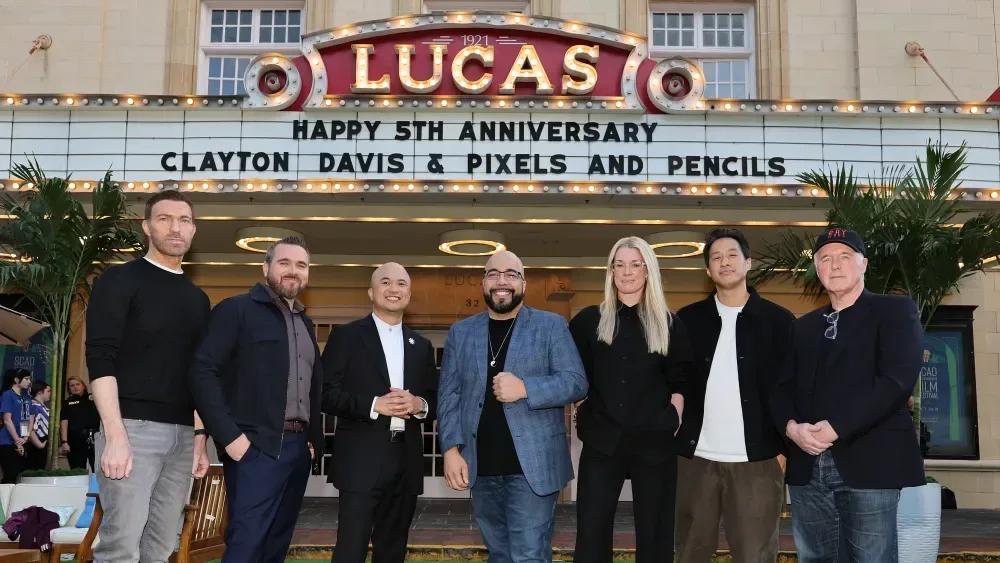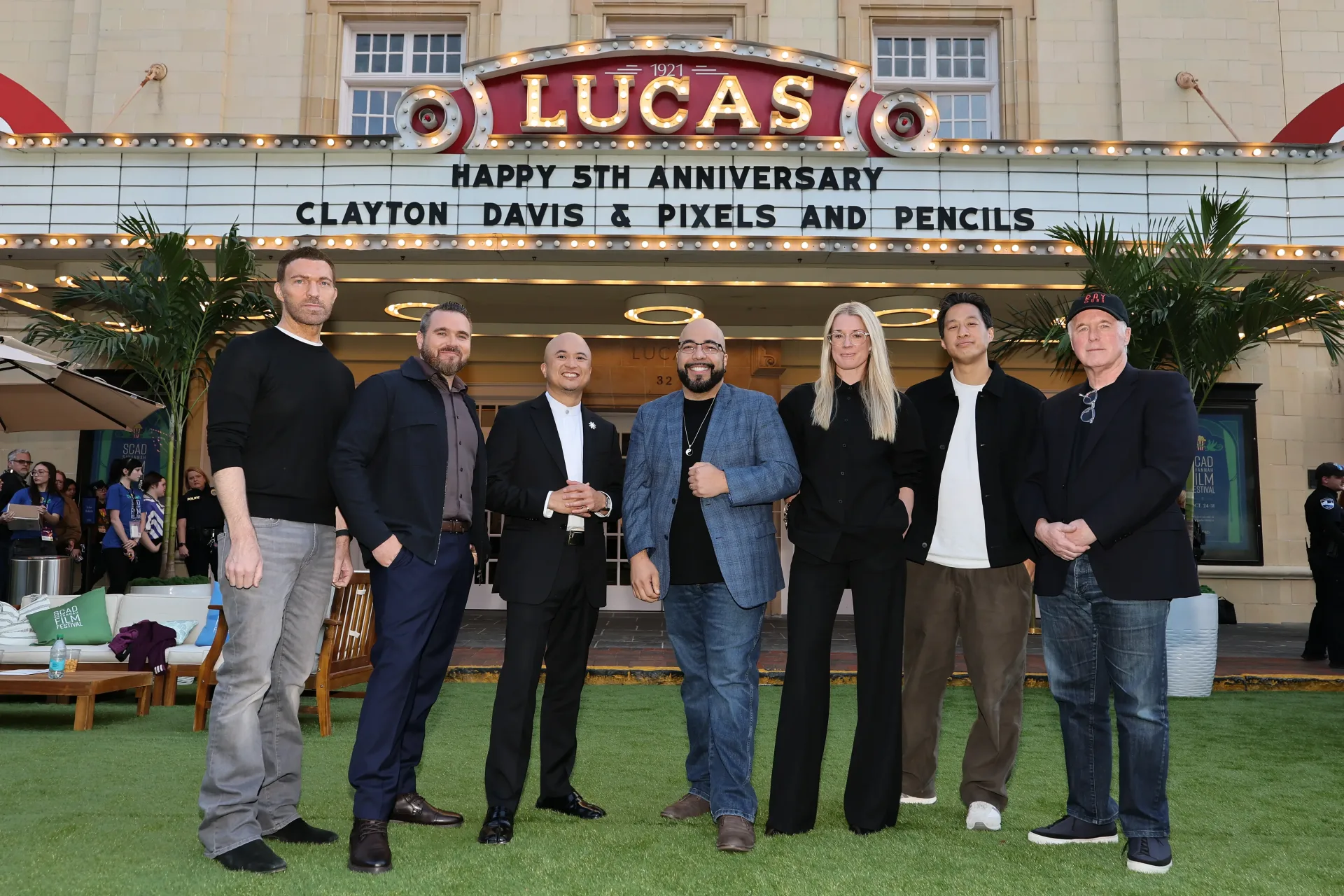
Animation can look effortless when it is working properly. A character moves with a convincing weight shift, cloth seems to react to a turn, light gives a location a mood, and a performance reads before a viewer has time to examine why. But that apparent ease is the endpoint of an enormous accumulation of choices. At a Savannah discussion devoted to animation craft, filmmakers working across computer animation, stop motion and other styles pushed back on the idea that those choices can be meaningfully reduced to a button press.
The conversation brought together Brad Bird, attached to Netflix’s Ray Gunn; Daniel Chong of Pixar’s Hoppers; Joel Crawford and Januel Mercado of DreamWorks Animation’s Forgotten Island; Travis Knight of Laika’s Wildwood; and Leah Nelson of Independent Film Company’s Tangles. The immediate issue was artificial intelligence and a creative industry increasingly asked to explain what remains distinctly human in an era of rapid technical change.
The answer offered by the panel was not that animation rejects technology. Animation has always depended on tools, pipelines and specialized labor. Rather, their emphasis was on authorship: a film’s feelings, viewpoint, performances and visual decisions emerge through people communicating with one another, revising work and building a world deliberately. That does not turn every new automated tool into a nonstarter, but it does challenge the claim that speed alone is a substitute for filmmaking.
Animation is built, not merely captured
Chong distilled a foundational difference between animation and live-action production. In a live-action shoot, a camera can record performers, a constructed set and the surrounding physical environment. In animation, even things viewers may take for granted—the set, character, hair, fabric and atmosphere—must be designed or created for the screen. The production is not simply finding an image. It is manufacturing the conditions under which that image can exist.
That matters when considering claims that animated work should be quick because it is digital. Computer animation does not eliminate the need for decisions; it shifts where many decisions occur. A team still has to determine what a space looks like, how it is framed, what a character is feeling, how that feeling is expressed in movement, and which details deserve attention. The result is a collaborative chain rather than an automatic output.
Chong’s broader point was that long production timelines are connected to this act of world-building. Animated features commonly take more than a year to make, and some take far longer. Bird’s Ray Gunn, for example, took roughly 30 years from its first conception to completion, although Bird was not continuously working on it throughout that entire span. That is an unusually long gestation, but it illustrates that a screen project’s timeline is not just a rendering schedule. Ideas can evolve, pause and return before they become a finished film.
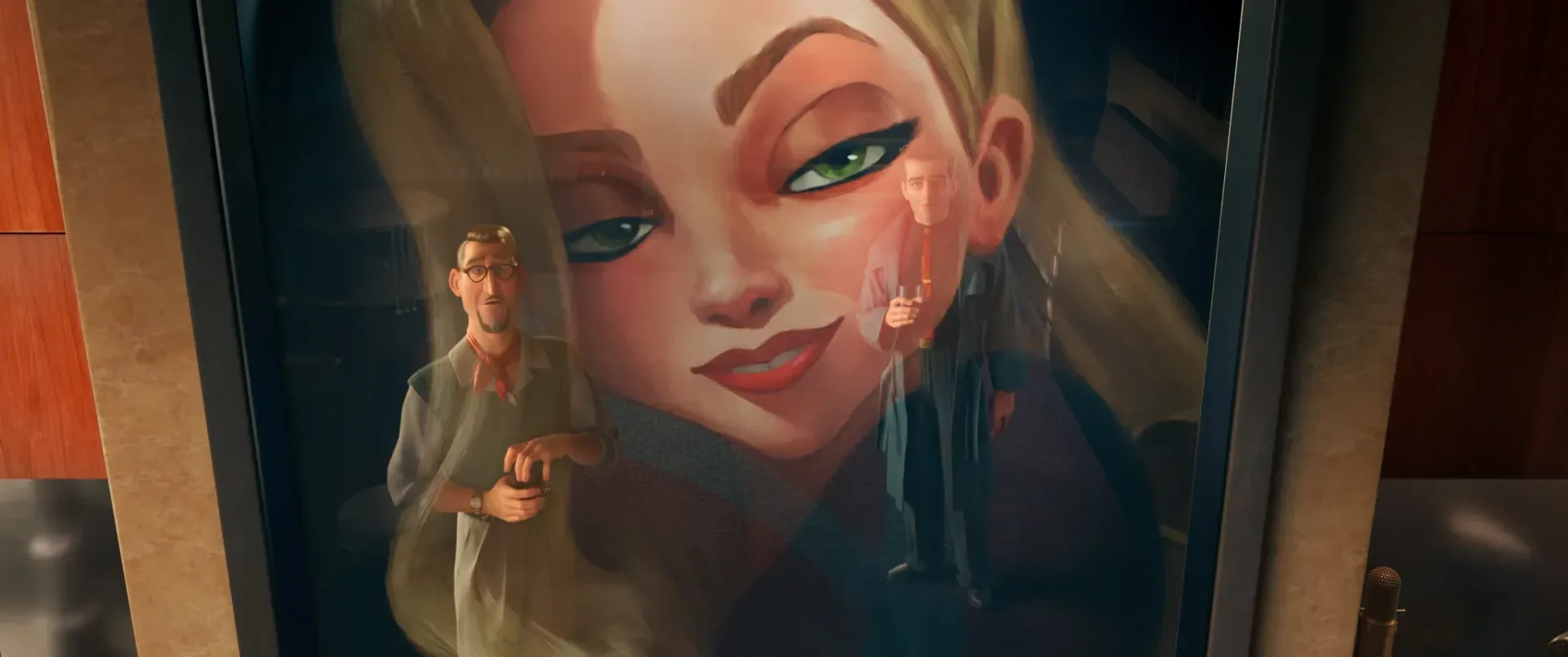
Ray Gunn is voiced by Sam Rockwell and Scarlett Johansson. Yet voice casting is one component of the larger process described onstage. Animation has to make the vocal performance legible through a character’s physical behavior and a world that gives the performance context. That is one reason a finished animated scene represents the work of many disciplines, even when audiences experience it as a seamless moment.
Why a story’s life matters to its “illusion of life”
Bird framed the question in more personal terms. His argument was that a convincing fictional life has to draw from lived experience. “Illusion of life” is a useful animation term here: it describes the effect in which audiences accept an animated figure as having thought, intention, emotion and physical presence. It does not mean fooling viewers into believing the character is literally real. It means creating behavior that feels observed, motivated and emotionally coherent.
Related coverage includes Animation Filmmakers Emphasize Human Craft at Savannah Panel.
In this view, technology can assist production while still falling short of the central artistic task. A story needs someone with a perspective to decide what is worth showing and why. The relevant human input is not limited to drawing skill. It includes memory, observation, empathy, taste and the willingness to make choices that may be difficult to quantify. That is the terrain Bird was describing when he urged artists to keep learning the mechanics of animation as the medium changes.
For artists watching the AI debate, that advice has a practical implication. Understanding the fundamentals of staging, timing, performance, design and storytelling gives a creator a basis for judging any tool rather than treating the tool’s output as the final creative answer. The panel did not present a detailed policy for AI use, and the larger industry remains uncertain as the technology advances. Still, the speakers’ position was clear: knowledge of the craft remains valuable precisely because the craft is more than generating an image.
The tension extends beyond animation. Questions around automation, training material and creative ownership are also active across technology and publishing; publisher challenges to website-scraping language show how debates about AI-era systems can involve both creative work and the terms governing its use. The animation panel’s contribution was to keep the focus on the actual labor and intent behind a finished story.
Stop motion makes the labor visible
Knight’s comments on Wildwood offered the discussion’s clearest example of a form in which patience is physically embedded in the result. The film used stop-motion animation across 2,800 shots. Stop motion is a technique in which physical objects or puppets are adjusted incrementally and photographed frame by frame, so that their movement appears continuous when the images are played in sequence.
Knight described the work bluntly as painful, but also as magical. The two ideas fit together. Stop motion proceeds progressively: animators begin at the first frame and advance through the performance in extremely small steps. A tiny adjustment can affect gesture, balance, expression or timing. Unlike a broad notion of “making something fast,” the method requires artists to inhabit the duration of a performance one frame at a time.
The point is not that difficulty automatically makes art better. Hard work, by itself, is not a guarantee of a good movie. What the panelists stressed instead is that the process carries meaning because it creates room for care, problem-solving and intentionality. A shortcut may reduce a task, but it does not automatically replicate the judgment that tells an animator which motion, pause or visual detail best serves a particular character.
That is also why “I can make it with one click” can be a misleading standard for evaluating creative work. It measures the time required to produce a result, not whether that result has a coherent point of view or resonates with an audience. Chong argued that animation’s demanding process is part of what lets these films connect with people. His claim is ultimately about outcomes, not nostalgia for inconvenience: human connection is the purpose that justifies the labor.
Technique should follow the story
The panel also resisted treating animation formats as interchangeable skins. Mercado said the narrative should determine the visual storytelling and the way characters are driven. In other words, the initial question is not simply whether a film ought to be 2D, 3D, stop motion or Claymation. The question is what kind of storytelling the material requires.
Those labels describe different approaches. 2D animation presents images on a flat plane, whether created by hand or digitally. 3D animation works with models in a virtual space that can be posed, lit and viewed from different camera angles. Stop motion photographs real, physical materials in incremental stages. Claymation is a form of stop motion that uses clay or similarly malleable material. Each approach can create a broad range of effects, but each also arrives with different expressive possibilities and production demands.
Forgotten Island was discussed as a particularly direct example of visual style serving narrative. The film explores memory and the ways people experience it. Crawford and Mercado described an approach in which animation styles can change depending on whose memory is being told, including uses of anime and manga styles connected to a character’s point of view in specific sections.
That is more than surface variety. If a memory is understood as personal rather than purely objective, changing the visual language can help the audience feel that subjectivity. A style shift can signal that a narrator’s emotions, identity or recollection is shaping what is seen. The technique becomes part of the storytelling grammar rather than a detached showcase of what the artists can do.
This is one of the strongest practical lessons from the discussion. A film’s look is not simply an asset to be generated after a premise exists. It is a way of conveying information. Texture, motion, framing and stylization all influence how viewers understand a character’s inner world. That link between form and meaning is why the panelists repeatedly returned to story, perspective and communication.
Directing animation is a communication job
Nelson challenged another assumption that can narrow people’s idea of animation work: a director does not necessarily have to be an animator. On Tangles, she relied on every available way to communicate what she wanted the team to protect, including acting references and filming herself performing actions when drawing was not an option.
That workflow clarifies what directing can involve in an animated production. The director’s role is not necessarily to personally execute every craft task. It is to articulate the destination clearly enough that specialists can move together toward it. Reference performance can communicate timing, body language and emotional intention. It gives an animation team something concrete to interpret, refine and translate into the project’s visual world.
There is a useful corrective here for anyone considering animation as a career or creative outlet. Drawing and animation skills matter, but they are not the only routes into the medium. Storyboarding, performance reference, writing, design, editing and clear creative communication all have a place. Nelson’s description also reinforces the central theme of the panel: animated filmmaking is collaboration, not an isolated act of image production.
What the panel’s AI argument does—and does not—settle
The speakers did not claim to resolve every question raised by AI. They acknowledged an industry still adapting to advancing technology. Nor did they argue that all technical innovation is inherently opposed to art. Animation itself is defined by evolving methods, and the panel discussed a range of established techniques rather than declaring one format universally superior.
What they did reject was the assumption that a fast approximation of an animated image is equivalent to the work of storytelling. Their case rests on the difference between output and intent. Animation asks creators to decide what a world contains, how characters perform inside it, whose perspective shapes it and what emotional truth the audience should take away. Those questions are not incidental production overhead. They are the film.
For viewers, that may offer a better way to look at the next striking animated scene: not merely as a finished visual, but as a record of choices. For artists, Bird’s advice to continue learning the medium’s inner workings is a reminder that technical literacy and human observation can coexist. And for an industry confronting a flood of promises about frictionless creation, the panel’s message was refreshingly specific: the painstaking parts are often where the meaning gets made.