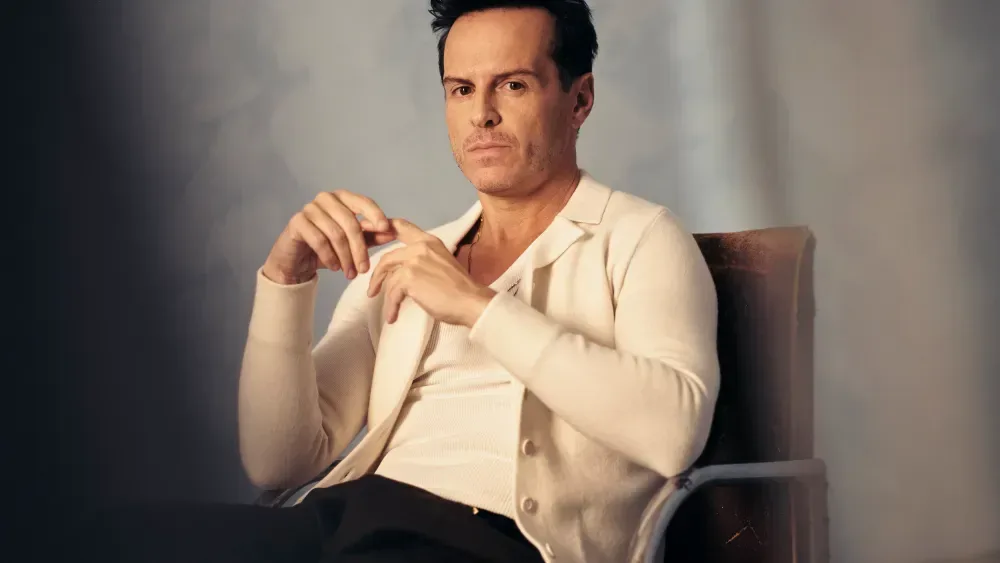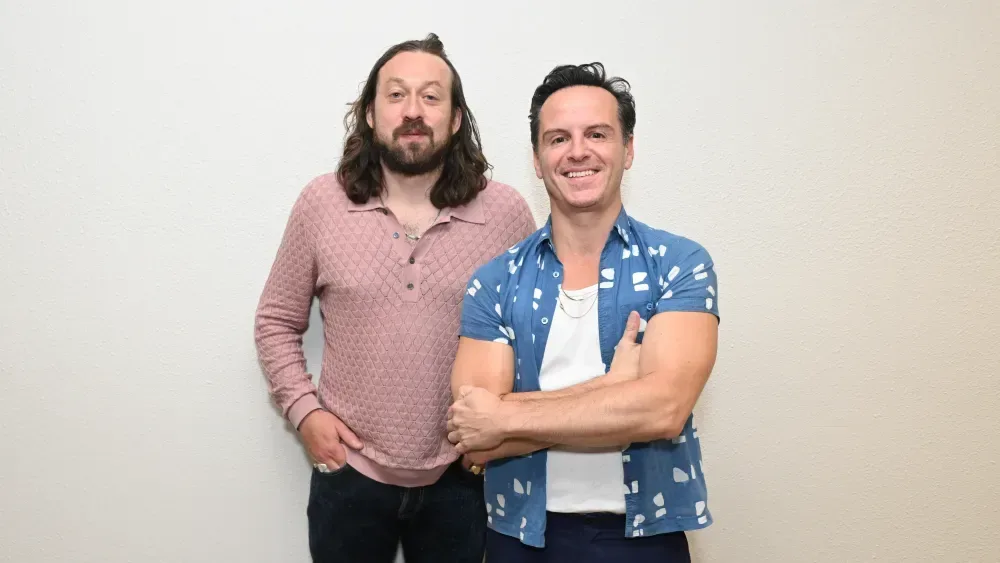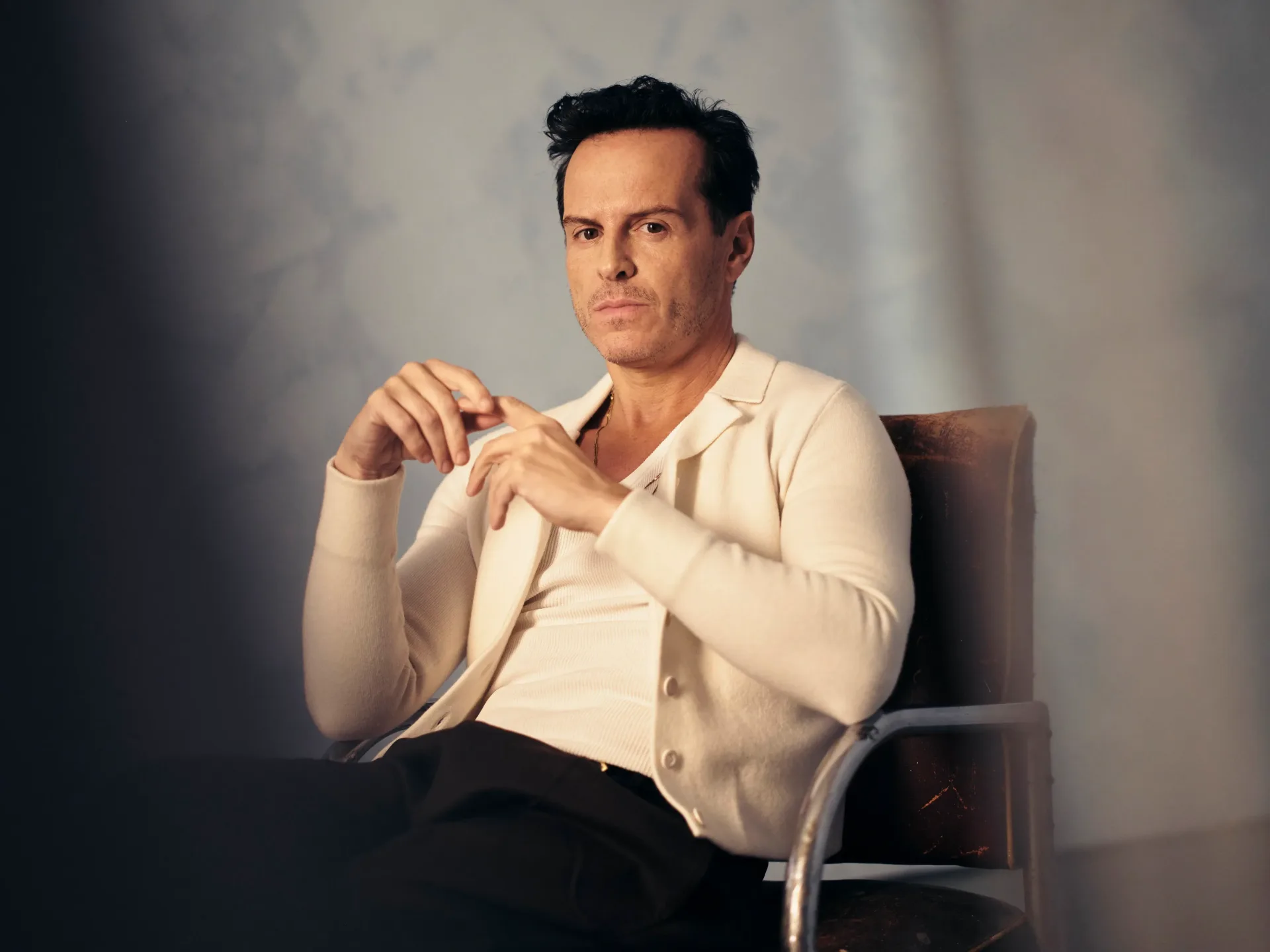
Andrew Scott’s Toronto International Film Festival appearance placed two ideas side by side: the demanding physical and emotional work of playing Hamlet, and the arbitrary limits historically placed on gay actors. Discussing his new film Elsinore, Scott spoke openly about the personal connection he feels to its subject, the late Scottish actor Ian Charleson, while also addressing a persistent and deeply unconvincing industry assumption: that an openly gay performer cannot credibly play a straight romantic lead.
For Scott, the issue is not an abstract debate about casting theory. It is tied to career opportunities, audience expectations, theatrical history, and the lives interrupted by the HIV/AIDS crisis. Elsinore, directed by Simon Stone, brings those elements into focus through Charleson’s final stage triumph. Scott also produced the film, his first producing credit, making the project an especially close one for an actor whose own history with Shakespeare’s prince adds another layer to the material.
Elsinore revisits Ian Charleson’s final Hamlet
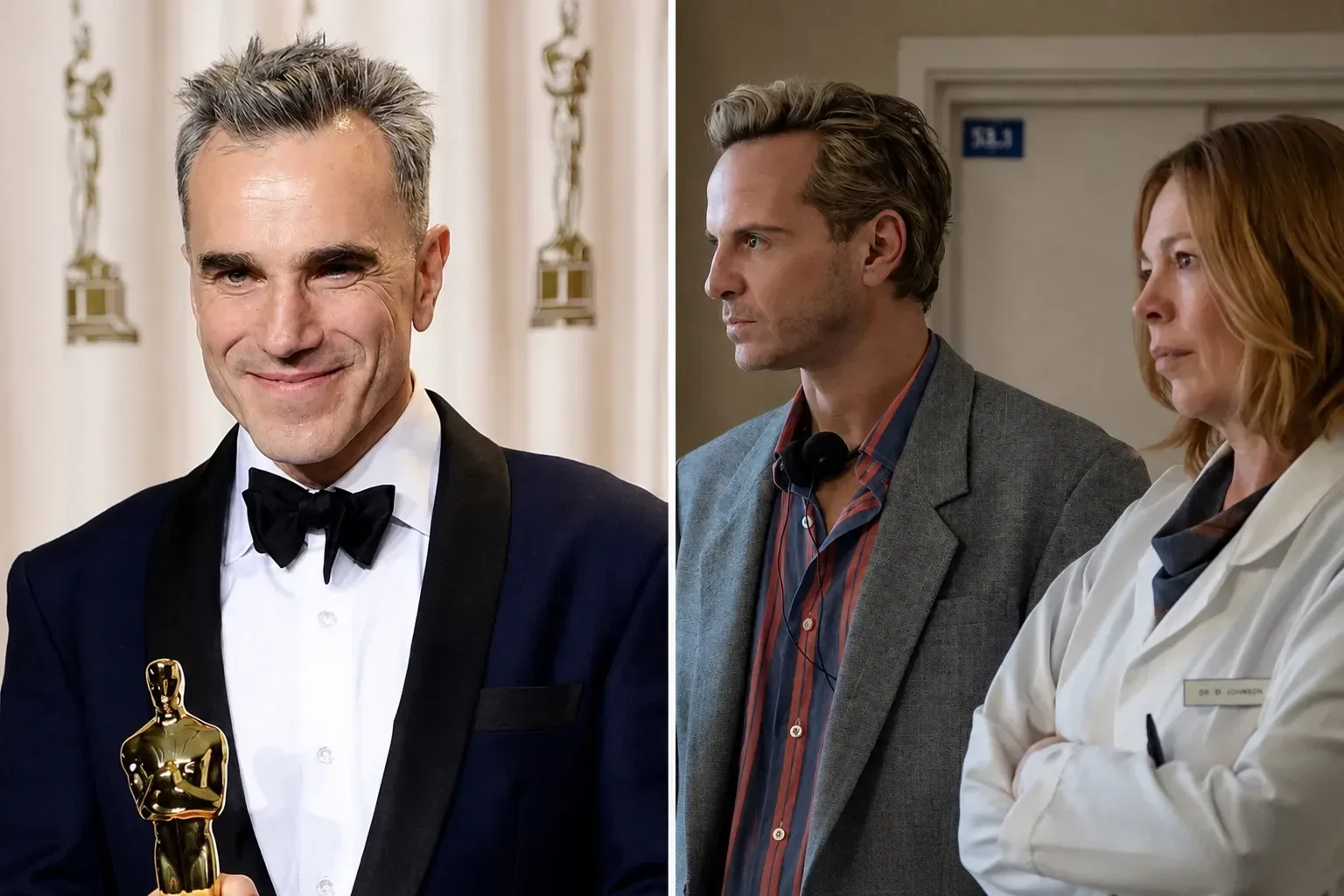
Elsinore is set in 1989 and stars Scott as Charleson, whose earlier screen work included Chariots of Fire. In the film’s account, Daniel Day-Lewis leaves a National Theatre production of Hamlet, creating an opening for Charleson to take on the role. The opportunity arrives while Charleson is seriously ill with AIDS. Olivia Colman plays his doctor, who cautions that the strain of the production could worsen his health.
That setup makes Hamlet more than a prestige assignment. It becomes a test of artistic purpose, bodily limits, and the value of time. Scott described Charleson as an extraordinarily gifted, charismatic actor, and emphasized that the film is concerned with both his courage and the people who supported him. It is a story about someone deciding how to use a finite amount of time, rather than an attempt to flatten him into a symbol.
Scott knows exactly how punishing the part can be. He previously played Hamlet onstage in 2017 and said he performed it 150 times. The role is famously enormous: the actor must carry a long, psychologically unsettled play while navigating shifts between grief, anger, wit, performance, indecision, and confrontation. Scott called it an Olympian-scale task, which explains why Charleson’s achievement under such severe illness remains profoundly moving to him.
The film premiered in Telluride before its TIFF screening, and awards-season discussion is already circling Scott’s performance. There is also a historical possibility attached to that attention: no openly gay man has won the Academy Award for Best Actor. Whether any campaign converts that possibility into a nomination or a win remains uncertain, of course. But the conversation underscores how rarely the industry’s most visible leading-actor prize has recognized openly gay men, even as such performers have delivered major work across stage and screen.
A producer role built from personal connections
Scott said becoming a producer on Elsinore took extensive encouragement, support, and shared vision. That is unsurprising for a first-time producer credit: acting is one major responsibility, while producing also involves helping shepherd a project from idea to screen alongside a broad team. His decision to take on that added role reflects how many elements of the story overlap with his own interests and experiences.
The movie is rooted in theatre, family, the representation of gay actors in the 1990s, and a period when gay men with HIV/AIDS faced vicious discrimination. Scott, who is openly gay and has worked in theatre since the 1990s, described all of those themes as resonant for him. The result is not simply a movie about an actor playing Hamlet. It is also about the conditions that decide who gets to be visible, who gets to work freely, and whose talent is allowed to be remembered.
Related coverage includes Andrew Scott on ‘Elsinore,’ Hamlet and Why Gay Actors Should Play Straight Roles.
Scott became emotional while speaking about how difficult it was for gay actors to exist and work during Charleson’s era. His point was direct: the scarcity of openly gay actors was not evidence that they did not exist. It reflected a culture that made openness dangerous and withheld opportunity. That distinction matters when looking back at film and theatre history. Absence in a public record is often the product of pressure, not proof of absence in real life.
The Hot Priest and the audience myth
Scott’s remarks also connected Elsinore’s historical questions to a more recent turning point in his own screen career. During the conversation, a scene from the second season of Fleabag, in which he starred opposite Phoebe Waller-Bridge, was shown. His character became popularly known as the Hot Priest, a label created by fans rather than the show itself. Scott joked that a script literally naming a character “The Hot Priest” would sound suspect; on the page, the role was simply called the Priest.
The attention around that character meant more to him than a viral nickname. Scott said it helped alleviate fears that audiences would not accept him, an openly gay actor, as a woman’s romantic interest. He had heard that such roles might be closed to him. Yet his experience in theatre told him something different: audience members who waited at stage doors already knew his sexuality, and they did not regard it as a barrier to believing the performance.
Scott’s argument is that viewers understand acting perfectly well: a performer being gay does not stop them from playing a straight character, just as nobody expects a Batman actor to be an actual bat.
It is a humorous comparison, but it goes to the heart of the matter. Screen stories regularly ask viewers to accept impossible worlds, historical transformations, elaborate disguises, monsters, superheroes, aliens, and magic. Treating a gay actor’s participation in a heterosexual romance as uniquely difficult to process is not a question of audience sophistication. Scott called that reaction prejudice and made clear he has no intention of accommodating it.
That position has practical consequences. It rejects the old logic that queer performers should be sorted into a narrow range of roles, often defined by stereotype or presumed “authenticity,” while straight performers remain free to play nearly everyone. It also resists a commercial excuse sometimes used to defend that sorting: the claim that audiences cannot separate performer and character. Scott’s experience with Fleabag is a highly visible counterexample.
From elocution lessons to a TIFF return
Scott’s path toward acting began with a childhood speech impediment. He had a pronounced lisp and attended elocution lessons at about seven or eight years old. Those classes included a drama component, allowing children to improvise before one another. Poetry and monologues performed for even a small crowd awakened something in him, leading toward the vocation that would define his life.
His first film arrived when he was 17: the Irish feature Korea, which premiered at TIFF in 1995. Scott remembered learning set etiquette by watching his co-star Donal Donnelly, a seasoned performer who carried authority without being cruel. For a newcomer, that model was foundational. It offered a lesson worth preserving in an industry too often willing to confuse harshness with seriousness: professionalism can include kindness, fun, dignity, and respect for everyone doing the work.
Now 49, Scott returned to TIFF for an In Conversation event at the Royal Alexandra Theatre, moderated by Keith Bennie, TIFF’s vice president of public programming. He opened with a joke about not having the internet and therefore missing its wilder commentary, despite the intense online fascination that has followed some of his roles. But the larger discussion repeatedly returned to craft, to community, and to the people permitted to stand in the light.
That same connection between performance and identity is increasingly relevant as entertainment moves between mediums. Film and television actors are taking on new forms of genre work, including projects inspired by games; for another example of the expanding screen landscape, see Netflix’s developing animated Diablo series. The medium may change, but Scott’s central point travels cleanly: casting should be guided by talent and the needs of a character, not by prejudice disguised as audience concern.
Elsinore gives that argument historical weight. Charleson’s story is about a performer undertaking one of theatre’s greatest challenges while sick, under scrutiny, and living in a period that denied gay men safety and freedom. Scott’s own career provides the contemporary answer. An actor can be openly gay, play a priest in a heterosexual love story, make an audience swoon, take Hamlet on for 150 performances, and produce a film about the cost of being denied that same openness decades earlier. There is no contradiction there—only the lingering need for the industry to stop pretending there is.