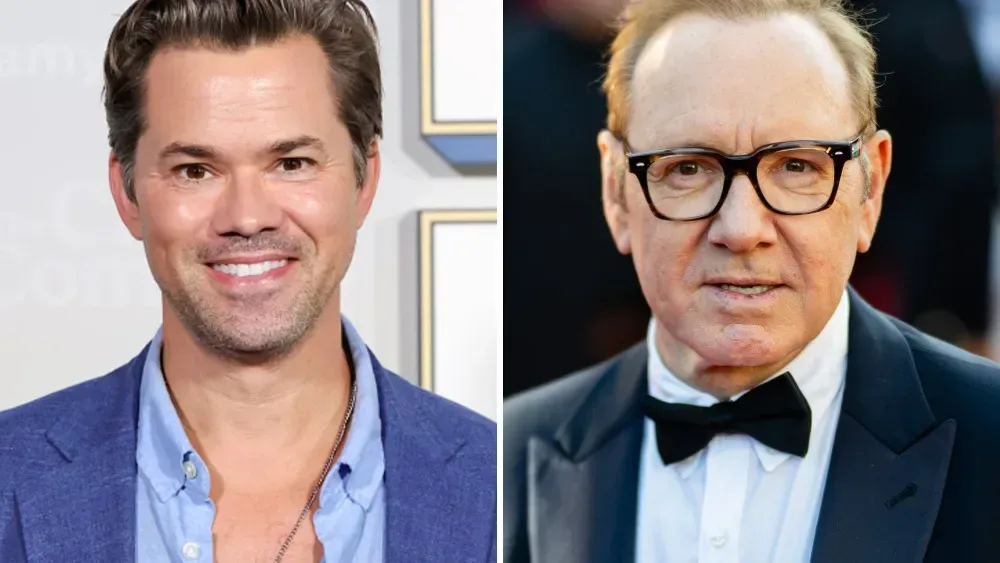
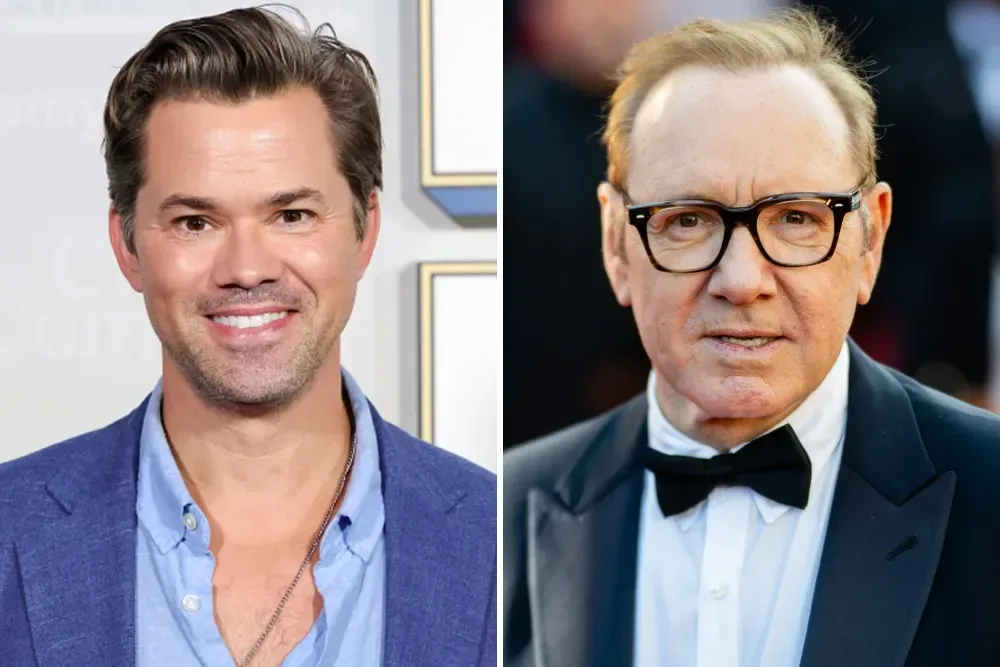
Andrew Rannells has recalled receiving a handwritten letter from Kevin Spacey asking him on a date while Rannells was appearing in the original Broadway company of The Book of Mormon. Rannells said he did not reply to the request.
The actor shared the account during an appearance on The Downside podcast. The episode adds a personal recollection from one performer about an encounter that took place years before the public allegations involving Spacey that emerged in 2017.
A backstage encounter during a landmark Broadway run
Rannells originated Elder Price in The Book of Mormon, performing the role from the musical’s 2011 opening through June 2012. The part earned him a Tony nomination for best leading actor in a musical and placed him at the center of one of Broadway’s most prominent productions of that period.
He described the backstage setting as an energetic but occasionally unplanned part of the job. Visitors could be brought to dressing rooms after shows with little warning, Rannells said. On the occasion he recalled, Goldie Hawn, Spacey and director Joel Schumacher arrived in the same area, though Rannells said they had not arrived as a group. The result, as he characterized it, was an unexpectedly crowded dressing room while performers were changing after the show.
Rannells said Spacey rubbed his neck during the encounter. He also recalled Schumacher, whom Rannells described as a close friend, warning him to stay away from Spacey. Rannells said Spacey pushed back verbally at the warning in the moment.
About a week later, Rannells said, he received the handwritten letter asking him out. His account is direct on one key point: he did not respond.
Why the detail of the letter matters
The handwritten note is central to Rannells’ story not because it establishes a broader claim on its own, but because it describes a specific follow-up to the backstage exchange he remembers. A date request, standing alone, is not an allegation of a crime. Rannells did not characterize the letter itself as one. His recollection instead places the request alongside the prior backstage interaction and Schumacher’s warning.
That distinction matters when discussing stories involving serious allegations. Readers should separate what Rannells personally says happened to him from allegations made by other people, as well as from the outcomes of the legal proceedings described below. Those are different categories of information, with different evidentiary and legal meanings.
Related coverage includes Andrew Rannells Recalls Kevin Spacey Date Request During Book of Mormon Run.
The account also illustrates a practical reality of live theater: backstage spaces can be both workplaces and access points for guests. Dressing rooms are especially private work areas, used by performers to change, prepare and decompress immediately before or after a show. Rannells’ description of visitors arriving without notice explains why the memory centers so strongly on lack of space and lack of preparation, rather than simply on a celebrity meet-and-greet.
How the timing changes the context
Rannells said the incident occurred during his Book of Mormon engagement, placing it well before allegations involving Spacey became public in 2017. That chronology is part of why Schumacher’s reported warning stands out within Rannells’ retelling: Rannells presented it as a warning he received at the time, not as a judgment formed after later reporting and litigation.
It is still important not to overstate what the anecdote proves. Rannells did not say he responded to the letter, went on a date, or made a legal accusation arising from this interaction. His story is an account of an unwanted or unwelcome-feeling situation from his own perspective, including his decision not to engage with the invitation.
For broader theater context, the original production’s significance is inseparable from Rannells’ career at the time. His Elder Price was one of the show’s principal roles, and the Tony nomination confirms the visibility of his work in that run. That professional setting helps explain why backstage access and post-show visitors were part of the environment around him.
Readers interested in another story focused on performance and the people behind it can also read how ‘Elsinore’ uses makeup, performance and familiar faces to honor Ian Charleson.
Legal history requires careful wording
Spacey has faced sexual assault allegations from multiple people. In 2017, fellow Broadway actor Anthony Rapp said Spacey assaulted him in Spacey’s New York apartment when Rapp was a teenager.
Rapp later brought a $40 million civil lawsuit alleging sexual assault and battery. In 2022, a New York jury found Spacey not liable on all counts in that case. In civil litigation, a finding of not liable means the jury did not find the defendant legally responsible under the claims and standard presented in that proceeding. It is not the same thing as a criminal verdict, and it does not turn every separate public account into the same legal question.
Earlier this year, Spacey reached a settlement with three men who had sued him over sexual assault claims, avoiding a London civil trial that had been scheduled for October. A settlement resolves the claims between the parties; it should not be described as a trial verdict or as a judicial finding on the allegations.
These distinctions are not semantic nitpicking. Public discussion often compresses allegations, civil suits, settlements and verdicts into a single vague narrative. They are not interchangeable. An allegation is a claim. A civil jury’s decision addresses the particular legal claims it was asked to decide. A settlement ends a dispute without the scheduled trial going forward. Rannells’ newly shared recollection belongs in yet another category: a personal account of an interaction and of what he chose to do afterward.
What Rannells actually put on the record
The narrowest accurate reading of Rannells’ comments is also the most useful one. He says Spacey came backstage during his Broadway run, touched his neck, and later sent a handwritten note asking for a date. He says Schumacher warned him away from Spacey, and he says he did not answer the letter.
There is no need to embellish that account with details Rannells did not provide. There is likewise no basis in his remarks to present the story as a reconstruction of anyone’s motives or as proof of any separate claim. The meaning of the anecdote rests on its specificity, its setting and the fact that Rannells chose to share it now after previously keeping it private.
For audiences, the story is a reminder that backstage culture is not merely glamorous access. It is also a workplace boundary question. Performers may be handling a demanding transition immediately after a show, often in close quarters, and an unannounced visit can change the conditions of that space very quickly. In Rannells’ recollection, the handwritten request was the final element in an interaction he decided not to continue.