Warning: this article discusses plot details from The Rings of Power season 3 episode 5 and story material from Tolkien’s First Age.
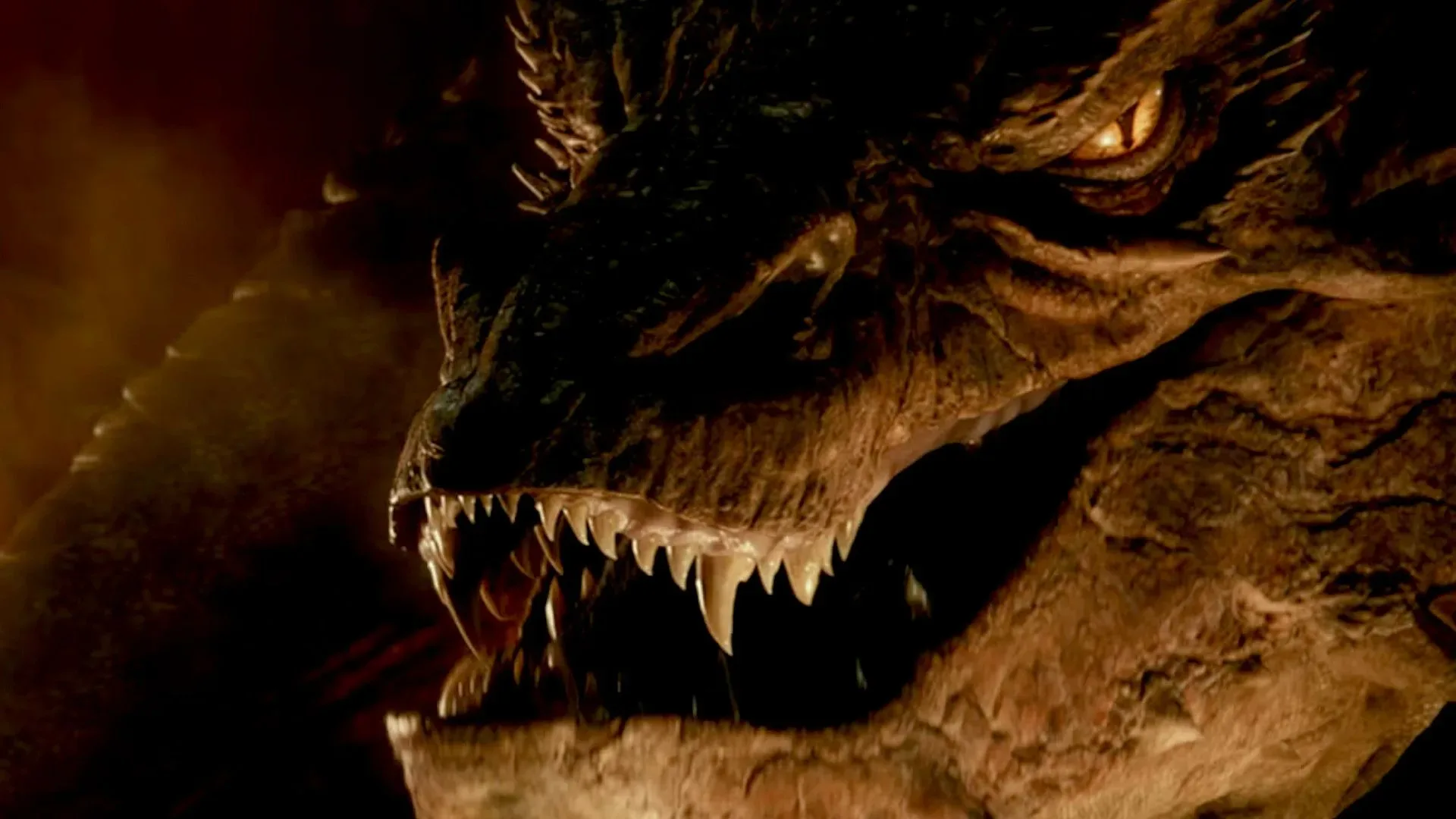
Ancalagon the Black does not make a physical appearance in The Rings of Power season 3 episode 5. Yet the dragon’s name does a remarkable amount of narrative work. Celeborn ties Ancalagon to the destruction of his legion and to his subsequent capture, while Sauron invokes the same event to establish a shared, hostile history between them. It is a reference to a figure from a vastly earlier age of Middle-earth, but it is being used to make a present-tense character conflict more personal.
That matters because Ancalagon is not simply another large dragon in the setting. He is identified as one of Morgoth’s winged dragons of the First Age, and as the greatest and most powerful dragon in Middle-earth’s history. The name therefore communicates catastrophe on a scale that ordinary dialogue could struggle to convey. If a character says they survived Ancalagon, the implication is not merely that they saw combat: they endured one of the defining horrors of the war against Morgoth.
The show’s reference also needs a little separation from the older legendarium background. The broad connection is clear: Celeborn fought in the War of Wrath and would have been present during Ancalagon’s era. But the series’ account of Celeborn’s capture, separation from Galadriel, and Sauron riding the dragon adds new dramatic material rather than simply retelling an established sequence. For viewers, that distinction is useful. Ancalagon’s importance in Tolkien’s mythology explains why the dialogue lands with such force; the exact event described in the episode belongs to the adaptation’s own version of the past.
Who Ancalagon the Black is
Ancalagon was a winged dragon in the service of Morgoth during the First Age. Morgoth is the earlier Dark Lord whose war forms the remote historical backdrop to much of Middle-earth’s later conflict. Sauron is connected to that legacy, but Ancalagon belongs to Morgoth’s military power rather than being a creature introduced by Sauron.
Only a relatively small number of dragons are named in the material discussed here, which makes Ancalagon’s identity unusually prominent. The description attached to him is deliberately extreme: he is the largest and mightiest dragon known in Middle-earth, a creature whose flight could blot out the sun and whose immense wings generated storm-like gusts. His fire is described as able to melt stone and vaporize metal, while his scales are tougher than conventional armor.
Those details should not be reduced to a monster-stat checklist. Ancalagon represents the escalation of dragon-kind into a weapon capable of shifting an entire war. A dragon can be dangerous because of claws, fire or size. Ancalagon combines all three with aerial mobility and the ability to terrify armies that already understood the horrors of Morgoth’s forces. His legend is meant to make even other fantastical threats seem insufficient preparation.
His later reputation endures far beyond the First Age. In the Third Age, Gandalf invokes Ancalagon’s fire while explaining that even such extraordinary dragon-fire could not destroy the One Ring. That comparison gives the dragon a special place in the mythology: he is a benchmark for destructive force, and the Ring is being framed as resistant even to that benchmark.
Dragons before Ancalagon: why wings changed Morgoth’s war
Ancalagon was not Morgoth’s first dragon. That distinction belongs to Glaurung, a wingless, landbound dragon. Glaurung demonstrates that Morgoth had already found a way to create terrible draconic weapons through his knowledge of the world’s creation and corrupted magic. But a landbound creature also has a basic limitation: it cannot reach every battlefield or cross mountainous terrain as an airborne force can.
That is the key technical difference in Ancalagon’s story. A winged drake is not merely a dragon with an added visual flourish. Flight changes the tactical problem for every army below. Troops, defenses and terrain that can delay or channel an attacking force on the ground are much less useful against an enemy that can arrive from above, dive, breathe fire and depart again. An aerial force can also create panic before direct fighting begins, because enemies must suddenly protect themselves in every direction.
Morgoth is said to have developed winged dragons in secret and kept them hidden while refining them. Ancalagon emerged from this breeding program and rapidly surpassed older dragons. The account portrays Morgoth’s armies supplying the growing dragon with entire herds and stripping areas of game through hunting expeditions. Whether read as military logistics or mythic exaggeration, the point is the same: sustaining Ancalagon was an enormous commitment because he was being shaped into an enormous instrument of war.
Ancalagon is further presented as the commander of Morgoth’s winged drakes. Under Morgoth’s direction, he learned formation flying, diving attacks and control of his fire, then trained dragons smaller than himself. In practical terms, this means he was not simply released as an uncontrollable beast. He was part of a concealed aerial arm intended to act with purpose, leadership and coordinated force.
The War of Wrath and the shock of the winged dragons
The War of Wrath is the battle in which Ancalagon finally appears openly. At a moment when Morgoth seemed close to defeat, he unleashed his winged dragons. The force of that reveal is central to the episode of history: opposing armies had not previously encountered flying dragons, and Ancalagon led the assault.
It is easy to see why this was more than a numerical reinforcement. The sudden appearance of a gigantic airborne dragon formation would alter morale immediately. Ancalagon’s size, fire and claws made him individually lethal, but his role at the head of Morgoth’s dragons compounded the danger. His presence announced that the conflict had entered a new phase, one in which the skies themselves had become hostile.
Accounts of Ancalagon emphasize the fear he generated. His wings obscured sunlight, and even fighters who had faced Balrogs were driven to flee. The language is mythic rather than engineering-minded, but its function is precise: Ancalagon’s physical enormity is inseparable from his psychological impact. He was a weapon against courage as much as against fortifications or soldiers.
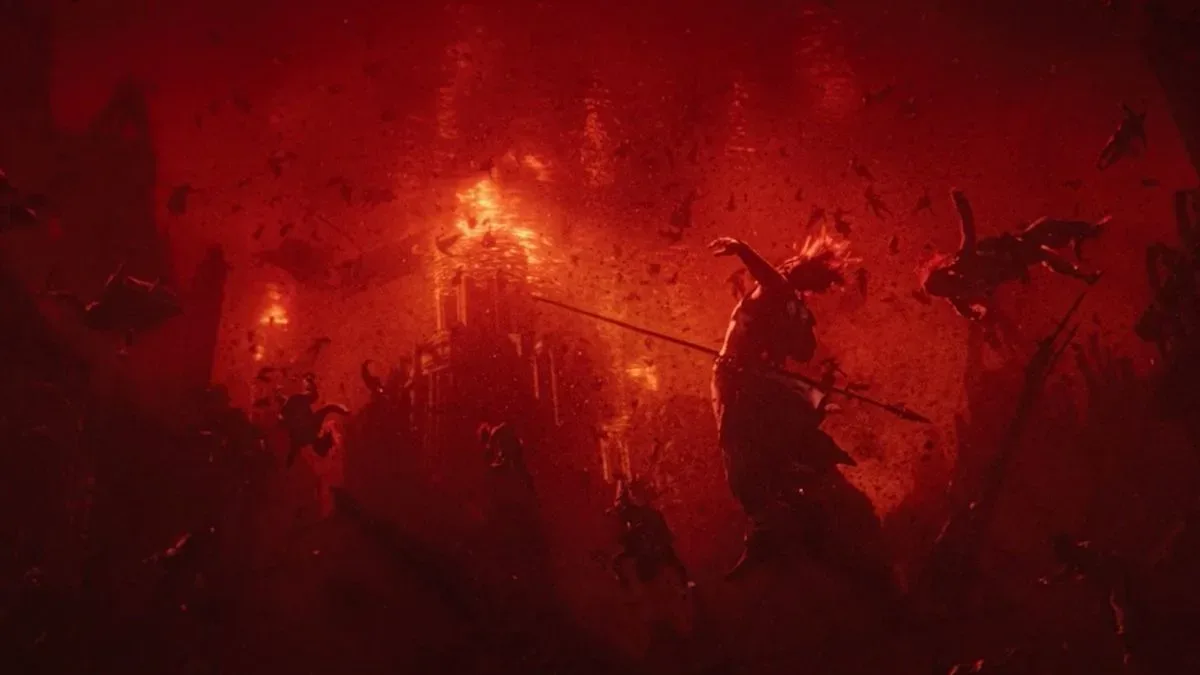
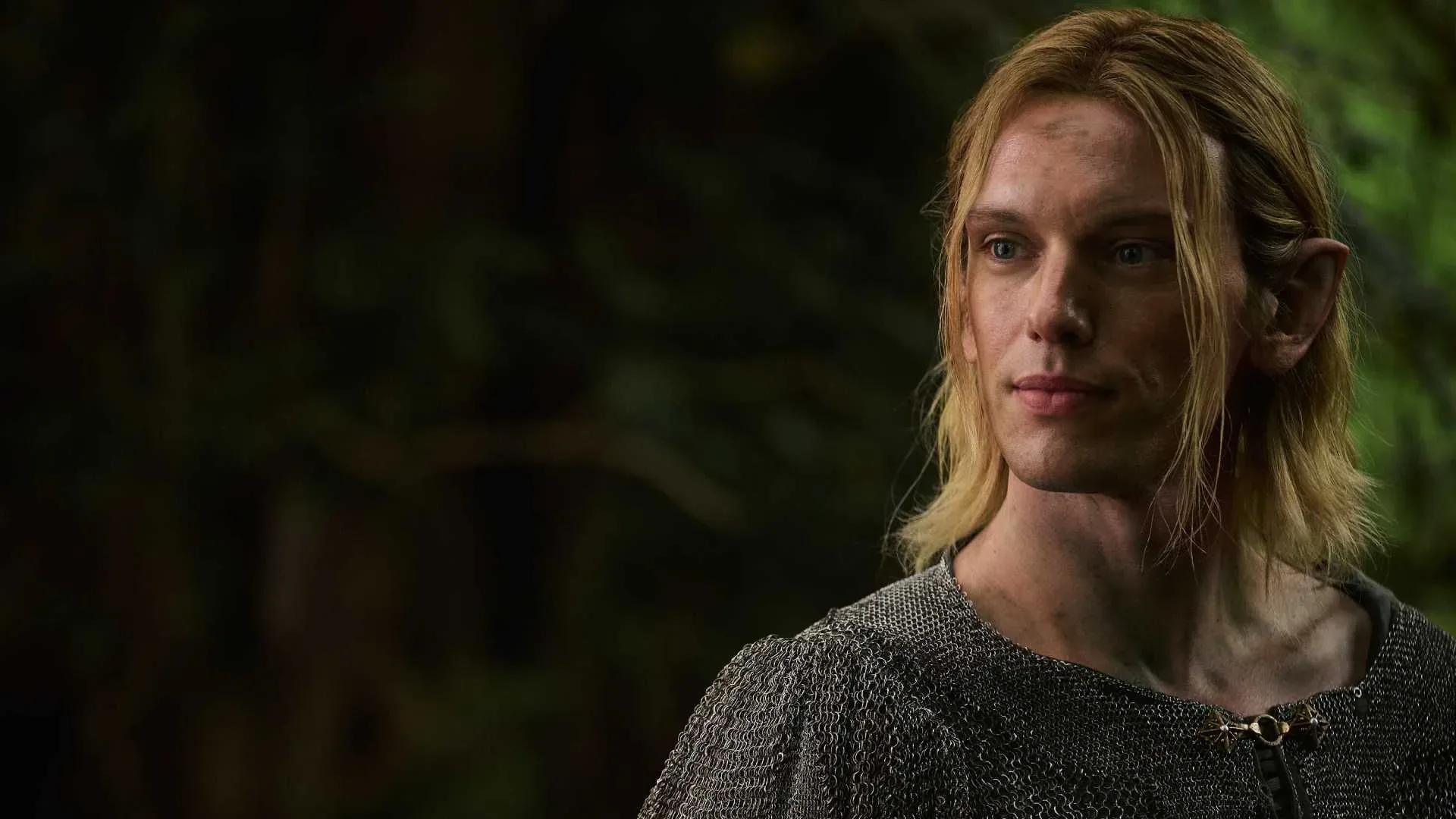
This context makes Celeborn’s season 3 testimony especially consequential. He says Ancalagon burned his legion during the war with Morgoth. The reference therefore connects Celeborn not only to the conflict in general, but to its most terrifying aerial assault. His survival is followed in the show by encirclement and capture, establishing the explanation for his absence from earlier parts of the series. For a fuller look at that character thread, see The Rings of Power Season 3 Gives Celeborn’s Absence a Devastating Answer.
How Ancalagon died
Ancalagon’s defeat comes through Eärendil, the father of Elrond and Elros. Eärendil arrives in a ship capable of traveling through the sky because the Valar granted it the power of flight. He is aided by the great eagles of the First Age, turning the confrontation into an aerial battle rather than an attempt to confront the dragon from the ground.
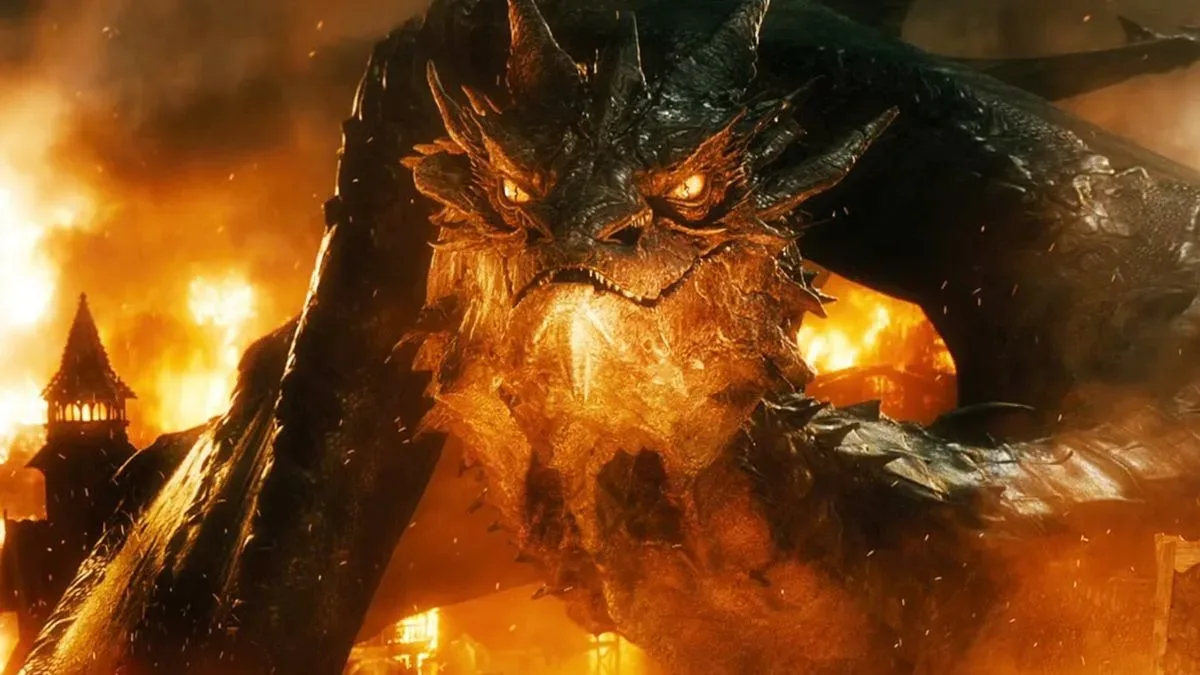
After a battle lasting a day, Eärendil kills Ancalagon. The dragon’s fall is as consequential as his arrival: he crashes from the sky and breaks a mountain. The remaining winged drakes flee to the Northern Waste, where they continue to breed. That surviving dragon line ultimately leads to Smaug, the later dragon familiar from The Hobbit.
The result is a clear chain of significance. Ancalagon’s fall helps secure the victory in the War of Wrath; the escape of other winged dragons ensures that dragons are not erased from Middle-earth; and Smaug shows that the consequences of that ancient war remain visible in a much later age. Ancalagon is long dead by the events most screen audiences know best, but he remains part of the world’s living memory and its lingering dangers.
What the season 3 reference changes—and what it does not
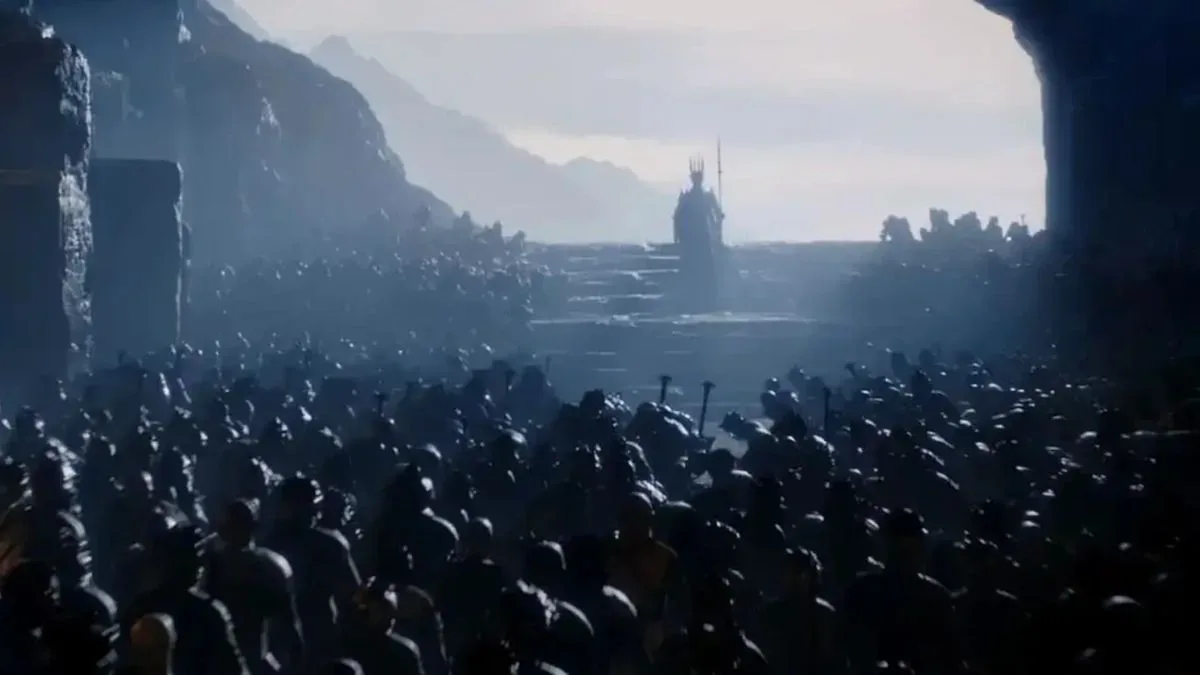
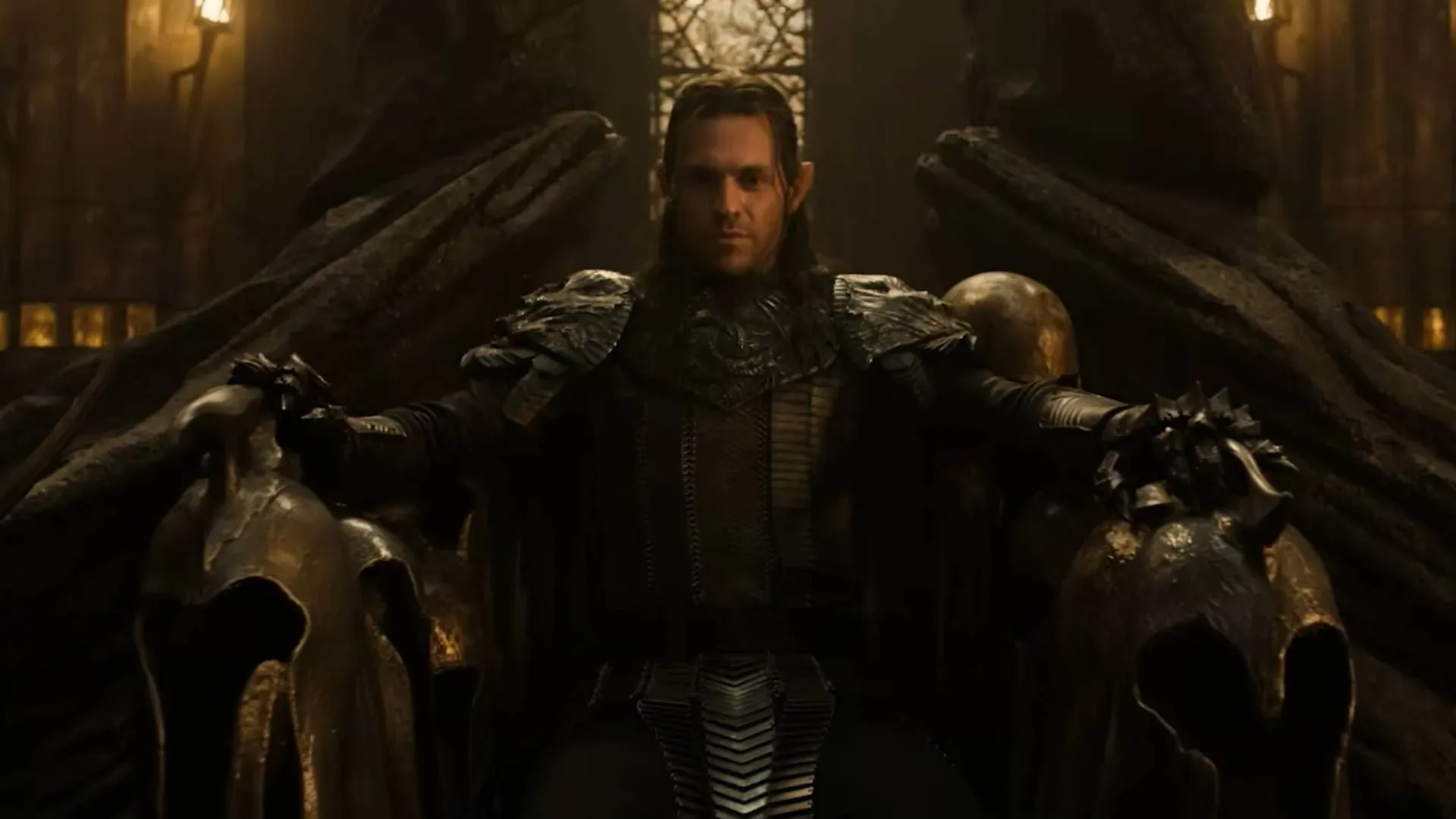
Episode 5 uses Ancalagon in two related ways. Celeborn identifies the dragon as the destroyer of his legion, then Sauron claims he rode Ancalagon while that attack occurred. The immediate dramatic effect is to bind the two characters to the same traumatic event. Sauron’s statement also makes his antagonism toward Celeborn more concrete than a broad allegiance to darkness: it positions him inside the memory Celeborn is recounting.
However, this is where viewers should distinguish adaptation storytelling from the lore background supplied by the older account. Celeborn’s participation in the War of Wrath is established, so his opportunity to witness Ancalagon fits the broad historical setting. The capture and separation storyline is a change to the timeline. Likewise, the claim that Sauron rode Ancalagon is not aligned with the supplied lore framing, which emphasizes the dragon’s immense power and the pride associated with dragons. The dragon is described as so formidable that even Morgoth was struck by his might; presenting him as a mount is a substantial reinterpretation of that relationship.
That does not erase what the reference accomplishes inside the show. Adaptations commonly use an ancient event to supply emotional stakes that would otherwise need lengthy flashbacks. Here, one name evokes an extinct super-weapon, a war against Morgoth, a burned legion, captivity, and an unresolved conflict between Celeborn and Sauron. It is compact storytelling built on a giant piece of Middle-earth history.
Why a name-drop can feel bigger than a cameo
For now, Ancalagon remains offscreen. That restraint is arguably appropriate to the function he serves in this moment. A direct appearance would require the series to define every aspect of a creature whose reputation depends heavily on scale and incomprehensibility. The dialogue instead lets viewers imagine the dragon through the responses of those who survived him.
The approach also preserves the difference between Ancalagon and Smaug. Smaug is a later dragon whose story allows for extended personal confrontation. Ancalagon is framed as an event in himself: a battlefield terror whose entrance destabilized armies and whose death marked the collapse of Morgoth’s ultimate airborne advantage. The two creatures are connected by dragon lineage, but their narrative jobs are different.
So the major takeaway from season 3 episode 5 is not that Ancalagon has returned. He has not. It is that the show has selected one of the oldest and most intimidating names in Middle-earth to deepen Celeborn’s trauma and sharpen his connection to Sauron. Anyone hearing that name for the first time now has the essential context: Ancalagon the Black was Morgoth’s supreme winged dragon, slain by Eärendil during the War of Wrath, and remembered ages later as a measure of destruction almost beyond comparison.