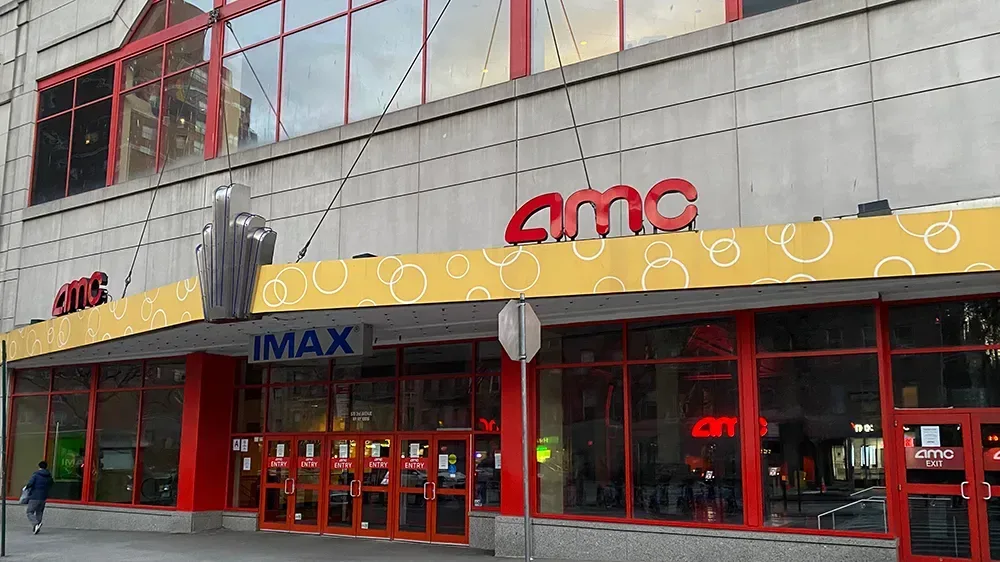
AMC Kips Bay 15, the 15-screen Manhattan multiplex at 570 Second Avenue, is currently set to close on January 3. In a public letter to the Kips Bay community, AMC Entertainment chairman and CEO Adam Aron said the chain does not want to leave and is pressing for a solution that would allow the theatre to continue operating while NYU Langone Health expands its nearby medical facilities.
The immediate issue is the theatre’s lease. Aron said the building’s current owner has ended AMC’s lease in anticipation of a possible transfer of the property to NYU Langone. He characterized the closure as a decision outside AMC’s control, rather than a choice driven by the chain’s desire to exit the neighborhood.
That distinction matters. Cinema closures are often discussed as though an individual location simply ran out of customers or became unprofitable. AMC’s account presents a different picture: a venue that it says has regained a sound footing, remains heavily used, and is instead caught in a larger real-estate and institutional-expansion decision.
AMC says Kips Bay remains a busy theatre
Aron said thousands of guests attend AMC Kips Bay 15 each day. He further said that, on several days over the summer, the site placed repeatedly among AMC’s 10 most-attended theatres nationwide, from a circuit of more than 500 locations.
For more context, explore Reports Say Claude Opus 5.5 Is Refusing More Game Reverse-Engineering Requests.
Those are company-provided attendance claims rather than independently released box-office figures, but they are central to AMC’s argument. The chain is not presenting Kips Bay as a location in terminal decline. It is arguing that a popular local theatre will disappear despite demand from patrons.
The building is not used by the theatre alone. A Fairway supermarket and a bank are also expected to close, underscoring that the change would affect more than one tenant and more than one type of everyday neighborhood service.
For moviegoers, a multiplex is more than a screen count. Fifteen auditoriums make it easier to accommodate a mix of major new releases, smaller titles, showtimes, and formats on the same day. When that capacity leaves a neighborhood, residents can still go to the movies elsewhere, but the choice becomes less immediate and potentially less flexible—particularly for spontaneous weeknight trips, families coordinating schedules, and viewers hoping to see a limited-engagement film before it moves on.
What AMC says it offered
AMC’s proposed alternatives, as described by Aron, were attempts to preserve at least some theatrical presence at the site. The company says it suggested either expanding the existing low-rise building in a way that could meet NYU Langone’s growth needs while retaining a theatre, or reducing the theatre’s own footprint so that a smaller cinema could stay open.
A footprint in this context means the physical amount of space a tenant occupies. A smaller footprint could mean fewer auditoriums or less ancillary space, though AMC did not specify an exact redesign, screen count, or construction plan. The key point is that AMC says it was willing to consider operating something smaller rather than insist on preserving the current 15-screen configuration unchanged.
Aron said AMC’s various proposals had not received engagement. NYU Langone’s position on the particular alternatives was not included in the available material, so the public record here is one-sided: AMC has stated its case and urged the medical institution to pursue a compromise, but no confirmed shared-site plan has been announced.
AMC’s position is that Kips Bay should not be forced to choose between medical expansion and a local cinema. Its proposed answer is a redevelopment arrangement intended to accommodate both.
That is a meaningful practical difference from saying a deal is close. It is not. As things stand, the terminated lease sets the timetable, and Aron’s letter frames January 3 as the date the lights will go out unless another agreement is reached.
A long-running local multiplex faces a defined end date
The Kips Bay theatre opened on May 14, 1999, and AMC took over the venue in 2006. It has been in continuous operation for more than 25 years. Within AMC’s New York City footprint, Aron identified it as the chain’s second-largest multiplex, behind Empire 25 in Times Square.
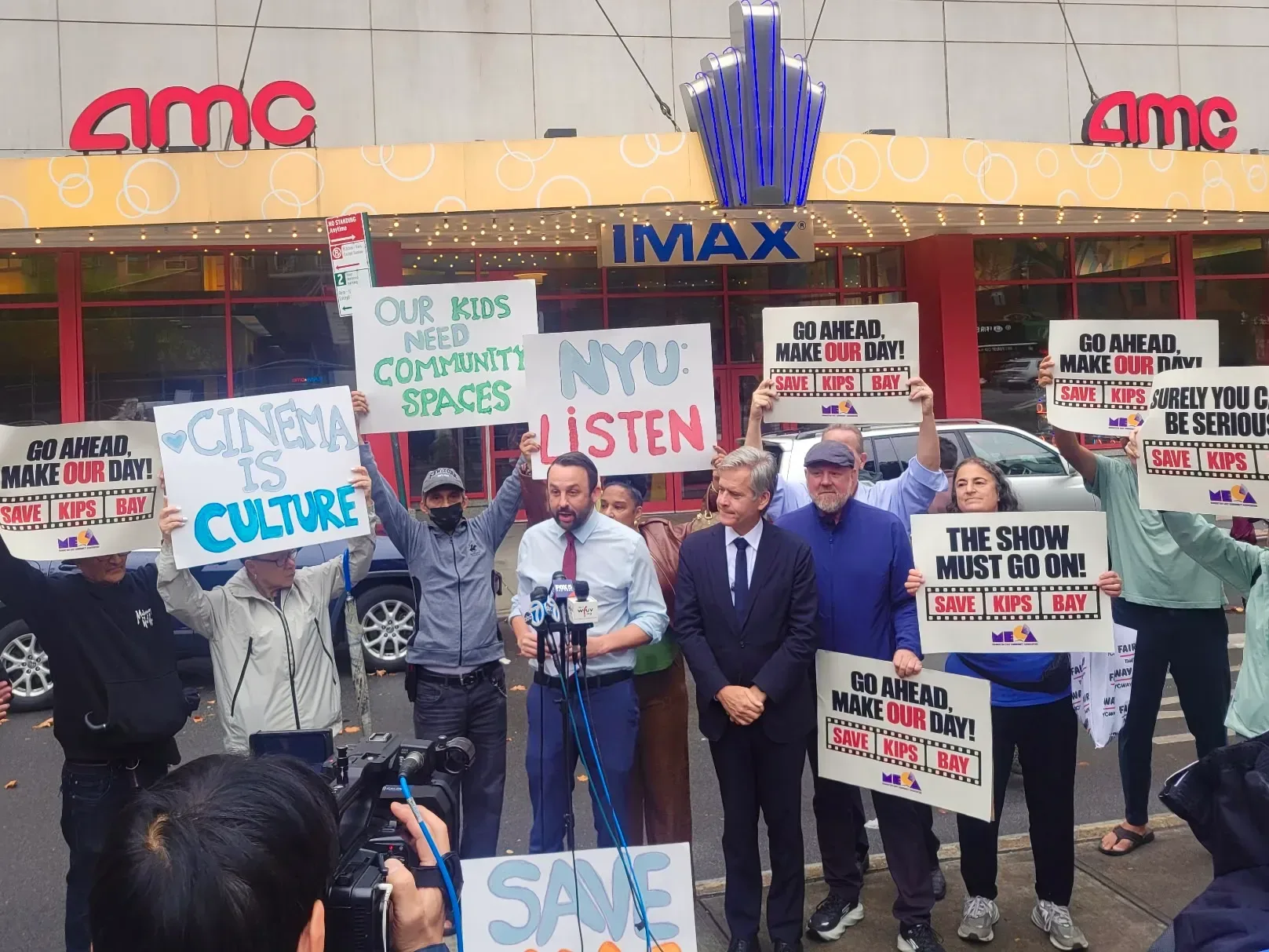
Local support has already become visible. Residents held a protest in September in an effort to prevent the closure, while Manhattan Borough President Brad Hoylman-Sigal and New York State Assembly Member Keith Powers have advocated for keeping a theatre operating in Kips Bay. Aron specifically thanked both officials in his letter.
The campaign is rooted in a straightforward civic argument: a neighborhood theatre is a shared cultural venue, not simply another commercial tenant. That does not settle questions of ownership, leasing, or medical infrastructure. It does, however, explain why the prospective closure has generated a larger response than a typical retail departure. Movie theatres create routine meeting places around a collective activity, and that convenience can be hard to replace even in a city with many entertainment options.
AMC also said the venue had previously faced high rent costs that made its long-term outlook uncertain, but that those concerns had been addressed in recent years. The company now contends that Kips Bay has a viable future if it is permitted to remain in the building.
The timing lands during a stronger box-office moment
The possible loss of Kips Bay arrives after a record-breaking domestic summer box office that collectively brought in $4.67 billion, helped by films including Spider-Man: Brand New Day, The Odyssey, and Toy Story 5. AMC’s point is not merely nostalgic: a popular theatre closing during a period of strong theatrical interest complicates the simplistic idea that audiences have stopped valuing cinemas altogether.
There are still major releases ahead before the scheduled closure. Aron specifically pointed to Avengers: Doomsday and Dune: Part III as films local audiences should have an opportunity to see at the venue while it remains open. No extension has been confirmed, however, and moviegoers should not treat the presence of a future release schedule as evidence that the closure has been averted.
For patrons, the practical takeaway is equally simple and more immediate: January 3 is the operative date. Anyone who regards the Kips Bay theatre as their regular cinema has a finite window to use it under the current plan, while the separate debate over a redevelopment compromise continues.
Why a lease dispute can reshape entertainment access
A lease is the contract that grants a business the right to use a property for an agreed period and under agreed conditions. A theatre operator can invest in staff, programming, projection, concessions, and customer experience, but it does not necessarily own the building in which it does that work. If the property owner ends the lease at its conclusion or under applicable terms, the operator may have no right to stay—even if the location is busy.
That is the central tension in Kips Bay. AMC is focused on the theatre’s audience and operational value. The anticipated property transaction and hospital expansion concern the future use of the site. Both can be significant public interests, but they are not automatically compatible without a negotiated design, a new lease, or another arrangement among the relevant parties.
Aron’s letter calls for a creative solution rather than offering a confirmed one. It asks NYU Langone to consider an arrangement that supports its facility expansion and preserves a functioning cinema on Second Avenue. Whether that is physically, financially, or contractually feasible has not been established in the information available.
That uncertainty is worth keeping front and center. The most concrete facts are the January 3 date, the lease termination described by AMC, the theatre’s long tenure in Kips Bay, and AMC’s stated willingness to consider a smaller operation. The rest remains a negotiation AMC hopes to reopen, not an announced redevelopment agreement.
What happens next
AMC is using public support to make the case that Kips Bay deserves both expanded medical capacity and continued theatrical exhibition. The company’s leadership sees enough neighborhood demand to justify preserving the venue in some form, even if that means a substantially smaller theatre.
For now, though, the scheduled shuttering remains in place. A reversal would require a workable agreement before the lease deadline, and none has been announced. If one does not emerge, January 3 will mark the end of a cinema that has operated at the location since 1999—and the end of AMC’s Kips Bay run that began in 2006.
The story also illustrates a broader entertainment reality: access is shaped not only by what audiences want to watch, but by the properties and agreements that make places to watch possible. The Kips Bay fight is about a theatre, but it is also about how a dense neighborhood decides which shared spaces it can retain when competing needs converge.