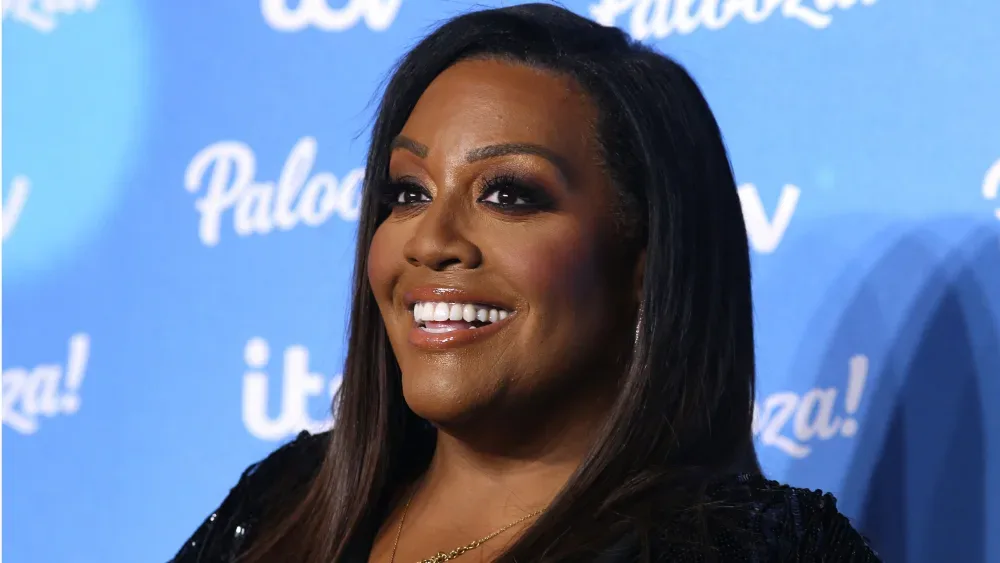
Alison Hammond has told followers she is “fine” after leaving an episode of This Morning early when she felt unwell on air.
The television presenter and The Great British Bake Off co-host later shared a video from a hospital bed, wearing a hospital gown and retaining the makeup from that morning’s broadcast. Hammond said she was having her “old ticker” checked after experiencing what she described as “a little bit of a palpitation.”
Her message was reassuring but measured: she said she thought she was OK, while making clear that medical staff were checking her out. Hammond also said she hoped the incident may have been “just a little panic attack or something like that,” which is her own tentative interpretation rather than a reported diagnosis.
What happened on the programme
Hammond had been presenting alongside Dermot O’Leary when the episode occurred. Following an advertising break, O’Leary told viewers that his co-host had needed to step away because she was feeling unwell.
That sequence matters because it explains why viewers saw a sudden change to the live programme rather than a planned departure. Live television is built around tight timings, studio cues and shared presenting duties, but an on-air contributor feeling ill takes priority over that format. Hammond’s exit was therefore brief and unexpected, with the follow-up coming through O’Leary during the broadcast and then from Hammond herself later in the day.
In the hospital video, Hammond apologized to the This Morning team for leaving. She said she would not normally walk away from a television show, adding that her condition had clearly made it necessary on this occasion. She also thanked people for their messages and praised the doctors looking after her.
What Hammond has, and has not, said
The available information supports a narrow, important picture: Hammond experienced palpitations, left work after feeling unwell, and was being assessed by doctors. She reassured fans that she was fine and hoped the checks would confirm that everything was all right.
It does not establish a diagnosis, a cause, a treatment plan or a timetable for returning to work. A palpitation is a term people commonly use to describe an awareness of their heartbeat, which can feel fast, fluttering, pounding or irregular. The word describes a sensation, not a specific medical explanation. Hammond’s mention of a possible panic attack was also framed as a hope or possibility, not a conclusion from clinicians.
That distinction is especially useful when a health concern unfolds publicly. Social posts can offer immediate reassurance and help stop speculation, but they are not the same as a medical update containing test results. The most responsible reading of Hammond’s message is the simplest one: she felt unwell, sought care, was being checked, and wanted supporters to know she was in good hands.
A direct update in Hammond’s own voice
Hammond’s video struck a familiar balance between reassurance and humour. Text over the clip read, “Anything to have a day off,” while Hammond joked about still having her makeup on from the morning. The light tone did not erase the reason for the hospital visit; it gave her a way to communicate with fans while saying that professionals were taking the episode seriously enough to investigate it.
For public figures, a direct message can be the cleanest way to address a visible disruption. Rather than allowing an abrupt mid-show exit to become an open-ended mystery, Hammond explained the limited facts she was comfortable sharing: there had been a palpitation, she was receiving checks, and she was optimistic. Her apology to colleagues also acknowledged the disruption without turning a health scare into a performance.
There is a broader entertainment-industry context here, too. Television presenters are expected to project ease even while working within a heavily scheduled live environment. Yet a health concern does not become less real because it happens during a broadcast. Hammond’s departure is a reminder that stepping away, getting evaluated and allowing colleagues to carry the programme is the appropriate response when someone feels unwell.
Why the careful language matters
It is tempting to treat a reassuring post as the end of a story, particularly when it comes with Hammond’s warmth and comic timing. But “I am fine” and “I am getting checked out” can both be true at once. The first addresses immediate concern; the second recognizes that symptoms deserve proper attention.
That is also why it would be wrong to attach a more definite explanation to the incident than Hammond has provided. Neither a panic attack nor any heart-related condition has been confirmed in the information available. Her use of “ticker” was an informal reference to her heart, while the formal details of any assessment were not shared.
Hammond’s update joins a wider pattern in which performers and presenters occasionally use their own platforms to set boundaries around personal health news. The public may see the interruption, but the individual retains control over how much clinical information is disclosed. In this case, the key message was not a diagnosis; it was that she was receiving care and felt hopeful.
Health has also shaped creative work for other entertainers in very different circumstances. Victoria Monét has discussed how vocal difficulties affected her own work, illustrating that personal wellbeing can influence public-facing careers without reducing a person to a single health-related headline.
What viewers can reasonably take from the update
- Hammond experienced palpitations while working on This Morning and left the programme after feeling unwell.
- Dermot O’Leary informed viewers after a break that she had needed to duck out.
- Hammond later said she was fine and was undergoing checks with doctors.
- She voiced hope that the episode may have been related to a panic attack, but did not present that as a confirmed diagnosis.
- No further medical detail, cause or return-to-work plan was provided in her update.
For now, Hammond’s own account is appropriately straightforward: she is being looked after, she appreciates the concern, and she is hopeful that the checks will show everything is all right.