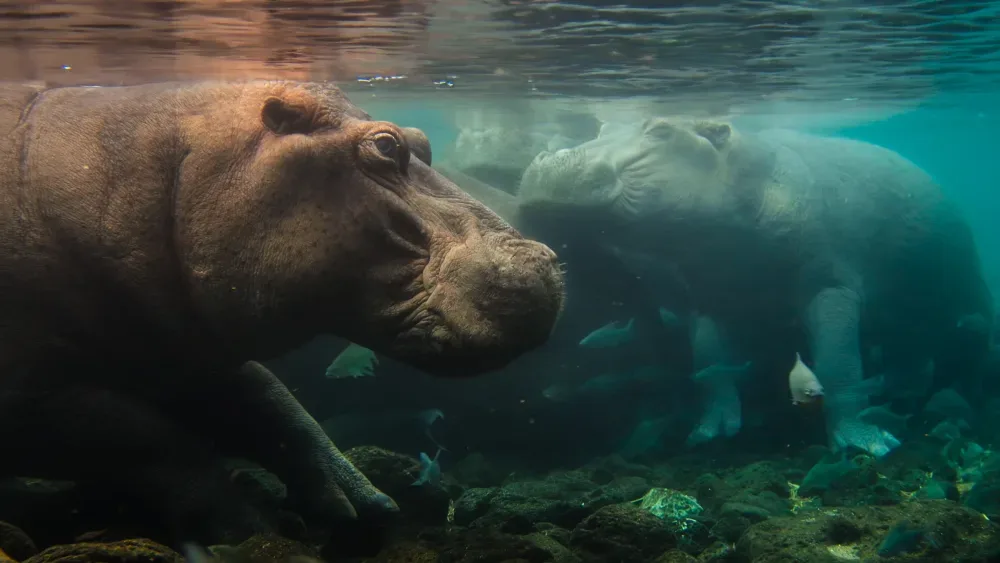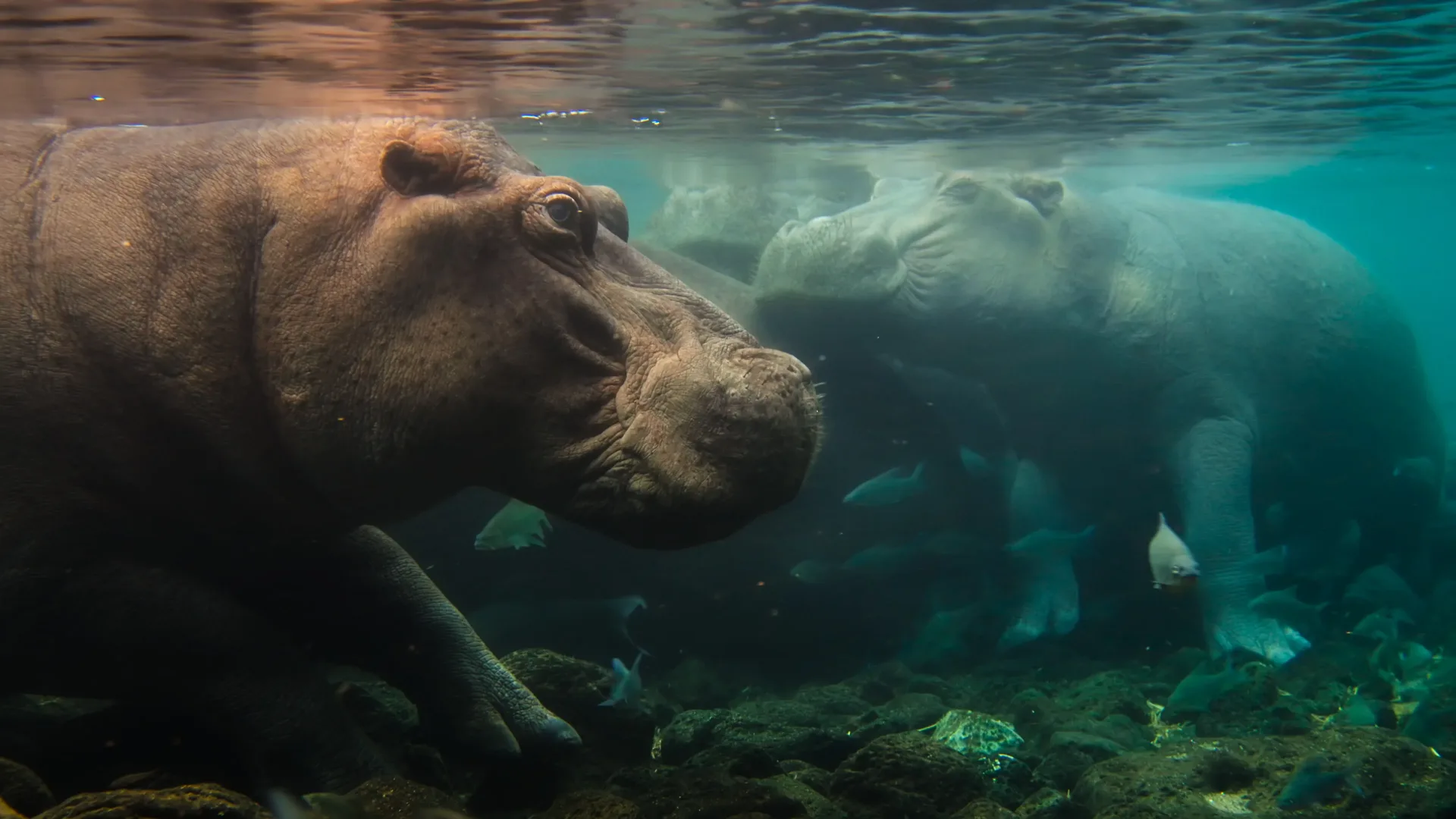
National Geographic is opening a new, multi-year natural-history franchise with Africa Earth’s Wild Home, a seven-episode series built to examine the planet one continent at a time. The first installment arrives on National Geographic on Oct. 2, followed by streaming availability on Disney+ and Hulu on Oct. 3.
This is not being positioned as a quick safari highlight reel with a lion roaring at sunset, although lions are certainly part of the picture. The production’s stated goal is broader: use Africa’s familiar wildlife appeal as an entry point, then take viewers into less routinely represented habitats, species and animal behavior. In video-game terms, it sounds less like sticking to the quest markers and more like checking every suspicious cave, mountain path and foggy coast for the things most players would otherwise miss.
The series is narrated and executive produced by Academy Award nominee Wunmi Mosaku. It was filmed across nearly 30 African countries, took four years to make and involved more than 50 people. BBC Studios Natural History Unit produced the project for National Geographic.
Africa is the first map in a much larger project
Africa Earth’s Wild Home is the first series in a planned seven-series franchise. National Geographic has partnered with the National Geographic Society’s global community of Explorers and scientists, as well as Rolex’s Perpetual Planet Initiative, on the wider undertaking.
The continent-by-continent approach matters because it gives the series a defined structure beyond simply assembling impressive animal footage. Africa is often strongly associated with wildlife in the public imagination, and showrunner and series editor Gavin Boyland described that recognition as part of the reason it became the franchise’s opening focus. The production still includes iconic subjects such as lions and elephants, but it also deliberately turns toward differing landscapes and the creatures that inhabit them.
That distinction is worth making. “Natural history” in television generally refers to factual programming about the natural world: animals, plants, environments, ecological relationships and the processes that shape them. It can contain dramatic moments, but its central subject is not a fictional plot. Here, the series is also using Africa’s geography as a storytelling engine, moving through deserts, forests, jungles, mountains and islands to show how environments influence the lives within them.
It is a framing that pushes against the idea of a continent as one uniform biome. The animals may be the obvious stars, but the habitats are not just background art. They determine water access, food, shelter, movement, hunting opportunities and survival pressures. A beetle harvesting moisture from coastal fog and a predator navigating a cave are not simply quirky side quests; those behaviors are tied to the conditions of the places where they live.
Local knowledge helped point cameras toward unusual behavior
One of the production’s most notable stated choices was how it sought leads in the field. Rather than relying solely on the usual pipeline of Western researchers and scientists, Boyland’s team worked with wildlife guides, drivers, photographers and local people who encounter wildlife day after day.
Related coverage includes ‘Africa Earth’s Wild Home’ Launches a New Seven-Part Natural History Franchise.
That approach has a practical filmmaking benefit. Wildlife behavior does not arrive on command when a camera crew deploys. People who work and live close to particular environments may recognize patterns, locations or moments that make a rare observation more possible. The series team said those contacts led them toward new behaviors.
It also changes who gets to shape the story. Natural-history productions frequently depend on a huge chain of expertise: camera operators, researchers, fixers, guides, rangers, field crews and people familiar with local terrain. Giving that knowledge a meaningful role can expand the range of behavior a production knows to look for in the first place. A spectacular sequence begins long before the camera rolls; it starts with someone knowing where patience might actually pay off.
The series’ partnership language emphasizes science, conservation and a broader set of voices in natural-history storytelling. Whether viewers come for the headline animals or the deep-cut creatures, that combination is the project’s clearest promise: spectacle paired with an effort to better explain the ecological systems producing it.
The animal roster goes well beyond lions and elephants
The announced footage includes several sequences described as never previously filmed. Among them are the world’s smallest crocodile hunting bats in pitch-black caves, a black rain frog, and a “flying saucer” beetle that digs trenches to gather water from coastal fog.
There are also giant land tortoises, identified in the series material as vegetarian, hunting birds; golden wolves pursuing pelicans three times their size; and a male fossa fighting for access to a female’s mating tree. It is an intentionally eclectic list, and that may be the point. The usual wildlife-documentary shorthand can make viewers feel as if they already know a place because they know its most famous animals. A crocodile in a dark cave or a beetle engineering a fog-water collection system is a useful reminder that the familiar headline is only a fraction of the ecosystem.
CGI, or computer-generated imagery, is another important part of the production. The series uses new technology and CGI to explore Africa’s history and the forces that formed its natural environments. In this context, CGI should not be confused with substituting an animated animal for real wildlife observation. The announced use is to help visualize historical and environmental processes that cannot be captured as straightforward present-day footage. It is a tool for explanation: a way to make large-scale geological or ecological change more legible alongside material filmed in the field.
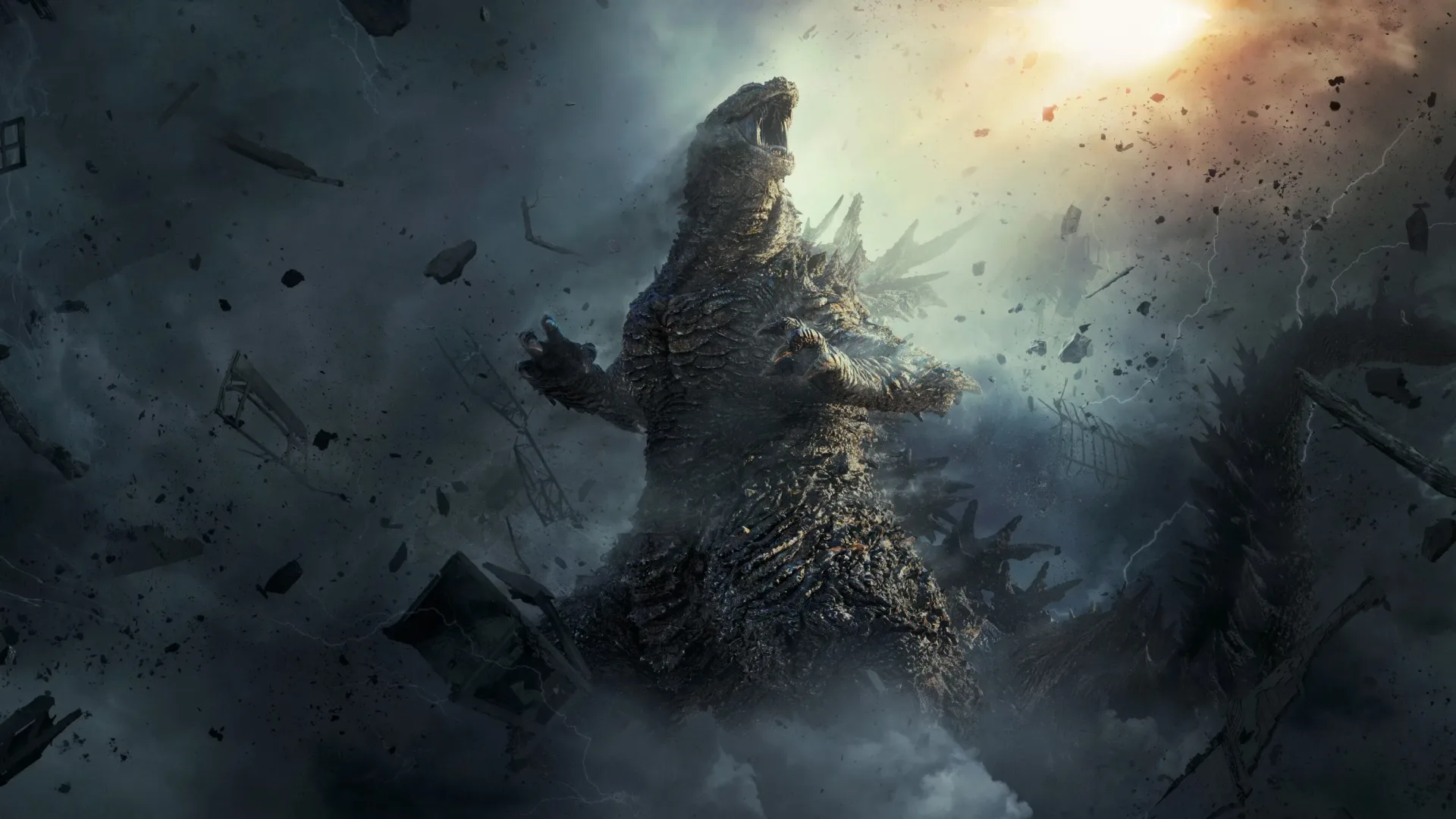
That explanatory role is a useful parallel to visual-effects work in fiction, even though the objectives differ. Effects can turn difficult ideas into something audiences can immediately parse, whether the task is presenting a scientifically grounded environment or building a fictional one. For a different view of how VFX achievement can enter a major awards conversation, see our look at the VFX conversation around Godzilla Minus Zero.
Conservation is the series’ final episode, not an afterthought
The seventh and final episode focuses on conservationists, photographers and scientists working to safeguard Africa’s environments. That is a significant structural choice. Conservation is often appended to nature programming as a brief closing appeal after the main spectacle has finished. Here, it is the explicit subject of the finale, connecting the dramatic footage back to the people studying and protecting the ecosystems on screen.
“Conservation” is a broad term, but at its core it refers to efforts to protect and responsibly manage nature, including species, habitats and ecological systems. The series’ stated argument is that protection begins with understanding fragile ecosystems. That does not make a documentary itself a conservation program; a television series does not replace research, local stewardship or on-the-ground protection. It can, however, make intricate natural systems more visible to an audience that might otherwise only know the most marketable animals.
National Geographic Society CEO Jill Tiefenthaler has framed the program around the idea that closer attention can lead to deeper care. Rolex executive Arnaud Boetsch similarly described the series as an opportunity to spotlight people working on conservation’s front lines and to offer hope alongside wonder. The project also builds on a 70-year partnership between National Geographic and Rolex.
There is an understandable temptation for any wildlife series to sell its most extreme moments: the oversized prey, the underground hunt, the unusual mating conflict. Those sequences can be compelling, but Africa Earth’s Wild Home seems designed to make them gateways rather than the whole lesson. The insect gathering fog water matters because the coast and its conditions matter. An animal’s strange behavior matters because its ecosystem makes that behavior possible.
What to expect from the premiere
For viewers, the practical schedule is straightforward. The seven-part series premieres on National Geographic on Oct. 2. It then streams on Disney+ and Hulu beginning Oct. 3. No episode-by-episode rollout details beyond that availability have been provided.
The larger franchise is worth watching as a format experiment as much as an individual series. A continent-based plan carries obvious risks: continents contain enormous ecological and cultural variety, and no seven episodes can be a complete account of one. But the approach can still be valuable if it treats the continent as a starting framework rather than a single simplistic setting. The reported emphasis on multiple habitats, locally informed observation, scientific collaboration and a conservation-focused finale suggests that the production understands that challenge.
For now, the most concrete draw is its range: familiar animals sharing screen space with black rain frogs, fog-harvesting beetles, fossas and the smallest crocodiles pursuing bats underground. That is a promising roster for a series asking audiences to look beyond the wildlife they already expect to see. Africa may be the franchise’s first level, but the pitch is clearly not to play it on autopilot.