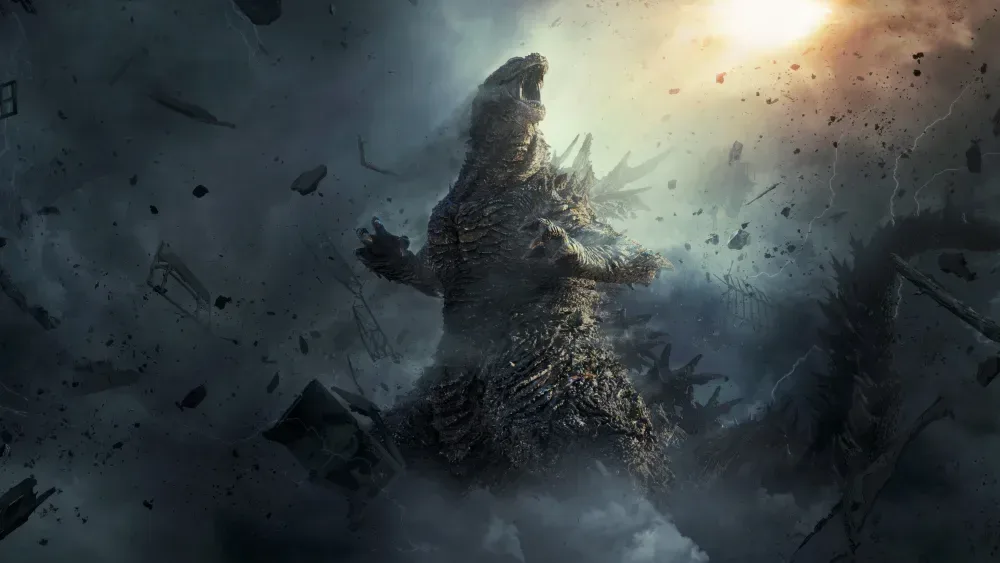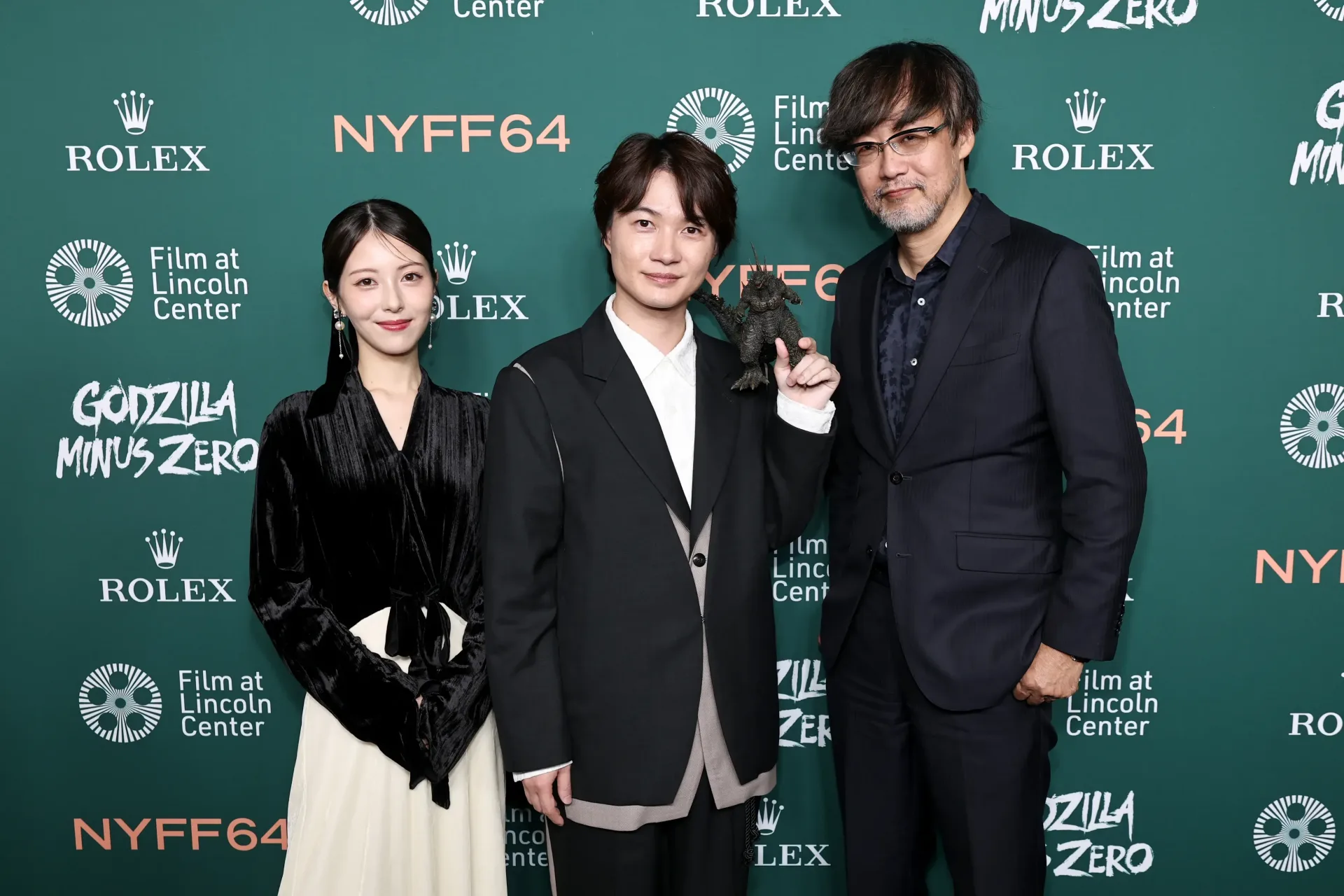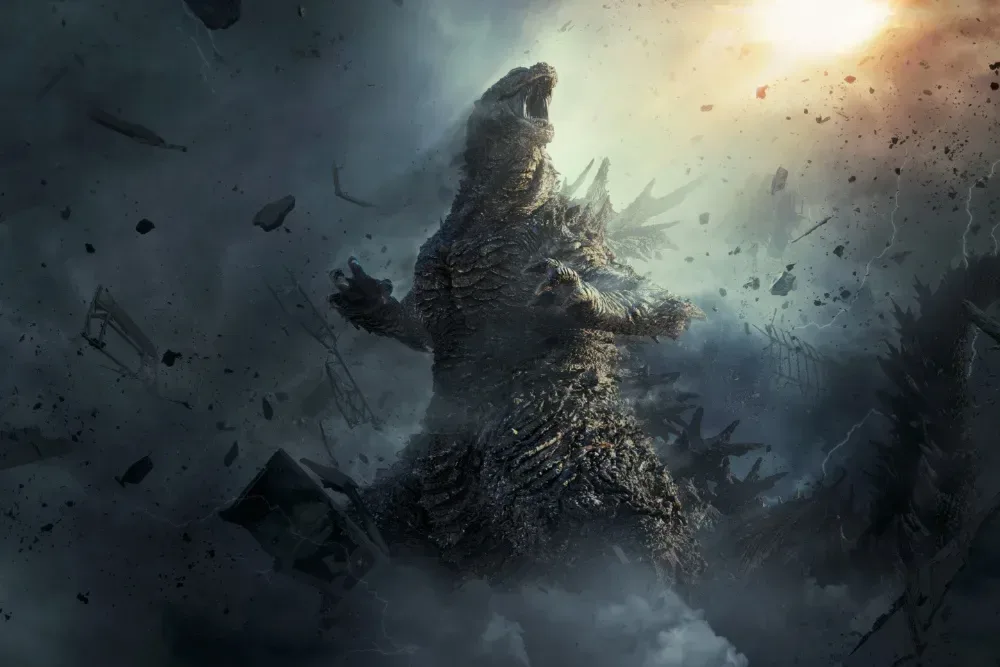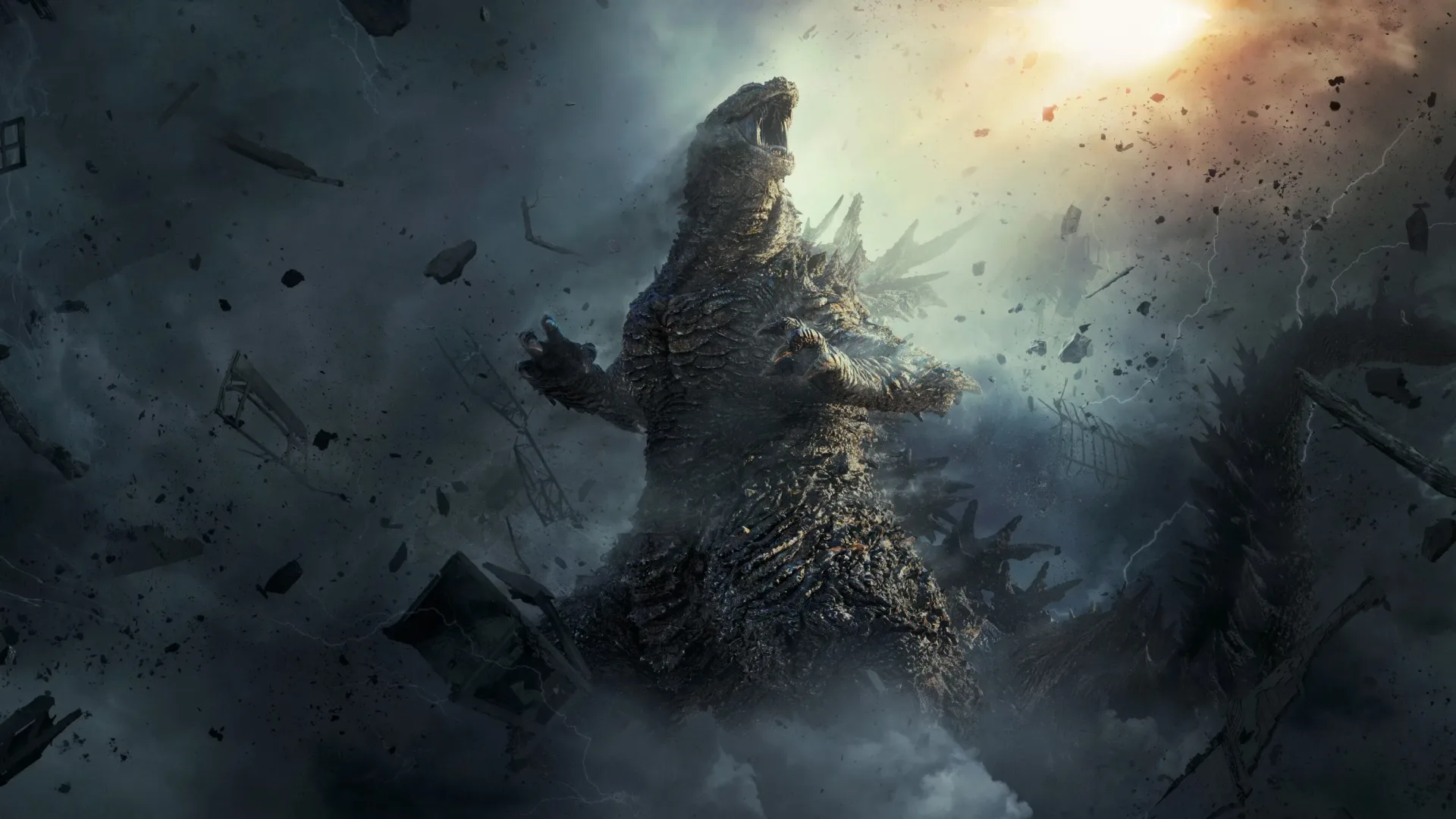
Godzilla has already broken one Academy Awards barrier. The new question is whether it can threaten the ceremony’s biggest category. Takashi Yamazaki’s Godzilla Minus Zero, the follow-up to Godzilla Minus One, has premiered at the New York Film Festival to strong early reactions. That response has put a potentially extraordinary idea into the conversation: a Best Picture nomination for a film in one of cinema’s most enduring monster franchises.
It is far too early to treat that prospect as a prediction, much less an outcome. But it is not coming from nowhere. Godzilla Minus One won Best Visual Effects at the 96th Academy Awards in 2024, a first Oscar win for any Godzilla film. Its sequel now has enough immediate enthusiasm around it to invite a broader question about where prestige, franchise filmmaking and effects-driven spectacle can meet.
Yamazaki has responded with understandable restraint. Discussing the prospect of Best Picture recognition at the festival premiere, he emphasized that the team had not expected even a visual-effects nomination for Minus One. Yet he also acknowledged the small but tantalizing space between “unlikely” and impossible: if there is a chance, it is difficult not to hope.
A franchise milestone that changed the conversation
The Best Visual Effects victory for Godzilla Minus One was significant for more than the trophy itself. It demonstrated that the Academy’s effects branch could embrace work from a Godzilla picture, and it did so in a field that included effects-heavy studio productions such as Guardians of the Galaxy Vol. 3, Mission: Impossible — Dead Reckoning Part One and Napoleon.
The scale of the achievement becomes clearer in the production figures attached to the film. Godzilla Minus One had a reported $15 million budget. Yamazaki and a team of 35 visual-effects artists produced 610 effects shots. In filmmaking terms, an effects shot is a moment whose finished image depends on visual-effects work, whether the audience notices that work as a giant creature, environmental destruction, compositing, or something designed to look invisible. A total of 610 is a meaningful workload; the achievement was not simply that the film had effects, but that a relatively compact team delivered a very large amount of them.
Yamazaki’s own background matters here, too. He started his career in visual effects, and his nomination marked the first time since Stanley Kubrick’s work on 2001: A Space Odyssey that a feature director had been recognized in the visual-effects category. That is an unusual intersection of roles: the filmmaker responsible for the overall movie was also directly tied to the work being honored as a technical accomplishment.
At the time, Yamazaki described Godzilla as having opened the door to the Oscars. With Minus Zero, that earlier win is now both precedent and pressure. It proves that Academy recognition is possible. It does not automatically make a sequel a contender in every category, but it gives the new film a reference point that almost no previous Godzilla entry possessed.
Why Best Picture is a different kind of contest
Best Visual Effects and Best Picture ask voters to recognize different things. A visual-effects award can center on the craft’s execution: the integration of imagery, the complexity of shots, the effectiveness of the illusion and the broader technical artistry. Best Picture is a wider proposition. For a title to enter that discussion, the conversation generally needs to extend beyond the specific department that made its spectacle possible.
Related coverage includes Can ‘Godzilla Minus Zero’ Break Into the Best Picture Race?.
That distinction is the central challenge for Godzilla Minus Zero. Its early praise may be an important opening, but a Best Picture case would depend on whether the film is regarded as a complete artistic statement rather than solely an impressive franchise installment. That is not a dismissal of effects work. In monster cinema, visual effects can be core storytelling rather than surface decoration. Still, awards attention at the top level requires a film’s identity to travel beyond its most obvious selling point.
The comparison being raised around the race is instructive. Films such as Joker and Dune showed that a well-known property and genre label do not necessarily prevent a movie from being treated as prestige filmmaking. The useful lesson is not that every successful genre sequel should be expected to follow their path. It is that “based on established intellectual property” is not, by itself, an answer to the question of artistic standing.
IP, shorthand for intellectual property, refers here to an existing character, world or franchise that audiences recognize before a new film arrives. Godzilla is one of the clearest examples of that commercial and cultural framework. Franchise familiarity can create expectations around monsters and destruction, but it can also make it harder for a particular installment to be considered on its own terms. For Minus Zero, the task is to make voters see a specific film, not merely another chapter bearing a famous name.
The more immediate awards lane is visual effects
Before Best Picture can become anything more than a possibility, visual effects looks like the cleaner and more concrete awards path. Current early projections place Godzilla Minus Zero among five anticipated Best Visual Effects nominees, alongside Dune: Part Three, Project Hail Mary, Spider-Man: Brand New Day and Wildwood.
Those projections are not nominations, and they do not determine what Academy voters will do. They do, however, show that the sequel is already being considered in the category where its predecessor made history. Returning to that conversation is itself notable. A one-time breakthrough can be received as a welcome surprise; repeat contention suggests that the first result may be part of a continuing creative standard.
The potential rivalry also underlines how crowded a visual-effects field can be. A film may be admired for its craftsmanship and still have to stand against titles built around major spectacle, different effects styles and enormous public expectations. The previous win gives Yamazaki’s team credibility, not immunity from competition.
For fans, that distinction is worth keeping in mind as awards discussion accelerates. “In the race” means a film is part of the ongoing conversation, not that it has secured a nomination. A forecast is an informed view of the field, not a ballot result. And festival acclaim can help establish momentum without resolving the eventual vote.
What the Best Picture talk really signals
There is value in the Best Picture question even if Godzilla Minus Zero never reaches the final lineup. The conversation recognizes the possibility that blockbuster craftsmanship, genre filmmaking and auteur-driven filmmaking need not be separated into rigid boxes. Yamazaki is not being discussed merely as a technician who happens to direct. His prior Oscar recognition and the reception for the sequel have made him a filmmaker whose work can be evaluated across both technical and broader artistic terms.
That is a meaningful shift for a franchise whose most immediate association is a towering creature. Godzilla’s screen presence naturally draws attention to scale, destruction and effects. Yet the awards chatter around Minus Zero asks whether the film delivers enough beyond that spectacle to become one of the year’s overall contenders. It is a higher threshold, and the uncertainty is precisely what makes the discussion interesting.
For now, the verified milestone remains Godzilla Minus One becoming the first Godzilla film to win an Oscar. Godzilla Minus Zero has inherited an unusually promising position: a sequel from an Oscar-winning creative team, backed by strong festival response and early visual-effects expectations. Best Picture remains an open question rather than a foregone conclusion, but it is no longer a question that sounds absurd on its face.
While the awards season develops, entertainment audiences tracking major 2026 events can also find viewing details in our guide to watching the 2026 MTV VMAs.