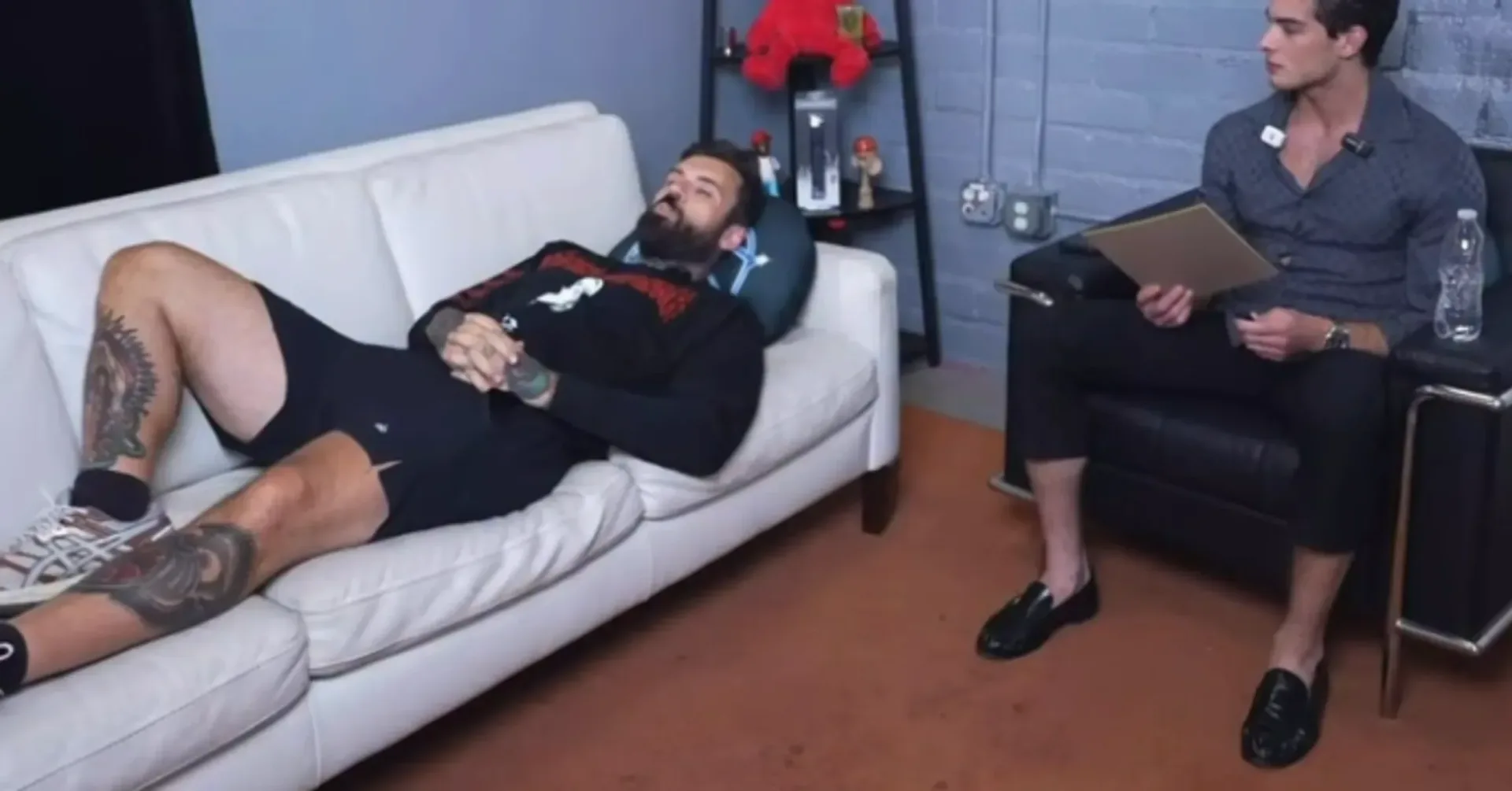
Adam22 made a series of harsh remarks about Chrisean Rock during an appearance on The Jason Lee Show, turning a conversation that began around his separation from Lena The Plug toward Rock, Blueface and their child, Chrisean Jr.
The comments were notable not simply for their severity, but for the ground they covered: an unverified claim regarding a child’s health and a separate online accusation concerning an ex-partner’s death. Neither topic is something that can responsibly be treated as established fact on the information available.
Adam22 knows Blueface personally and presented that connection as part of why he wished to address the situation. He expressed anger toward Rock and alleged that she used drugs and alcohol while pregnant. He also asserted that Chrisean Jr. has fetal alcohol syndrome and said Rock should face imprisonment. The material provided offers no confirmation of a diagnosis, no medical evidence and no official allegation establishing the conduct he described.
That distinction is essential. A forceful opinion is still an opinion; it does not turn a rumor, a diagnosis inferred from online discussion, or an allegation into proof.
What was actually said—and what remains unverified
Adam22’s appearance included personal criticism of Rock in unusually hostile terms. His remarks framed the child’s appearance and development as evidence of fetal alcohol syndrome, often abbreviated as FAS, then connected that assertion to a claim of prenatal substance exposure.
Fetal alcohol syndrome is a serious medical term, not a label to be casually assigned through clips, photographs, social-media posts, or a commentator’s interpretation. In this case, the supplied account explicitly says the alleged diagnosis has not been confirmed. It therefore should not be repeated as a statement about Chrisean Jr.’s health.
The same care applies to Adam22’s additional suggestion that Rock could be capable of arranging harm against an ex-partner. The account identifies that idea as an internet-borne accusation and states there is no evidence presented that she was involved in anyone’s death. The claim is not substantiated by the information at hand.
These are separate allegations, but they share a familiar online pattern: a highly charged assertion is attached to a recognizable name, amplified in commentary, and then treated by some viewers as though repetition has supplied the missing verification.
Why medical language changes the stakes
Medical terms carry an authority that makes misuse particularly damaging. A diagnosis normally rests on qualified clinical assessment, not public speculation. When a child is involved, the privacy and reputational stakes become still higher.
There is a practical difference between discussing what a speaker claimed and declaring that the claim is true. The first describes a media moment. The second makes an unverified assertion about a child and their parent. Those should never be collapsed into the same thing simply because a provocative interview segment has gained attention.
Adam22’s comments also illustrate how quickly a discussion about an adult celebrity can shift into public judgment of a child’s body, health or development. That is a line audiences should be wary of crossing. A child cannot answer the speculation, consent to the public scrutiny, or correct the assumptions being made about them.
FAS is not interchangeable with online rumor
“Fetal alcohol syndrome” is commonly used in casual online debate as a catch-all phrase, but it is a specific medical term. In the context of this story, the relevant point is not to diagnose or explain Chrisean Jr.; there is no verified medical information in the material that would support doing so. The relevant point is that Adam22 invoked a serious diagnosis as part of an attack on Rock, without confirmed evidence presented in the account.
That makes the wording more consequential than routine celebrity criticism. A public feud can be assessed as a feud. A claim about a child’s health requires a much higher standard of care.
The criminal accusation has the same evidence problem
Adam22 also raised the possibility that Rock might “backdoor” an ex, a phrase used here to suggest betrayal or arranging violence against someone close to her. But the account makes clear that the underlying allegation about an ex being killed is coming from internet commenters and is not supported by evidence in the supplied information.
It is important not to launder an online accusation through layers of commentary. “People online are saying it,” “a host discussed it,” and “a reaction account repeated it” are not independent confirmation. They are often one unsupported assertion moving through multiple platforms.
There is a major difference between reporting that Adam22 voiced the allegation and reporting that Rock did what was alleged. Only the former is supported here. The latter would be an unsupported claim of serious wrongdoing.
A commentary format built for escalation
Interview and reaction formats frequently reward certainty, conflict and quotable insults. Nuance rarely produces the clip that travels furthest. The result is an incentive to make the most absolute version of a point, particularly when the people involved already attract intense online attention.
That does not make every harsh statement meaningless. It does mean viewers should separate three different categories:
- Verified information: facts supported by reliable evidence or direct documentation.
- Personal opinion: a speaker’s judgment, anger or interpretation.
- Unverified allegation: a claim that has not been substantiated, even if it is repeated widely.
Adam22’s hostility toward Rock is clear from his own remarks. His relationship with Blueface is also part of the context he offered for weighing in. What cannot be established from the supplied material is the medical claim about Chrisean Jr. or the implication that Rock caused or arranged violence against an ex.
That boundary may sound basic, but it is especially easy to lose when a discussion is delivered in emphatic, emotionally loaded language. Strong confidence from a speaker can feel like evidence to an audience. It is not evidence by itself.
What audiences can take from the episode
For readers encountering clips or screenshots from the interview, the most responsible approach is to resist filling in the blanks. Do not treat an alleged diagnosis as a confirmed one. Do not infer criminal conduct from an online rumor. And do not turn a public disagreement between adults into a license to scrutinize a child.
There is also a broader media-literacy point: attribution matters, but it is not a magic eraser. Saying “Adam22 alleged” accurately identifies who made a statement; it does not make the underlying accusation reliable. The same applies when claims are attributed to unnamed commenters or vague online chatter.
Celebrity disputes can become self-sustaining because the initial claim, reactions to it, and criticism of those reactions all create new content. Coverage of other entertainment clashes, including the renewed public dispute involving Roseanne Barr and Michael Fishman, shows how old conflicts and public responses can keep generating headlines. But a continuing conversation does not reduce the need for accuracy—particularly when allegations touch on health, parenting and violent crime.
In this case, the clearest supported takeaway is narrow: Adam22 used a television interview to condemn Chrisean Rock and to voice serious allegations. The supplied information does not verify those allegations. Keeping that line visible is more important than amplifying the shock value of what was said.