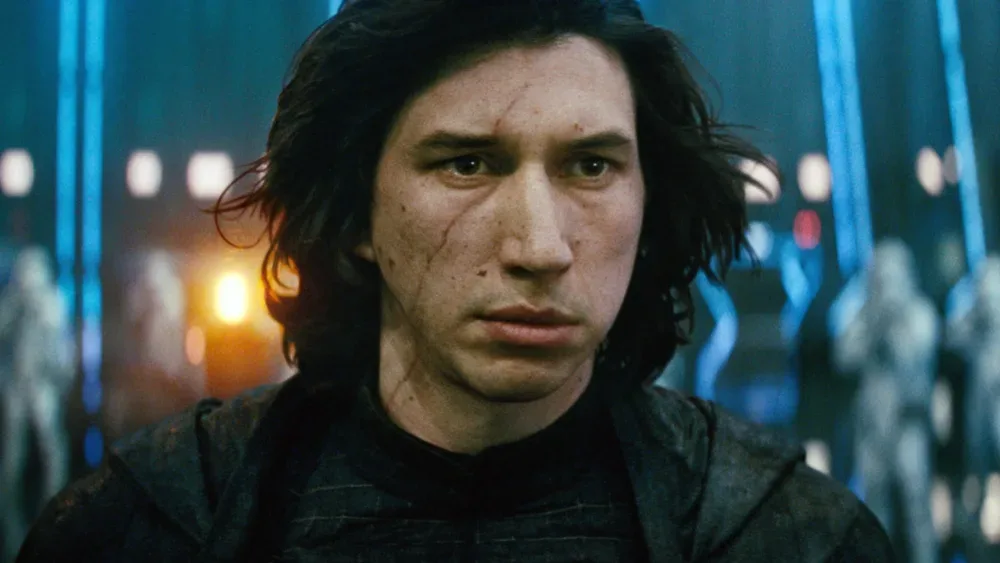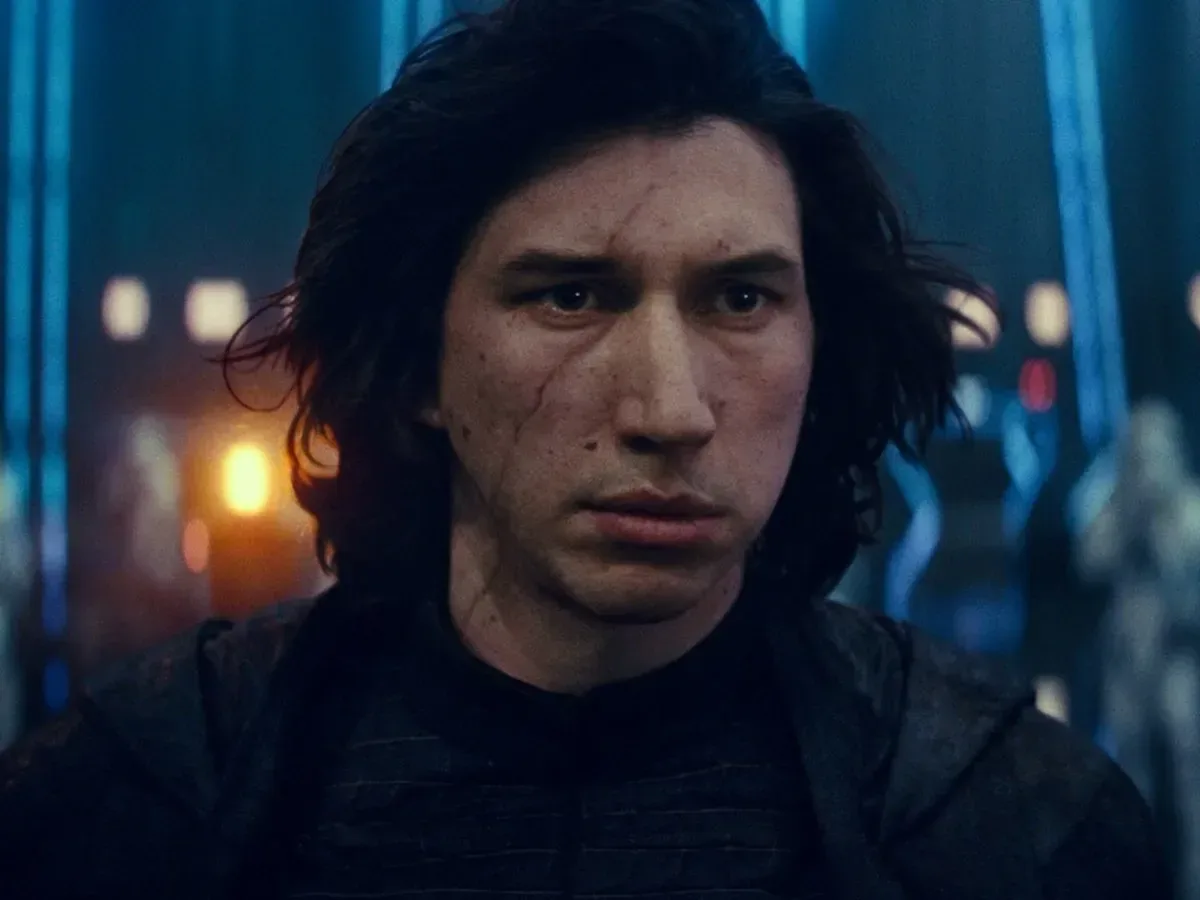
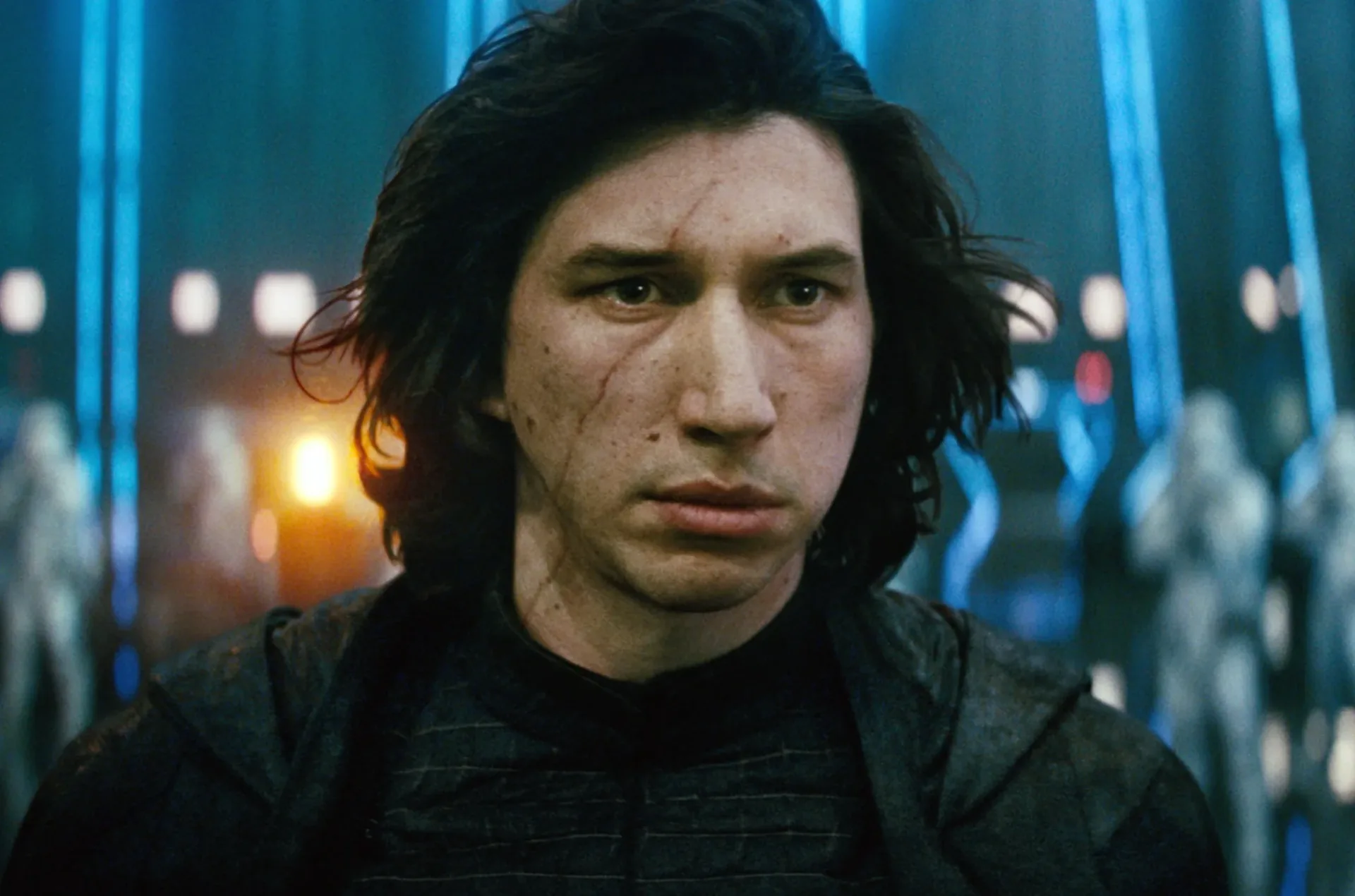
Adam Driver has offered his clearest indication yet that a return to Star Wars as Ben Solo, also known as Kylo Ren, is no longer something he expects to happen. Speaking on The Rich Eisen Show, Driver said there was an earnest effort to make one additional film centered on the character, but that the proposed project was ultimately rejected because Disney leadership could not accept the story’s basic premise: Ben Solo being alive after the events of the sequel trilogy.
The key distinction is important. This was not simply an actor entertaining a hypothetical comeback in public. Driver described a project that progressed through a substantial creative process, involving director Steven Soderbergh and writers Scott Burns and Rebecca Blunt. Driver said the team worked on it for several years and had completed a script. He characterized the material positively, while also making clear that a completed screenplay is not the same thing as a greenlit film.
A developed idea, not a confirmed production
The project was referred to as The Hunt for Ben Solo. Driver said he had long been open to another Star Wars film and that Lucasfilm responded positively when the idea and screenplay were presented. In his account, Lucasfilm understood the team’s approach and the reason for pursuing the character again.
That internal enthusiasm did not carry all the way through the approval process. Driver said Bob Iger and Alan Bergman rejected the pitch because they did not see how Ben Solo could be alive. In other words, the obstacle was not presented as a disagreement over Soderbergh’s involvement, the quality of the screenplay, or whether Driver wanted to return. It was the narrative hurdle created by the character’s apparent death.
That is the central practical lesson in the story for fans trying to read the situation: a franchise project can have creators attached, a script in place, and support at one level of a company without becoming an official production. Development is the phase in which ideas, scripts, talent and possible creative directions are assembled and evaluated. A greenlight is the separate business decision that commits a studio to actually making and releasing the project. Driver’s comments describe the former, not the latter.
There is also no indication here that the film entered filming, that it had a release date, or that it was publicly announced as part of a studio slate. The available details instead describe a serious but unsuccessful attempt to persuade decision-makers that Ben Solo’s story could continue.
Why the question of survival mattered
Ben Solo’s survival was not a minor piece of franchise trivia. It was the apparent foundation upon which the standalone movie would have needed to be built. If the executives considering the project were unconvinced that the character could plausibly return, then every other part of a Ben Solo-focused story became harder to evaluate. A film can explore what happens after a character’s presumed death, but the audience-facing logic of that return needs to work before a studio can commit to the premise.
Driver summarized the impasse bluntly: the decision-makers said the character was dead. That does not establish a broader rule about every past or future Star Wars story. Nor does it prove that no version of the concept could ever be revisited. It does explain why this particular version stopped where it did. The people with final authority were not persuaded by the proposed answer to the survival question.
Related coverage includes Adam Driver Says ‘The Ship Has Sailed’ on Ben Solo Return.
For a large shared-universe property, continuity is more than a detail for devoted viewers to debate. It affects how a new story relates to prior films, how it is marketed, and how much explanation an audience may need before it can engage with the new plot. A standalone movie still has to decide whether it is accessible on its own, how directly it follows existing events, and whether its central premise will feel earned to people who know the earlier films. In Driver’s retelling, the first of those continuity questions—the character’s existence—proved decisive.
Soderbergh, Burns and Blunt were part of the creative team
Driver reiterated that Steven Soderbergh was attached to direct and named Scott Burns, Rebecca Blunt, Soderbergh and himself as collaborators who worked on the script. That lineup helps clarify why the abandoned film drew attention after details of it emerged: it was not described as a casual wish or an undeveloped fan proposal, but as a multi-year collaboration involving established filmmakers and a lead actor returning to a role he had previously played.
Still, audiences should be careful not to turn that creative group into a claim that a finished film exists waiting to be released. The information available supports that a script was assembled and pitched. It does not establish that footage was shot, a full cast was signed, production was scheduled, or a distribution plan was set. A screenplay can be complete and still remain a screenplay.
Driver’s language also avoids pretending that he controls the franchise’s direction. He said, in effect, that the final choice was not his. That may sound obvious, but it is a useful corrective whenever a familiar performer says they would be willing to return. An actor’s willingness can be an essential condition for a sequel or spinoff, but it does not settle the studio’s questions about story, budget, scheduling, strategy or continuity.
“The ship has sailed” is a judgment, not an absolute ban
When pressed on whether he might participate if the project were revived, Driver did not frame himself as refusing the role under every circumstance. He said that, if the people in control wanted to move ahead, that was their decision. But he added that he believes “the ship has sailed.”
That wording leaves a narrow theoretical possibility while conveying a very different practical expectation: Driver does not see the abandoned project as something currently moving toward revival. It is more definitive than a vague “never say never,” but it is not evidence of a formal lifetime prohibition on playing the character again. The most accurate reading is that Driver sees no active path forward and is not promising fans that one will emerge.
Soderbergh had already expressed a similarly resigned view in April, saying the film would have happened if it were going to happen. Taken together, the two collaborators’ comments point to the same outcome. The project had real creative momentum, but that momentum did not become production.
That kind of distinction often gets lost in conversations about unreleased genre projects. “Canceled” can suggest that cameras were rolling and a completed movie was taken away; “never made” can imply that nobody seriously pursued it. This case occupies the meaningful space between those extremes. The team developed a script over years and made a pitch, yet the decision required to move ahead was not granted.
The fan campaign made the response visible
Driver also acknowledged the scale of fan response to news of the dropped movie. He said he did not expect support to include billboards or aircraft flying over Disney. One group of fans paid for a plane to carry a “Save The Hunt for Ben Solo” banner over Walt Disney Studios in Burbank, California.
That campaign illustrates genuine interest in the prospect of a Ben Solo story, and Driver called the reaction “pretty incredible.” It does not, by itself, change the production status of the film. Fan campaigns can show a highly motivated audience and create a visible public moment around an unrealized project. They do not amount to an announcement, a studio commitment, or confirmation that a creative decision has been reversed.
The attention is nevertheless relevant. It explains why Driver was asked directly about returning and why a project that never reached screens remains part of the broader conversation around the franchise. The interest is tied not just to the possibility of another appearance, but to the unusually specific idea of a character-led film with Driver, Soderbergh and the named writers involved.
What this means—and what it does not
For now, the firmest conclusion is limited: Driver says the Ben Solo project did not receive the approval it needed, and he personally thinks the opportunity has passed. Fans should not treat his comments as confirmation that a replacement film is coming, that the screenplay will be released, or that the story will be adapted in another format. None of those outcomes were described.
It also does not erase the work that was done. The account establishes that Driver and his collaborators invested years in an attempt to create a focused continuation for Ben Solo. The project’s end came at the approval stage, where the proposed return of the character did not convince Disney leadership.
That makes this less a story about a performer suddenly shutting the door on a role and more a story about the limits of creative development. Driver appears to have wanted the film, participated in building it, and remains appreciative of the people who rallied around it. But he also recognizes that the decision rests beyond the creative team. Similar questions of development, continuity and corporate approval can shape screen futures elsewhere, including cases where a project is being written but its eventual place remains uncertain, such as the John Constantine film being written for DC Studios.
In Ben Solo’s case, the current message is straightforward: there was a screenplay, there was a desired reunion, and there was vocal fan support—but there is no sign that The Hunt for Ben Solo is moving forward. Driver’s own assessment is that its moment has passed.