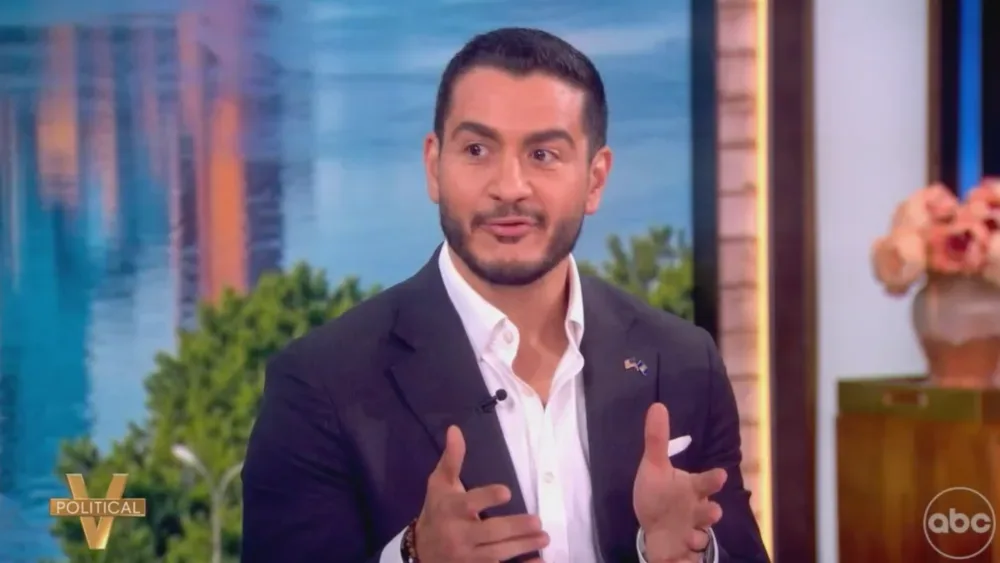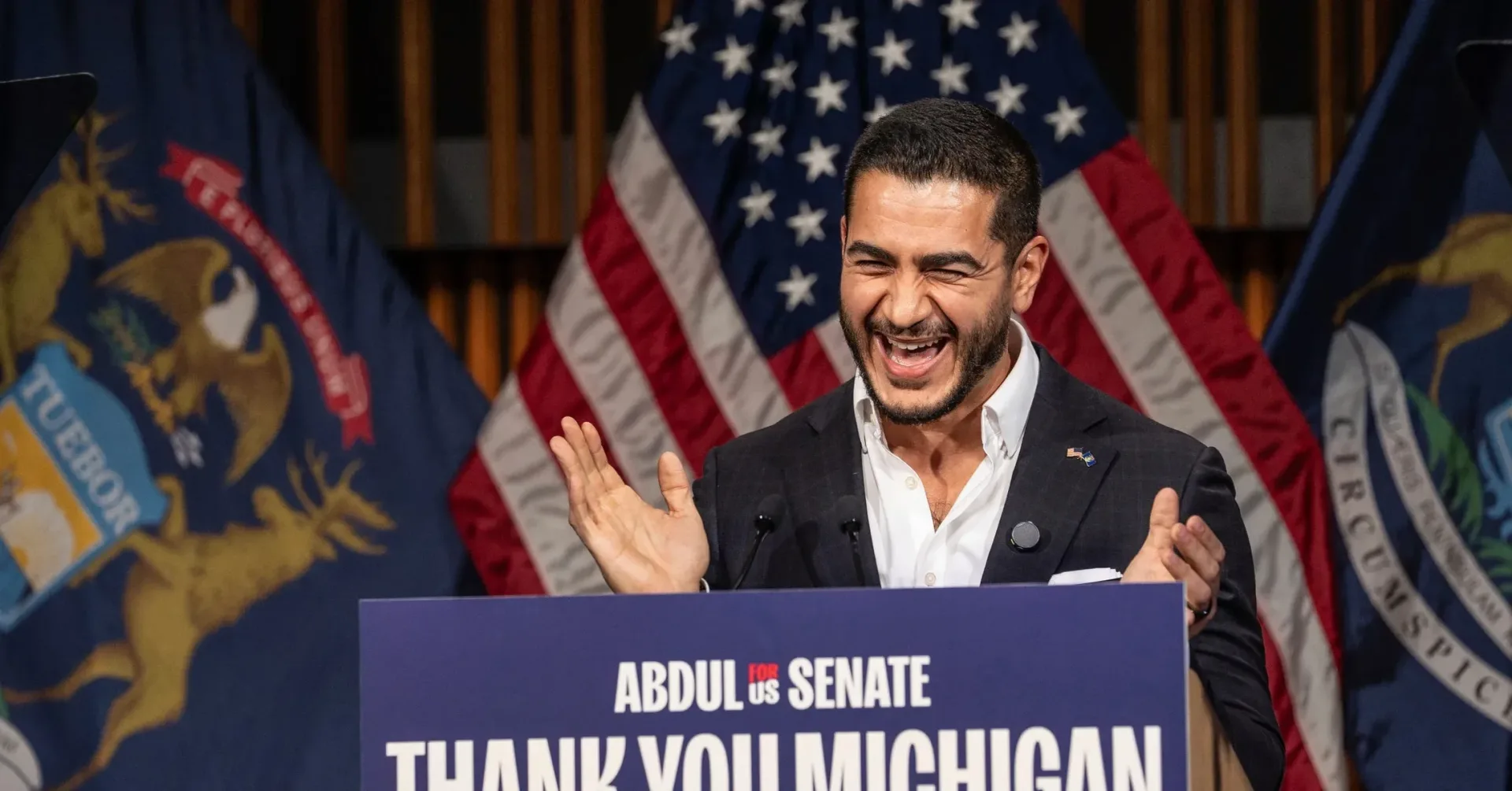
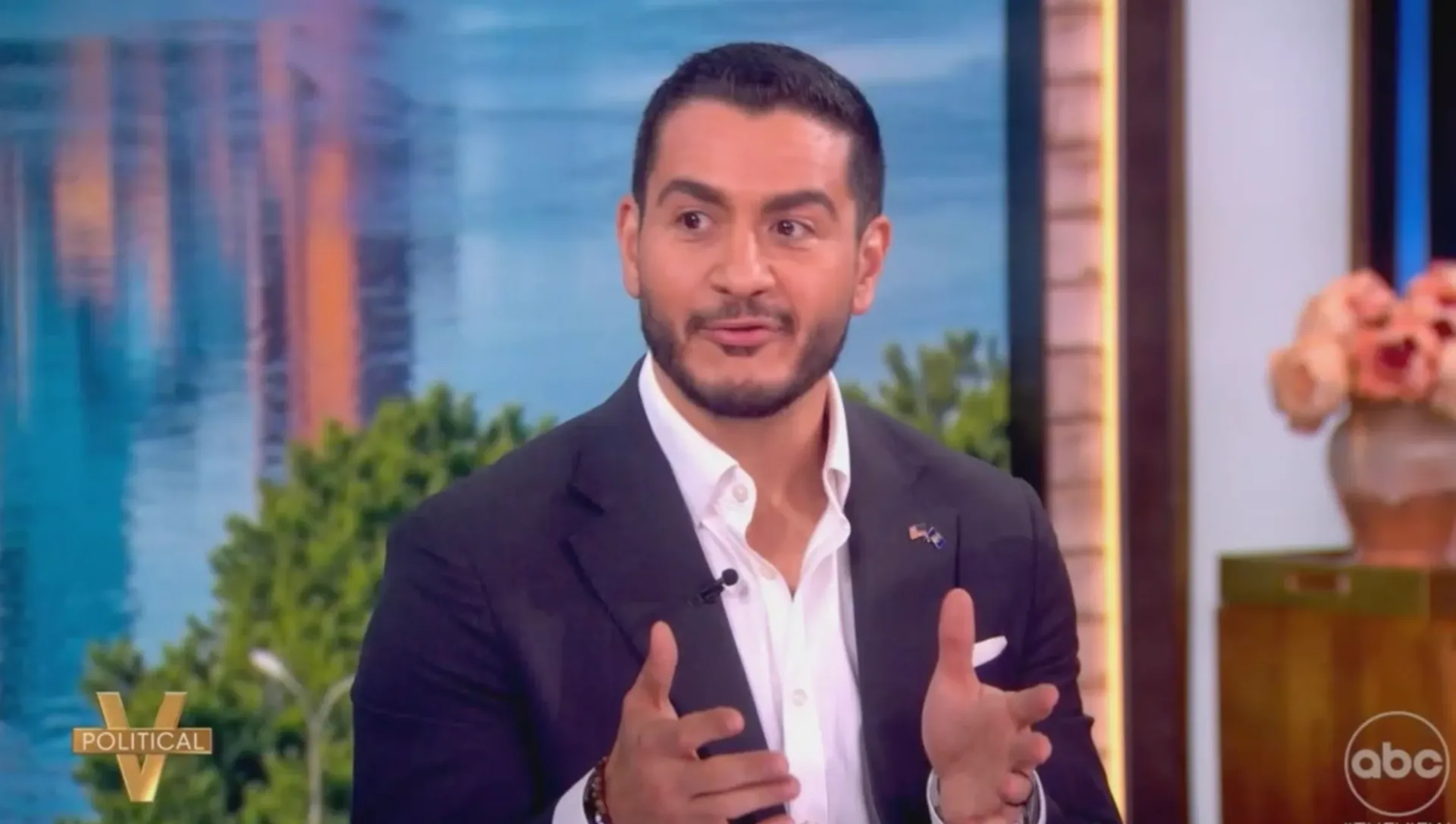
Abdul El-Sayed’s first major television appearance after his Michigan Senate victory was not framed as a victory lap. Instead, the Democrat used a Thursday visit to The View, two days after defeating Republican Mike Rogers, to confront campaign rhetoric aimed at his Muslim faith and to explain why he believes Michigan voters rejected it.
At 42, El-Sayed is set to become the first Muslim elected to the U.S. Senate. That historic result was central to the discussion, but so was the nature of the final stretch of the campaign: a period in which prominent Republican figures made accusations and insults focused on him rather than the policy concerns he said voters are facing.
El-Sayed’s central response was broader than a defense of himself. “They weren’t attacking me. They were attacking the idea of an America big enough for me,” he said. He described his campaign as a wager on “the goodness of the people of Michigan,” rather than a bet on his own personal abilities.
What El-Sayed was responding to
During the interview, co-host Sunny Hostin recounted several remarks made during the campaign. Vice President JD Vance had said there was something “very, very evil” about El-Sayed. Sen. Ted Cruz used the phrase “jihadist leprechaun,” an insult that El-Sayed met with a quick joke: “I want a hat!”
The comic beat did not change the seriousness of the broader conversation. The word “jihadist” carries an explicit association with violent extremism. Applied to a candidate because of Muslim identity, it shifts a campaign argument away from a person’s positions, record or qualifications and toward insinuation. El-Sayed’s response on television was to refuse the premise of that framing while making clear that he saw it as part of a larger attempt to define who can belong in American political life.
Hostin also raised comments Donald Trump made at an October rally in Michigan. Trump called El-Sayed a “jihadist,” suggested he would need to pass through a metal detector before entering the Senate, and invoked the Sept. 11 attacks while urging voters to oppose him.
El-Sayed answered the metal-detector remark by reiterating a challenge he had made at a Kalamazoo campaign rally the previous week. “I’ll do a metal detector test all day because I have nothing to hide,” he said, then addressed Trump directly: “Donald, if you’re watching, a lie detector is still on the table.”
The exchange was constructed as a reversal. A metal detector is a physical security device, whereas a lie detector is commonly used as shorthand for a test of truthfulness. El-Sayed’s point was not that the two are equivalent technologies; it was a rhetorical counter to an accusation he regarded as baseless. His joke redirected attention from an implication of danger toward the credibility of the people making it.
A policy-centered rebuttal
El-Sayed also argued that the attacks revealed an absence of a substantive alternative message. “If they had something to say about the price of gas or the price of groceries or the fact that people can’t see a doctor, they would’ve said it,” he said. “But they didn’t have anything to say.”
That list matters because it identifies the practical concerns he believes should have been at the center of the Michigan contest: fuel costs, food costs and access to medical care. None of those issues is unpacked with specific proposals in the interview, and the conversation does not establish how voters weighed each one. But El-Sayed’s critique is clear. He contends that identity-based attacks were used in place of arguments about the pressures affecting everyday life.
He described that style of campaigning as reaching for “red meat,” a political expression for provocative messaging intended to energize a committed audience. His version of the argument was that the tactic can become self-reinforcing: once a campaign deploys inflammatory rhetoric, it is pressured to defend and intensify it rather than pivoting to a more grounded discussion.
“Once you go there and you put that out there, then you’re forced to defend it,” El-Sayed said. “So what do they do? They double down. They triple down again.”
That is El-Sayed’s interpretation of the campaign dynamic, not a complete account of the election. Still, it clarifies why the victory has significance beyond one television segment. His win came after attacks that tied his faith to extremism, and he presented the result as a public rejection of that approach.
Why the appearance carries pop-culture weight
Daytime television is not the Senate floor, and the segment did not function as a legislative hearing or a detailed policy debate. It did, however, give a newly elected senator an immediate national platform to establish a public narrative about his win. The format also allowed room for tonal movement: El-Sayed could answer a demeaning label with humor, then return to the stakes of religious inclusion and economic stress.
That combination is part of why political moments frequently become pop-culture moments. The most memorable line may be the request for a hat, or the lie-detector challenge, because both are compact, repeatable answers. Yet those lines sit inside a much heavier question: how a candidate responds when religion becomes the target of campaign messaging.
Political punchlines can circulate far beyond the event that produced them, particularly when they compress a larger disagreement into one sharp reversal. Political humor’s place in pop culture often comes from precisely that tension between a fast joke and a consequential subject. In El-Sayed’s case, the humor was not a detour from the criticism; it was one way of declining to be defined by it.
Representation and the limits of a single result
El-Sayed’s election makes him the first Muslim elected to the Senate, an unmistakable milestone in the institution’s history. Representation can have a practical symbolic effect: it expands the visible range of people who can be imagined in positions of national power. El-Sayed himself captured that idea through his description of “an America big enough for me.”
At the same time, the interview does not claim that one election resolves the prejudice exposed during the campaign. In fact, the remarks he was asked to address demonstrate the opposite: a historic candidacy could still become the object of rhetoric that treated Muslim identity as grounds for suspicion. The importance of the win and the ugliness of some attacks are not competing interpretations. They are connected facts in the story El-Sayed told.
His framing also avoids treating the election as solely a personal triumph. By crediting Michigan voters, he made the victory a statement about the electorate’s judgment. That is a politically useful message, but it is also a direct answer to the premise behind the attacks: that a Muslim candidate’s faith should make him unacceptable to voters. The outcome, El-Sayed argued, answered that claim.
What comes next from the message he chose
The appearance offered no new legislative agenda, timetable or Senate policy commitments. Its value was instead in setting a post-election emphasis. El-Sayed put grocery and gas prices and the ability to see a doctor alongside a defense of pluralism, arguing that a serious campaign should have room for both voters’ material concerns and a candidate’s equal claim to participate in public life.
For viewers, the key distinction is between rhetoric and evidence. The insults and insinuations discussed in the segment were political attacks. El-Sayed’s rebuttal was that they were distractions from issues on which candidates can be judged more concretely. His victory over Rogers does not automatically settle every argument that will face Michigan’s new senator, but it does give his answer to those attacks a new significance: he made it after winning the seat they were intended to deny him.