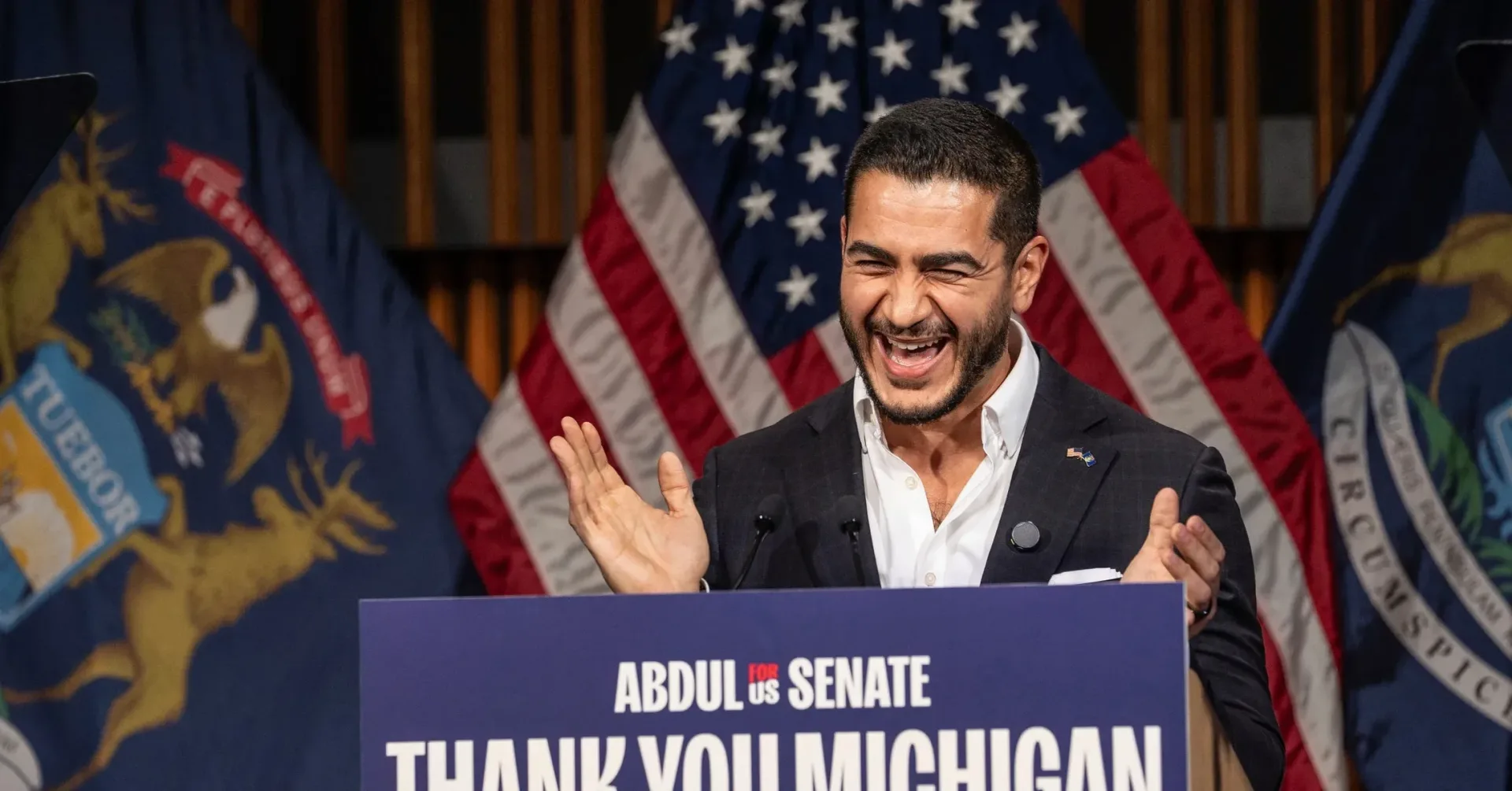
Abdul El-Sayed’s successful Michigan Senate campaign closed out election day with a familiar piece of Detroit rap: Eminem’s 2010 single “Not Afraid.” The 78-second ad pairs the track with footage of El-Sayed meeting Michigan residents and appearing at rallies. It is a straightforward campaign montage in format, but its soundtrack gave it a considerably bigger cultural footprint. Eminem is not merely a prominent musician from Michigan; his songs, public political positions and past objections to political use of his work have made any campaign association a closely watched matter.
El-Sayed defeated Mike Rogers for Michigan’s Senate seat. The ad’s use of “Not Afraid” arrived as voters were heading to the polls, placing the song’s defiant, motivational framing at the center of a last-stage appeal for turnout and momentum. Yet a spokesperson for Eminem said the campaign had not contacted him about using the music. That detail is important because it separates the ad’s message from a demonstrated personal endorsement by the artist.
The available information does not establish what permissions, if any, were arranged for the song’s appearance. Nor does the absence of an immediately reported legal challenge establish Eminem’s approval. It does, however, put a spotlight on a recurring collision between campaign communications, artist identity and the practical distinctions involved when a famous recording appears alongside a candidate.
A song choice that carries more than one message
Campaign ads are built to condense a candidate’s case into a short emotional argument. Visuals of handshakes, crowds and community events are common ingredients because they signal proximity to voters. Music turns that sequence into a mood: urgency, optimism, confidence, defiance or solidarity. In this case, the choice of “Not Afraid” carries an especially direct title-level message. It can suggest persistence under pressure without needing to make that point in a spoken line.
That is also why well-known songs are powerful but risky political tools. A recognisable song arrives with its own accumulated associations. Listeners do not experience it as neutral background audio; they bring memories of the artist, the original release and the performer’s public persona. The campaign may be using the song to frame El-Sayed, while audiences may simultaneously read the ad as a statement about Eminem. Those are not necessarily the same thing.
For Michigan viewers, Eminem’s Detroit roots add another layer. A local connection can make a national celebrity’s work feel like a regional cultural reference rather than simply a famous track selected for broad familiarity. In an election ad, that can reinforce a campaign’s effort to appear connected to the place it seeks to represent. But geography should not be mistaken for consent. Being associated with Michigan does not itself reveal what the artist thinks of a particular candidate or use.
Contact, consent and permission are separate questions
The spokesperson’s statement that Eminem was not contacted creates a clear boundary around what can responsibly be inferred. The ad’s inclusion of “Not Afraid” is not evidence that Eminem personally signed off on, endorsed or collaborated with El-Sayed’s campaign. It is evidence that the song was used in the campaign material described.
It is useful to distinguish a few terms that are often compressed into one vague question: “Did the artist allow it?”
- Artist endorsement means a performer publicly supports a candidate or campaign. It is a political statement by the person.
- Direct contact means the campaign or its representatives approached the artist or the artist’s team. The spokesperson’s reported statement indicates that did not happen here.
- Music permission concerns whether the relevant rights required for a recording’s use were cleared. The supplied information does not answer that question.
- Legal response is what follows if a rights holder or artist objects publicly or through formal action. No cease-and-desist comparable to Eminem’s prior dispute with Vivek Ramaswamy was reported in the material at hand.
These categories overlap in public discussion but are not interchangeable. A candidate may cite an artist admiringly without an endorsement. A song may be used in material without proving personal contact. An artist’s lack of an immediate public objection is not the same as affirmative approval. Keeping those distinctions intact is particularly important in political advertising, where a song can imply values and affiliations in seconds.
The prior Ramaswamy episode is therefore relevant only in a narrow way. Eminem previously sent a cease-and-desist to Vivek Ramaswamy over use of his music in 2023. That history shows that Eminem has objected to political use of his work before. It does not establish why no similar action has been reported in the El-Sayed matter, whether one could still occur, or what arrangements may sit behind the new ad.
Eminem’s political record gives the placement context
Although the new ad should not automatically be treated as an Eminem endorsement, the artist’s established public political associations explain why many viewers may see it as fitting rather than random. Eminem has endorsed Kamala Harris, and Joe Biden previously used “Lose Yourself” in an ad with Eminem’s permission. Those examples indicate that Eminem’s music has been connected with Democratic political messaging in the past.
That context matters because campaigns do not select cultural references in a vacuum. A track can function as a signal to listeners who already know an artist’s outlook or political history. For supporters, that familiarity may make an ad feel aligned with a larger cultural coalition. For opponents, it can make the same ad feel more polarising. Either way, the music becomes part of the campaign’s public language, not just an editing choice.
Still, the careful reading remains the same: past support for Democrats is context, not a verified statement about El-Sayed’s campaign. Political reporting and political fandom often reward the simplest reading of a celebrity song placement—artist backs candidate—but the known facts here support a more limited conclusion. The campaign used “Not Afraid”; Eminem’s spokesperson said there had been no outreach to him.
The Kid Rock collaboration complicates the moment
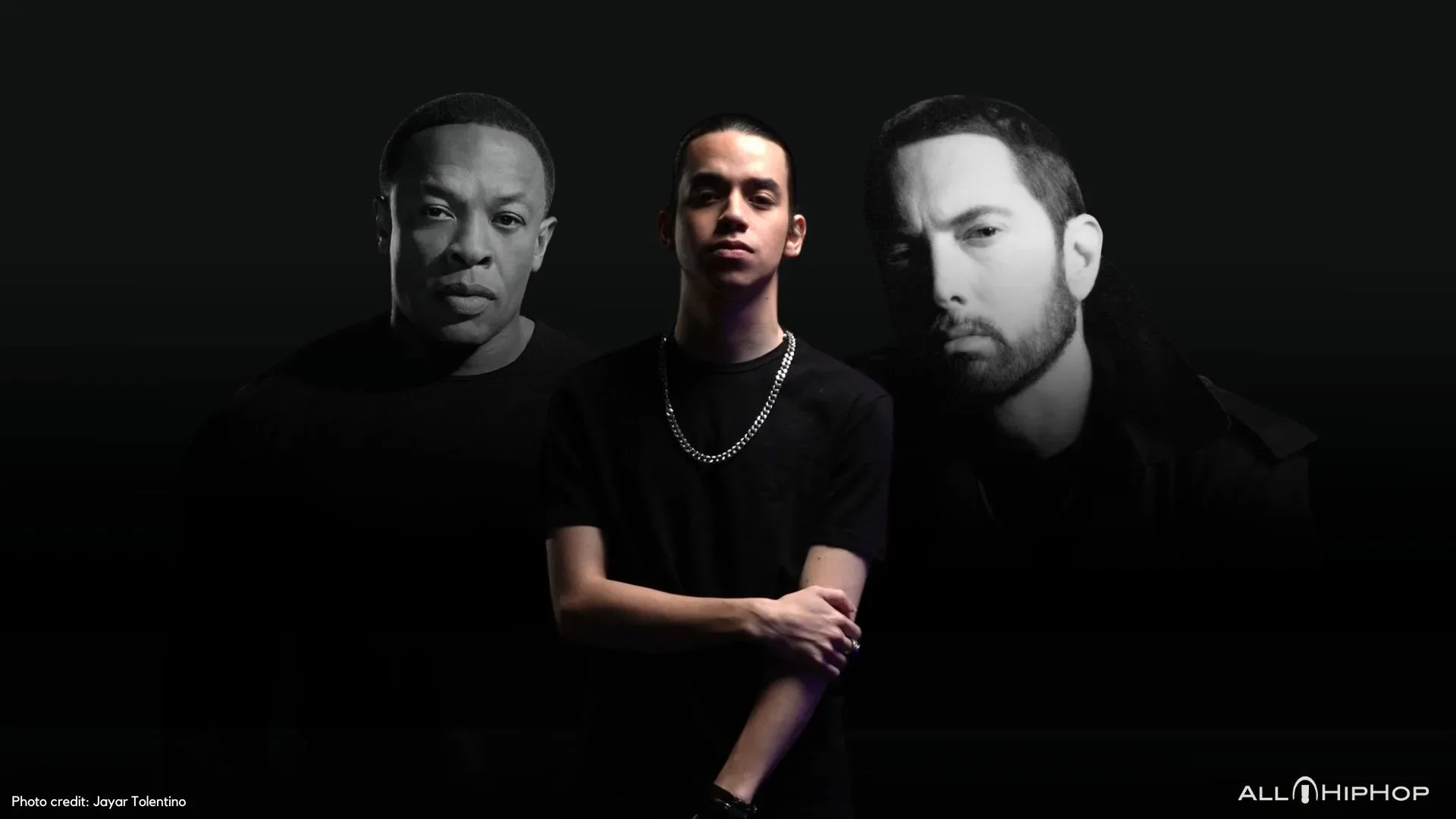
The ad also lands after Eminem’s collaboration with Kid Rock, “Heal My Faith.” The song was presented around the pair’s relationship beyond their political differences. Kid Rock is described as a staunch MAGA Republican, while Eminem has leaned Democratic. Their collaboration accordingly drew attention because it put two major Michigan-linked musicians with very different political identities in the same project.
That contrast makes “Not Afraid” a particularly notable choice for El-Sayed’s campaign. It is not simply a familiar Eminem record appearing in a Democratic candidate’s ad. It follows a moment when Eminem’s public cultural positioning was being discussed through a cross-political collaboration. The campaign placement may invite audiences to map that debate onto the Senate race, whether or not the artist was personally involved in the ad’s planning.
Kid Rock had also compared the Michigan senator to the 9/11 hijackers during an appearance on Real Time With Bill Maher, another element that sharpened the political edge around the musicians’ association. The central lesson is not that every collaboration erases political disagreement, nor that every song use declares an endorsement. Rather, celebrity culture and electoral politics repeatedly create situations where artistic work is asked to do more symbolic work than the performer may have intended.
That broader tension has surfaced elsewhere in pop culture. The debate over who can invoke a recognisable figure or character in political messaging is also visible in a recent dispute involving Chucky creator Don Mancini and a “Vote Red” reference. The details differ, but the underlying question is similar: public familiarity with an artist’s work does not settle whether its creator wants that work linked to a political cause.
Hip-hop is a recurring part of El-Sayed’s campaign language
“Not Afraid” was not El-Sayed’s only rap selection during the campaign. Another ad used Kendrick Lamar’s “Euphoria.” Taken together, the choices indicate that hip-hop was a deliberate part of the campaign’s aesthetic and emotional vocabulary.
These are notably high-profile selections, and they operate differently. Eminem’s Detroit identity gives “Not Afraid” a home-state resonance for a Michigan race. Kendrick Lamar’s “Euphoria” carries a more contemporary and confrontational cultural charge. In both cases, the campaign appears to be drawing on songs with strong existing identities rather than relying on anonymous instrumental music.
For voters and observers, the practical takeaway is to separate what is visible from what remains unknown. The visible facts are that El-Sayed’s election-day ad used Eminem’s “Not Afraid”, that he won the Michigan Senate seat over Mike Rogers, and that the artist’s spokesperson said Eminem had not been contacted. The unknowns include the campaign’s rights arrangements and Eminem’s precise reaction. That uncertainty is not a minor footnote; it is the key to interpreting the ad without turning a striking soundtrack choice into a claim that has not been substantiated.