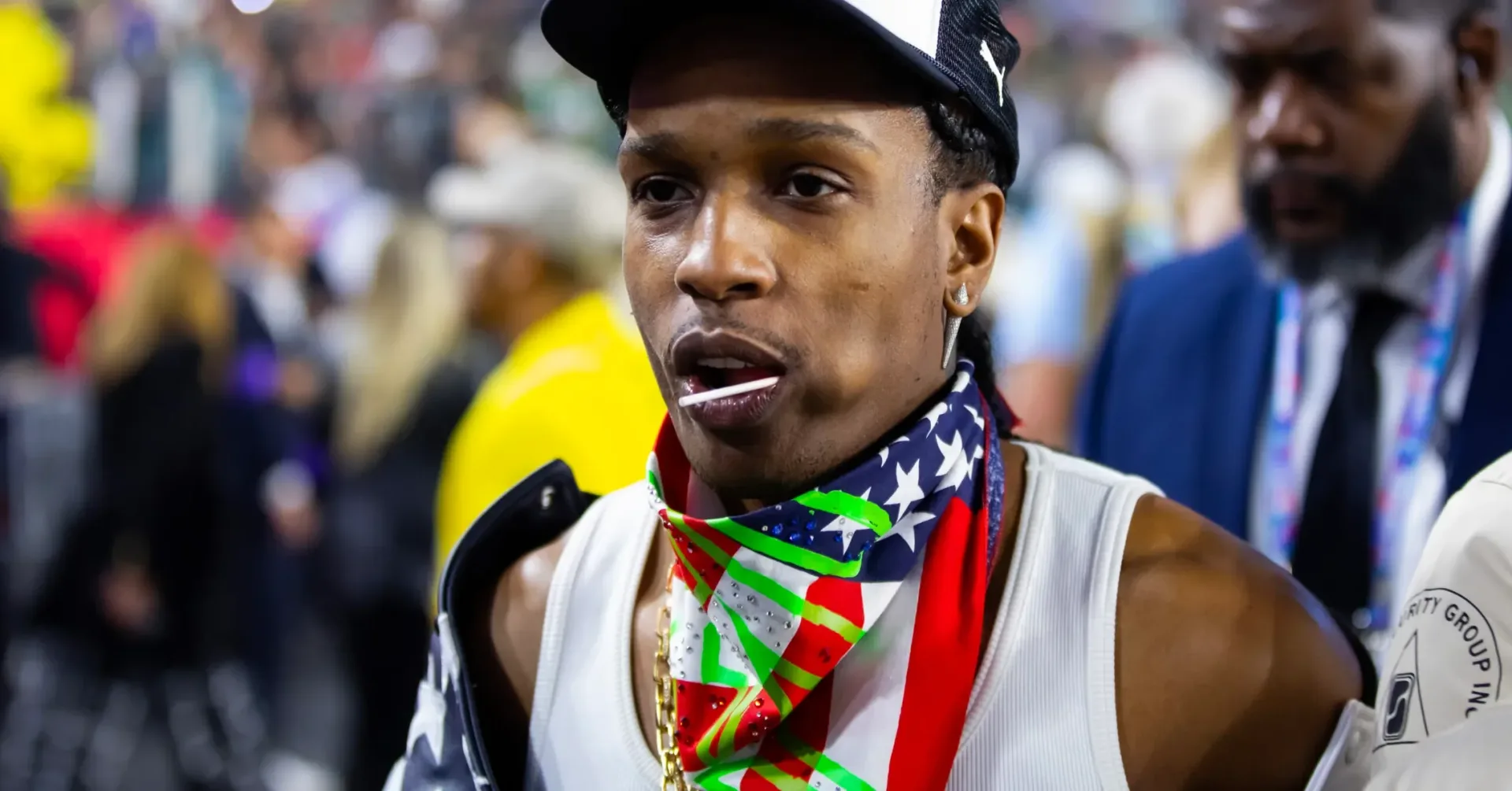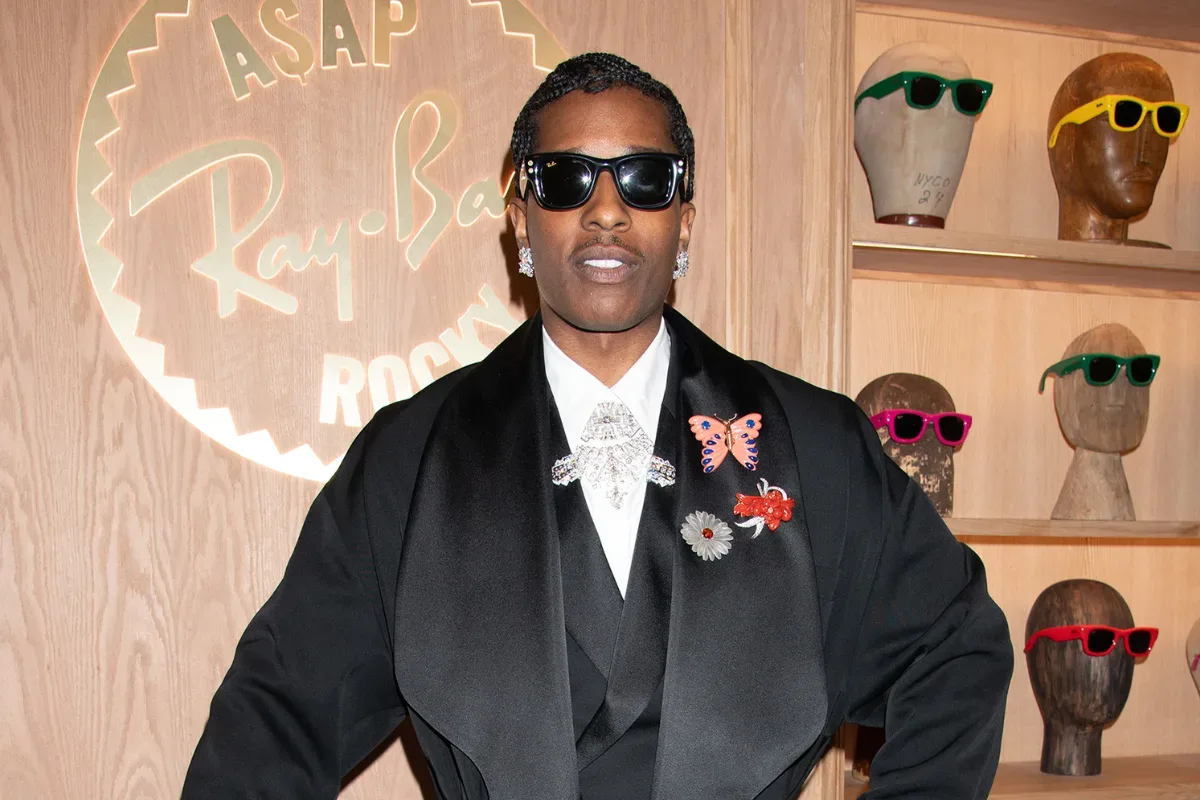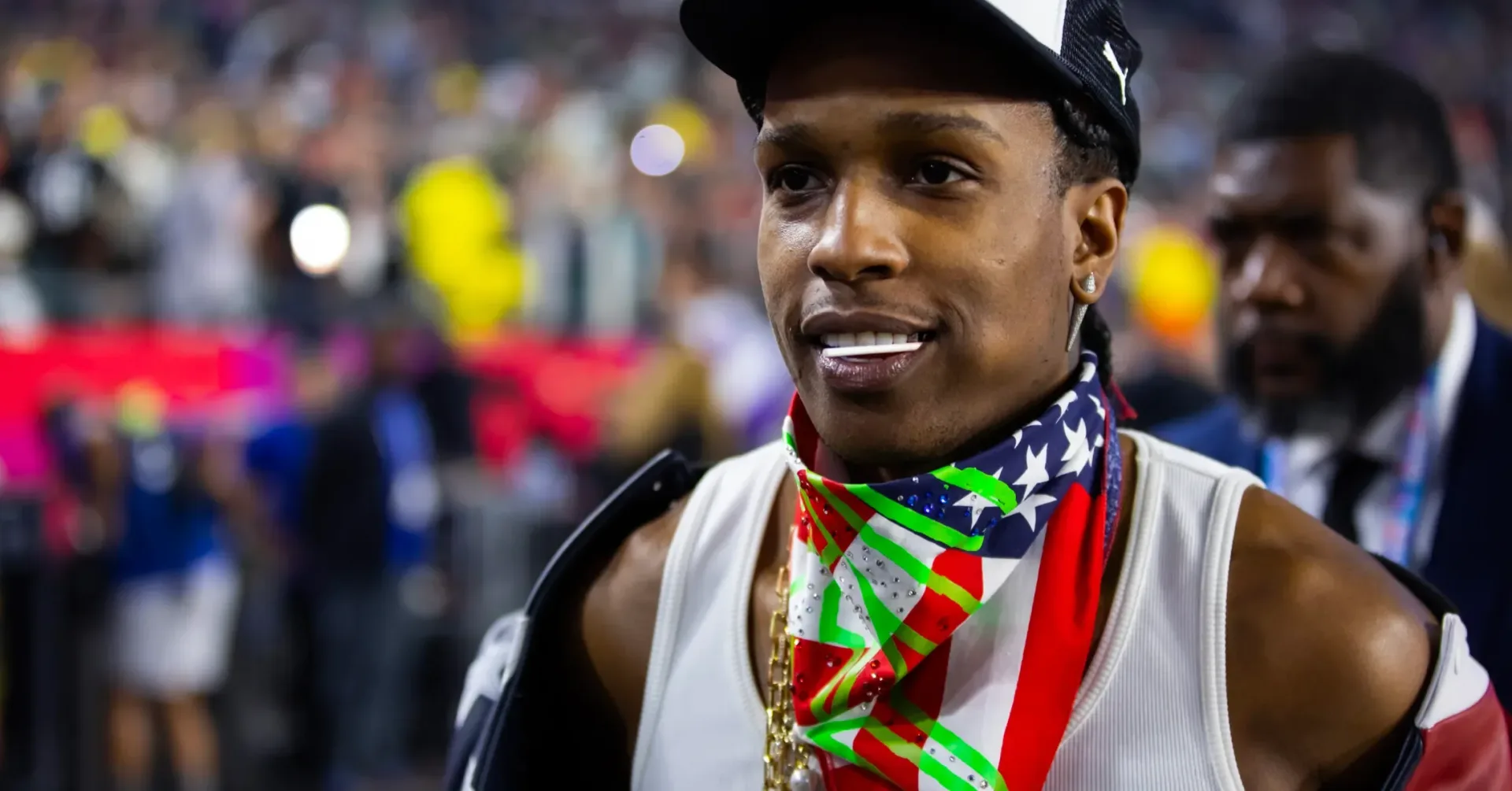
A$AP Rocky’s view of artificial intelligence in music is not a blanket endorsement or rejection. The rapper’s dividing line is straightforward: AI can assist with a specific technical task, but it should not take over the creative role of the artist.
That distinction matters because “AI music” has become a catch-all label for very different processes. A tool that helps isolate part of an existing recording is not the same thing as a track generated primarily from a text prompt. Rocky’s comments put the focus less on whether AI was involved at all and more on what the human creator actually contributed to the finished work.
“AI is supposed to be a tool in that sense,” Rocky said, while adding that he is not trying to dictate a universal standard for totally AI-generated songs.
For his own work, though, Rocky made his preference clear. He said he makes music “practically,” working with musicians, producers and beat makers to convey and develop his sound. It is a people-first process, even if a machine may have a narrowly defined job somewhere along the way.
The important distinction: assistance versus authorship
Rocky was asked about AI’s increasingly visible role in music and answered, “It depends.” That may sound noncommittal, but it is a useful response to a conversation that often collapses several separate questions into one.
At one end, AI may be used to perform or speed up a technical operation. Rocky gave an example involving “Good Morning” from Ye’s Graduation: if someone needed the instrumental without the original vocal, an AI-assisted process could potentially separate the recording into stems.
Stems are separate elements of a completed song, such as vocals, drums, bass or other instrumental parts. Stem separation is the attempt to extract those elements from a mixed recording. In Rocky’s framing, that is a functional use of the technology: it addresses a particular production problem rather than supplying the song’s central creative decisions.
At the other end is a song that is generated from a prompt with little or no human musical construction described beyond that request. Rocky said that approach is “their thing” for artists who choose it, while also drawing a personal boundary around his own methods.
Related coverage includes A$AP Rocky Draws a Line Between AI Assistance and AI-Made Music.
The distinction does not make every practical question easy. An instrumental obtained through stem separation could still raise questions about permission and rights depending on how it is used. Rocky did not address those issues. His point was narrower: the presence of AI alone does not tell listeners how much of a record’s writing, performance, arrangement or sound-building came from people.
Why the process is becoming part of the conversation
Rocky mentioned Fenix Flexin and Tyga, artists who faced criticism after acknowledging AI played a role in recent music. But he also said he did not know enough about their respective processes to make a precise judgment. That caution is notable. Public reaction can move fast once an artist says AI was involved, while the underlying details may remain unclear.
Those details are not trivial. A discussion of AI in a release can refer to many different things: editing audio, separating stems, generating a musical idea, creating a vocal-like performance, or constructing an entire track from a prompt. Treating each of those uses as identical can obscure the exact concern listeners are trying to express.
Rocky’s comments suggest that creative responsibility is the central issue for him. If the human artist is still collaborating, choosing, revising and shaping the work, AI may function as an aid. If prompting replaces most of that work, the relationship between artist and output changes substantially.
That is not a technical definition of AI, nor did Rocky offer one. It is a creative one. His emphasis is on whether technology supports a maker’s intention or becomes the primary maker itself.
The same broad question is emerging in other entertainment spaces as well, including the debate around AI-driven film projects and authorship. Hollywood’s recent AI questions similarly show why a single label rarely explains the whole process.
Rocky still wants collaborators in the room
The most revealing part of Rocky’s position may be how plainly he describes his own approach. He said he is “really tapping with musicians, producers, beat makers” to build his sound. That means the human network around a song remains part of the point, not merely an obstacle that software can remove.
A producer and beat maker can help establish a track’s rhythm, texture and structure. Musicians can bring performances and ideas that change as collaborators respond to one another. In Rocky’s account, those interactions are fundamental to developing a sound. They are not an outdated preliminary step before a final prompt is entered.
There is also an important difference between saying an artist uses a tool and saying the tool defines the artistic process. Rocky has not positioned himself as anti-technology. He recognizes that AI can solve a production task. But he does not present it as a substitute for the collective work that shapes his records.
That stance leaves room for utility without requiring enthusiasm for every possible application. It also avoids an absolutist claim that no other artist should work differently. Rocky’s standard is personal: he is focused on doing his music in a practical way, with people actively involved in its creation.
What it means for the next Don’t Be Dumb material
Rocky’s comments arrive as he prepares additional material connected to Don’t Be Dumb. He released the album earlier this year and has completed a 49-date world tour. A second disc is still on the way, with only two guest appearances teased so far.
He has also said audiences need to hear the added material before some later moves, including unreleased work with Metro Boomin, will fully make sense. The limited information leaves plenty unknown about the second disc’s tracklist and direction, but it reinforces that Rocky sees more of the project’s story ahead.
“Shroom Clouds,” a new song and video, is also slated for Friday. Nothing presented about the release establishes how, or whether, AI was used in its making. What Rocky has explained is his broader preference: continued work with musical collaborators rather than treating AI as a shortcut around them.
A more useful way to talk about AI music
Rocky’s position is valuable because it asks a better question than “Was AI used?” For listeners, artists and critics, that yes-or-no question can be only the starting point. More revealing questions include:
- What specific task did the technology perform?
- Who wrote, performed, arranged and selected the musical material?
- Was AI used to repair or isolate audio, or to generate the core recording?
- How much creative direction and revision came from people?
Those questions will not automatically settle every argument. People may still disagree about where their own line should be. But they make room for more precision than treating technical assistance and near-total generation as interchangeable.
For Rocky, the answer is rooted in process. AI may help with a defined problem, such as separating stems. The sound he wants to make, however, is still built through musicians, producers and beat makers working together. The tool can have a place in the studio; it just is not the artist.