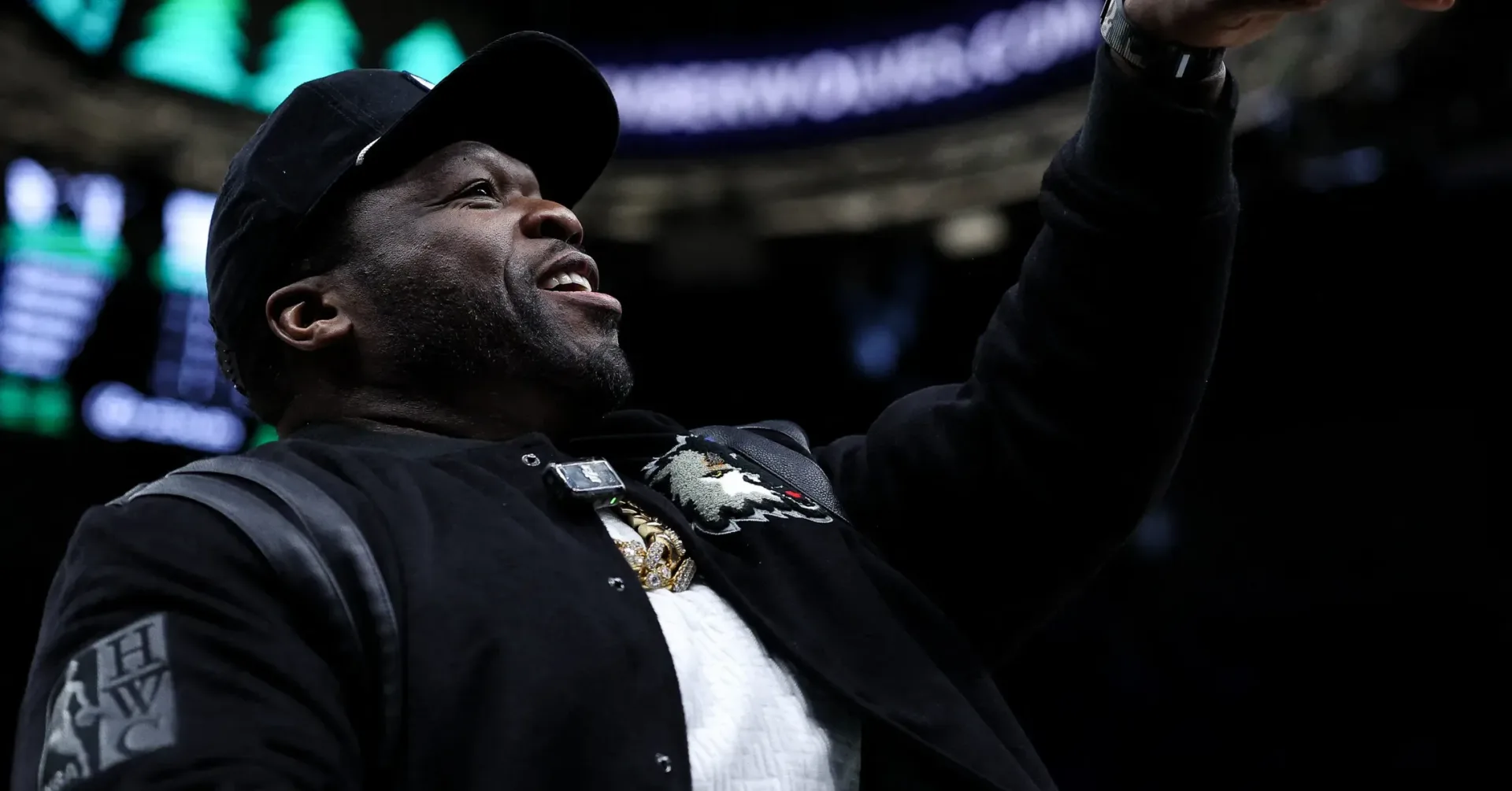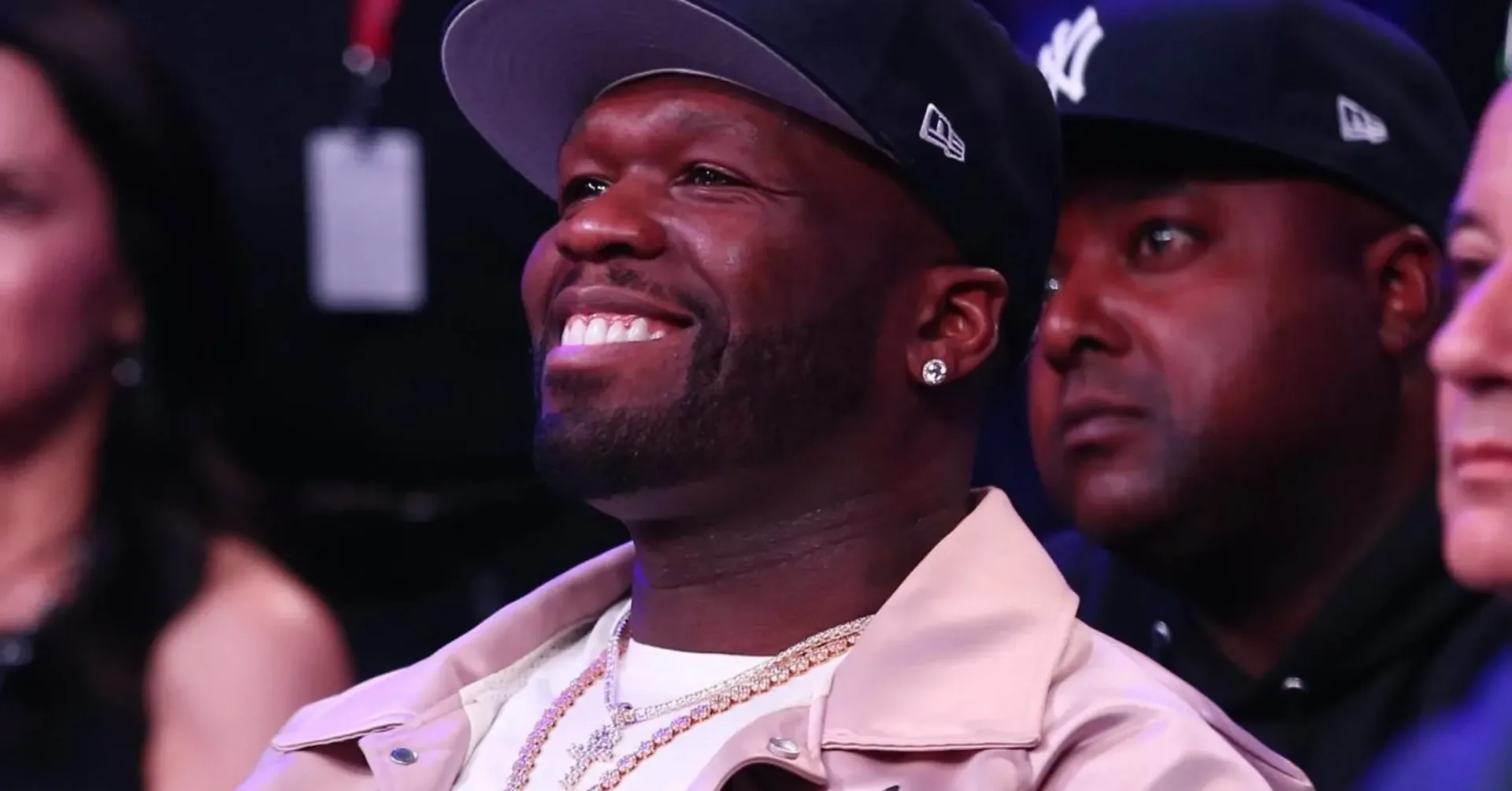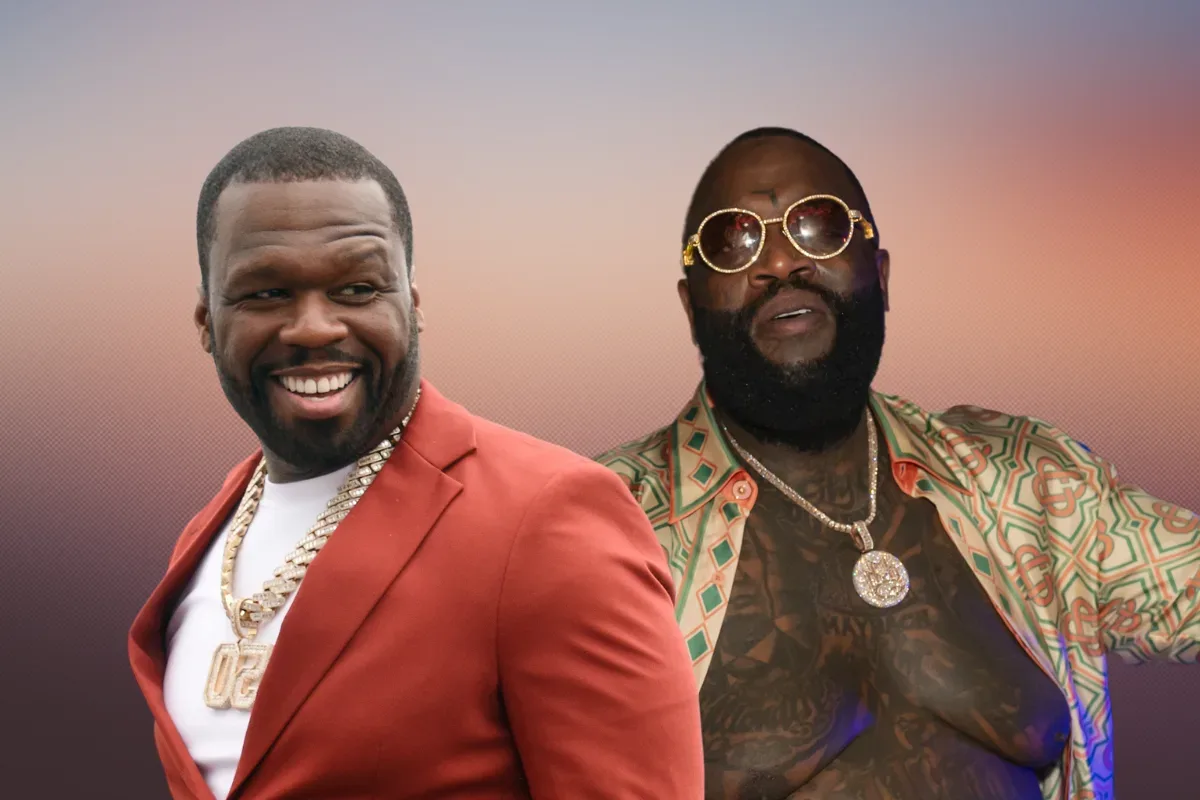
Some rivalries retire quietly. Others seem to have an unlimited continue screen, several unlockable business ventures and a social-media notification set to maximum volume. The latest chapter in the long-running conflict between Rick Ross and 50 Cent arrived after two final dates on Ross’ Port of Miami 20th anniversary tour were canceled: a Greensboro show scheduled for Friday and a Charlotte show scheduled for Saturday.
50 Cent quickly treated the news as an invitation. Sharing word of the canceled dates, he mocked Ross with a joke about creating another wing flavor, a clear reference to Ross’ association with Wingstop. It was a brief jab, but it landed in familiar territory for these two: business, visibility, sales narratives and the kind of online taunting that turns any unfavorable headline into ammunition.
For anyone keeping score at home, that score is less a neat spreadsheet than a decades-long multiplayer match in which both players insist they have already won.
What happened to the final tour dates
The canceled shows were part of an anniversary production celebrating Ross’ 2006 debut, Port of Miami. The run was designed as a more elaborate presentation than a standard concert package, pairing his catalog with the Renaissance Orchestra and the Sainted Trap Choir. Ross had framed it as a formal, big-stage tribute to a key album in his career.
Greensboro’s Tanger Center indicated that its performance would not be moved to another date. In Charlotte, Blumenthal Arts attributed the cancellation to “unforeseen circumstances” and said ticket holders would receive automatic refunds. No detailed reason for the cancellations was publicly provided in the available information.
That distinction matters. Canceled dates are concrete; the cause is not. The lack of a fuller explanation naturally left room for commentary, speculation and, inevitably, a 50 Cent post. Still, the available facts do not establish why the shows were called off, and a canceled pair of dates does not by itself explain the broader performance of the tour.
The anniversary run had otherwise been presented as a successful celebration before the North Carolina stops fell away. Ross also had separate September concerts listed, even as this particular Port of Miami anniversary itinerary ended without reaching Charlotte.
A feud built for the social-media era, even before it existed
The Ross–50 Cent clash dates back to around 2009, when Ross took aim at 50 Cent on “Mafia Music.” What followed was never limited to a conventional exchange of diss tracks. The feud expanded outward into videos, parody material, legal fights, insults involving relatives and arguments over business success. It has endured through several very different eras of hip-hop promotion, from blogs and DVDs to platform-native posts that can turn a single screenshot into a news cycle.
Related coverage includes 50 Cent Targets Rick Ross After Port of Miami Tour Cancellations.
That history explains why the wing joke was not merely an offhand gag. Each artist has repeatedly used the other’s commercial projects as evidence in a larger status argument. Albums, shoes, brand partnerships and public appearances are all treated like stats on a player card. In this rivalry, nearly every release comes with an unofficial postgame show.
Ross’ Wingstop connection is therefore easy material for 50 Cent, just as 50 Cent’s ventures have been material for Ross. The exchange is as much about crafting a clean, shareable punchline as it is about the literal business being mentioned. A good jab requires almost no setup: fans already know the backstory.
Set in Stone and the numbers argument
The new tour cancellation joke also follows 50 Cent’s criticism of Set in Stone, Ross’ first solo studio album since 2021. The album debuted at No. 39 on the Billboard 200, described as the lowest-charting solo studio debut of Ross’ career.
Ross pushed back against reducing the record to that chart position. His response was essentially an argument for listening over scoreboard watching: he urged hip-hop fans to evaluate the music itself rather than rely on what he characterized as manipulated or misleading numbers circulating around the business.
It is an old debate wearing current clothes. Commercial performance has always been part of rap’s competitive language, but streaming, social platforms and constant chart updates have made the conversation unavoidable. An album can be discussed through its songs, influence and audience response, yet the first number many people encounter is its placement. That makes a chart debut unusually useful to a rival looking for a compact insult.
Ross’ counterargument is also understandable in principle: charts measure a particular kind of performance during a particular period, while artistic value is a different question. Neither position makes the other disappear. The No. 39 entry remains a reported chart fact, while listeners can independently decide whether the music connects with them.
The G-Unit G6 became the next battleground
Ross did not leave 50 Cent’s commercial claims untouched. He questioned the reported demand for 50 Cent’s revived G-Unit footwear, arguing that people in the sneaker world had told him they had not seen the shoes and casting doubt on the claim that the release sold through quickly.
The product at the center of that exchange was the G-Unit G6, a $130 Reebok rerelease that returned on August 20 in a white, blue and red colorway recalling the original early-2000s model. The shoe was no longer listed on Reebok’s website within roughly two hours of its release.
That is the concrete detail available here: the product disappeared from the site within that timeframe. It is a strong sign of immediate online demand, but it does not, on its own, disclose the amount of inventory initially offered. In the usual fever dream of sneaker launches, “sold out” can mean very different things depending on stock levels, regions and restock plans. It is still understandable that 50 Cent seized on the fast website disappearance as a rebuttal.
The back-and-forth has a familiar rhythm. Ross challenges the commercial claim; 50 Cent answers with a result that can fit neatly into a post; the audience gets another round of jokes. For collectors and shoppers, the same behavior can feel recognizable beyond celebrity feuds: release-day excitement, disputed sellout claims and arguments over whether scarcity reflects genuine demand or a limited supply. The comedy is sharper when the product is something conspicuous enough to become a symbol. For a lighter look at the emotions that can surround such purchases, see The Collector’s Five Stages of Buying One Small Thing.
Why cancellations create such easy ammunition
Touring is especially vulnerable to public interpretation because it is visible by design. A show is announced, promoted, mapped to a venue and sold ticket by ticket. If a date is canceled, the change is immediately legible to fans, even if the underlying circumstances are not. Rivals do not need access to a promoter’s books or a venue’s internal planning to turn the word “canceled” into a punchline.
That simplicity is exactly what 50 Cent exploited. The post did not attempt to explain the circumstances behind Greensboro or Charlotte. It converted the bad news into a Wingstop joke and relied on the audience’s existing familiarity with Ross’ brand connections and the pair’s years of antagonism.
There is a difference, however, between an effective joke and a complete account. The venues communicated that the Greensboro event would not be rescheduled and that Charlotte refunds would be issued automatically, with “unforeseen circumstances” offered in Charlotte as the explanation. Beyond that, the public record described here does not assign a specific reason.
The rivalry remains bigger than one post
For Ross, the immediate practical issue is the disappointing end to a tailored anniversary presentation for Port of Miami, an album central to his rise. For 50 Cent, it is another chance to reinforce the character he has played in this feud for years: the rival always ready with a joke, a screenshot and an alternative interpretation of someone else’s victory lap.
Neither artist has built a career on avoiding spectacle. Ross’ anniversary concept leaned into grandeur with orchestra and choir support. 50 Cent’s response reduced that grandeur to a fast-food-flavor punchline. That contrast is the whole mechanism: black-tie musical commemoration meets relentless internet heckling.
With Ross still listing other September shows, the canceled North Carolina dates do not represent a blanket end to his live schedule. They do, though, mark the premature close of this particular anniversary run. And because this is Rick Ross versus 50 Cent, the last scheduled stops were never likely to disappear quietly.