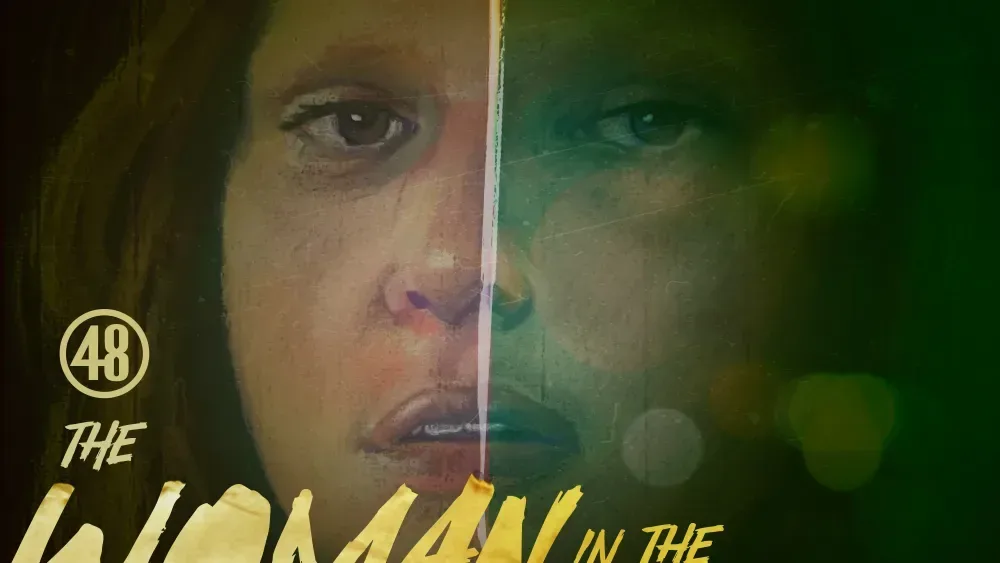
True-crime storytelling is getting a new screen to stare at suspiciously. 48 Hours is expanding one of its podcast formats with The Woman in the Woods, a six-part series led by correspondent Erin Moriarty. Unlike the program’s earlier podcast miniseries, which were audio-only, this project is designed as an audio-and-video experience, with a video episode arriving alongside every audio installment.
The new series centers on the unsettling mystery involving Mindi Kassotis and her husband, Nick Kassotis. Friends were initially told that Mindi had died in a hospital. A few months later, they were told that Nick had also died. That account was thrown into doubt after a dismembered woman’s body was found in a swamp outside Savannah, Georgia, and police sketches resembled Mindi.
It is grim subject matter, and the added visual format appears intended to provide context rather than turn an already disturbing case into background noise for a scrolling session. The paired video chapters will incorporate previously unseen interview footage from the original 48 Hours broadcast, along with b-roll, photographs and animated text. They are set to be available through the 48 Hours YouTube channel on the same day as their companion audio episodes.
A six-part investigation built for listening and watching
At its core, The Woman in the Woods remains a six-episode investigative podcast. Moriarty’s reporting will examine questions surrounding the Kassotises’ lives, including Nick Kassotis’ prior military work and the possible effects it may have had on the couple. The series also addresses why Mindi was seldom seen by friends outside the home.
Those details point to a central strength of serialized reporting: it can make room for the questions that do not fit neatly into a one-line summary. The public-facing facts described so far are stark, but the podcast’s episode-by-episode structure gives the investigation space to trace how friends understood events, how those understandings changed, and why the discovery near Savannah transformed the case.
Adding video does not change the seriousness of that material. What it can change is how an audience follows it. An interview subject’s pauses, a location image, a document shown on screen, or simply a clearly timed on-screen name can provide useful orientation during a complicated narrative. The format is particularly suited to a case in which timelines, relationships and competing accounts may be difficult for listeners to keep straight.
What the video editions will add
The key distinction is not that The Woman in the Woods has a video component, but that the visual edition is being released in step with the audio series rather than as a separate afterthought. Each episode is expected to have a same-day video counterpart. The announced materials include:
- Never-before-seen interview footage from the original 48 Hours broadcast
- B-roll connected to the story
- Photography used to support the narrative
- Animated text intended to clarify information on screen
That package puts the project somewhere between a traditional audio podcast and a compact documentary series. Listeners who prefer headphones can still follow the story in audio form. Viewers who want visual reference points can use the YouTube releases without waiting for a separate television-style rollout. It is an uncomplicated idea, but a meaningful departure from the audio-only approach used for previous miniseries.
There is also a practical accessibility angle. In a dense investigation, visual text can reinforce names and sequence events, while photographs and footage can help establish setting. At the same time, the audio version gives people a way to engage without requiring a screen. The best hybrid projects do not make either format feel like an incomplete substitute for the other; they offer different paths through the same reporting.
The case at the center of the series
The announced premise begins with information given to Mindi Kassotis’ friends: that she had died at a hospital. Later, friends were told that her husband, Nick Kassotis, had died as well. The discovery of human remains in a swamp outside Savannah complicated that story dramatically, particularly after police sketches bore a resemblance to Mindi.
Those are the known contours presented for the series, not a substitute for the investigation itself. The Woman in the Woods is positioned to examine how the couple’s circumstances were understood by people around them and how the case developed from there. Moriarty’s reporting will also explore Nick Kassotis’ military background and its potential impact, a subject that requires care and context rather than easy assumptions.
Likewise, the question of why Mindi was rarely seen by friends is not a conclusion by itself. It is one of the threads the series says it will investigate. That distinction matters in true-crime coverage: an unanswered question may be important, but it is still an unanswered question. A serialized format can be useful when it lets evidence, interviews and chronology do the work instead of treating every unusual detail as an instant reveal.
Why this shift matters for a long-running true-crime brand
Podcasting has long rewarded intimate narration and the ability to spend time with a case. Video, meanwhile, can preserve the emotional and informational force of recorded interviews. Combining the two lets a documentary brand reuse neither format mechanically: audio can carry the story wherever listeners are, while video can offer a fuller visual record for viewers who want one.
For 48 Hours, the change also gives an established television investigation a different life outside a standard broadcast window. The inclusion of footage not previously seen in the original broadcast gives the video installments a reason to exist beyond merely placing a waveform over an audio file. B-roll, photos and animated text further suggest an edited presentation made for digital viewing.
That is important because “video podcast” can mean almost anything now, from a studio camera pointed at two microphones to an elaborately produced visual companion. Based on the announced elements, The Woman in the Woods is closer to the latter. It promises reporting shaped for serialized listening but supplemented with documentary materials that can add clarity and atmosphere.
It also arrives as viewers continue to move between formats rather than committing to only one. Someone may hear an episode while commuting, then later watch the visual version to see the interview footage referenced in the reporting. Another viewer may start on YouTube and use the audio feed to keep up with the series away from a screen. The case remains the focus; the format simply gives the audience more than one doorway in.
Where viewers can find it
The video installments of The Woman in the Woods will be released on the 48 Hours YouTube channel, with each one scheduled to arrive the same day as its corresponding audio episode. The series has six parts and is led by Erin Moriarty.
For viewers keeping an eye on how established entertainment and documentary properties adapt to changing platforms, the move is another example of familiar programming taking a more flexible distribution shape. It is not a game launch or a collector drop, admittedly, but the release plan has the same basic appeal as a well-organized inventory screen: choose the format that suits you, and do not make the audience hunt through three menus just to find the important lore.
The reporting itself will determine the impact of the series. But as a format experiment, the plan is clear: a six-part investigation, audio and video released in tandem, archival interview material that was not included in the original broadcast, and visuals designed to accompany a difficult case with added context. For another recent example of a major screen project finding its way to a streaming destination, see our coverage of the streaming plans for Disclosure Day.