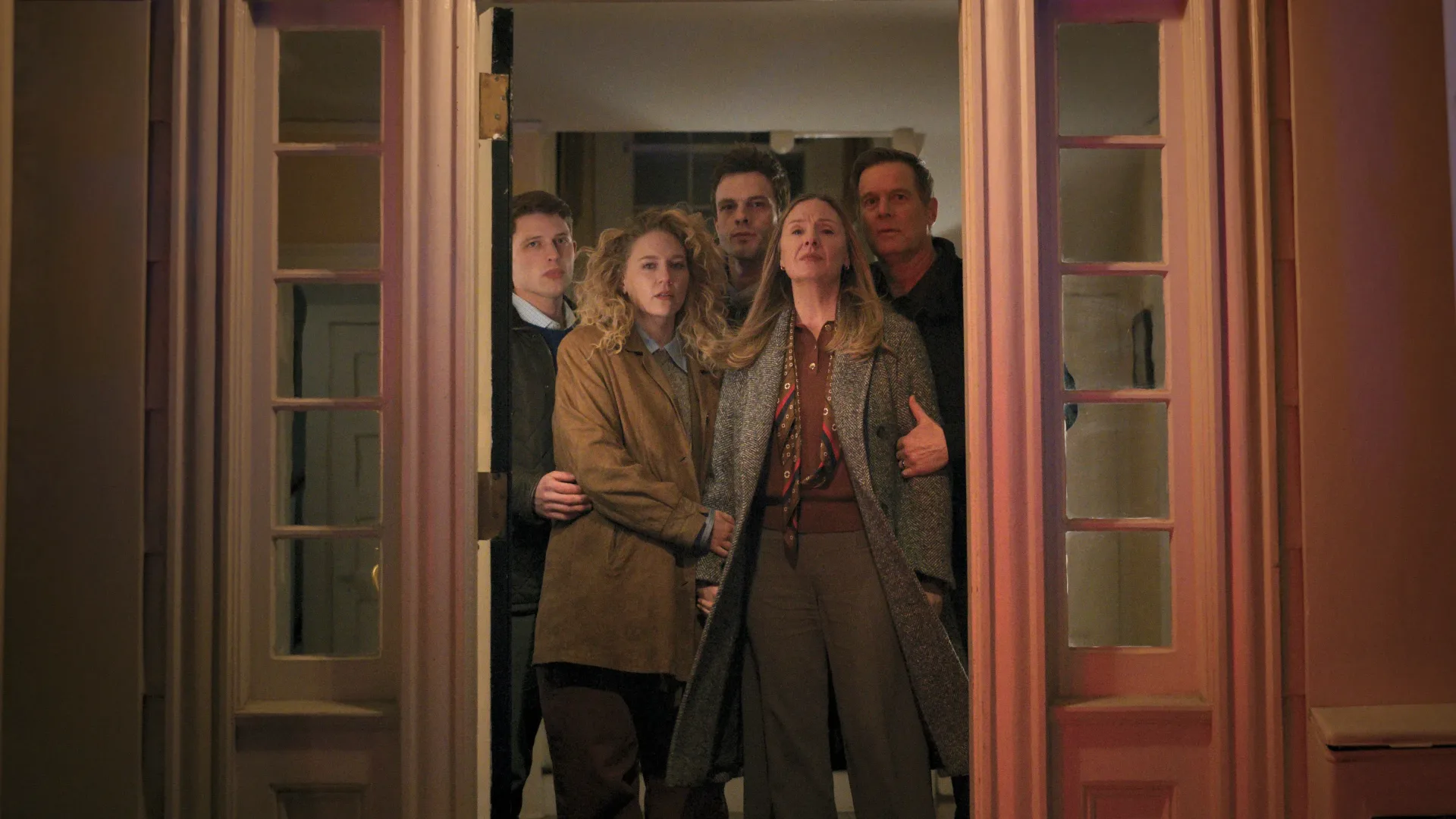
Disclosure Day, Steven Spielberg’s science-fiction action drama, is scheduled to begin streaming on Peacock on Oct. 9. The film first arrived in theaters on June 12 and now moves to a home-viewing platform after a sizable summer theatrical run, one that ended with $241 million in worldwide box-office revenue.
The setup puts Emily Blunt and Josh O’Connor at the center of a story involving alien life, official secrecy and personal danger. Blunt plays a meteorologist, while O’Connor portrays a whistleblower. Their characters uncover an unexpected connection to extraterrestrial activity and put themselves at risk while attempting to expose both the truth and alleged abuse by the U.S. government.
That is a fittingly large piece of narrative machinery for Spielberg: weather systems, visitors from elsewhere, authorities who know too much and ordinary people trying to get a world-changing fact into public view. The premise places Disclosure Day in a corner of sci-fi where the alien mystery is not simply a monster-of-the-week problem. It is also a political and human problem, with the question of who controls information sitting alongside the question of what, exactly, has arrived.
A Peacock date for a theatrical sci-fi release
The Oct. 9 Peacock debut gives viewers who missed the theatrical window a clear date to catch the film. It also gives returning viewers a chance to revisit the story’s conspiracy framework and ensemble cast without the pressure of a summer multiplex schedule.
Disclosure Day was produced with a reported $115 million budget, while marketing accounted for another reported $80 million. Those figures underline the scale of the release. The $241 million worldwide total represents a meaningful global turnout for an original live-action science-fiction drama in an environment where recognizable franchises often command much of the conversation.
Box-office totals are not a one-line verdict on a film’s full commercial performance; theatrical splits, later viewing arrangements and other business details all matter. Still, the worldwide gross establishes that Disclosure Day was a prominent summer release rather than a quiet genre experiment that slipped past audiences unnoticed. The Peacock run is its next major opportunity to build an audience beyond ticket buyers.
Blunt and O’Connor lead a substantial ensemble
Blunt and O’Connor anchor the central investigation, but the cast also includes Colman Domingo, Colin Firth, Wyatt Russell, Eve Hewson and newcomer Courtney Grace. The mix brings together performers with very different screen personas, which can be especially useful in a story about competing loyalties and withheld knowledge. A whistleblower narrative needs people who may be allies, obstacles, witnesses or potential sources of pressure; an alien-life story needs the audience to wonder who understands the danger and who is refusing to acknowledge it.
The available plot description does not spell out every role or reveal the nature of the extraterrestrial connection. That uncertainty is worth preserving. What is clear is that the meteorologist and whistleblower are not merely observing the mystery from a safe distance. They are trying to reveal information that powerful institutions would apparently prefer to keep contained.
That angle distinguishes the film from a simpler invasion scenario. Rather than presenting alien life only as an external threat, Disclosure Day ties its suspense to the actions of people and agencies on Earth. The real tension may therefore come from the collision between discovery and disclosure: finding something extraordinary is one task, but persuading the rest of the world that it exists can be a much more dangerous one.
Reviews were positive, with some reservations
Critical response was broadly positive, and the movie holds an 80% score on Rotten Tomatoes. Audience reaction was described as more restrained than the critical consensus, suggesting that the film’s ambitions and execution may have connected differently depending on what viewers hoped to get from its sci-fi premise.
One critical assessment praised the cast while arguing that the ending did not ultimately travel to a particularly unexpected destination. That is a useful bit of context for prospective viewers, but not a reason to reduce the movie to its final stretch. Films built around conspiracies and extraterrestrial mysteries often live or die on the journey as much as the reveal: the dread of hidden information, the shifting trust between characters and the visual or emotional texture of confronting an impossible truth.
For people who enjoy a genre film as a discussion piece, the contrast between strong critical notices and comparatively muted audience enthusiasm may be part of the appeal. A streaming arrival makes it easier to form an opinion without spoilers doing all the work in advance. Is the value in the destination, the performances, the investigative momentum or the filmmaking atmosphere? Peacock viewers can decide for themselves beginning Oct. 9.
Spielberg and the extraterrestrial imagination
Spielberg has long been one of mainstream cinema’s defining filmmakers of encounters with life beyond Earth. Close Encounters of the Third Kind approached contact as an immense, mysterious event, while E.T. the Extra-Terrestrial found intimacy and childhood wonder in a story about a stranded visitor. Those films remain major points of reference whenever the director returns to the cosmos, even when a newer movie takes a different tonal route.
Disclosure Day appears to push the alien theme toward suspicion, governmental power and an effort to expose the truth. That does not erase the legacy of those earlier films; it highlights the flexibility of the subject. Extraterrestrial stories can be wondrous, frightening, sentimental, paranoid or all of those at once. Here, the emphasis is on revelation and the danger faced by those who refuse to let the evidence stay hidden.
The director’s career extends well beyond science fiction, of course. His Oscar wins include best director and best picture for Schindler’s List, as well as best director for Saving Private Ryan. His filmography also includes projects such as Raiders of the Lost Ark, Munich, War Horse, Lincoln, The Post and West Side Story. More recently, he received a best-picture nomination as a producer of Hamnet, directed by Chloé Zhao.
That history gives any Spielberg sci-fi project an inevitable layer of expectation, especially when its subject involves aliens. Yet Disclosure Day is not being framed simply as a retro return to an earlier hit. Its meteorologist-and-whistleblower pairing, its governmental-abuse component and its action-drama positioning point toward a more contemporary disclosure thriller.
Why the streaming move matters for genre viewers
Streaming can be an especially good second stage for a film with a dense premise. Viewers can pause to debate details, revisit a clue, compare theories or simply give a slower-burn opening more room than they might have during a crowded theater trip. For a story centered on hidden extraterrestrial activity, that replay value can matter: conspiracy narratives invite audiences to look twice at what characters say, what institutions withhold and what the story chooses to reveal.
It also arrives at a time when science-fiction and horror audiences continue to move comfortably between movies and games. Players looking for another kind of escalating genre tension can keep an eye on the planned Nintendo Switch 2 releases of the Resident Evil 2, 3 and 4 remakes, though Spielberg’s film is concerned with extraterrestrial secrecy rather than survival-horror outbreaks.
For Disclosure Day, the essential viewing information is straightforward: the film streams on Peacock beginning Oct. 9. Its path from a June 12 theatrical release to a $241 million worldwide gross and then to streaming gives the movie a new audience runway. Anyone drawn to Spielberg, Emily Blunt, Josh O’Connor, alien mysteries or stories where telling the truth is as perilous as discovering it will have a new way to see where the disclosure leads.