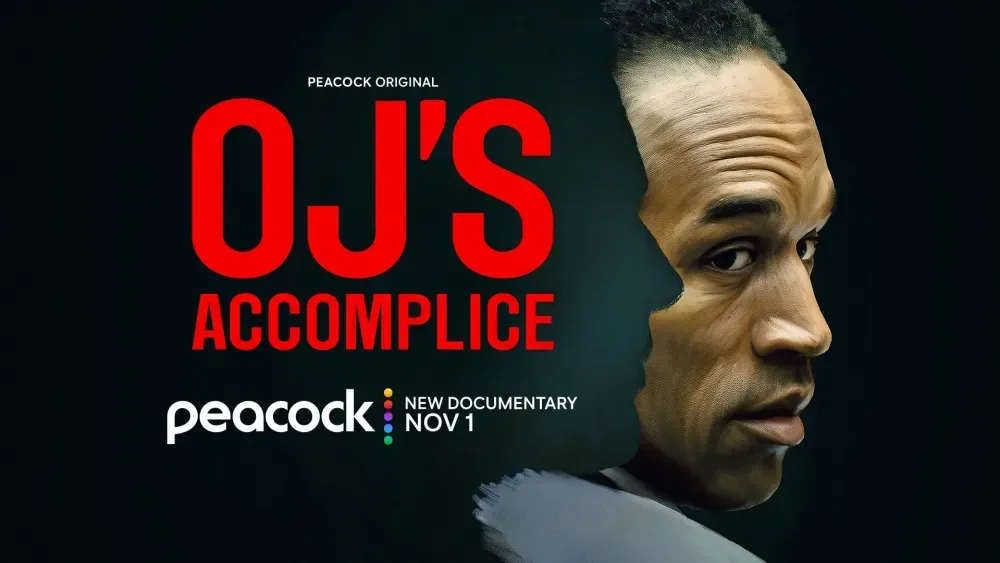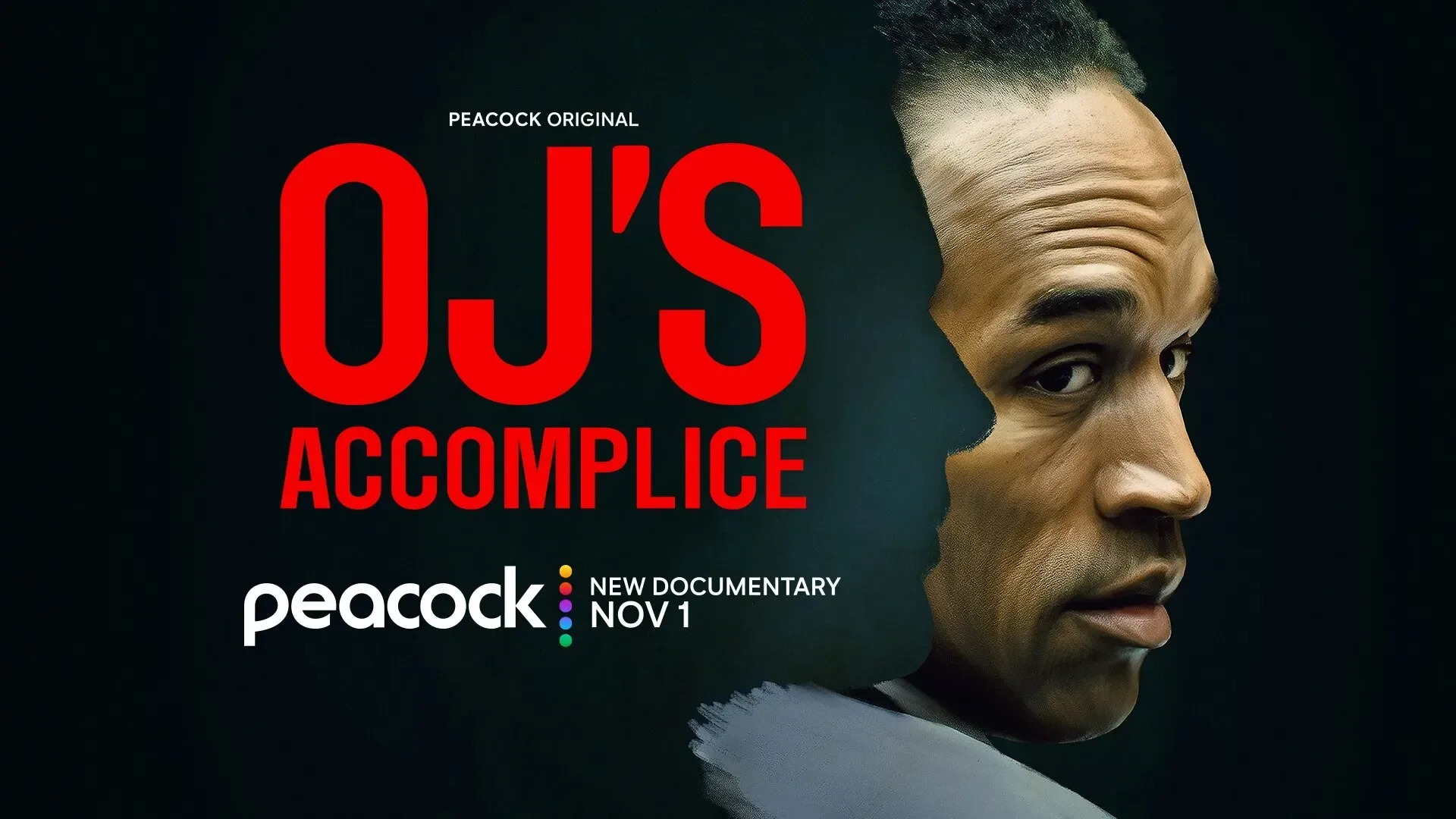
Peacock has moved OJ’s Accomplice forward from its previously planned December debut. The two-part documentary will now premiere on Nov. 1, revisiting the 1994 murders of Nicole Brown Simpson and Ron Goldman and examining the possibility that O.J. Simpson did not act alone.
That framing is necessarily a serious one. The project is not presented as a simple recap of a well-known case, but as a renewed examination of the crime scene, key evidence and accounts from people connected to the investigation and its aftermath. Peacock’s first-look material includes courtroom footage and what is described as a new eyewitness account.
What the documentary is set to examine
OJ’s Accomplice centers on the night of June 12, 1994, when Nicole Brown Simpson, Simpson’s wife, and her friend Ron Goldman were killed. Its stated premise is an exploration of whether more than one person may have been involved. That is an investigative question the documentary intends to pursue; it should not be treated as a conclusion established merely by the program’s title or promotional framing.
The distinction matters in any documentary built around an unresolved or disputed interpretation. Revisiting evidence can mean placing familiar material beside newly featured testimony, re-evaluating the meaning assigned to particular details, or comparing how different participants remember events. It does not inherently mean that a film has discovered definitive proof. Viewers approaching the series should keep separate three things: what the documentary alleges or explores, what interview subjects believe, and what can be independently established from the material presented.
Peacock says the program will return to the crime scene and key evidence while interviewing figures with varied relationships to the case. The announced participants are:
- Pat McKenna, identified as an original defense investigator;
- Tom Lange, identified as the lead detective;
- DEA agent Robert Brisolari;
- members of Simpson’s original defense team;
- Kato Kaelin, identified as A.C. Cowlings’ former roommate; and
- Tanya Brown, Nicole Brown Simpson’s sister.
That lineup signals an effort to build the narrative from more than one vantage point: defense-side work, law-enforcement investigation, personal proximity to people in the case, and the perspective of Nicole Brown Simpson’s family. It also means viewers may encounter sharply different interpretations. A documentary can give those accounts room without making them equivalent in evidentiary weight, and the useful question is how clearly the series identifies the basis for each claim.
Why courtroom footage and witness accounts change the viewing experience
Archival courtroom video can do more than establish atmosphere. It places viewers near the arguments, questions and public stakes of a legal proceeding. But courtroom footage is still only one kind of record: it captures what was presented and contested in court, rather than automatically settling every broader theory later attached to the case.
The announced eyewitness component raises another important documentary question: context. Eyewitness testimony can be compelling because it offers a personal account of what someone says they saw, heard or experienced. Its relevance depends on the details surrounding it—what precisely is being described, when the observation allegedly occurred, how the account relates to other evidence, and whether the program distinguishes remembered testimony from verified fact.
For a two-part series, the format potentially gives the filmmakers more room to lay out competing strands rather than compressing them into one quick reveal. Part one can establish the known setting, people and evidence under discussion; part two can test the theory against interviews and objections. Whether OJ’s Accomplice uses that time to offer transparent sourcing and clear counterpoints will be central to how persuasive its argument feels.
A premise that requires careful language
The title itself makes a forceful proposition. Yet “exploring the possibility” is not the same as proving an accomplice existed. That gap is especially important with a story involving real victims, a highly publicized legal case and a long afterlife in television culture.
Terms such as theory, allegation, testimony and evidence are often blurred together in promotional true-crime language, but they do different jobs. A theory is an explanation proposed for consideration. An allegation is an assertion that requires support. Testimony is a person’s account or statements. Evidence is material used to substantiate or challenge a proposition. A rigorous documentary should tell viewers which category they are hearing at a given moment instead of using editing, music or a dramatic title to make an unproven inference seem settled.
This is also why the identities of the interviewees matter as much as their inclusion. A detective, a defense investigator, a family member and a social acquaintance each bring different firsthand knowledge, professional incentives and personal stakes. Their appearances can offer useful perspective, but no participant’s proximity alone resolves the documentary’s central proposition.
The creative team behind the two-parter
OJ’s Accomplice is directed by Ari Mark and Sumit David. The pair also executive produce for Ample Entertainment, which produces the documentary. Sphere Abacus handles licensing and distribution.
The move to Nov. 1 gives Peacock a new, earlier date for a program whose subject remains deeply sensitive. The practical takeaway for prospective viewers is simple: this is a two-part documentary arriving earlier than expected, with a stated focus on a possible additional participant in the 1994 murders and a mix of archival courtroom material plus newly presented accounts.
It also arrives during an active period for documentary and scripted television development, where the distinction between a fresh angle and a proven revelation can be easy to lose in the marketing. Other projects, including a new mystery-centered limited series based on The Birds, show how familiar subject matter can be revisited through a newly constructed story. In the case of OJ’s Accomplice, its value will rest on how carefully it explains its evidence and how candidly it handles uncertainty.
What to look for when it premieres
For viewers interested in the documentary as an investigative work rather than simply a sensational revisiting of a famous case, several questions will be worth keeping in mind:
- What is genuinely new? The program advertises a new eyewitness account. The series will need to establish what information that account adds and how it connects to the central theory.
- How does it define the accomplice claim? A precise explanation of the alleged role, timeline and evidentiary basis is more meaningful than a provocative title alone.
- What material challenges the theory? A strong examination should address contradictions, gaps and alternative readings rather than merely assembling material that supports one interpretation.
- Are interviewees clearly situated? Viewers benefit when a documentary explains each participant’s role and proximity to the events, instead of treating every voice as interchangeable.
- Does the editing preserve uncertainty? Suspense is a television tool, but it should not substitute for making clear what is known, what is disputed and what remains speculative.
Peacock has not framed the project as a conventional biography or a general overview. Its focus is narrower: reassessing the events of June 12, 1994 through evidence, courtroom footage and interviews, while putting the possibility of an accomplice at the center of the inquiry. The series premieres Nov. 1.