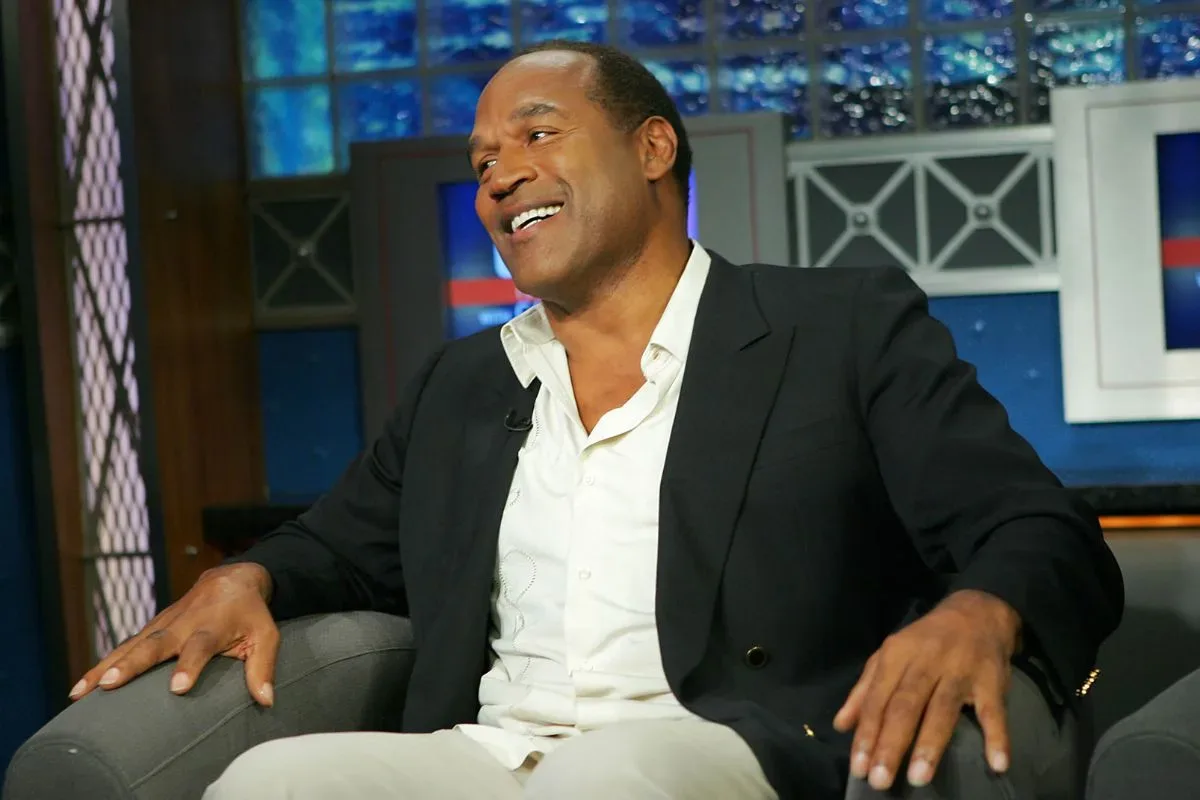
Peacock is preparing another return to one of the most exhaustively examined criminal cases in modern American media. Its newly greenlit two-part documentary, OJ’s Accomplice, is slated to premiere in December and is built around a provocative, unresolved-on-screen premise: whether O.J. Simpson may have had help on the night Nicole Brown Simpson and Ron Goldman were killed in 1994.
That premise is a claim the documentary intends to explore, not an established finding. The reported program will draw on interviews with Kato Kaelin, a witness in Simpson’s criminal trial, and Nicole Brown Simpson’s sister, as well as accounts described as previously unheard from eyewitnesses. Those accounts may suggest that people in Simpson’s inner circle were present during the killings.
The distinction matters. A documentary’s promise to challenge a long-held understanding is not, by itself, proof that the understanding has been overturned. Until viewers can assess the interviews, the context surrounding them, and the program’s evidence, the most accurate description is that Peacock is revisiting allegations around possible accomplices rather than resolving the question.
What the two-part series says it will investigate
The title makes the project’s angle unusually direct. Rather than presenting another broad survey of the case, OJ’s Accomplice is expected to focus on the possibility that Simpson did not act alone. The available details point to a structure centered on witness recollections and the relationship between those recollections and the people closest to Simpson at the time.
“Inner circle” is a broad phrase, and the announcement does not identify the people who may be discussed, spell out what eyewitnesses allegedly saw, or explain how the documentary will corroborate their accounts. Nor does it provide a detailed outline of the evidence expected to appear. Those omissions are important practical limits on what can responsibly be inferred before the series airs.
Eyewitness testimony is also a technical term with a broad range. It can mean a person says they directly observed an event, an individual, or activity connected to an event. It does not automatically answer separate questions about timing, vantage point, memory, consistency, corroboration, or whether the observation establishes criminal participation. A documentary examining eyewitness accounts can be valuable, but its conclusions depend on how carefully it distinguishes observation, inference, and speculation.
The program’s planned participation from Kaelin and Nicole Brown Simpson’s sister gives it connections to figures already closely associated with the case. Kaelin was a trial witness; Nicole Brown Simpson’s family has lived with the public and personal consequences of the killings for decades. Their presence may provide perspective and context, but audiences will still need to see exactly what new information, if any, is presented.
A case that has become its own documentary ecosystem
Nearly three decades after the 1994 killings, the Simpson case remains a recurring subject for television and streaming documentaries. That persistence is part of the story around OJ’s Accomplice: the series arrives in a field already crowded with productions that approach the same events through different lenses.
O.J.: Made in America, released in 2016, is widely regarded as a major long-form examination of Simpson and the cultural forces surrounding the case. More recently, 2025’s American Manhunt: O.J. Simpson offered another serialized treatment. Peacock has also previously carried O.J. Simpson: Blood, Lies and Murder.
There is also a separate, more recent project examining a far different period in Simpson’s public life. O.J. Unseen: Exploitation of Evil, a four-part series, examined the unsuccessful 2006 hidden-camera project Juiced. The series aired September 7 and 8 and included footage from an attempted reality-TV comeback that did not ultimately reach air in its original form.
These projects are not interchangeable. Some attempt broad biographies, some focus on the criminal case, and some use individual episodes from Simpson’s post-trial public life to examine image management and media attention. OJ’s Accomplice appears designed to narrow its scope to a single claim that has persisted at the edges of discussion around the killings.
Why the framing deserves careful viewing
True-crime programming often faces a difficult balance: it must make a coherent story from complicated records while avoiding the temptation to treat drama, novelty, or an unresolved question as a substitute for proof. The “did he act alone?” framework is inherently compelling because it promises a fresh interpretation of an event that many viewers believe they already understand.
That does not make the question illegitimate. New interviews, newly available materials, or reassessed testimony can be worth public examination. But a responsible viewer should keep several categories separate:
- What is newly alleged: claims that emerge in interviews or through recollections presented by the program.
- What is newly documented: material that can be independently identified, dated, and placed in context.
- What is interpretation: the filmmakers’ argument about what the material means.
- What remains unproven: any conclusion not established by the information made available.
This is especially significant in a case with decades of public attention, retellings, debates, and adaptations. A “never-before-heard” account may be new to a television audience, but viewers should not assume the phrase alone establishes either novelty in the factual record or reliability. The documentary will need to show why its interviews matter and how they fit against what has previously been known.
Terms worth keeping straight
Corroboration means independent support for a claim. If one person recounts an event, corroboration may come from other accounts, documents, records, or material evidence that supports key details. It is not merely another version of the same unverified story.
Chain of custody generally refers to the documented handling of physical evidence: who possessed it, when they possessed it, and what happened to it. Nothing currently disclosed about OJ’s Accomplice indicates that it will introduce new physical evidence, but the term is useful when documentaries imply that an item proves a specific claim.
Reenactment is a visual dramatization of an alleged event, not footage of the event itself. If used, it can help an audience follow a timeline, but it should not be confused with documentary proof.
Clear labeling of these distinctions would be central to a persuasive presentation. The more consequential the allegation, the greater the need for the program to show viewers where testimony ends and the filmmakers’ conclusions begin.
The larger streaming question: familiarity versus genuine revelation
The new series also arrives at a moment when familiar, high-profile subjects remain useful to streaming platforms. A case that audiences instantly recognize has an obvious promotional advantage. But the growing number of Simpson projects raises a more difficult creative question: what does a new production add beyond revisiting an already famous narrative?
For OJ’s Accomplice, the answer will depend on substance rather than branding. If the series offers specific accounts, tests them against the available record, acknowledges inconsistencies, and makes its evidence legible to viewers, it may earn its place as a focused re-examination. If it relies mainly on the suspense of its central question, it risks becoming another variation on a well-worn promise that the case is about to be seen in an entirely new light.
That pressure is not unique to true crime. Across the screen-entertainment business, recognizable names and established audiences are increasingly valuable assets, a subject also visible in reporting around platforms and film-discovery services such as Letterboxd’s reported sale interest. In the case of a documentary about real deaths, though, familiarity comes with a heightened obligation: attention should serve understanding, not simply prolong a cultural fixation.
What viewers will know before December—and what they will not
At present, the confirmed outline is limited. Peacock has greenlit a two-part documentary called OJ’s Accomplice. It is expected in December. It will include Kaelin, Nicole Brown Simpson’s sister, and accounts characterized as previously unheard from eyewitnesses. Its thesis is that members of Simpson’s inner circle may have been present during the killings of Nicole Brown Simpson and Ron Goldman.
What remains unknown is just as important. The announcement does not identify the eyewitnesses, detail their testimony, explain whether their accounts are supported by records or other witnesses, or reveal how the series will handle competing explanations. It does not establish that an accomplice existed, and it does not state that law enforcement has reached a new conclusion.
For now, then, OJ’s Accomplice is best understood as an upcoming documentary investigation with a high-stakes claim at its center. Its eventual value will rest on transparency: the specificity of its evidence, the fairness of its context, and its willingness to leave uncertainty visible where certainty cannot be supported.