There are plenty of ways a horror game can make a player jump: a sudden sting on the soundtrack, an enemy crashing through a window, the realization that the last save was an hour ago. Resident Evil: Village found a more specialized route to fear in House Beneviento: take away the weapons, narrow the corridors, turn the lights down, and introduce an enormous malformed baby that hunts by sound while making deeply unpleasant noises.
That particular sequence has now earned an admirably candid reaction from Zach Cregger, director of the upcoming Resident Evil film. Speaking during a Q&A where the movie’s opening 30 minutes were shown, Cregger described playing Resident Evil: Village in virtual reality and reaching an adult-sized limit. The Beneviento basement, he said, gave him a full panic attack. He had to remove the headset, step away, eat some candy, and eventually work up the nerve to return.
This is not a verdict delivered from the safe emotional distance of a couch, a controller, and a conveniently visible living-room exit. Cregger was playing in VR, in his garage, where Village’s carefully controlled nightmare could occupy his entire field of view. The game’s giant baby creature was no longer merely approaching a character on a screen. It had the distinctly rude ability to seem as though it was somewhere behind the player.
Honestly: fair. More than fair. The Duke may sell ammunition, healing items, and increasingly impractical luggage space, but he cannot sell the one thing that would truly help in this chapter: a certificate permitting the player to leave.
Why House Beneviento still gets under players’ skin
Resident Evil: Village, often called Resident Evil 8, spends much of its running time giving players tools to answer danger. Ethan Winters accumulates firearms, ammunition, upgrades, and the grim competence that comes from repeatedly being dropped into impossible situations. House Beneviento disrupts that familiar arrangement. It strips back the expected combat rhythm and asks the player to continue into an enclosed, unsettling space without the reassuring option of shooting the problem until it becomes loot.
The setting does a huge amount of work. A doll-focused mansion is already not a place anyone should willingly enter after sunset. The lower areas intensify the discomfort with clinical-looking objects, a mannequin-like figure on an operating table, and dark passages that feel designed to make navigation itself stressful. The giant fetus monster then converts all of that anticipation into pursuit.
Its design is deliberately difficult to shake off. The creature is a deformed infantile shape, it cries out words including “mama” and “dada,” and it produces an array of noises that make the player want to relocate their ears. None of that depends on a conventional boss-fight challenge. The fear comes from vulnerability, proximity, and the simple fact that the monster does not need to be elegant to be unforgettable. It only needs to keep coming through a corridor that is far too narrow.
VR changes the equation further. A television frame maintains a small but meaningful border between a player and the fiction. Virtual reality reduces that buffer. Spatial sound, scale, and the instinct to physically turn toward a noise can make a game’s scare design feel alarmingly immediate. Cregger’s response is a useful reminder that the format can amplify not just spectacle but helplessness. A giant baby being scary on a flat display is one thing; feeling it occupy your space is another.
For anyone who has ever paused a horror game, stared at the menu, and announced that they are “just checking something” before taking a walk around the house, this is an extremely legible experience. Video games have a long history of producing iconic enemies. Village’s baby is perhaps unusual in that it also produces an immediate desire to discuss literally any other enemy.
A filmmaker adapting a series with a sharp sense of fear
Cregger’s story matters beyond the shared trauma of fans who have visited the Beneviento basement. It also offers a small insight into what he responds to in Resident Evil: not only monsters or action set pieces, but changes in tone and perspective that make an audience feel exposed. The franchise has always moved between survival horror, action, body horror, mystery, camp, and creature-feature excess. Village itself can pivot from a grand, snowy gothic setting to a claustrophobic dollhouse nightmare without asking permission.
That flexibility will be worth watching as Cregger’s film approaches. The movie does not appear, based on its trailers, to include a direct equivalent of Village’s giant baby monster. That is probably good news for theater seats, snack counters, and every usher who would rather not hear an audience collectively whisper “nope” for two uninterrupted minutes. It does, however, feature first-person perspective shots that evoke the games’ point of view.
First-person imagery is a potentially telling choice for a series whose identity is inseparable from player perspective. Whether a game uses fixed angles, over-the-shoulder action, or a first-person camera, Resident Evil regularly makes sightlines and limited knowledge part of the scare. A film cannot hand viewers a controller, but it can create the sensation of moving with a character into danger before the wider picture becomes clear. The difference between seeing a monster and fearing what may be just outside the frame remains a powerful horror tool.
There is also a timely parallel between Cregger’s VR anecdote and the larger conversation around immersive storytelling. Virtual reality can make carefully staged environments feel physically close, while movies use camera position, editing, and sound to force a viewer’s attention into similarly uncomfortable places. For a wider look at how immersive work is evolving around shared experiences and smarter hardware, see this look at VR and XR’s push toward new shared spaces and storytelling approaches.
What is known about the new Resident Evil movie
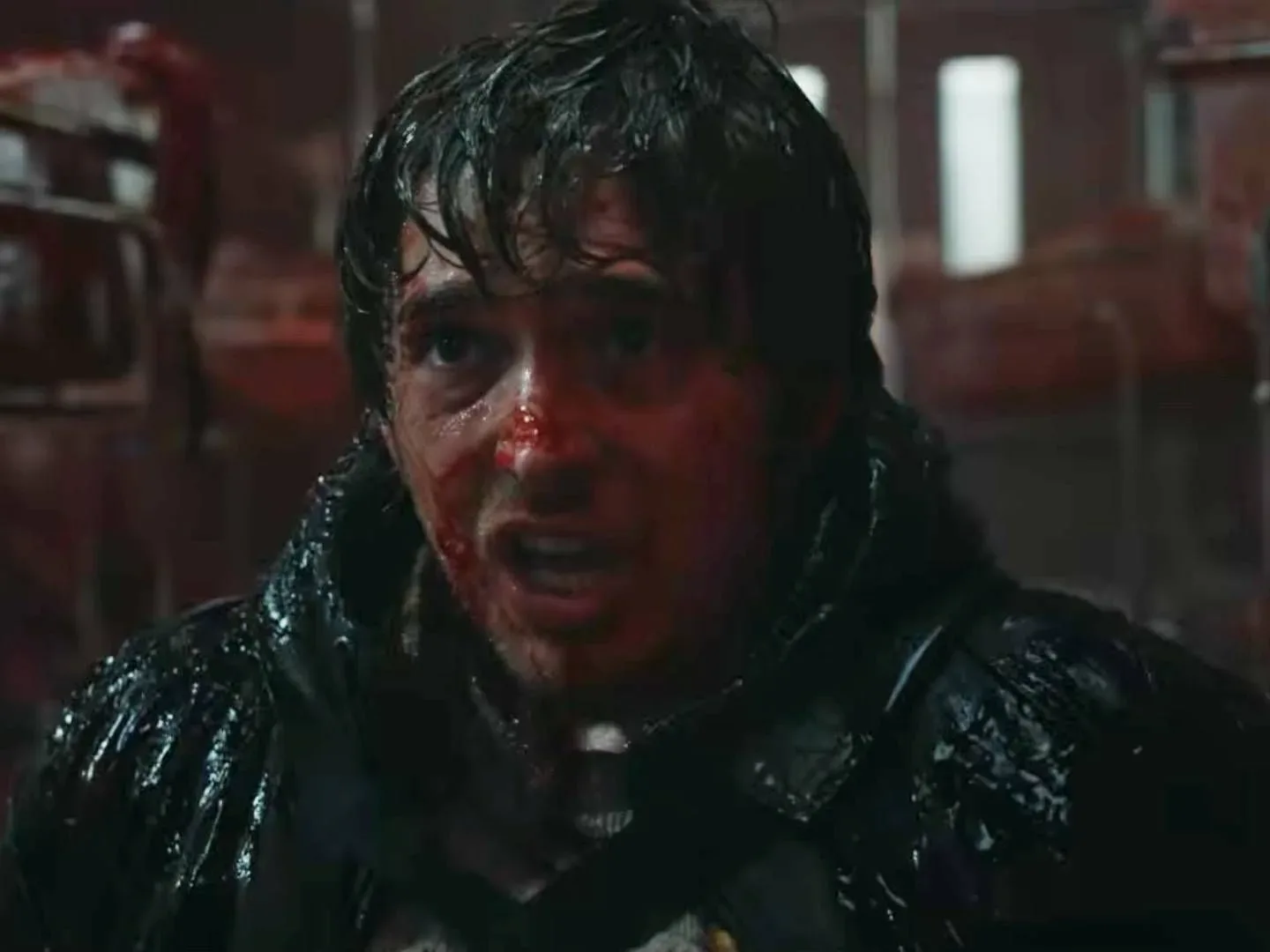
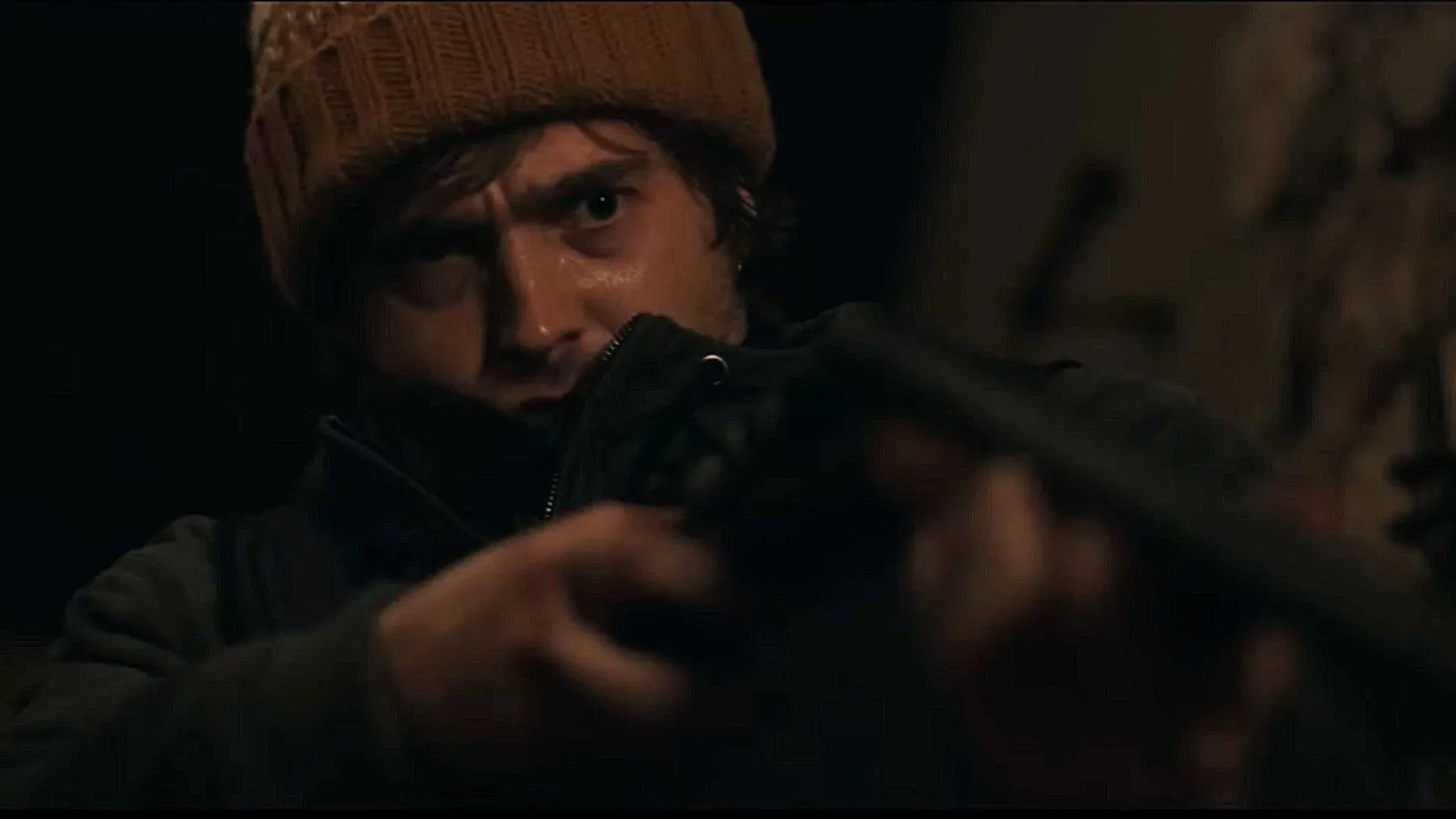
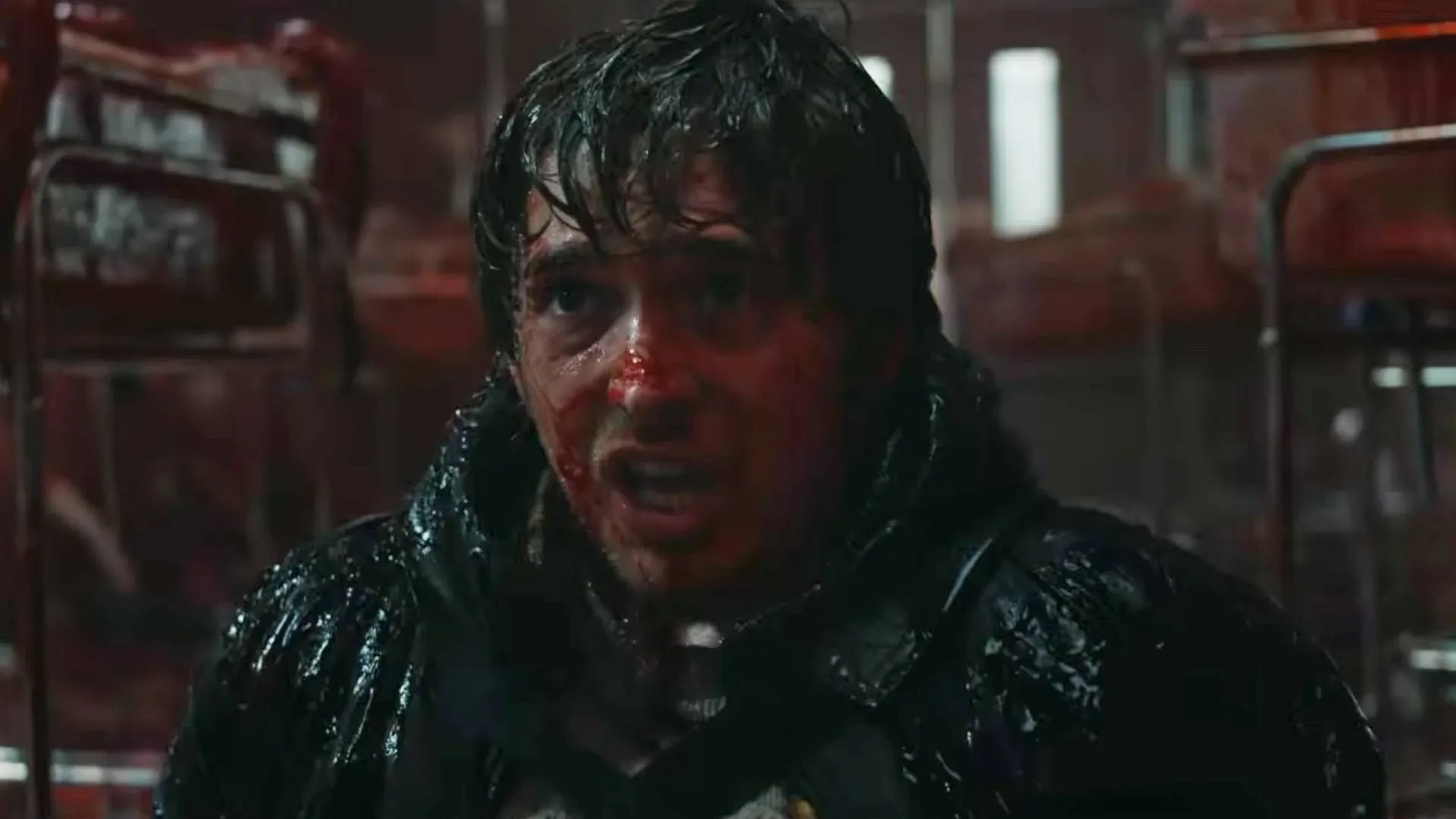
The forthcoming Resident Evil movie stars Austin Abrams as a medical courier whose delivery to Raccoon City General Hospital goes spectacularly wrong when an outbreak erupts. With Raccoon City involved, a routine job was never likely to stay routine, but the premise gives the film a grounded starting point: a person trying to complete a task when a biological catastrophe turns the route into a fight for survival.
Cregger directs from a screenplay written with Shay Hatten. The cast also includes Zach Cherry, Kali Reis, and Paul Walter Hauser. The film is scheduled to reach theaters on September 18.
Those facts leave plenty unresolved, and that is appropriate at this stage. The trailers point toward an outbreak scenario and game-inspired visual language, but they do not establish a full creature roster or confirm which familiar series elements may appear. Fans should be wary of turning a first-person shot, a location name, or a moodily lit hallway into proof of a specific character, monster, or story beat. The pleasure of Resident Evil speculation is real; treating speculation as confirmation is how one accidentally gets bitten by a rumor.
The candy-break standard for effective horror
Cregger’s response to Village also gives horror fans a beautifully practical measuring stick. Forget numerical scores for a moment. Did the game make someone who considers themselves difficult to scare take off a VR headset and seek emergency candy? That is a result. It is not necessarily the kind of result every player wants from entertainment, but it is proof that the scene’s design landed exactly where it aimed.
There is something especially funny about the contrast. The series has supplied towering vampires, werewolves, parasites, bioweapons, cults, and laboratories with workplace safety records that would concern a supervillain. Yet one of its most notorious terrors is a giant baby in a basement. Horror is not always about what is objectively strongest. It is about what feels wrong in a way the brain cannot neatly file away.
Village’s Beneviento chapter understands that rule. By withholding the normal power fantasy, surrounding the player with uncanny domestic imagery, and making sound central to the threat, it creates a section that remains vividly remembered long after the broader adventure. Cregger’s admission does not make the creature any less disturbing. If anything, it confirms that even a filmmaker preparing to bring Resident Evil to theaters can be caught off guard by the series at its most intimate and unnerving.
And if the new movie can translate even a fraction of that escalating dread—without requiring audiences to turn around in a garage to check what is behind them—it may have found a very useful piece of the franchise’s DNA. For a lighter reminder that shared gaming terror can be a social contract all its own, revisit the unwritten rules of couch multiplayer. Rule number one for House Beneviento would be simple: whoever has the controller is allowed to scream. Everyone else is allowed to scream too.