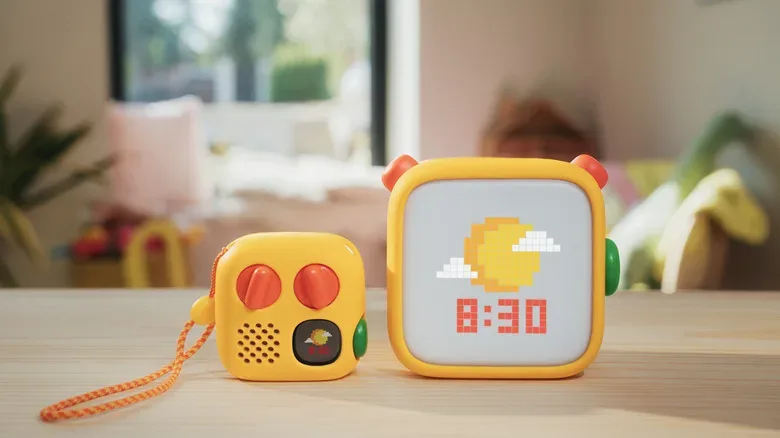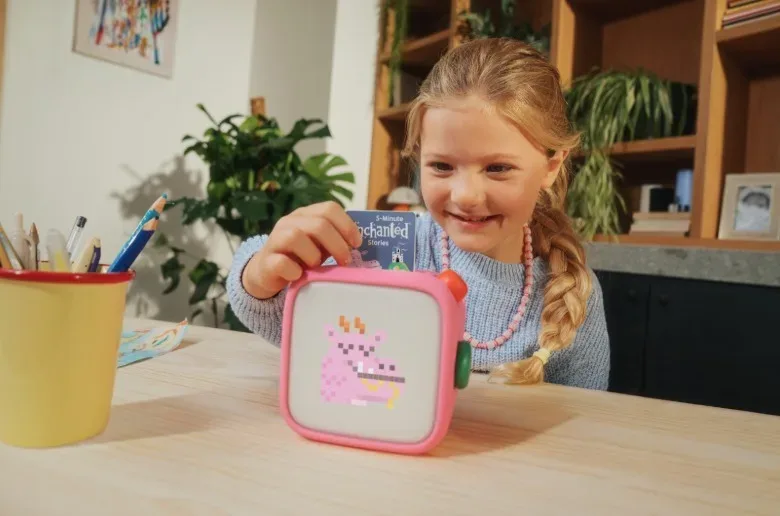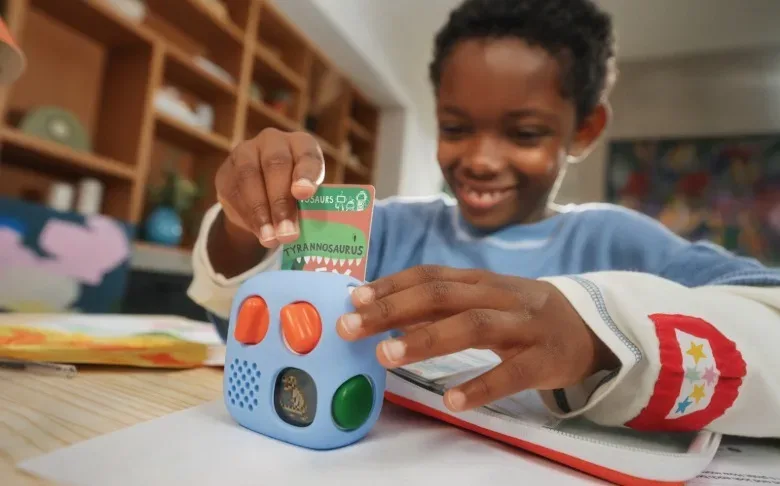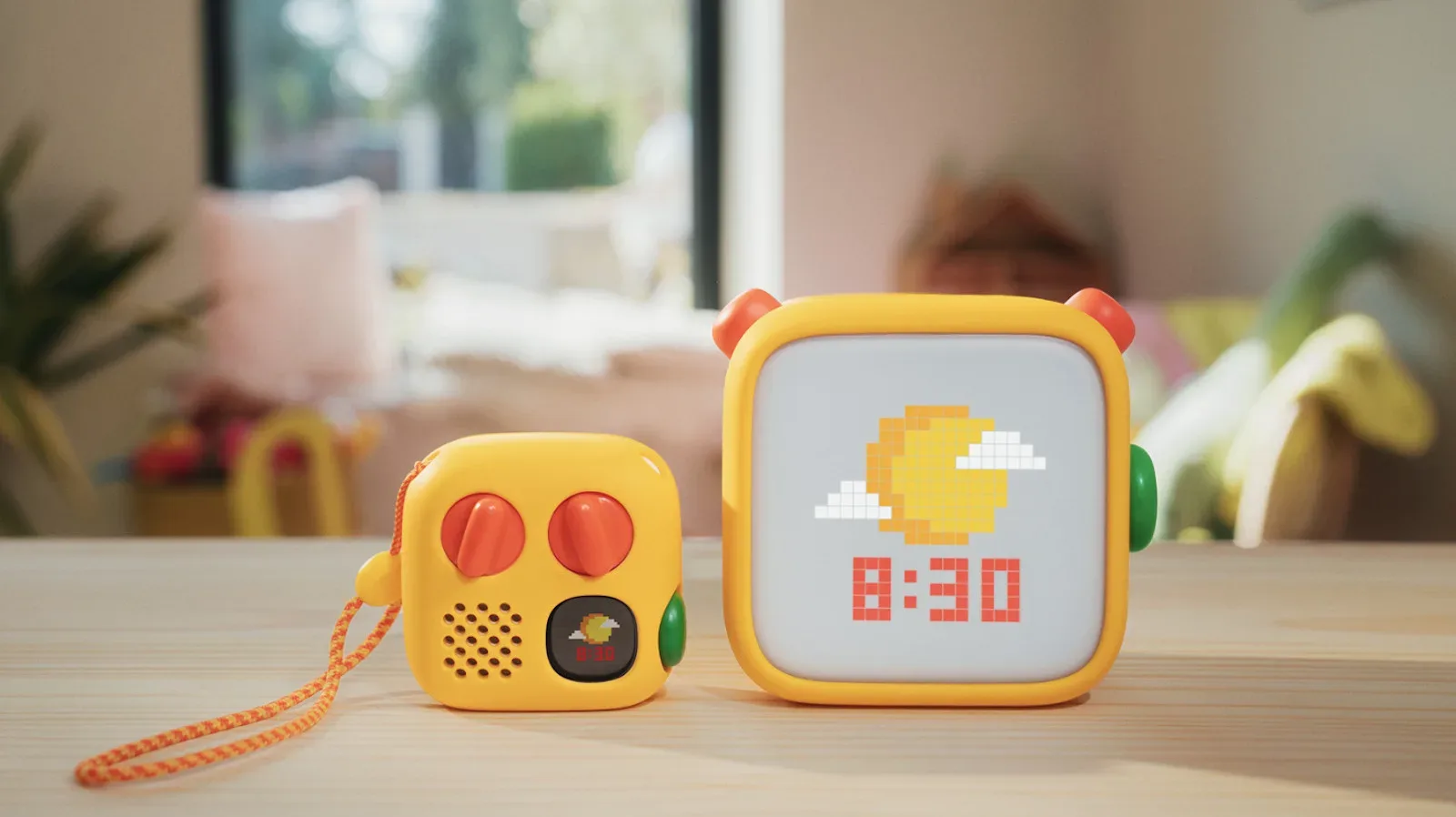
Yoto is refreshing both ends of its kid-focused audio lineup: a fourth-generation Yoto Player and an updated Yoto Mini. The headline change on each device is delightfully straightforward: a large green control designed to take children directly to audio they love, without requiring them to reach for a parent’s phone or insert a Yoto Card first.
That seemingly small physical shortcut is an important shift in how the devices can be used day to day. Yoto’s ecosystem has long used Yoto Cards—small NFC cards inserted into a player—to open individual audio experiences. The new green control does not replace cards outright, but it creates another path to content. On the new Yoto Player, it can reach as many as 20 selections, spanning stories, music and podcasts. For a child, that potentially means fewer steps between “I want the bedtime story” and actually hearing it. For adults, it may mean one less request to unlock a phone just to start a familiar show.
Neither product is a game console, of course, but their appeal sits close to a familiar gaming-family problem: how do you give younger users more independence around entertainment without placing an all-purpose connected screen in their hands? Dedicated audio hardware answers that question by narrowing the job. It is there to play audio, show simple pixel-based visuals, support routines and generally survive life at child height. That is a very different proposition from handing over a tablet and hoping an autoplay queue does not take a strange turn.
The fourth-generation Yoto Player adds capacity and a direct-favorites control
The newest Yoto Player retains the broad identity of the existing model: it is a speaker with a pixel display. What changes is the device’s emphasis on direct interaction. The big green dial can be turned to locate a child’s preferred audio among up to 20 saved choices. Yoto describes this selection as “most loved audio,” and the range includes podcasts, songs and stories.
Critically, this function works from the hardware itself. It also does not depend on a Yoto Card being present. Cards remain part of the platform and still serve as physical keys for particular content, but the new shortcut gives the Player a card-free lane for a set of favorites. It is an approach that makes sense for recurring listening: the morning podcast, a comfort story, a quiet playlist, or whatever audio has become the household’s current repeat-button champion.
Yoto is also revising the software around routines. Parents can establish a routine once and then have the Player handle subsequent actions automatically. One example is changing the on-device graphics based on the time of day. The practical appeal is less about making a pixel display do gymnastics and more about consistency. A device that visually signals morning, wind-down or bedtime could help a routine feel more tangible without adding another app interaction to the child’s part of the process.
On the hardware side, the new Player is said to have been redesigned with younger hands in mind. Storage rises to 64GB, downloads are expected to be faster, and the nightlight panel has been improved. Those upgrades are sensible rather than flashy. More onboard space can reduce the pressure to constantly manage downloaded material, while quicker downloads matter most when a new story or playlist is wanted now—not after an extended progress-bar vigil.
The fourth-generation Yoto Player is priced at $150. That is a noticeable jump from the prior $110 price. Pre-orders are open, with shipments scheduled to begin on October 15. The increase is hard to ignore: the added storage, revised nightlight, refreshed hardware, routines and shortcut control all have to carry a great deal of value for families comparing it with an older Player or alternative audio devices.
The refreshed Yoto Mini is built for a rougher route
Yoto’s smaller, lower-cost option is getting the same core convenience feature. The new Yoto Mini receives a green button for accessing favorite content without Yoto Cards, bringing the updated interaction model to both the stationary-speaker-style Player and the more portable Mini.
The Mini’s refresh is especially focused on resilience. Yoto characterizes the upcoming device as rugged and resistant to water and dust. That framing fits its intended role: a compact player likely to travel through backpacks, car rides, playrooms and the highly unpredictable terrain surrounding sofas. The company says it is intended to cope with playground grass, launches from furniture and rainy-day disorder. Those claims are promises from the manufacturer, rather than a substitute for independent durability testing, but they make the target use case clear.
Storage is rated for up to 1,000 hours of audio. As with the larger Player’s 64GB figure, real-world results may vary depending on the files involved, but the stated capacity suggests the Mini is meant to carry a substantial offline library. It also works with both wired headphones and Bluetooth headphones, giving families options depending on whether they prioritize a cable that never needs pairing or wireless listening for travel.
The updated Yoto Mini costs $110, up from $80. Pre-orders are available now, and shipments are due to start on September 30. That makes the Mini the earlier of the two releases, even though it is the more compact device. It also means the historical price gap between Mini and Player remains $40, while the actual cost of entry for the smaller player has risen by $30.
What the two price increases mean
The feature lists make the new models more capable, but the pricing creates an unavoidable caveat. The Yoto Player moves from $110 to $150, while the Mini climbs from $80 to $110. In percentage terms, the Mini’s increase is particularly substantial. Families who see the Mini as a take-anywhere audio companion may welcome the durability-oriented refresh, extra storage and card-free favorites button. Still, a higher price naturally raises the stakes for a device that may be handled by the same person who believes puddles are merely outdoor furniture.
The broader appeal of dedicated children’s audio players has always been partly philosophical. They can encourage a child to choose a story, album or podcast without immediately introducing the endless attention tug-of-war of a general-purpose screen. A tactile system also gives physical media a role in an otherwise digital library: cards can be collected, swapped and selected without navigating menus. The new favorites controls add convenience, but they do not erase that physical-card identity. Instead, the devices appear to offer two modes: choose a specific card when that is the desired ritual, or use the green control when a familiar favorite is the goal.
That kind of focused interface can be more meaningful than it sounds. Gaming has repeatedly shown how a well-designed input can shape who feels comfortable using hardware. A giant, obvious button or dial is an invitation; a complicated menu is a gate. The new Yoto controls are trying to make audio selection feel immediate enough for children, while leaving parental setup and routine-building in the background where it belongs.
For adults weighing kid-friendly hardware more generally, we recently looked at how comfort features can redefine specialized equipment in a gaming chair built around seat fans. Yoto’s update is a much quieter example of the same product-design idea: put the feature people will actually use front and center, then make the rest of the system less demanding.
Accessories are on the way, but key details are still missing
Alongside the two refreshed players, Yoto is preparing several accessories. Scratch-resistant cases are planned for both the Player and Mini, and they will come in four colors. A wireless dock and a storage case for Yoto Cards are also in development.
There is no price or release timing for those accessories yet. That matters particularly for the dock, which could affect how some households think about placement and charging, and for the card case, which may appeal to families with a growing pile of audio cards. Until more details arrive, they are best regarded as planned additions rather than part of the immediate purchase calculation.
Quick rundown: Yoto Player versus Yoto Mini
- Yoto Player, fourth generation: Speaker with pixel display, a green favorites dial supporting up to 20 audio selections, card-free favorites access, easier routines, 64GB storage, faster expected downloads and an upgraded nightlight panel.
- Yoto Player price and timing: $150; pre-orders are open; shipments are expected to begin October 15.
- Updated Yoto Mini: Smaller player with the same green card-free favorites control, claimed rugged water- and dust-resistant construction, storage for up to 1,000 hours of audio, plus wired and Bluetooth headphone support.
- Yoto Mini price and timing: $110; pre-orders are open; shipments are expected to begin September 30.
- Upcoming accessories: Four-color scratch-resistant cases for each device, plus a wireless dock and Yoto Card case. Pricing and availability have not been provided.
For now, the new Yoto hardware is best understood as an evolution rather than a reinvention. The Player gains more space and smarter household-routine features, while the Mini aims to be more prepared for portable chaos. Both put the same oversized green route to favorite listening at the center of the experience. The convenience is real; so are the higher prices. Families considering a pre-order will have to decide whether easier independent listening, expanded capacity and the respective hardware updates justify the new totals.