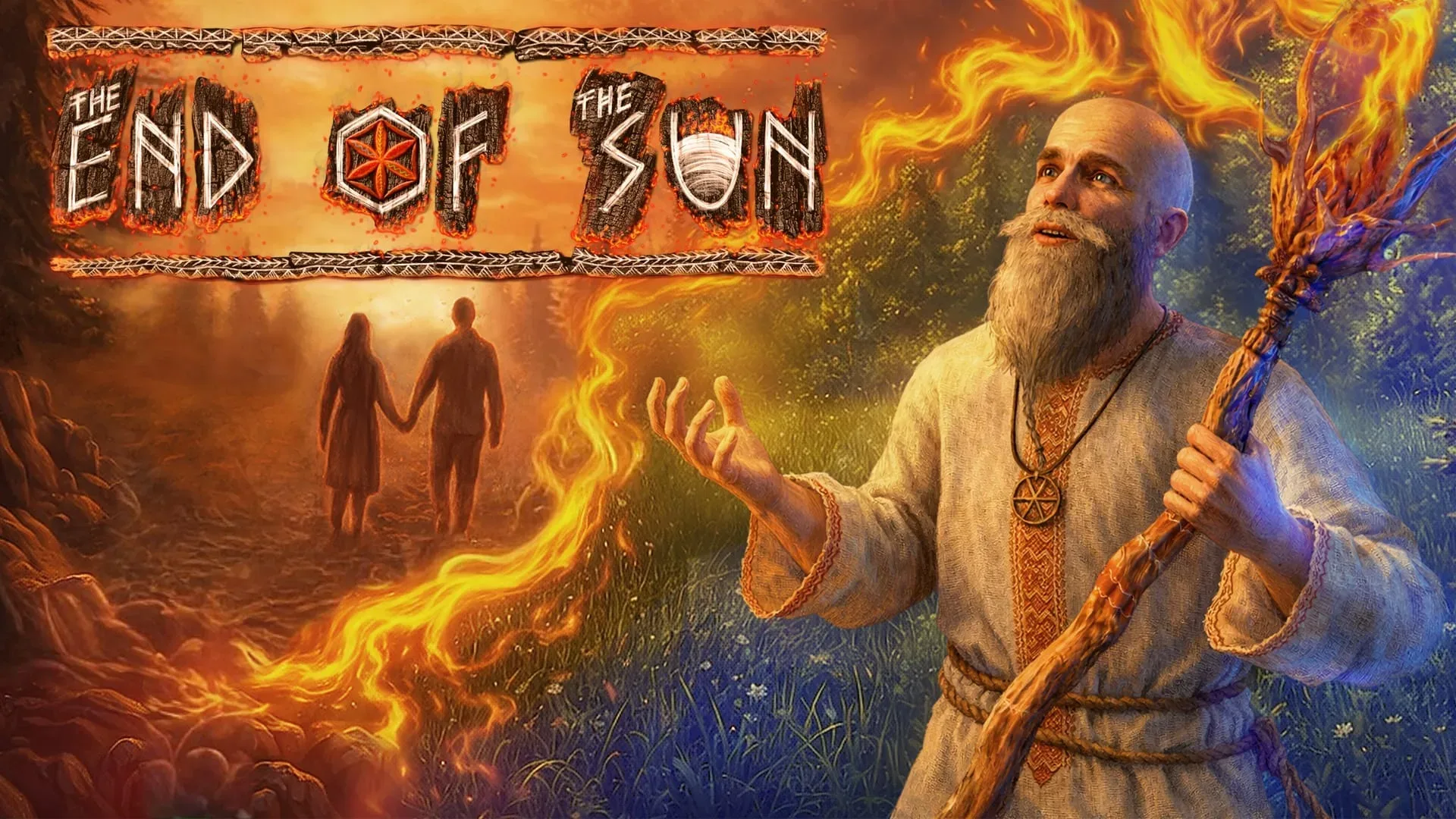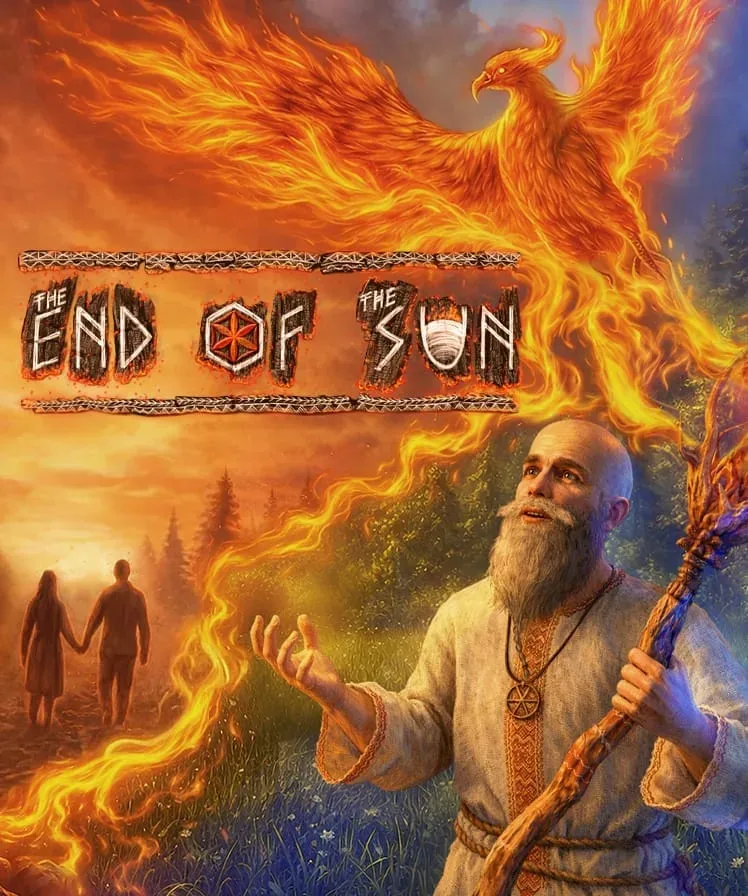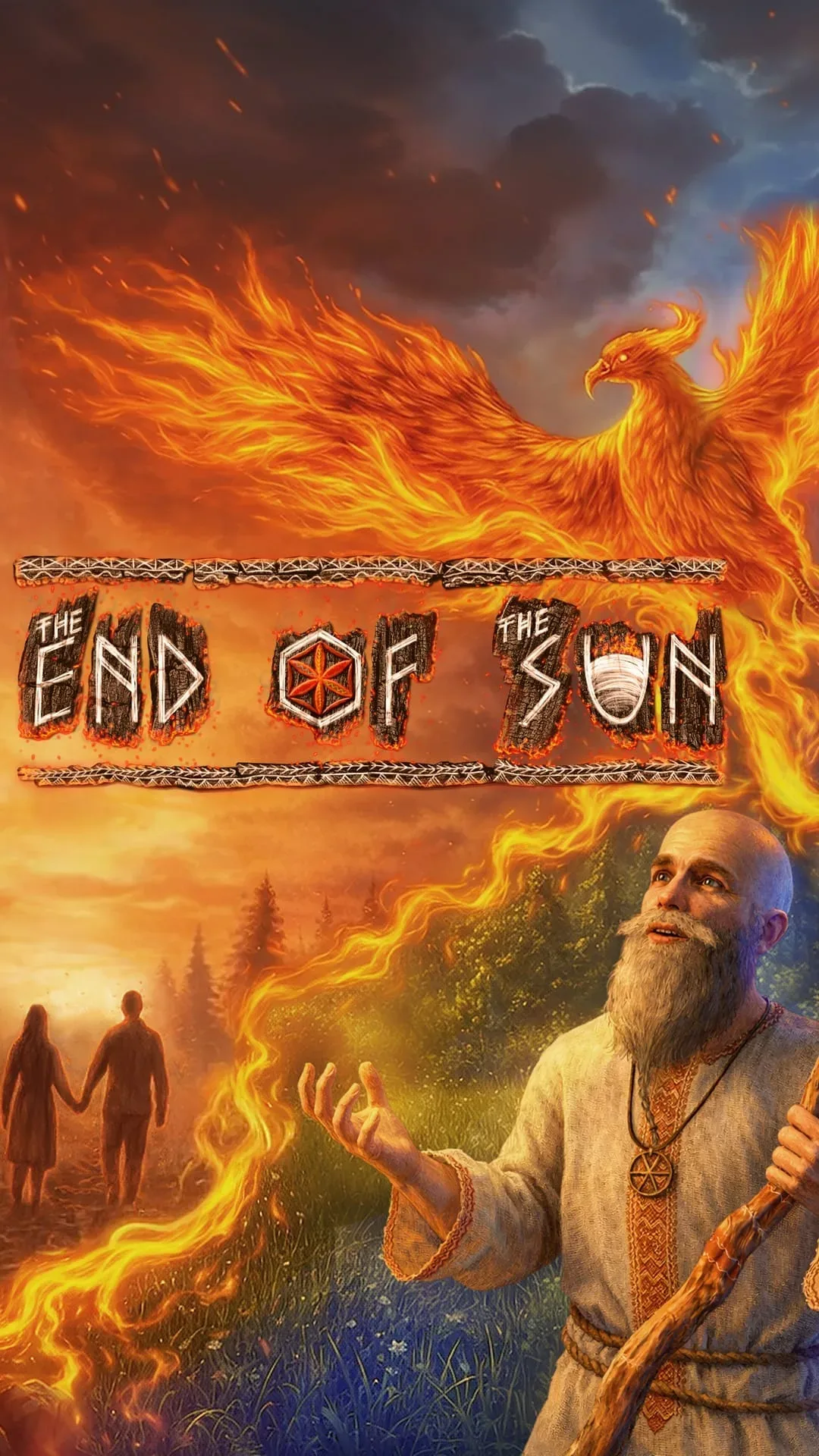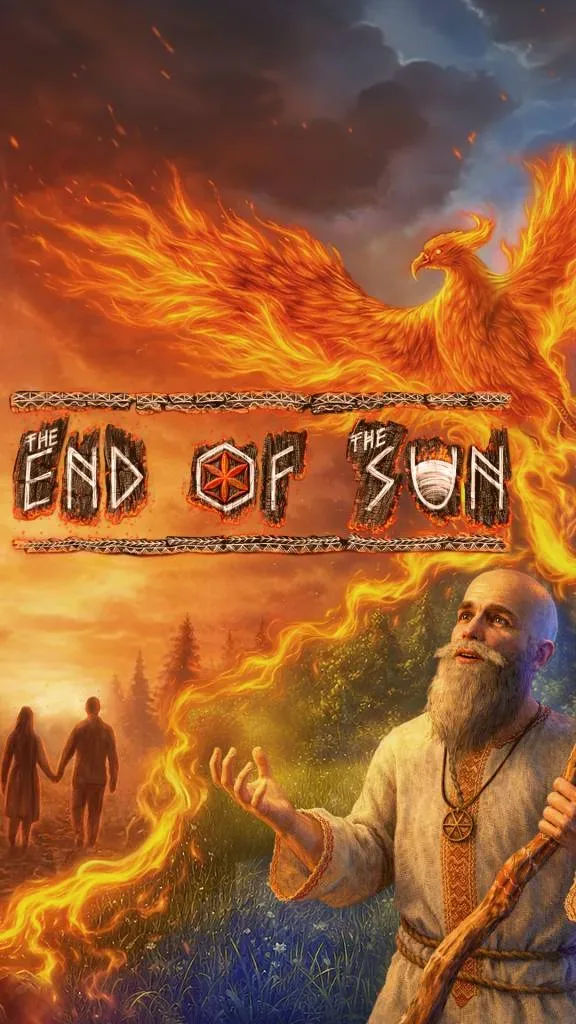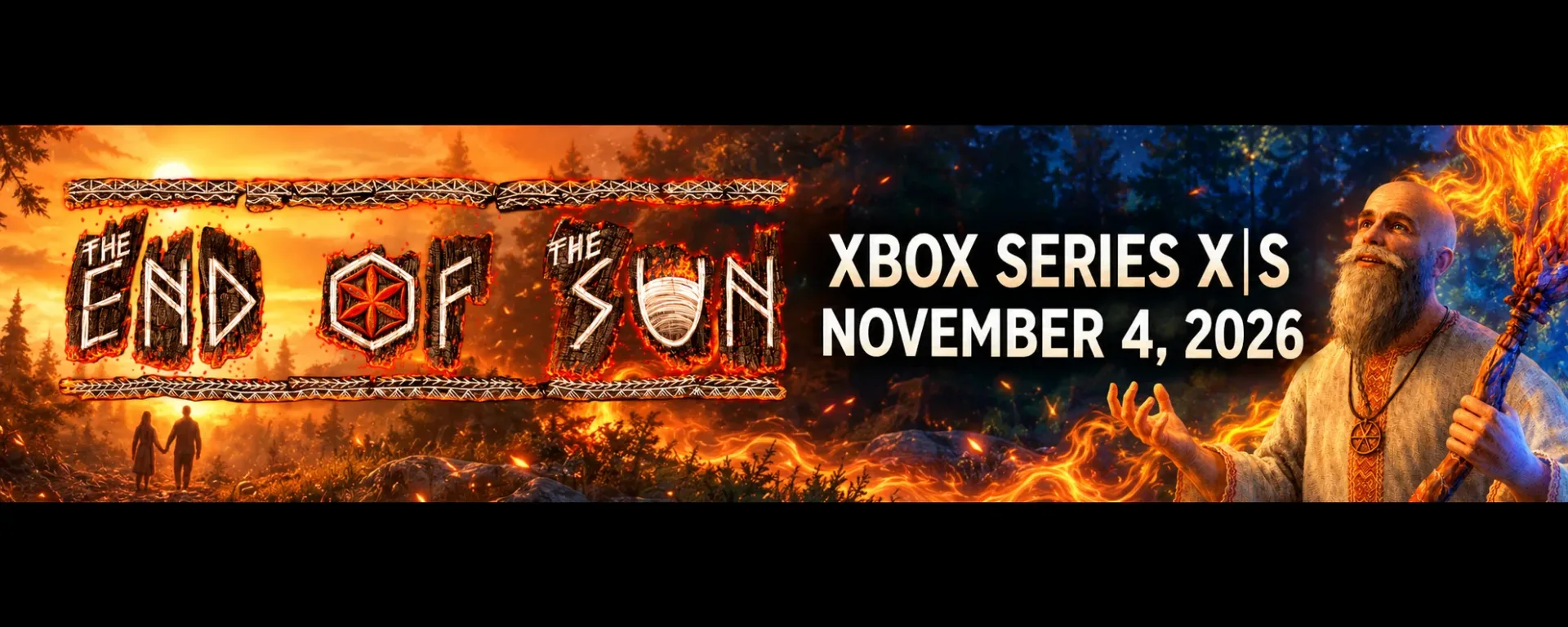
The End of the Sun is scheduled to arrive on Xbox Series X|S on November 4, 2026. Published by IMGN.PRO and developed by The End of the Sun Forge, the first-person adventure places its mystery inside a village shaped by changing seasons, generations of residents and Slavic mythology.
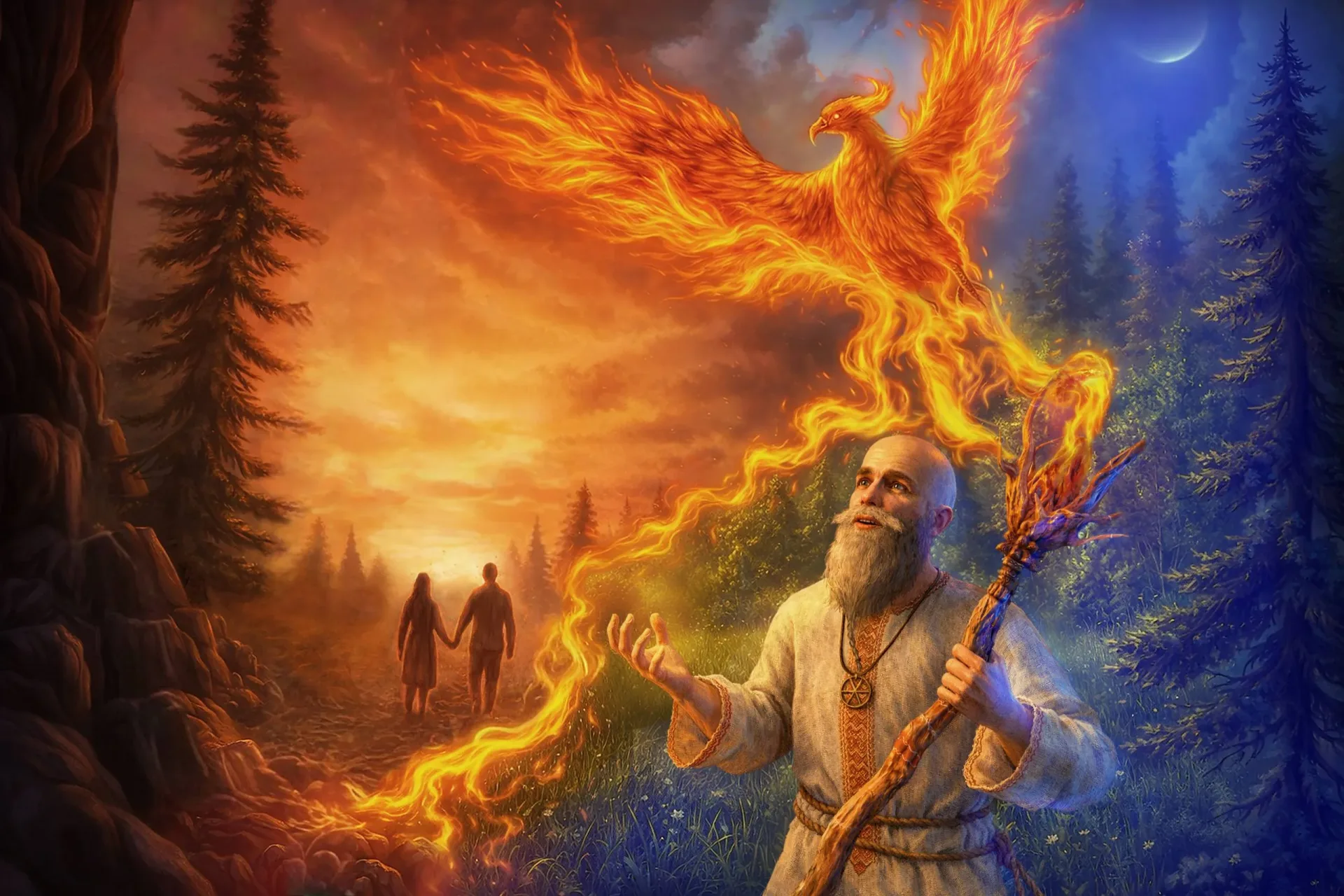
Its central character is an ashter, described as a Slavic priest who can travel through time. That ability brings the player to a mysterious settlement with a task that is deliberately broader than solving one isolated incident: uncover the stories of the people who lived there. The journey moves across different points in the village’s history, allowing familiar places to be revisited under different circumstances.
The premise makes time travel less about spectacle and more about interpretation. A location can carry one meaning in one season or year, then acquire another when players return to it at a different point in the timeline. The game’s mysteries are intended to emerge from those contrasts, as environmental details and discoveries gradually connect personal histories to traditional rituals and folkloric creatures.
A village mystery built around revisiting time
The End of the Sun is presented as an exploration-led adventure. Rather than framing time travel simply as a way to leap between distant eras, its design centers on repeat visits to the same village. Players will explore it in different years and seasons, looking for clues that help assemble the chain of events behind its secrets.
That setup gives the setting an important narrative job. Buildings, objects and areas of the village are not merely backdrops; they are part of the evidence. An environmental clue is information communicated through a place or object instead of directly stated by a character. In this case, the stated emphasis on environmental clues suggests players will need to observe the village closely and connect what they find across periods.
There is a practical appeal to that structure for players who enjoy taking their time with a setting. Returning to the same place can make subtle changes meaningful: an object may be present, absent or newly relevant depending on when it is examined. The announced feature list does not specify a puzzle system, combat mechanics or a branching-choice structure, so those details remain unconfirmed. What is clear is that exploration and piecing together events are at the heart of the experience.
The Xbox release date also adds another game to the late-2026 console calendar. For a wider snapshot of titles dated October 14, see our games releasing today roundup.
Slavic mythology is part of the setting, not just decoration
The game draws directly on Slavic mythology, folk tales and traditional rituals. That focus distinguishes the village’s mystery from a generic historical-fantasy premise: the folklore is positioned as part of the world that the ashter is investigating. The stories of individual inhabitants are said to connect with these traditions and creatures, linking community life with the supernatural dimension of the setting.
Related coverage includes The End of the Sun Brings Slavic Time-Travel Mystery to Xbox Series X|S on November 4, 2026.
“Slavic mythology” is a broad term covering the folk beliefs, stories, spiritual practices and legendary beings associated with Slavic cultures. The announced material does not name particular creatures, rituals or regional traditions that appear in The End of the Sun, so it would be premature to treat any specific myth as confirmed. Still, the game’s stated grounding in folk tales and ritual gives it a clear thematic identity: a mystery where cultural tradition informs both atmosphere and the story’s underlying questions.
The protagonist’s role reinforces that approach. An ashter is described here as a priest with the power to travel through time, placing a figure tied to spiritual tradition at the center of the investigation. This does not establish the full rules of the ability—such as where it can be used or whether it has limitations—but it clarifies why the character is equipped to move among the village’s different eras.
Eight years of work from a two-person Polish team
The End of the Sun was created over more than eight years by a two-person team in Poland. The project’s long development is linked to research into regional traditions and material culture, the latter meaning the physical things through which people live and express their culture: structures, tools, household items and other objects.
That research is reflected in another key part of the production: the use of photogrammetry. Photogrammetry is a process that uses many photographs of a real object or location to construct a detailed digital version of it. The development team used the technique to recreate real buildings and historical objects for the game.
For this particular adventure, that technical choice has a direct storytelling relevance. Since players are asked to investigate a village through exploration, a setting built from scanned real-world material can support the project’s interest in historical texture and regional material culture. It does not, by itself, tell players what any clue means; the narrative function still comes from how those places and objects are arranged across the game’s changing time periods. But the technique provides a concrete route from the team’s research to its digital environment.
The announced details also confirm English and Polish voice acting. No further language, accessibility or performance information has been provided in the release details.
What Xbox players can expect—and what is not yet specified
Based on the confirmed outline, Xbox Series X|S players can expect a first-person adventure about investigating a mysterious Slavic village, using an ashter’s time-travel ability to revisit locations across seasons and generations. The game will emphasize exploration, environmental storytelling, folk traditions, mythology and a world featuring photogrammetry-based recreations of real buildings and historical objects.
Several questions are still open. The available information does not state whether the game will launch on other Xbox services, identify a price, give a precise release time, or describe Xbox-specific visual and performance modes. It also does not detail the length of the campaign, the exact form of its interactions, or the complete range of mythical beings players will encounter. Those are meaningful considerations for prospective players, but they should not be filled in with assumptions from the premise alone.
What has been firmly dated is the platform release itself: The End of the Sun launches on Xbox Series X|S on November 4, 2026. An Xbox announcement trailer has been made available alongside media materials, offering the currently released look at the game’s atmosphere and village setting.