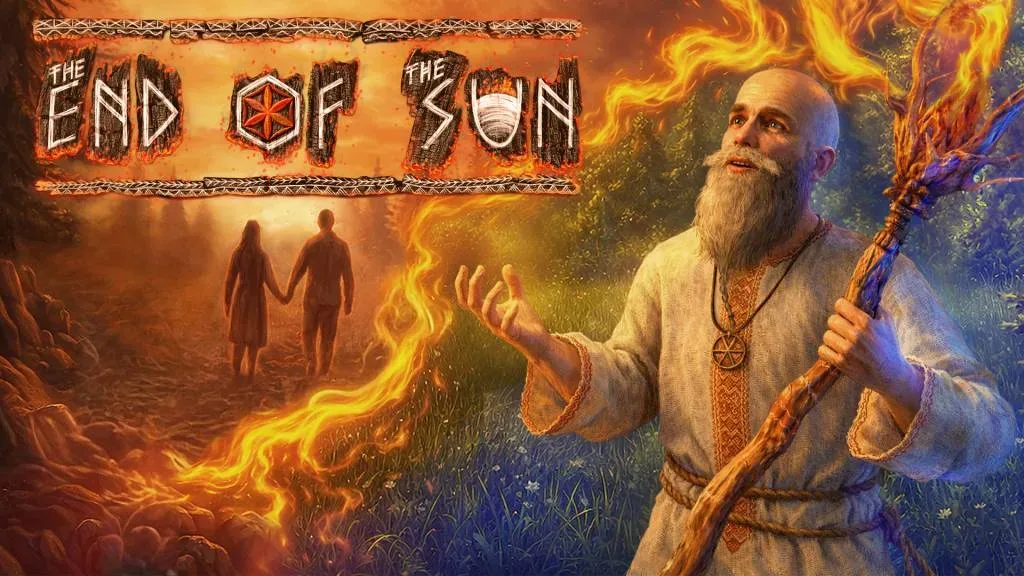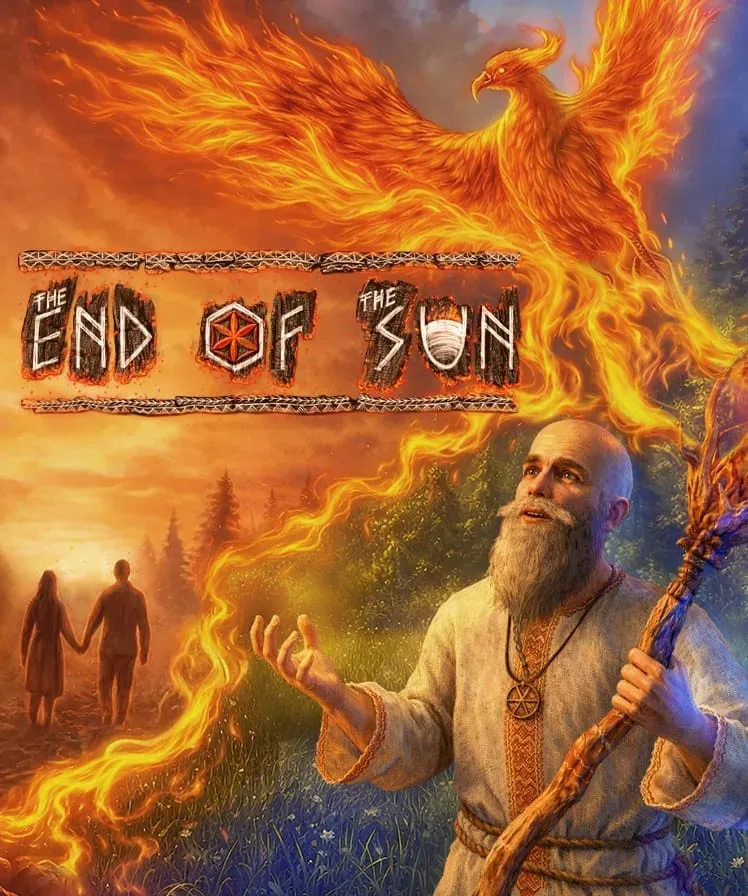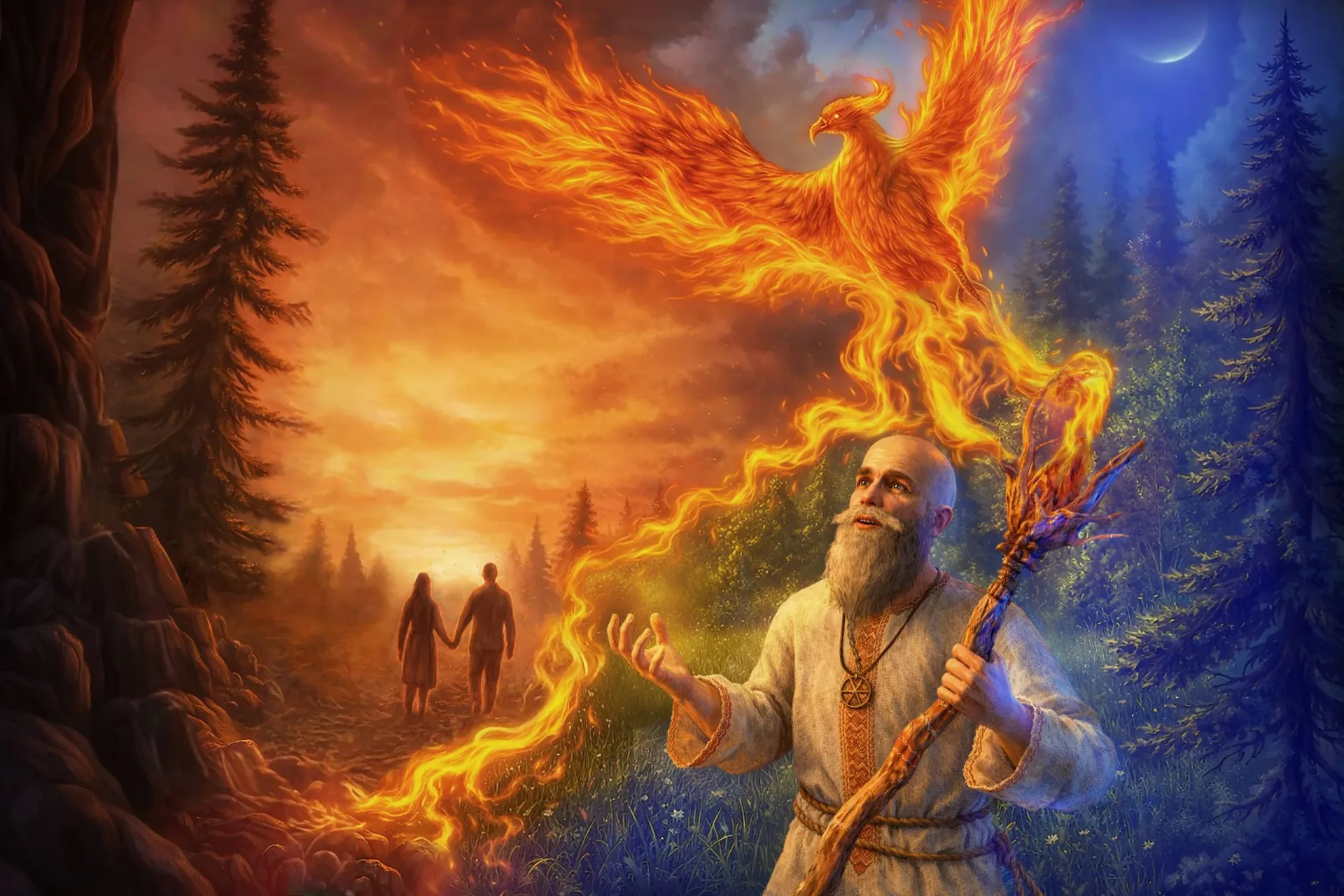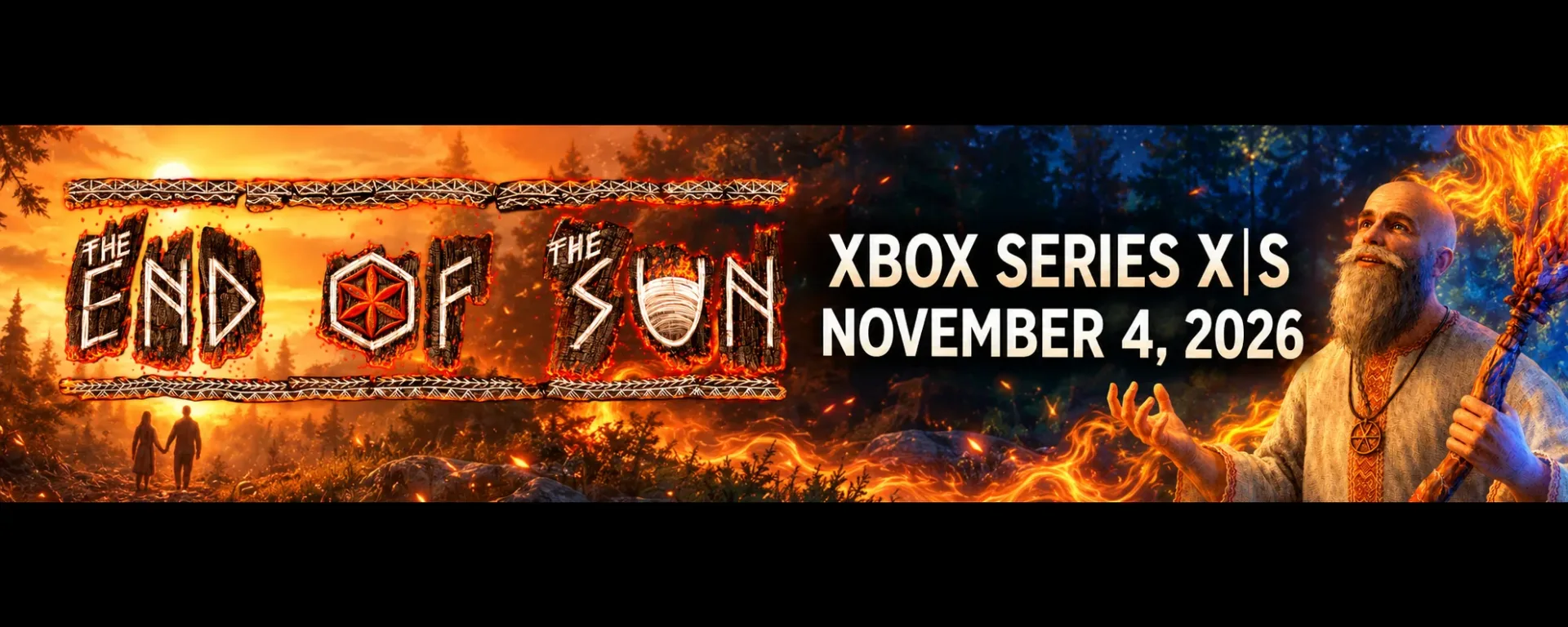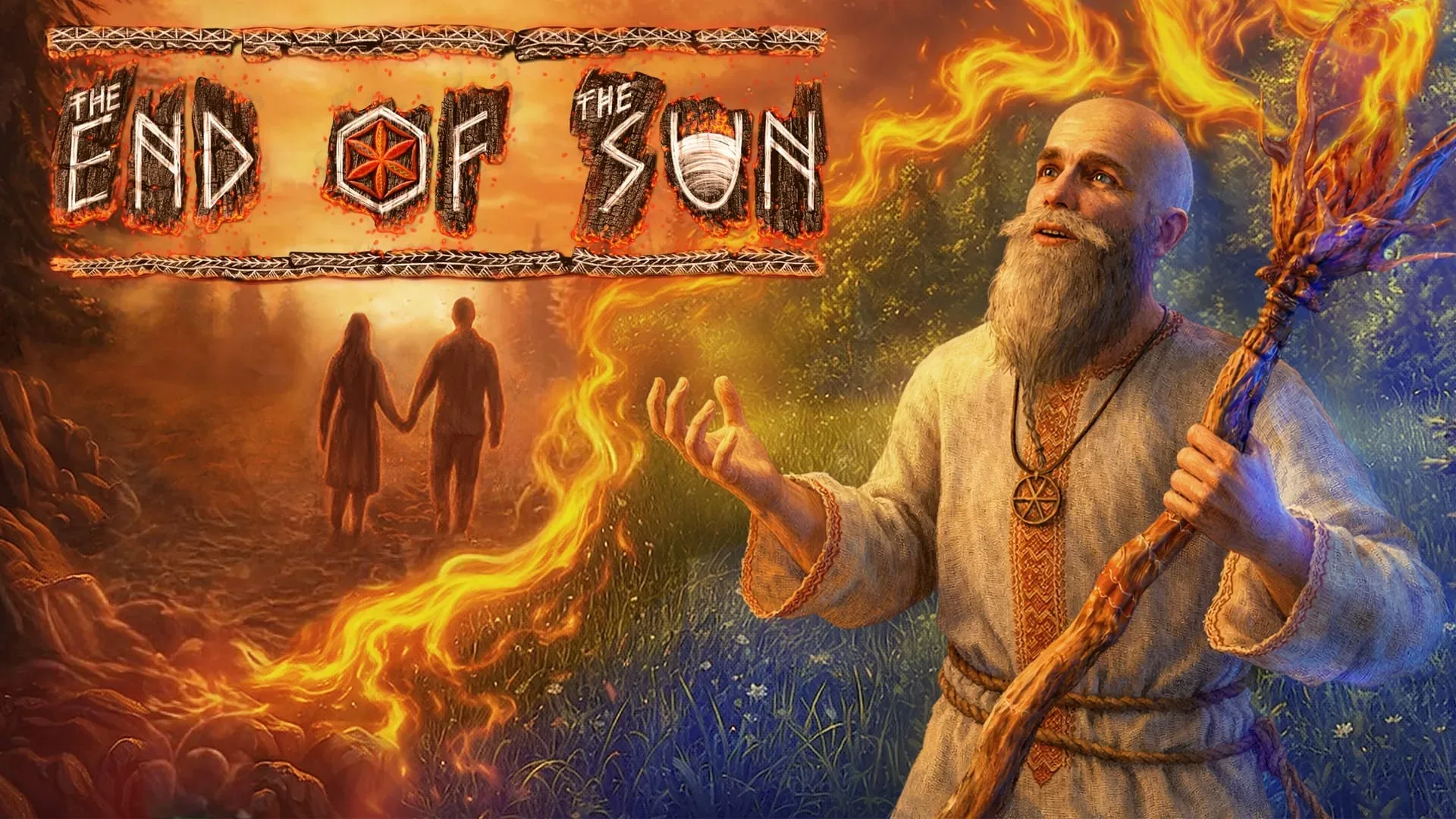
The End of the Sun is now available on Xbox Series X|S. The first-person, story-led adventure places players in a rural village where Slavic folklore and ordinary life occupy the same uneasy space, and where a fire appears to be the thread connecting a community’s hidden history.
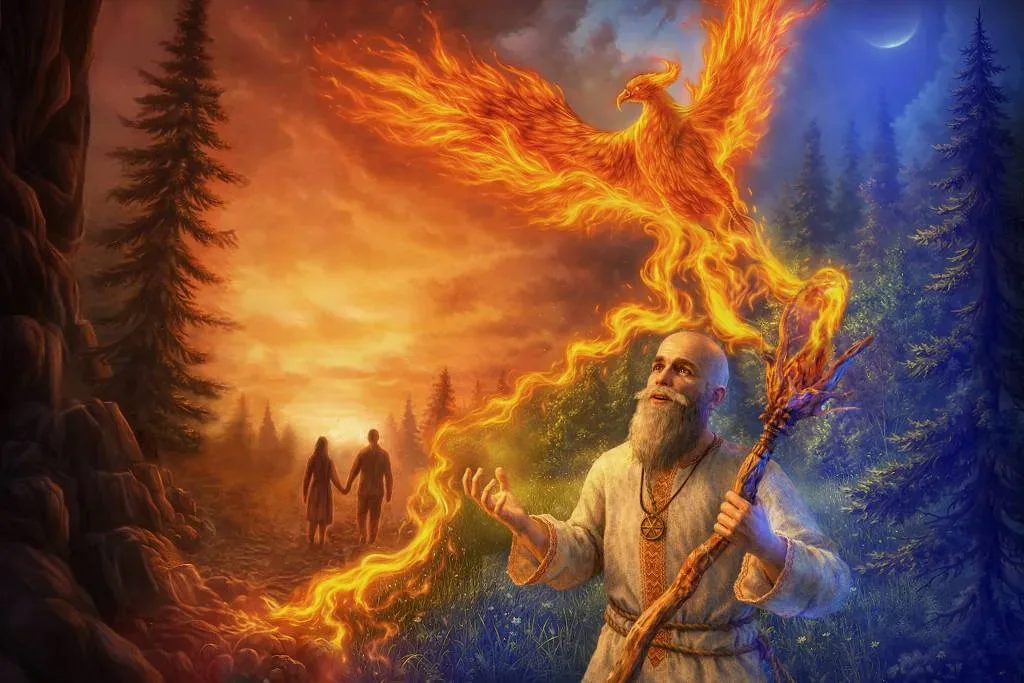
Its central character is Ashter, a Slavic fire mage with the ability to wield time. Arriving in a mysterious settlement where the separation between myth and reality is weakening, Ashter follows the traces left by a blaze. The investigation does not simply move from one clue to the next: players encounter the village through different seasons and periods in its residents’ lives, then use what they learn in one moment to reinterpret another.
The game comes from The End of the Sun Forge, a small family-run studio in Poland, with IMGN.PRO handling publishing. Its Xbox arrival follows an eight-year development effort by two developers. For players looking over the day’s wider release slate, see Games releasing today: November 4, 2026.
A mystery built around changing context
The premise makes time more than a backdrop. Ashter’s ability lets the story move between different moments, while the village itself changes across all four seasons. That structure is important because the game’s mystery is framed around connections: the people who live there, the places they inhabit and the secrets they have left behind.
In practical terms, a time-based mystery asks players to pay attention not just to an event, but to its position in a sequence. A detail observed in one period can gain a different meaning once a later or earlier stage of a character’s life has been seen. The same applies to spaces. A building, household object or location may be part of the evidence simply because its role changes as the player’s understanding of the village changes.
That is distinct from a game whose time travel exists chiefly to create action spectacle or alternate versions of a map. Here, the stated focus is narrative reconstruction. The aim is to follow a fire’s trail and gradually assemble the stories surrounding it. The village is therefore both the setting and the puzzle’s record: a place whose past is not entirely gone, but must be read across multiple points in time.
Four seasons, one place
The four-season setup gives that idea a clear visual and thematic frame. Seasons can make one location feel unfamiliar without turning it into a different world altogether. In The End of the Sun, they are part of the game’s stated approach to showing the village through changing moments. A player returning to a familiar area may be asked to consider what has changed, what has remained, and what that contrast says about the people connected to it.
There is no detailed breakdown here of the exact rules governing travel between these periods, the order in which discoveries can be made, or the game’s puzzle systems. That uncertainty matters. The announced premise supports an expectation of exploratory, story-focused investigation, but it does not establish the exact degree of player freedom or how individual mysteries are structured.
Related coverage includes The End of the Sun Launches on Xbox Series X|S.
Slavic folklore meets village life
The End of the Sun situates its supernatural elements alongside everyday rural existence rather than separating myth into a distant fantasy realm. Slavic beliefs and myths intertwine with the routines of village life, while Ashter’s identity as a fire mage places magic directly at the story’s center. The fading boundary between myth and reality gives the game room to make folklore part of the mystery instead of merely visual decoration.
That framing is especially relevant to the game’s tone. A story about a village and its inhabitants can make the personal scale of the setting matter: the mystery is not presented as an abstract threat hanging over an anonymous world, but as a set of connections among residents, locations and past events. The fire provides a concrete trail, while the folklore-rooted setting adds uncertainty about how literally the village’s strange phenomena should be understood.
The game supports both Polish and English voice acting. That gives players a choice of language presentation, though no further information has been provided about subtitles, localization options beyond those voice tracks, or whether performances differ in content.
What photogrammetry adds to the setting
A major part of The End of the Sun’s identity is its use of photogrammetry. This is a process that uses photographs of real-world subjects to help create digital 3D assets. Rather than relying only on artists to model a building or object from reference, developers can use many images to capture visual surface information and shape, then adapt that material for use in a game.
For this project, historical buildings and everyday objects were brought into the game through photogrammetry. The stated goal is to recreate a setting informed by traditional crafts, customs and rural life. That makes the technique relevant beyond visual polish. When a story centers on a specific kind of village, domestic items and architecture can help establish how people work, live and organize their surroundings.
It also fits the game’s investigative premise. Environmental storytelling is the use of places and objects to convey information without having every point delivered through direct explanation. A rural home, tool or communal building can suggest habits, roles and history. The game’s description does not claim that every scanned object is a clue, so players should not assume that. But its emphasis on real-world heritage indicates that the physical environment is intended to carry cultural weight as well as atmosphere.
Photogrammetry is not automatically a guarantee of historical accuracy in every gameplay detail. A game still involves artistic choices, technical optimization and fictional storytelling. What can be said is that The End of the Sun uses historically grounded buildings and objects as reference material for its world, in service of a village shaped by heritage and tradition.
What Xbox players can expect—and what remains unspecified
The confirmed foundations are straightforward: this is a first-person adventure, driven by story and exploration of a mystery across time. Players control Ashter, follow the aftermath of a fire, visit one village through four seasons and multiple periods, and encounter a world where Slavic myth intersects with daily life.
- Perspective: first-person.
- Protagonist: Ashter, a Slavic fire mage who can wield time.
- Core setting: a mysterious village shaped by Slavic folklore, beliefs and rural life.
- Story device: travel across different moments and seasons to understand events and relationships.
- Visual approach: photogrammetry of historical buildings and everyday objects.
- Voice acting: Polish and English.
Just as useful is recognizing what has not been detailed. There is no supplied information on combat, if any; no confirmed playtime; no stated accessibility features; and no technical specification for Xbox Series X versus Series S. There is also no basis to characterize the game as horror, survival, an open-world experience or a conventional point-and-click adventure. Its confirmed description is a first-person, story-driven adventure with a time-spanning mystery.
For potential players, that means the clearest appeal lies in narrative atmosphere, folklore-rooted worldbuilding and the promise of returning to events with greater context. Anyone primarily seeking a detailed mechanical breakdown will need more information than the launch description currently provides.
Price and launch discount
On Xbox Series X|S, The End of the Sun is priced at $24.99 / €23.99 / £18.74. A 20% launch discount is available for one week from the November 4 launch announcement.
The timing is worth noting for interested buyers, because the discount is explicitly limited to that one-week launch window. Beyond that period, the stated standard prices are the relevant reference points. No other edition, bundle or platform availability details are confirmed here.
Why the launch stands out
The End of the Sun’s Xbox release brings together several elements that are most effective when they reinforce one another: an intimate village setting, a supernatural protagonist, time as a tool for investigating human stories, and real-world heritage captured through photogrammetry. The resulting pitch is less about saving a vast kingdom than understanding a particular place and the people whose lives have shaped it.
Its long development by a two-person, family-run team is also a meaningful part of the launch context. That does not tell players how they will respond to the game, but it does explain why the world’s carefully researched material identity is foregrounded. Historical structures, household objects, craft traditions and seasonal change are not incidental details in the game’s description; they are fundamental to the way its mystery is meant to be experienced.
For Xbox players drawn to first-person adventures that ask them to piece together a story over time, The End of the Sun is available now on Xbox Series X|S.