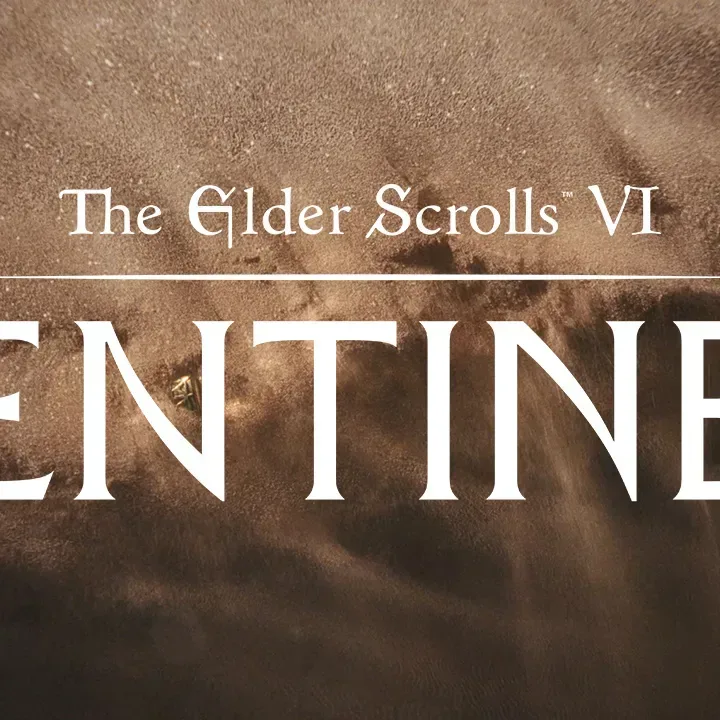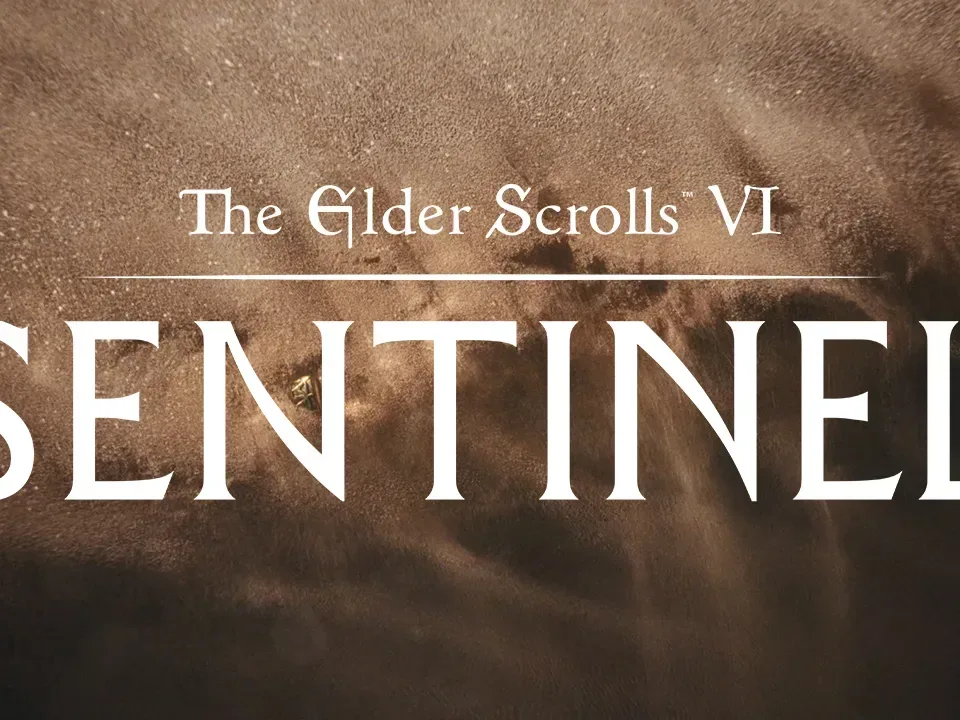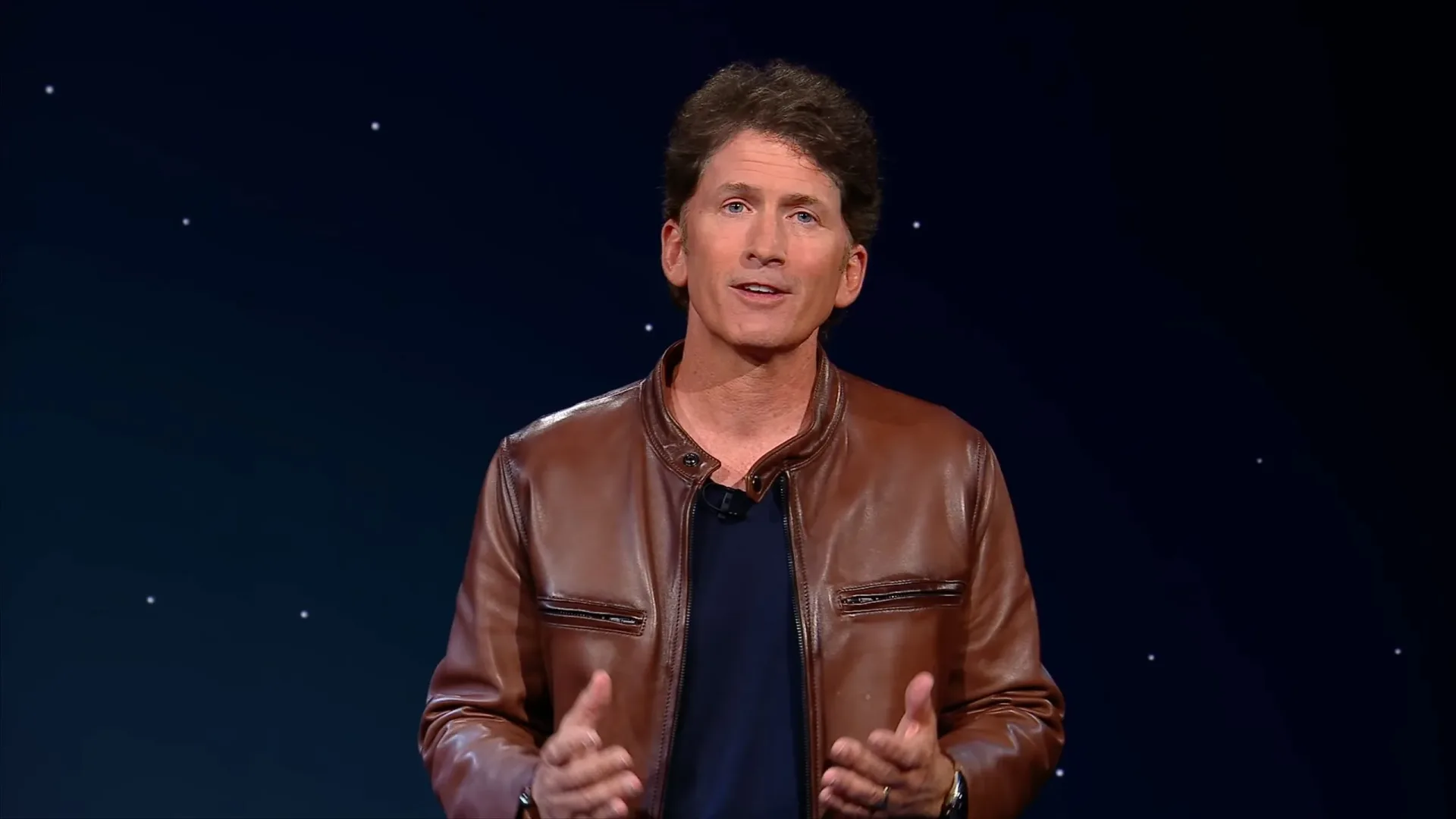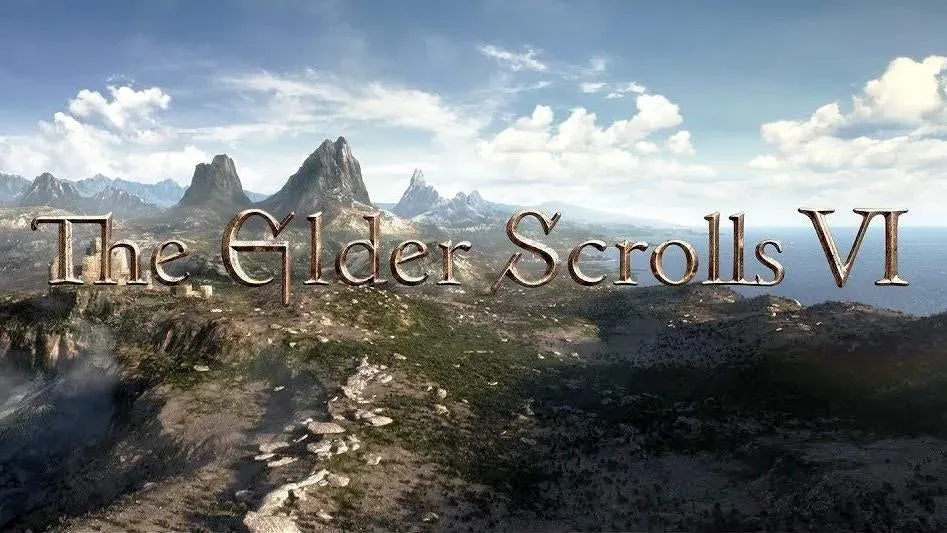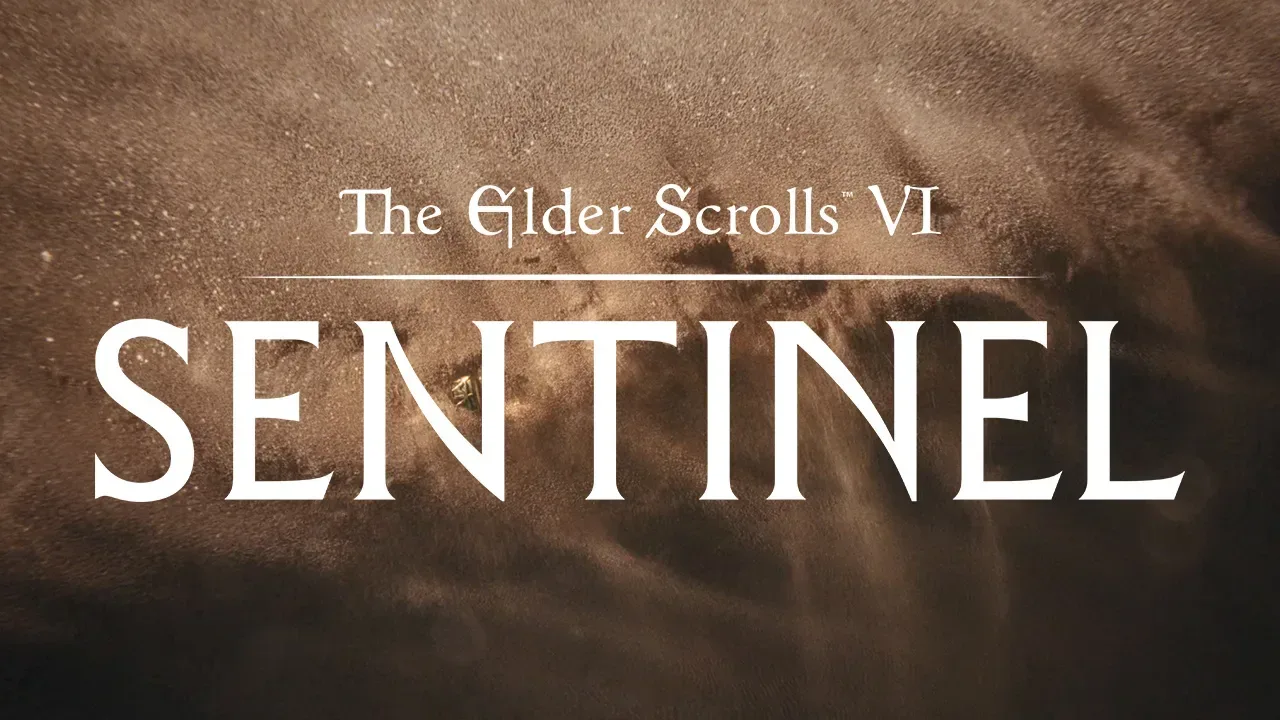
The wait for a proper name is over: Bethesda Game Studios has confirmed that the next mainline Elder Scrolls game is called The Elder Scrolls 6: Sentinel. The studio also revealed the game’s logo as part of its 40th-anniversary celebrations, in a video message featuring longtime franchise director Todd Howard.
It is a small but meaningful update for a game first announced in 2018. For years, the project has primarily been known by its numbered placeholder, The Elder Scrolls 6, while fans attempted to read geography, iconography and corporate tea leaves for a clue about its setting. The newly confirmed subtitle is not a release-date announcement, a gameplay reveal or a platform list. It is, however, the first substantial official detail in some time—and it gives the next chapter a clear place within Tamriel’s established map.
Why “Sentinel” matters in Elder Scrolls lore
Sentinel is a city in Hammerfell, one of the provinces on Tamriel, the continent where the Elder Scrolls series takes place. The city sits on Hammerfell’s northwestern coast beside Iliac Bay. Hammerfell lies west of Cyrodiil, the province explored in The Elder Scrolls IV: Oblivion, and southwest of Skyrim, the setting of The Elder Scrolls V: Skyrim.
Hammerfell also shares its northern border with High Rock, while its western edge meets the Abacean Sea. Those are useful landmarks for understanding why the subtitle immediately draws attention: Sentinel is not merely a vague fantasy word or a newly coined title. It is an existing location with a defined position in the series’ world.
That does not amount to confirmation that the entire game takes place in Hammerfell, that Sentinel is the only major city, or that High Rock will be included. A subtitle can indicate a central location, a theme, or another story-facing idea without describing the full playable map. Still, choosing the name of a Hammerfell city is the clearest official geographic signal attached to the project so far.
A title is a clue, not a map
It is worth separating confirmed information from reasonable interpretation. The confirmed portion is straightforward: the sequel is named The Elder Scrolls 6: Sentinel, and Sentinel is a city in Hammerfell. The interpretation is that Bethesda may be positioning Hammerfell—and potentially the region around Iliac Bay—as important to the game’s identity.
That distinction matters in a franchise with a huge fictional setting. Fans can productively revisit what Sentinel, Hammerfell, Iliac Bay, High Rock and the surrounding geography mean within Tamriel, but they should not treat that as a promise of particular regions, quests, factions, systems or playable areas. None of those details were included with the title-and-logo reveal.
The eight-asterisk tease now has an answer
The confirmation also resolves a recent piece of public speculation. Xbox CEO Asha Sharma had received a demo of The Elder Scrolls VI earlier in the summer and referred to its subtitle using eight asterisks. Sentinel has eight letters, making the earlier redaction a very precise hint rather than a generic omission.
Related coverage includes The Elder Scrolls 6 Is Officially Titled Sentinel, Bethesda Confirms.
The fact that Sharma saw a demo indicates that the game has been shown internally in some form. But a demo is a broad term. It can describe a curated presentation, a limited slice of a game, or another work-in-progress showing. It does not, on its own, establish a launch window, the game’s content, public hands-on availability or its technical state. The title reveal offers a firmer public identifier, not a complete development report.
For a project that has spent so long under a Roman numeral, that identifier is still significant. Subtitles often become the useful shorthand by which a major sequel is discussed: they can convey a setting, differentiate a game from its predecessors and give audiences something more concrete than a distant announcement teaser. “Sentinel” now performs that role for Bethesda’s next Elder Scrolls entry.
Skyrim remains a huge benchmark
Bethesda says that The Elder Scrolls V: Skyrim is still Bethesda Game Studios’ most-played game, measured by total lifetime players. That framing is important. “Most played” here refers to the accumulated number of players over the game’s lifetime, rather than a claim about current activity at a particular moment.
The result is a formidable inheritance for Sentinel. The new game is a follow-up to one of the studio’s most enduring releases, and its title inevitably invites comparisons before audiences have seen its gameplay. Bethesda has not supplied enough information to make meaningful feature-by-feature comparisons, so expectations about combat, exploration, character creation, quests, progression or world scale remain expectations rather than facts.
What can be said is that the announced name deliberately anchors the sequel to a different part of Tamriel than Skyrim. That shift is important on a thematic level even before any mechanics are known. A new provincial focus gives a long-running role-playing series room to establish a different local identity, while retaining the larger setting and the numbered-series continuity that players recognize.
Release timing and platforms are still unresolved
There is still no confirmed release date for The Elder Scrolls 6: Sentinel. The game was initially announced in 2018, and the long gap since then has made each official update especially closely watched. The subtitle and logo are a genuine step beyond the original announcement, but they should not be read as confirmation that release is imminent.
Xbox and PC are the platforms discussed around the game, while a PlayStation release remains unconfirmed. That uncertainty is especially notable given the scale of the Elder Scrolls brand and Microsoft’s interest in strengthening its wider gaming ecosystem. At present, there is no official answer on whether Sentinel will appear on a PlayStation console, so any definitive platform claim would be premature.
Likewise, hopes for a larger showing at a future Xbox Showcase are understandable, but no such presentation has been confirmed. A title reveal can often be the beginning of a more visible marketing cycle; it can also remain a focused update while development continues behind the scenes. The available information does not establish which path Bethesda will take.
What the announcement confirms—and what it doesn’t
- Confirmed: The official title is The Elder Scrolls 6: Sentinel.
- Confirmed: Bethesda Game Studios has revealed a logo for the game.
- Confirmed: Sentinel is a city in Hammerfell, on Tamriel’s northwestern coast near Iliac Bay.
- Confirmed: The project was first announced in 2018.
- Not confirmed: A release date or release window.
- Not confirmed: The complete setting, map, gameplay systems, story or playable content.
- Not confirmed: A PlayStation version.
- Not confirmed: A date for a major gameplay reveal.
For now, the most useful response is measured excitement. Fans have a title, a logo and a lore-grounded name that naturally points attention toward Hammerfell and the Iliac Bay region. They do not yet have enough official material to turn that clue into a full setting breakdown or a release countdown.
The Elder Scrolls has always had a sprawling world behind it, and Sentinel gives the next game a specific point on that world map. After years of waiting, that may sound modest. But in the context of this sequel’s long silence, it is a meaningful move from an abstract promise toward a game with an identity of its own. For a look at another current PC release, see Death at Fleming Manor’s Steam launch and paperwork-driven detective premise.