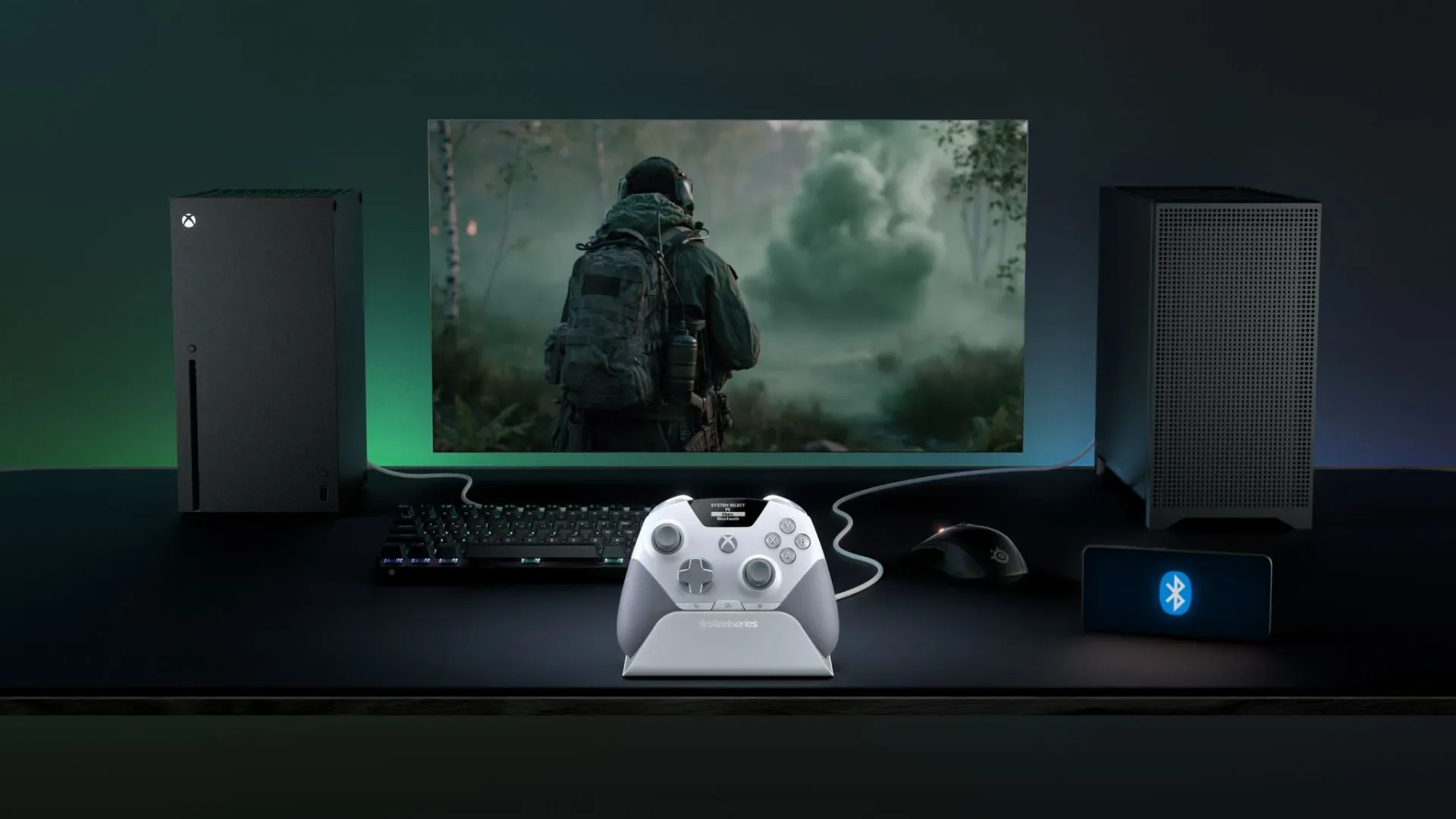
SteelSeries has entered the premium Xbox controller arena with the Aeon Pro, a multi-platform gamepad built for Xbox and PC players who want nearly every high-end convenience in one extremely serious-looking package. It arrives with an onboard OLED display and menu system, tactile microswitch buttons, four rear paddles, a charging dock, two removable batteries, interchangeable thumbstick tops and separate USB-C connections intended to make switching between PC and Xbox less of a desk-crawling chore.
There is, however, one enormous number standing in front of all that hardware: $259.99 / £229.99. That puts the Aeon Pro in rarefied controller territory. A great many players can buy a standard wireless pad and a stack of games for less, so SteelSeries is not merely offering extras here. It is asking buyers to decide whether a highly integrated controller ecosystem is worth a major premium.
That makes the Aeon Pro one of the more interesting hardware launches of September 8, 2026, alongside the wider slate covered in our games releasing today roundup. Its pitch is not subtle: this is a controller for someone who values customisation, quick access to settings and a permanent place on the desk or entertainment stand.
A controller designed to stay in command central
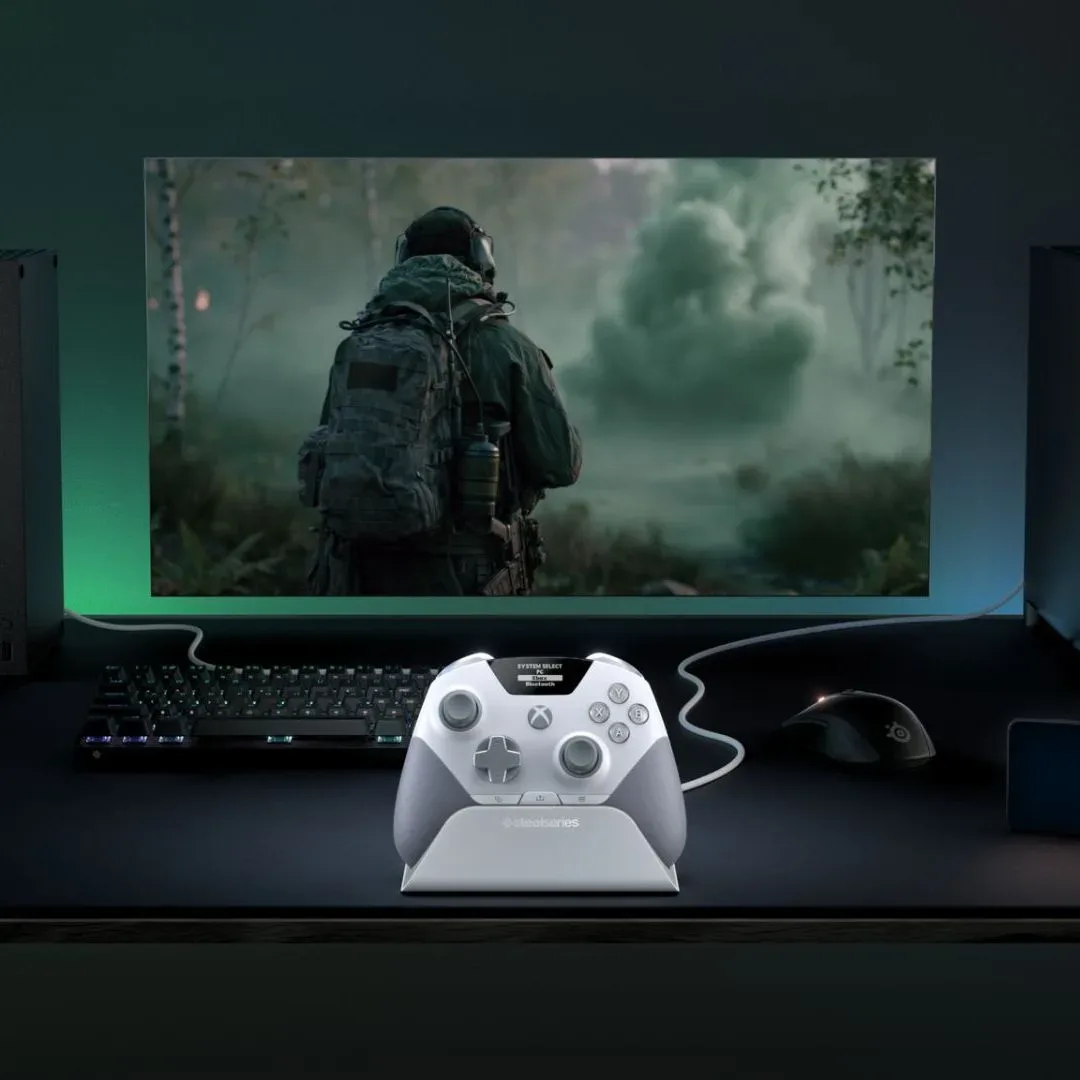
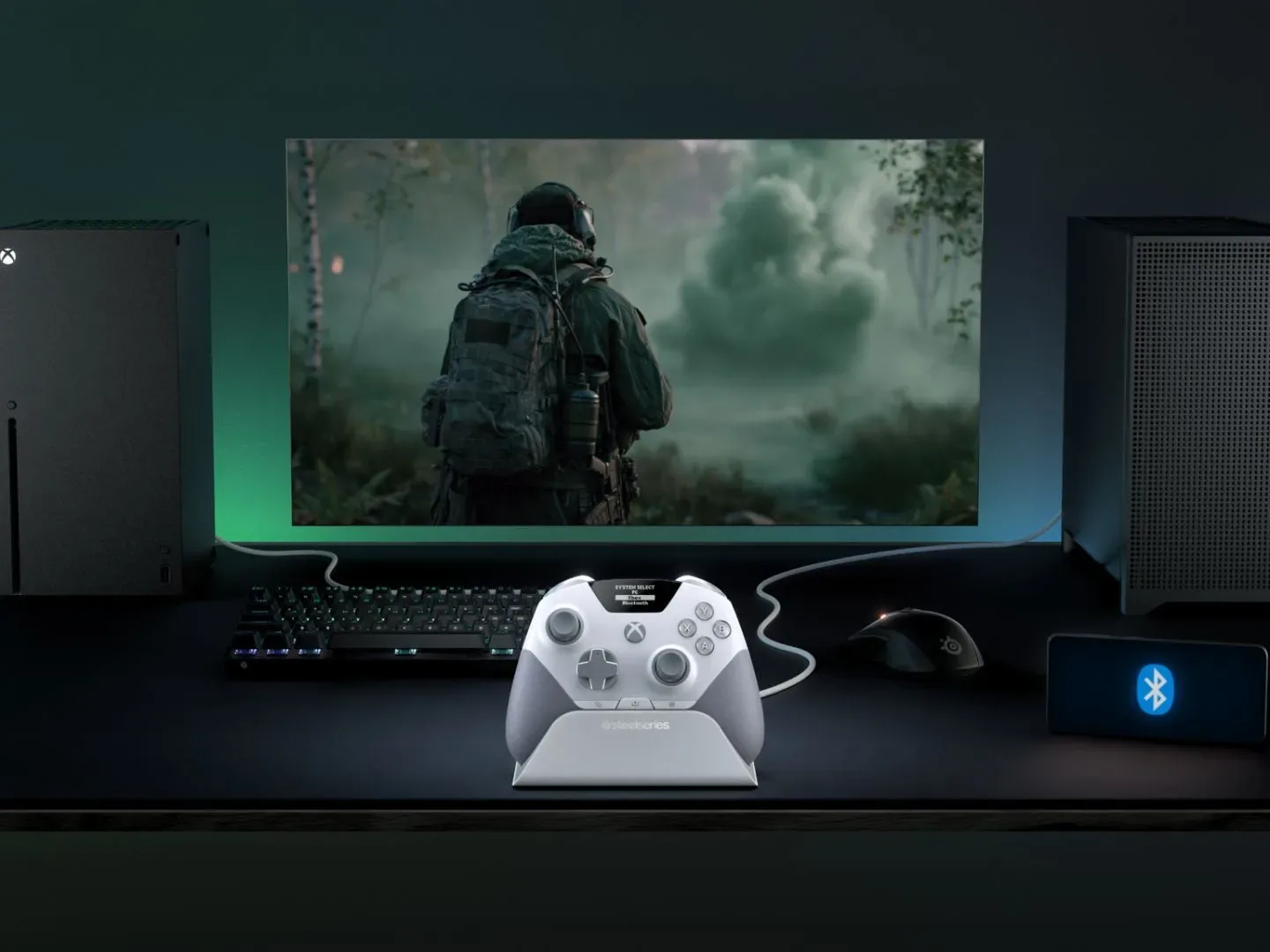
The most distinctive part of the Aeon Pro may be its dock. Charging stands are common enough in the accessory world, but SteelSeries has made this one do substantially more than provide a tidy parking spot. The dock charges the controller, accommodates and charges the spare removable battery, and provides magnetic storage for alternate thumbstick caps. It also acts as the wireless receiver.
That arrangement matters for people who regularly alternate between a console and a computer. The rear of the dock includes separate USB-C ports for PC and Xbox connections. In practical terms, the setup is meant to spare owners from constantly moving a wireless dongle from one machine to another. The dock becomes the central hub, rather than an ornamental charger that happens to be useful when the battery meter turns red.
It is a notably broad feature set, but it also explains why the hardware is physically more involved than a conventional gamepad. The charging stand is described as sizeable, and prospective buyers will likely want to account for desk or media-unit space. For the right setup, that footprint could be a benefit: controller, spare power cell and loose stick caps all have an assigned home. For a minimalist living-room arrangement, it could be more hardware than necessary.
Hot-swappable power targets the most annoying kind of interruption
SteelSeries is bringing a familiar philosophy from its headset and mouse lines to the Aeon Pro: use a removable battery and include a second one. While one battery is running the controller, the other can recharge in the dock. When power runs low, the goal is a quick swap rather than a cable trailing across the sofa or a long pause while the pad charges.
That is a simple idea with genuine appeal. Rechargeable internal batteries are tidy and increasingly standard, but they eventually create an unavoidable trade-off between plugging in and stopping play. A dual-battery arrangement theoretically avoids both problems, provided the owner remembers to keep the unused cell seated in the charger.
The word theoretically is important. The system promises continuity rather than guaranteed perpetual power, because every battery solution depends on charging habits. Still, including two batteries from the outset gives the Aeon Pro a more complete package than a controller that sells a replacement battery or charging accessory separately.
Microswitches everywhere, including four rear paddles
Input feel is clearly central to SteelSeries’ approach. The Aeon Pro uses clicky microswitches across its buttons and its four rear paddles. Players who enjoy a crisp, audible actuation point may find that appealing, particularly in games where rapid, intentional presses are preferable to a softer membrane feel.
The rear paddles are long metallic levers rather than the magnetic paddle design used by controllers such as Sony’s DualSense Edge and Microsoft’s Elite Series 2. They are said to provide a similarly tactile click when pressed. Four rear inputs can be especially useful for keeping thumbs on the sticks while assigning actions that would otherwise require face-button presses, though how comfortable their placement is over longer sessions remains something that requires fuller evaluation.
There is no universal answer to whether loud, sharp microswitches are preferable. Some players love the definitive response; others prefer quieter controls for late-night sessions or simply like the softer travel of traditional buttons. The Aeon Pro is at least making a clear choice rather than trying to be invisible in the hands.
An OLED menu means less dependence on software
The controller also has an onboard OLED display and its own menu system. That lets players access settings and prebuilt button profiles aimed at different game genres without treating a PC application as the only route to adjustments. It is a premium feature that can be particularly convenient for console users or for anyone who wants to change profiles without interrupting their current setup.
For deeper tuning, the Aeon Pro works with SteelSeries GG software. The available adjustments include thumbstick deadzones and other controller settings. That two-layer approach is sensible on paper: fast, routine changes are available on the device, while detailed configuration lives in companion software.
Whether an onboard display becomes indispensable or merely a flashy extra depends heavily on menu speed, clarity and the number of options that can be changed directly. But it gives the Aeon Pro a degree of independence that many controller buyers will appreciate. High-priced hardware should not feel helpless when it is disconnected from an app, and the OLED interface is intended to prevent exactly that impression.
Magnetic thumbstick caps solve a small but real irritation
Interchangeable thumbstick tops have become a familiar premium-controller inclusion. SteelSeries’ implementation stands out because the caps attach magnetically. That may sound minor beside OLED menus and replaceable batteries, yet it addresses a routine annoyance: many alternate stick-cap systems rely on plastic fittings that must be aligned and pressed into place.
Magnetic attachment should make changing caps quicker while reducing the sense that a tiny plastic tab might be damaged during removal. The dock’s magnetic storage area also gives unused tops a place to live, which is welcome in a category where small accessories have a remarkable talent for vanishing just before they are needed.
In short, SteelSeries has focused not only on selling different thumbstick heights or shapes, but on making them easy to swap and harder to misplace. That is the kind of practical polish a $259.99 controller needs.
Hall Effect sticks create the clearest question mark
For all of the Aeon Pro’s elaborate hardware, its sticks use Hall Effect technology rather than TMR. Hall Effect sticks use magnets to detect movement, a contactless approach often associated with improved resistance to drift compared with traditional potentiometer designs. That is not a trivial feature, and it remains a meaningful selling point in a market where stick longevity matters enormously.
Still, the price changes the conversation. TMR, or tunnel magnetoresistance, sticks are increasingly viewed as the newer, top-tier option, with potential benefits that can include power efficiency and sensitivity. A buyer may reasonably expect every specification in a $259.99 pad to represent the latest available hardware, not merely a well-regarded current alternative.
That does not automatically make Hall Effect a flaw, nor does a technology label settle how a controller will feel in actual use. Stick tension, calibration, deadzone settings, build quality and long-term reliability all matter. But against the Aeon Pro’s unusually high price, the absence of TMR will be one of the first points enthusiasts compare with rival premium pads.
The value question SteelSeries must answer
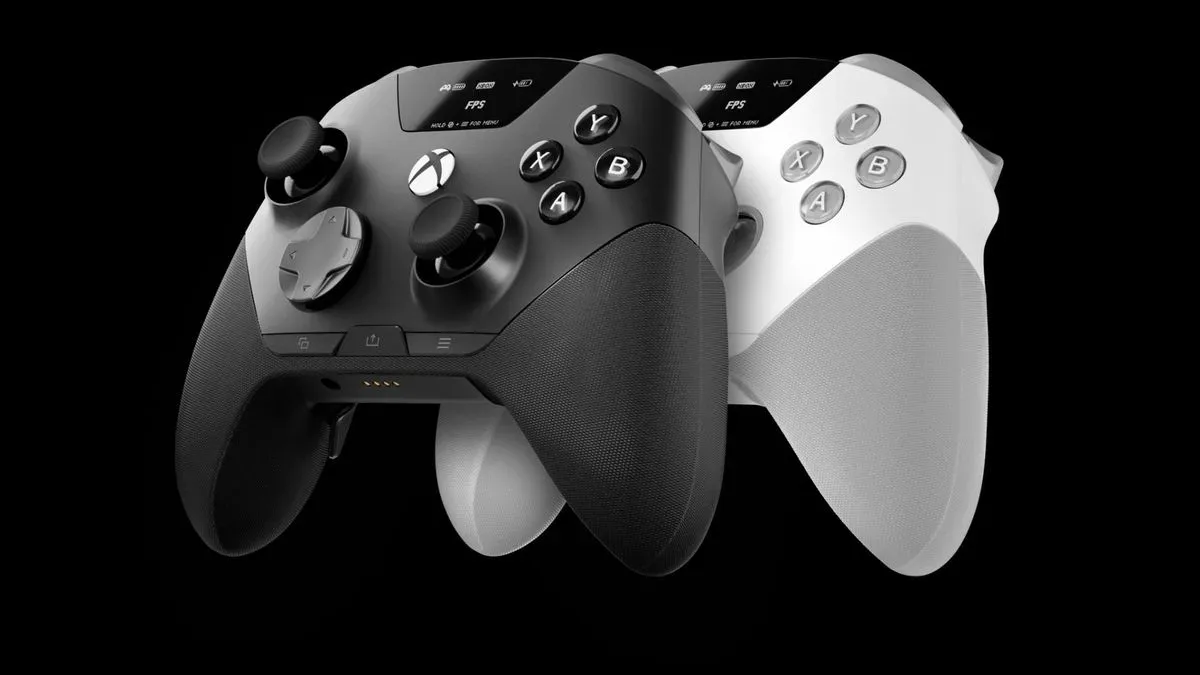
The Aeon Pro is available in an all-black version that follows the familiar visual language of an Xbox controller. A white-and-grey option is also available, with a look that closely recalls the GameSir G7 Pro. Both colorways present a conventional controller silhouette around a feature list that is anything but conventional.
SteelSeries has assembled a compelling checklist: hot-swappable batteries, a dock that doubles as a connectivity hub, spare-cap storage, tactile rear paddles, an OLED configuration interface, genre-based profiles, software tuning and multi-platform support for Xbox and PC. Taken individually, those are desirable perks. Taken together, they form a coherent proposition for someone who plays across platforms and wants a controller setup that is always charged, connected and configurable.
But the asking price remains the Aeon Pro’s toughest opponent. At $259.99 / £229.99, it has to do more than be feature-rich. It has to demonstrate exceptional comfort, dependable wireless performance, durable controls, effective software support and a configuration experience that genuinely saves time. The dock and battery design may be the most persuasive elements because they target everyday friction rather than merely adding a specification-sheet trophy.
For players who want the most straightforward route to Xbox or PC gaming, the Aeon Pro will likely look excessive. For dedicated users who alternate between both platforms, use rear buttons heavily and dislike the ritual of recharging a fixed internal battery, SteelSeries has created a distinctly ambitious alternative. The feature list is worthy of attention; whether the whole package earns its extraordinary premium will depend on how convincingly those parts come together over time.