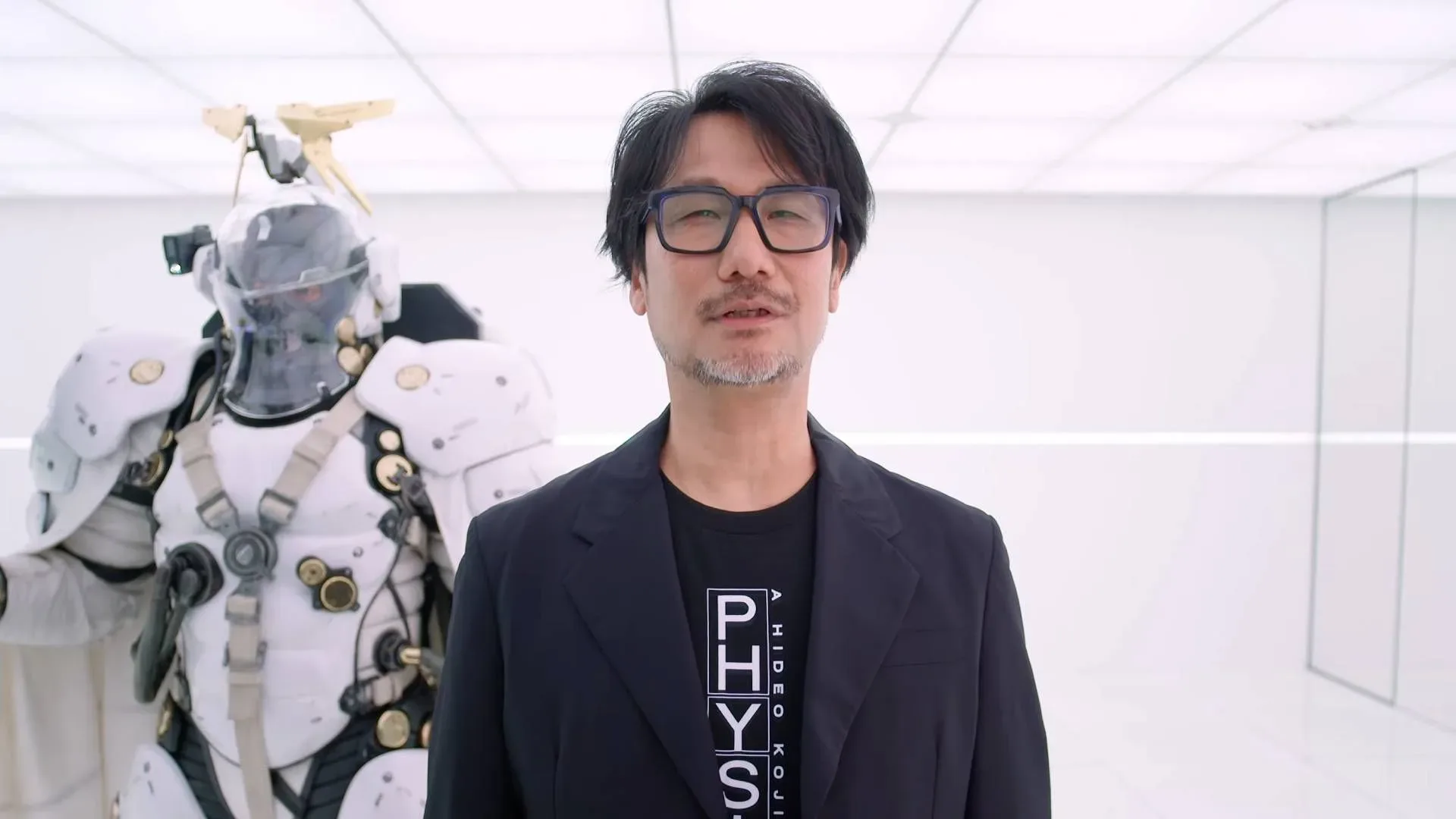
Microsoft’s agreement to fund Physint, Hideo Kojima’s upcoming project with Kojima Productions, is reportedly substantially below what Xbox would ordinarily spend to develop a premium game. That phrasing is notable because Physint is widely positioned as an ambitious, full-price, triple-A-scale project—and because Xbox’s deal is understood to extend beyond the game itself.
The precise value has not been confirmed. Online discussion previously attached a figure of roughly $400 million to the arrangement, but subsequent reporting suggested the actual amount was far lower. With neither Microsoft nor Kojima Productions publicly assigning a number, the sensible reading is not that a specific budget has been established, but that the deal may be structured differently from a conventional publisher-funded blockbuster.
That difference matters. Kojima has described Microsoft’s interest as an investment in a new intellectual property, or IP, with possible room for film and anime adaptations alongside the game. In plain terms, Physint appears to be intended as a broader entertainment property rather than a single game shipment with a beginning, middle and balance-sheet-ending credits roll.
What the report does—and does not—tell us
The reported comparison is to what Xbox typically spends on a premium game, not necessarily to Physint’s entire eventual development cost. Those are importantly different things. A publishing arrangement can include varied rights, production responsibilities, adaptation plans and commercial terms. Without a confirmed contract or budget breakdown, it is impossible to determine what Microsoft’s payment covers, how expenses are divided, or whether the deal has milestones and other conditions.
That also means the circulating $400 million claim should not be treated as a settled figure. It has been challenged by later reporting, while the parties involved have not confirmed it. For now, “below a typical premium Xbox game spend” is the clearest available characterization, and even that is a relative description rather than a hard financial disclosure.
Still, the broader point is meaningful. Modern triple-A development has become exceptionally costly, particularly in Western game production, while the price of a standard premium game has not risen in lockstep with those costs. Publishers therefore face a difficult equation: larger teams, longer development cycles and higher technical expectations can increase risk, but a game’s retail price alone may not expand enough to absorb that risk.
In that climate, a deal built around more than one format could make strategic sense. A successful game can support awareness for an adaptation; an adaptation can in turn keep an IP visible between game releases. That is analysis of the reported strategy, not confirmation that any particular Physint movie or anime has been approved. The only firm takeaway is that adaptations are included in the scope of Microsoft’s agreement.
Physint’s route from PlayStation to Xbox
Physint was previously planned as a PlayStation-exclusive project before Sony canceled it. Kojima later pitched the project to Xbox chief executive Asha Sharma, and Microsoft took it on. The transition placed an unusually high-profile creator and project at the center of a cross-platform industry story: a game once associated with PlayStation now continues under Xbox funding.
Related coverage includes Microsoft's Physint Deal Reportedly Came in Below Typical Premium Xbox Game Spending.
Reporting around the change said Sony had concerns tied to the performance of Death Stranding, as well as Physint’s timeline, budget and platform strategy. Kojima Productions responded publicly, but did not directly address those specific claims. Instead, the studio stressed that it remained healthy and profitable, that development on Physint was continuing with Xbox, and that its relationship with PlayStation remained strong.
That response is important context for anyone reading the move as a simple break between Kojima Productions and PlayStation. The studio’s own statement argues against that interpretation. At the same time, it does not resolve the unanswered questions around why the project changed backers or what the ultimate release plan will be.
The platform question remains especially significant because platform strategy was among the reported areas of concern before the Xbox deal. There has been no release window for Physint, and no confirmed list of platforms in the supplied information. It would be premature to convert Xbox’s funding role into unannounced promises about exclusivity, launch timing, subscriptions or hardware availability.
Why the broader IP plan could change the math
In games, an intellectual property is the fictional identity and creative foundation that can be used across projects: its name, world, characters and associated concepts. Building a new IP is different from merely financing one game, because the investor is potentially creating a platform for future games and non-game media.
Kojima’s description of Microsoft’s approach suggests that Physint is being assessed through that larger lens. The comparison to a one-game budget may therefore be incomplete by design. A conventional premium-game agreement principally asks whether a game can recoup its cost through sales and related game revenue. A wider IP agreement can weigh other possible outcomes too, including adaptations and the longer-term value of establishing a recognizable new universe.
None of this makes the project low-risk. A new IP still needs to find an audience, and planned adaptations do not guarantee that it will. Indeed, the absence of a release window reinforces how early the public picture remains. But the reported deal structure helps explain why the headline budget comparison should not be read as a verdict on Physint’s scale or importance to Xbox.
For Microsoft, the attraction is potentially twofold: supporting a game from one of the medium’s most recognizable creators while also gaining a stake in a brand that could reach beyond the console and PC game audience. For Kojima Productions, the arrangement may provide support for a project that had faced a potentially consequential disruption after its prior cancellation.
There is a useful distinction here between funding and ownership. Funding a project can involve financial backing and negotiated rights without automatically revealing every detail of who owns the underlying creative property. The available information says Microsoft is funding Physint as a broader project and that the agreement includes adaptations. It does not publicly lay out the complete rights arrangement, so claims beyond that would be speculation.
What players can reasonably expect now
At present, Physint remains more a strategic outline than a game with public release particulars. It is expected to arrive after OD, Kojima’s other upcoming Xbox game. That ordering does provide a practical expectation: news about OD may need to come first before Physint’s own launch plans move into clearer view.
For players, the most responsible expectations are limited but substantial:
- Physint is continuing in development with Xbox funding.
- The project is expected to be a premium, triple-A-scale game and has been discussed as a spiritual successor in the orbit of Kojima’s Metal Gear Solid legacy.
- Microsoft’s agreement is understood to include adaptation ambitions, not solely the game.
- No release window has been announced.
- No exact, confirmed budget has been disclosed.
The language around a “spiritual successor” deserves restraint as well. It signals a perceived creative lineage or expectation, rather than confirmation that Physint is literally a new Metal Gear entry or will replicate every element of that series. Kojima created Metal Gear, but Physint is presented as a new IP. The distinction is fundamental for audience expectations and for any potential adaptation strategy.
Physint’s changing publisher path also arrives amid renewed debate about exclusivity and platform plans across the industry. For related perspective on evolving PlayStation strategy, see this look at comments on a possible exclusivity-first approach to PC. In Physint’s case, however, the facts currently support only that Xbox is the project’s funder and that the eventual platform details have yet to be set out publicly.
The key question is scope, not one rumored number
The most revealing aspect of the report may be its emphasis on scope. If Microsoft’s spending is lower than a typical premium Xbox game investment while its deal encompasses games and potential adaptations, Physint may represent a tailored partnership rather than a standard development cheque. That could mean negotiated efficiencies, different allocations of responsibility, or a value calculation centered on the long-term IP. The public evidence does not let us choose confidently between those possibilities.
What it does show is that Physint has survived a major change in backing and now sits within a more expansive Microsoft plan. Kojima Productions says the studio is profitable, development is progressing, and its PlayStation relationship remains intact. Microsoft, meanwhile, has secured a project that could be more than an individual release if its new universe gains traction.
Until a formal reveal supplies gameplay, platforms, a launch window and clearer business details, the budget conversation should stay grounded in that uncertainty. The reported spending comparison is an intriguing clue about how Xbox made the deal work—not a confirmed price tag, and not a full blueprint for what Physint will eventually become.