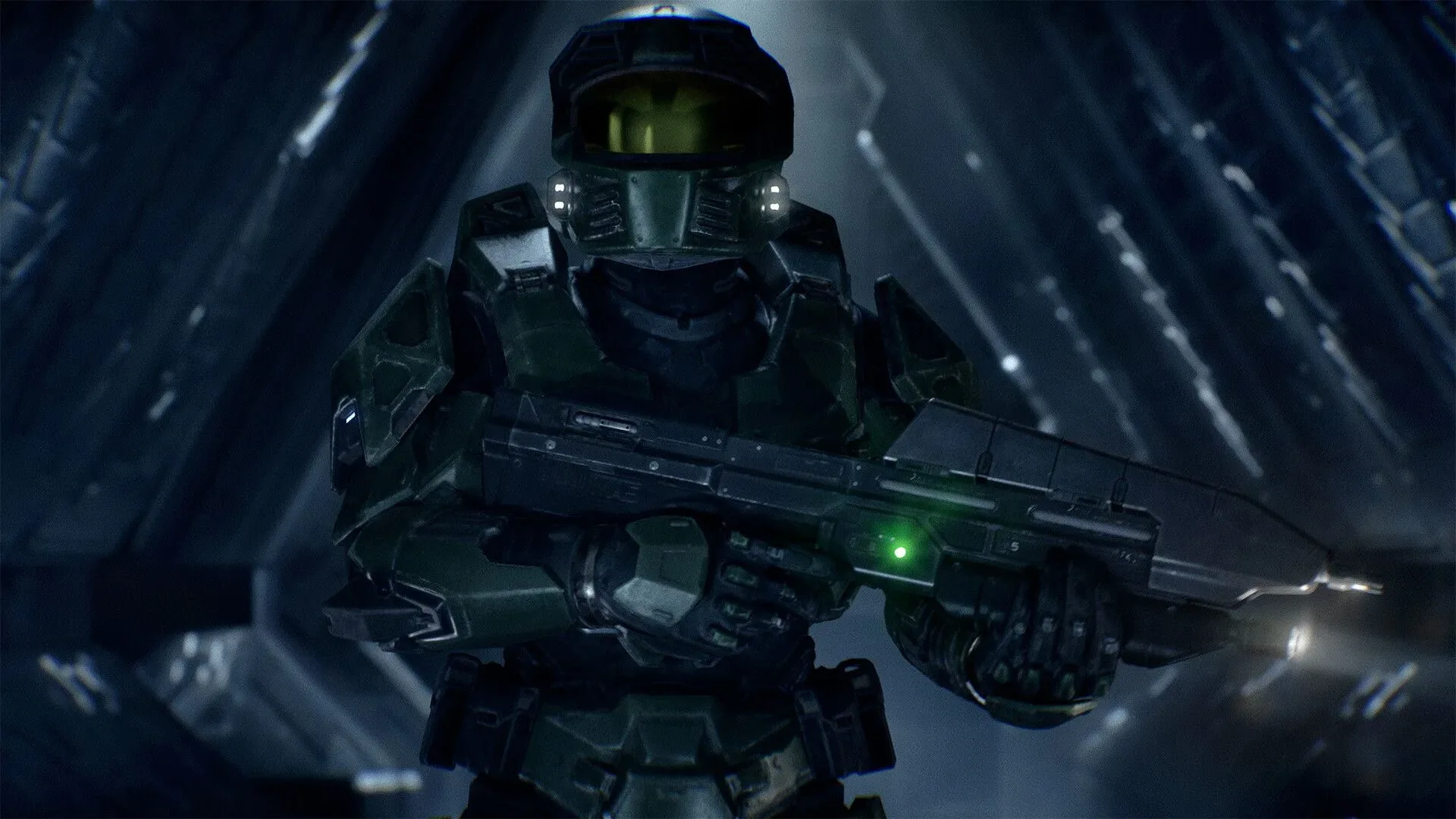
Halo’s future has gained a difficult new wrinkle: Activision now has control of the series, while Xbox job cuts have affected Halo Studios and other parts of the organization. Into that uncertainty, longtime Halo writer and former franchise creative director Frank O’Connor has offered a useful framework—not a promise, plan, or inside account, but three possible strategic directions for making a successful next Halo.
O’Connor’s proposal is unusually valuable because it does not pretend there is one painless answer. He explicitly cautions that none of the routes is easy, guaranteed, or necessarily viable. That matters. “The greatest Halo game ever” is an enormous ambition; it is not a genre, production plan, audience definition, or content roadmap. The challenge is deciding what a modern Halo should prioritize, whom it should serve first, and which compromises it can make without losing the parts that give the series its identity.
His three routes are clear: build a focused classic-style Halo for a durable core audience; radically reinvent the universe with a different kind of game; or adapt Halo to systems familiar to Activision, with established player, progression, and business models plus a regular cadence of major content. O’Connor also attaches a human consideration to the conversation: Activision should consider hiring talent from Bungie, Halo Studios, and other teams affected by layoffs.
A franchise question arriving during layoffs
Microsoft’s Xbox organization is in the middle of a plan to cut 3,200 employees. A reported 268 roles were affected earlier in the month, with many of those employees working at Halo Studios. Matt Booty, Xbox’s chief content officer, described the role eliminations as occurring across Halo Studios, other first-party studios, and management and central-function layers.
That context makes any discussion of Halo’s future about more than familiar arguments over maps, modes, campaign structure, or multiplayer balance. Making a large game requires institutional knowledge: people who understand creative pipelines, production constraints, the fiction, technical tradeoffs, audience expectations, and the small design details that turn a setting into a game players recognize. Layoffs do not establish what a future Halo will or will not be, but they do make continuity of expertise an important practical issue.
It also explains the force of O’Connor’s final recommendation. His suggestion is not merely to recruit recognizable names. It is to look toward people whose ideas and experience may have been interrupted, reduced, or closed down over the years. Whether Activision takes that route is unknown. The point is that a strategy for Halo cannot be separated cleanly from the people who will have to execute it.
Path one: a classic Halo built for a core audience
The first option is the most conservative in concept, though it is hardly simple: make a “classic” Halo movement, sandbox, and shooter experience, aim it carefully at its core audience, then scale it so it can succeed with that group while remaining attractive enough to grow beyond it.
Two terms in that idea carry a lot of weight. Movement means the feel and rules of navigation: acceleration, jumping, traversal options, momentum, and how easily players can read and predict one another in combat. In a competitive shooter, movement is not cosmetic. It affects weapon usefulness, map design, encounter pacing, and the difference between a tense duel and a chaotic one.
Related coverage includes Halo Veteran Maps Out Three Paths to Activision's 'Greatest Halo Game Ever'.
Sandbox, meanwhile, describes the set of systems players can combine. For Halo, that usually points to the relationship among weapons, vehicles, equipment, space, enemies, and objectives. A strong sandbox lets a player solve the same situation in multiple ways and gives surprising interactions room to emerge. It is why preserving a sandbox is more demanding than simply including a long list of guns or vehicles: the elements must meaningfully interact.
This first path would therefore ask Activision to define “classic” in playable rather than nostalgic terms. O’Connor’s framing does not call for a museum piece or a narrow attempt to reproduce an earlier era. It calls for a game tailored to a committed audience but designed with enough accessibility and appeal to expand. Those goals can pull against each other. Serving expert players may require depth, consistency, and room for mastery; reaching newcomers may require legibility, onboarding, and a clear reason to join now.
O’Connor also makes the straightforward but crucial multiplayer point that more players improve multiplayer by mathematical default. Healthy population matters because it supports matchmaking, gives friends more reasons to play together, and keeps a community from becoming fragmented across separate activities. The claim is not that raw player counts solve every design problem. It is that a multiplayer game has more opportunity to function well when there are enough people participating.
For players, this route is the one most likely to put Halo’s established first-person-shooter identity at the center. Its biggest risk is not that familiar design is inherently outdated. The risk is defining familiarity too narrowly, treating recognizable traits as a substitute for a compelling contemporary game, or trying to please every past preference at once.
Path two: a deliberate reinvention
O’Connor’s second route is bolder: make something new and modern that reinvents the game or universe in a surprising but excellent way. He floats an action-sandbox title, a new take on the FPS format, or even an action RPG, provided the result is fundamentally different and succeeds through strong storytelling, effective use of the Halo intellectual property, and the initial curiosity or loyalty attached to a known name.
An action RPG is a game where real-time action is paired with role-playing systems such as character development, progression, abilities, equipment, or choices. O’Connor’s suggestion does not establish that Halo is becoming one. It illustrates the degree of change he believes a reinvention could entail. The key condition is not simply moving Halo into another genre. It is making the new approach persuasive in its own right.
This distinction is essential. A famous setting can provide recognition and initial interest, but it cannot automatically make a genre shift coherent. A reinvention would need to answer practical questions that the current discussion does not resolve: Which parts of Halo’s identity carry over? Is the central appeal its universe, its story, its first-person combat, its sandbox interactions, its multiplayer social space, or some combination? How would new systems enrich the property rather than merely borrow its name?
The potential upside is obvious. A different structure could create a fresh entry point for people who do not currently identify Halo with their preferred genre. It might also let the series emphasize parts of its universe that a more traditional competitive shooter presents differently. But O’Connor correctly identifies the reliance on curiosity and loyalty as only a small head start. Interest gets people through the door; a satisfying game is what makes the reinvention durable.
This is the path with the widest creative latitude and, correspondingly, the most uncertainty. It could refresh Halo’s purpose. It could also alienate players who expect the franchise’s defining loop to remain central. A reinvention needs confidence: not just a list of new mechanics, but a clear explanation of why this particular Halo concept exists.
Path three: put Halo in Activision’s comfort zone
The third option is to translate Halo into Activision’s “comfort zone,” using player, progression, and business models that are already proven to work, accompanied by a large annual or semi-annual spectacle and continuing content. This is not a full prescription to copy another game. O’Connor specifically warns against abandoning Halo’s sandbox elements and against tying the series to hardware launch cycles.
Progression generally refers to the systems that show a player’s advancement over time. It can include levels, unlocks, ranks, challenges, cosmetic goals, or other ways that continued play is organized and rewarded. Constant content describes an ongoing model in which a game receives regular additions rather than functioning only as a finished boxed-style release. Neither term guarantees quality. The question is whether those systems give players meaningful reasons to return while supporting, rather than distracting from, the core game.
There is an understandable business logic to this third route. Proven structures can reduce uncertainty, and a predictable cadence can make it easier for an audience to know when big moments and smaller updates are expected. Yet O’Connor’s caveats are the important part. If Halo’s sandbox is what makes its action distinct, then a progression and content plan should be built around that strength, not flatten it into an interchangeable delivery framework.
The warning about hardware launch cycles is similarly practical. Building a major Halo around a platform deadline could make a release schedule, rather than the game’s readiness and design needs, the dominant force. O’Connor’s alternative emphasis is on a large recurring spectacle and steady support, but the supplied information does not identify any actual release cadence, specific project, or product plan. These are possibilities, not confirmed decisions.
Talent is not a footnote to the strategy
O’Connor’s most pointed suggestion is to hire from Bungie, Halo Studios, and other recently laid-off groups. It is tempting to frame that solely as an emotional response to job losses, but it also has a clear production argument behind it. If the aim is either to preserve Halo’s core qualities, reinvent it intelligently, or operate it as an ongoing service, experienced developers can bring hard-won knowledge about what works, what failed, and what unresolved ideas still have potential.
That does not mean one former developer or team is a magic answer. O’Connor himself rejects the idea that any route is assured. Nor does the information available establish whether Activision will hire any of the people he mentions. Still, the proposal puts a concrete answer beside a broad corporate slogan. A claim about making the greatest Halo game needs a team capable of translating that ambition into movement, maps, missions, systems, story, and sustainable support.
It also leaves a more immediate question for the audience: what does success look like? Players who want the first route may value a crisp, recognizable shooter with a rich sandbox and a healthy multiplayer population. Those attracted to the second may prefer a confident leap into a substantially new form. The third route could appeal to people seeking a regularly supported game with visible progression and recurring moments. Activision’s eventual challenge, if it takes any of these directions, will be to make its priorities legible rather than trying to sell all three visions simultaneously.
Halo’s legacy continues to invite experimentation outside the official series; a separate look at Halo: Combat Evolved projects on New Nintendo 3DS and in a browser is a reminder of how enduring the original game’s appeal remains. For the franchise’s next official chapter, though, O’Connor’s comments focus attention on a more pressing issue: a great Halo will need more than a grand promise. It will need a deliberate identity, an audience-aware plan, and the people to build it.