Halo’s reported move under Activision has prompted a big creative question that cannot be answered by a logo change, a production chart, or a sudden influx of military-green spreadsheets: what exactly should the next Halo be?
Frank O’Connor, who spent nearly two decades as Halo’s franchise creative director across 343 Industries and Halo Studios before leaving in 2023, has laid out three broad possibilities. Crucially, he did not frame any of them as a guaranteed win. Each could work, he argued, but each comes with meaningful creative and operational risk.
The three routes are straightforward on paper: make a focused modern version of classic Halo; make a fundamentally different game that uses the Halo universe; or adapt Halo’s identity to Activision’s experience with large, regularly updated franchises. The difficult part is that Halo’s next custodians would have to make a clear choice rather than attempting to bolt all three approaches together.
The franchise has already been through a period of major change. 343 Industries rebranded as Halo Studios in 2024, underwent leadership changes, and shifted its underlying technology to Unreal Engine. Earlier this year, it released Halo: Campaign Evolved, a remake of the first game’s campaign without multiplayer. Reports have also indicated that the studio’s next mainline project was still years away before Xbox leadership decided to place Halo with Activision.
That context makes O’Connor’s framework useful: it is less a prediction than a way to define the decisions now facing one of Xbox’s most recognizable series.
Path one: a classic Halo built for a sustainable audience
The first option is the most conservative creatively, but it should not be confused with simply replaying the past. O’Connor’s proposal is a Halo shooter rooted in the series’ established movement, combat sandbox, and multiplayer appeal, designed first for the people who actively want that kind of Halo. It would then need enough clarity and quality to attract more players over time.
In Halo terms, the sandbox is the collection of weapons, vehicles, equipment, enemy behaviors, maps, and rules that create unscripted possibilities. A player may take a different route through an arena, use a vehicle in an unexpected way, combine tools, or react to an opponent’s improvised tactic. Preserving that interaction-heavy design language is a more specific goal than merely retaining familiar armor or a recognizable rifle.
This approach acknowledges an important multiplayer reality: more players generally improve the experience. A larger active population can support healthier matchmaking, more varied skill levels, and a greater chance that niche modes remain viable. But that does not mean a game must be designed around everyone at once. The proposed model begins with a credible core audience and seeks expansion from there, rather than treating broad reach as a substitute for a firm creative identity.
Related coverage includes Former Halo Creative Director Maps Out Three Possible Futures Under Activision.
Its upside is legibility. Players would know what Halo is offering, and the developers would have a firm set of principles against which to judge new mechanics. Its downside is equally clear. “Classic” can become an excuse for caution, and a game that only reenacts an earlier template may struggle to feel essential alongside newer shooters.
For this route to work, familiar foundations would need thoughtful modernization, not nostalgic preservation under glass. That could mean better onboarding, reliable support for multiplayer, and systems that give committed players reasons to return while still welcoming people who have not kept up with every prior entry.
Path two: use Halo for a genuine reinvention
The second path would be bolder: build something surprising in the Halo universe that is fundamentally different from the established first-person-shooter formula. O’Connor floated the broad possibilities of a fresh FPS interpretation or even an action role-playing game, provided the result is more than a cosmetic reskin.
An action RPG generally combines real-time combat with role-playing systems such as character progression, build choices, abilities, equipment decisions, or narrative branching. That label alone does not determine how a game plays, but it signals a potential shift away from Halo’s traditional match-to-match competitive multiplayer focus and toward longer-form character development or adventure structure.
The advantage is room to surprise. Halo has a vast fictional setting, and a new genre could invite different stories, stakes, and player perspectives. Familiarity with the universe could draw initial curiosity, while a strong story and coherent use of the setting could turn that curiosity into a durable audience.
But the safety net is thin. Name recognition can encourage players to look at a new project; it cannot make them stay. A reinvention would have to be compelling on its own terms, and it would face the particularly awkward burden of proving both that it belongs under the Halo banner and that it is not merely imitating a genre better served elsewhere.
There is also a branding risk. Halo’s identity is closely tied to how it feels in motion, how encounters unfold, and how its tools interact. A new game could successfully broaden the universe, but it should understand which ideas are structural to Halo and which are flexible. O’Connor’s third path supplies an especially relevant warning on that point: do not abandon the sandbox.
Path three: Halo at Activision scale
The third possibility starts from Activision’s demonstrated comfort zone: player-progression systems, recurring updates, and large-scale release cadence. In this scenario, Halo would retain its intellectual property and sandbox while using structures meant to sustain a major, frequently refreshed franchise. O’Connor described the prospect as an annual or semiannual spectacle paired with constant content.
Progression systems are the mechanics that track and reward a player’s time or performance. They can include ranks, unlock paths, challenges, and other measures of advancement. Live content refers to material and updates delivered after launch on an ongoing basis, rather than a game being treated as a finished product that receives little continuing support. Neither concept is automatically good or bad; their effect depends on whether the rewards, updates, and pacing serve the game rather than distract from it.
The operational appeal is easy to understand. A large franchise needs planning, coordination, retention strategy, and the ability to deliver updates consistently. Genevieve Harrison, a former Xbox social-media manager for executive communications, noted that expertise cannot be transferred as simply as moving people from one organizational folder to another. Still, Activision’s capacity to operate giant franchises could be valuable if it is matched with a clear understanding of Halo’s distinctive play.
That caveat matters. An efficient content machine without a strong game at its center can make a series feel busier without making it better. Halo’s weapons, vehicles, modes, and map design cannot simply be decoration around a progression loop. They are the reasons a regular update schedule would matter in the first place.
O’Connor also cautioned against forcing Halo to line up with hardware or service launch cycles, or trying to make it fit an aging platform that cannot support its intended design. The practical argument is that a game’s scope and technology should be determined by the game’s needs, not by an external calendar. Halo Studios’ pivot to Unreal Engine is relevant here: changing game technology is a substantial undertaking, and it reinforces the case for setting an achievable creative target before trying to commit to a fixed cadence.
Talent may be the connective tissue
O’Connor’s most concrete recommendation is about people. He suggested bringing in talent from Bungie, Halo Studios, and other teams affected by layoffs, especially people with ideas that were previously reduced or shelved. It is an argument that institutional knowledge is not interchangeable with a franchise label.
That does not mean Halo’s future must be dictated by its past. In fact, the three-path model argues against that. It does mean that a team making major choices about the series could benefit from people who understand why particular design decisions mattered, where earlier ambitions ran into trouble, and which parts of the game’s character should survive a reinvention.
For players, the immediate takeaway is not that a specific type of Halo has been confirmed. No such direction is established here. The useful signal is that the series appears to have three very different strategic futures, each demanding discipline. A traditional Halo needs the confidence to modernize without dissolving its identity. A reinvention needs the confidence to change more than the camera angle. A high-frequency Activision-style Halo needs to ensure that constant support amplifies its sandbox rather than replacing it.
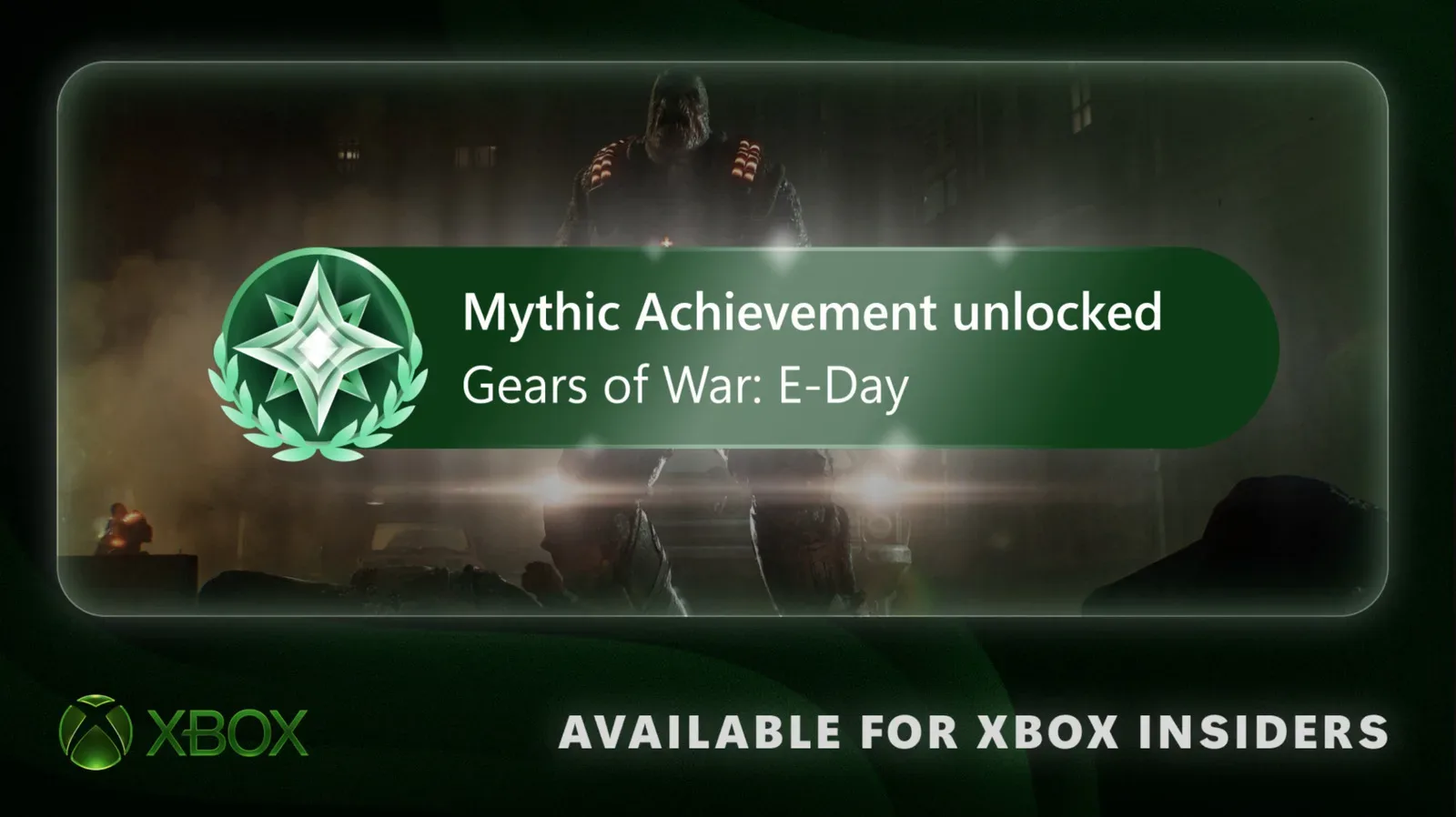
Xbox’s wider ecosystem is also continuing to build systems around long-term engagement, including Xbox Mythic Achievements and their permanent completion badge. That is separate from Halo’s creative decision, but it illustrates why the franchise’s relationship to recurring play, progression, and community will matter.
None of O’Connor’s three paths is easy, and that may be the most honest part of the assessment. Halo does not need an answer that sounds familiar in a planning meeting. It needs a direction that its developers can execute with enough conviction that players can recognize the game’s purpose as soon as they pick up the controller.