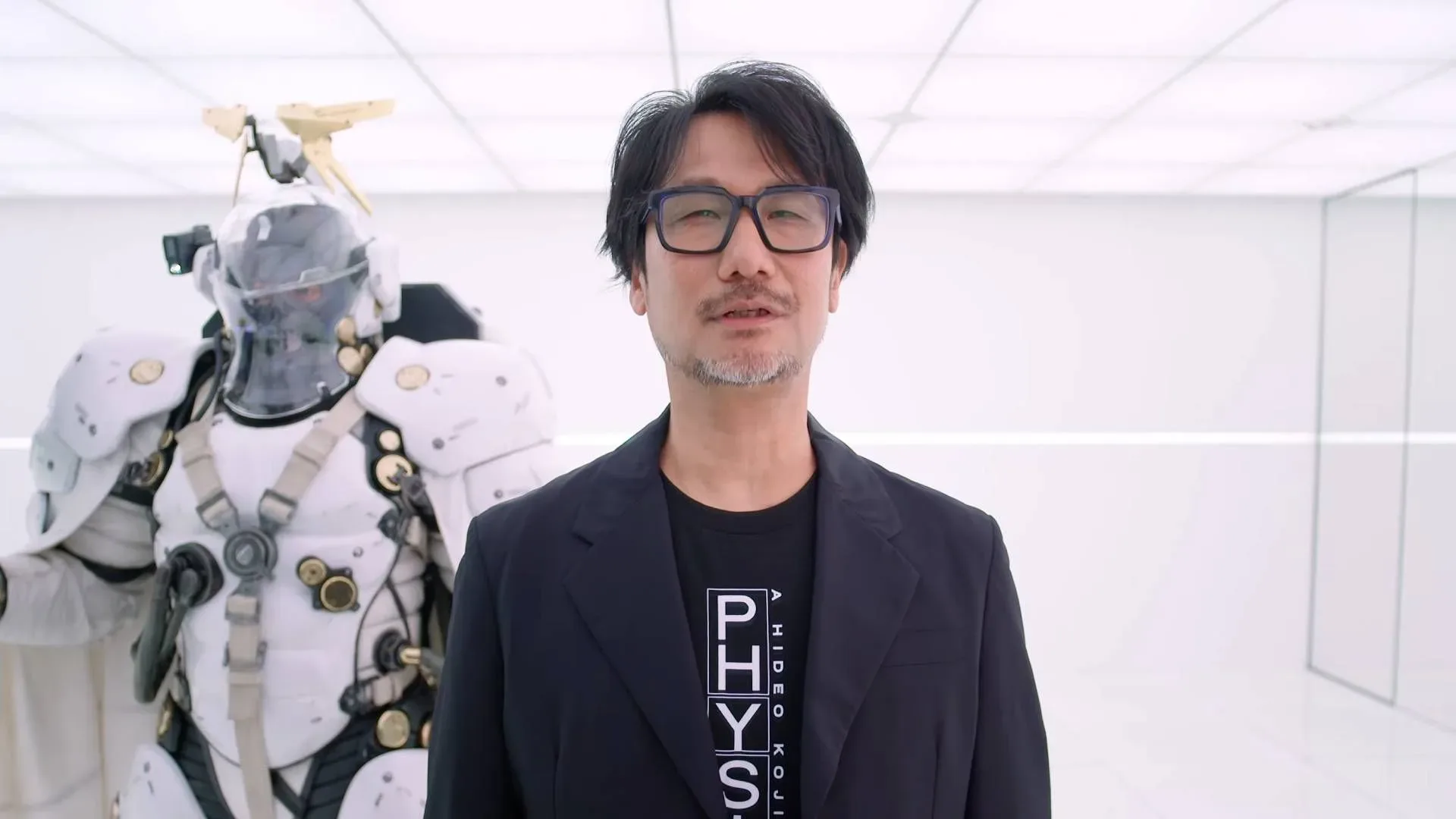
Hideo Kojima has named Bill Skarsgård as the lead performer for Physint, the action-espionage game now backed by Xbox Game Studios. The casting news is one of the clearest updates yet on a project that Kojima describes in exceptionally broad, ambitious terms—but it does not bring a release date, gameplay footage, or a detailed explanation of how the game will play.
Skarsgård, whose screen roles include John Wick: Chapter 4 and Nosferatu, joins previously disclosed cast members Charlee Fraser, Don Lee—also known as Ma Dong-seok—and Minami Hamabe. Kojima said he and Skarsgård have long admired one another’s work and chose to begin the project together. The announcement establishes Skarsgård as the performer attached to the central character, rather than simply another member of an ensemble whose roles have yet to be defined.
A major casting reveal, not a gameplay reveal
For now, the confirmed information should be separated from the expectations surrounding it. Skarsgård is playing the lead in Physint; Fraser, Lee, and Hamabe are also part of its cast; and development is continuing under Xbox Game Studios. Those are the concrete developments.
What remains unknown is nearly everything that normally tells players what an espionage game will feel like: the protagonist’s identity, the setting, the mission structure, the player’s tools, combat systems, stealth rules, platforms, and release window. There is no announced gameplay to use as a basis for claims about those subjects. The cast announcement is therefore meaningful as a signal of the project’s production direction, especially its apparent emphasis on performance, but it is not evidence of a finished game or a near-term launch.
That distinction matters because Kojima has connected Physint to the legacy of Metal Gear Solid, a series strongly associated with stealth, cinematic presentation, elaborate narratives, and performer-led characters. Calling a title a spiritual successor generally means it is positioned as a creative heir to ideas or sensibilities from an earlier work. It does not mean the new game is officially part of the older series, shares its characters, or will necessarily reproduce its exact mechanics.
Kojima said the idea to make a game in that vein came to him while he was ill during the COVID-19 pandemic. His current description goes further: he calls Physint the culmination of more than four decades of his career and says it aims to redefine “action espionage” beyond existing digital-entertainment genres. That is a statement of creative intent, not a specification. Until the team shows the game, players should treat it as a high-level ambition rather than a promise of particular features.
What “action espionage” suggests—and what it does not confirm
“Action espionage” is the phrase Kojima is using to frame Physint. In plain terms, it points to a mixture of covert operations and action-oriented stakes: infiltrations, surveillance, deception, escape, conflict, or intelligence gathering could all fit the label. But the phrase alone does not establish which of those activities players will perform, how often they will occur, or whether the game prioritizes avoiding confrontation over winning it.
Espionage games can differ dramatically in structure. One may focus on carefully managed visibility and sound; another may make gadgets and disguises central; another may use dialogue, investigation, or branching decisions. A game can also use the language of espionage chiefly as a narrative frame. Physint has not been publicly detailed enough to place it in any of those categories.
There is also a difference between a game’s genre label and its production approach. The disclosed cast points toward a project interested in screen performers, while Kojima’s language emphasizes a boundary-pushing format. Neither detail tells audiences whether the final result will be linear or open-ended, first-person or third-person, single-player or otherwise. Keeping those unanswered questions visible is the sensible way to follow a project still without a public gameplay demonstration.
Xbox’s role is now central to Physint
Kojima acknowledged Xbox as the partner supporting the project and thanked the company for believing in the studio’s vision. That relationship is newly important because Physint is described as having moved to Xbox after Sony had intended to cancel it. The supplied details do not outline the terms of the arrangement, nor do they confirm exclusivity, platforms, release services, or publishing plans beyond Xbox Game Studios’ involvement.
What can be said is that Xbox now has two upcoming Kojima projects in the conversation: Physint and OD. Both were addressed during the Xbox Tokyo Game Show 2026 Broadcast, though they are at different stages and are being described differently. That makes the partnership more than a one-project curiosity, even while the particulars surrounding each title remain limited.
Xbox’s broader slate continues to span projects with varying platform plans and formats; for a recent example of an Xbox-connected multi-platform release, see the cross-play plans for Shape of Dreams. That wider context should not be read as a clue about Physint, however. No platform commitments for Kojima’s game were provided in the available update.
OD is progressing, but remains a separate proposition
Kojima also provided a brief status report on OD, saying the game is steadily taking shape. Performance capture resumed or continued during the year after the SAG-AFTRA strike. Performance capture is a production process in which an actor’s movements—and potentially facial performance and voice work, depending on the setup—are recorded for use in a game. Its mention indicates ongoing development work, but it cannot by itself establish how close a game is to completion.
He previously said that OD had a pitch that sounded “crazy” to every publisher except Xbox. That framing makes it clear that Xbox’s willingness to support unconventional Kojima projects is part of the public narrative around the partnership. Yet OD and Physint should not be collapsed into one project: the former has been described through its unusual pitch and performance-capture progress, while the latter is being positioned around action espionage and its newly announced lead actor.
Why Skarsgård’s casting matters at this stage
In a game with no gameplay shown, a lead casting announcement carries extra weight. It gives the public a recognizable creative anchor and indicates that character performance will be an important part of the project’s presentation. Skarsgård’s name is now the strongest available clue to who will front Physint, alongside Kojima’s own description of the game’s ambitions.
It also provides a more grounded update than genre-defining rhetoric. Casting can be confirmed without revealing plot turns, mechanics, or a visual design that the team may not be ready to show. For players, that means the news is worth noting without trying to extrapolate a character’s personality, story function, or physical likeness from Skarsgård’s previous film work. No details about his role beyond its lead status have been shared.
The existing group of named performers suggests an international ensemble, but even that is only an observation about the announced cast—not confirmation of a setting, a story premise, or the characters’ relationships. Kojima has not supplied those pieces publicly in this update.
The timeline remains deliberately distant
The most practical takeaway is patience. Kojima said last year that Physint was another five or six years away. The latest update says the project is making steady progress, but it does not replace that earlier estimate with a new target. The game also appears to have gone through a publisher transition before landing with Xbox, a circumstance that may complicate any attempt to infer timing from older comments.
As a result, there is no basis to expect imminent hands-on access, gameplay footage, or a release announcement. A cast reveal can arrive a long time before a game becomes playable, particularly when a project is built around a substantial production pipeline and a team is still defining how much it wants to show.
For now, the Physint checklist is short: Bill Skarsgård will portray its lead, Fraser, Lee, and Hamabe are also attached, Xbox Game Studios is its partner, and Kojima is presenting it as a new action-espionage work informed by his long career. The larger questions—the game itself, its format, and when players can see it in action—remain unanswered.