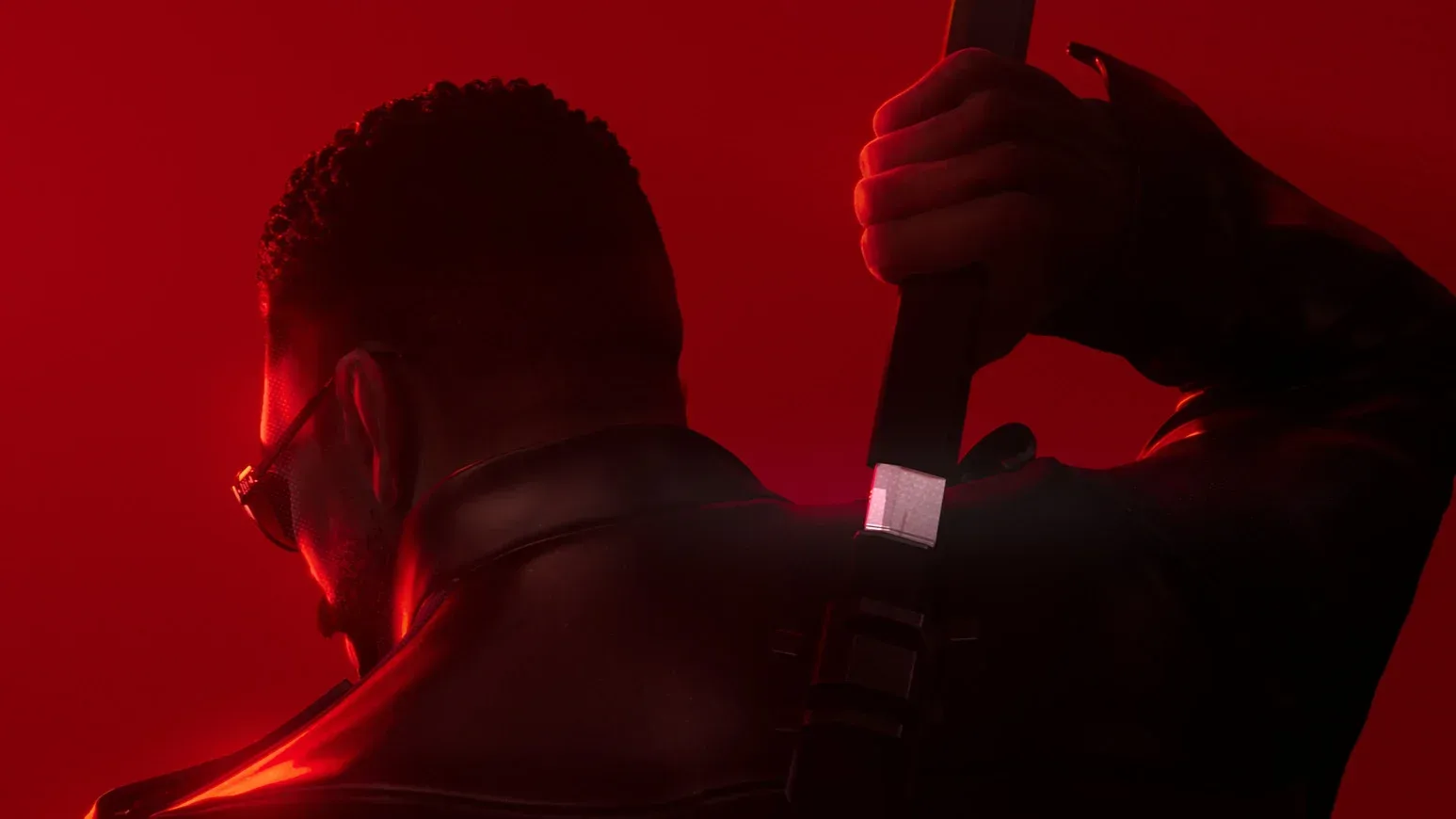
Arkane Lyon reportedly has only weeks left to secure a buyer, with November 13 identified as the end of a three-month process that requires an attempt to find a purchaser before a closure or large-scale layoffs can proceed. The prospect is especially fraught because union representatives speaking for the studio’s developers say Marvel’s Blade is nearing the end of development.
That leaves a well-known game team, an unshown Marvel project, and a legal timetable moving at the same time. The central facts are still subject to the uncertainty that surrounds any potential sale: no buyer has been confirmed, no deal has been announced, and “nearing the end” is not a release date. Still, the reported status makes the fate of Arkane Lyon more consequential than a typical corporate restructuring. It could decide whether a nearly complete game is finished under new ownership, transferred elsewhere, or left without the team building it.
The reported deadline and what it means
Arkane Lyon is part of Arkane Studios, which came under Xbox ownership through the 2021 acquisition of ZeniMax Media. The French studio is known for Dishonored and Deathloop. It was reportedly placed in a period of uncertainty during a wider Xbox reset in July, while other studios faced different outcomes: Double Fine and Compulsion Games were spun off, Undead Labs became employee-owned, and Ninja Theory reportedly began reducing staff after two unsuccessful rescue efforts.
Arkane Lyon’s situation has followed a different track because French labor rules reportedly require an employer of the relevant size to seek a buyer before pursuing a mass layoff or closure. That buyer-search window is said to expire on November 13. In practical terms, it is not simply a countdown to a business decision. It is a period in which a prospective owner would need to see enough value in the studio, its staff, its work in progress, and any deal structure available to take on the operation.
A buyer does not automatically mean that every existing plan, job, or project term remains intact. Nor does a failed search necessarily explain every later step on its own. But a successful transaction would provide the clearest path to keeping Arkane Lyon together as a functioning development studio rather than losing the team during a closure process.
For readers tracking the wider human side of technology and entertainment work, the issue echoes the labor-and-technology questions covered in this look at a new labor and technology role: creative work can be shaped as much by ownership structures and organizational decisions as by the finished product audiences eventually see.
Why Marvel’s Blade changes the stakes
Marvel’s Blade was announced at The Game Awards in 2023. Beyond that reveal, there have been no public progress updates cited here. Reporting has indicated that Xbox wanted to cancel the project entirely, while union representatives now say it is close to completion. Those are powerful claims, but they should be read precisely.
“Nearing the end of development” does not establish that the game is ready to ship. Modern game development is not a single straight line from a playable build to a store release. A project can be substantially built and still need important work such as bug fixing, performance optimization, platform certification, accessibility review, localization, balancing, final art integration, quality assurance, marketing preparation, and approval processes. None of those specific remaining tasks have been detailed for Blade, so it would be wrong to assume which ones are outstanding.
What the reported language does establish is the developers’ view that there is significant value in completing the work rather than abandoning it. Their argument is not merely that a recognizable Marvel character has commercial appeal. It is that the project represents a large body of work by a specialist studio and that leaving it unfinished would be, in their description, a monumental waste.
That distinction matters. An announced game can disappear at any stage, and an advanced project is not guaranteed to launch. Yet a game said to be near the end of development is a more immediate preservation concern than a concept announced without any indication of progress. A buyer evaluating Arkane Lyon may therefore be evaluating not only a studio’s history but a live project whose completion could determine much of the transaction’s appeal.
What is known—and what is still unknown
The available information supports a short list of firm reporting points:
- Arkane Lyon reportedly has a buyer-search period ending on November 13.
- The studio is known for work on Dishonored and Deathloop.
- Marvel’s Blade was announced in 2023.
- Union representatives say the game is nearing the end of development.
- No confirmed buyer for Arkane Lyon has been identified.
It also leaves major questions unanswered:
- Whether a buyer is currently in active negotiations.
- Whether any sale would include the studio as a whole, its employees, or only selected assets.
- What rights and approvals would be required for a new owner to continue making Marvel’s Blade.
- How much work remains before the game could meet release standards.
- Whether the reported November 13 date will be extended or followed by another process.
The point about rights is particularly important. Arkane Lyon’s history, its workforce, and a Marvel-licensed game are related but not automatically inseparable assets. The reporting does not spell out the terms under which a purchaser could obtain or continue the Blade project. It is therefore safer to treat the game’s future as linked to the studio’s survival, not guaranteed by it.
A possible founder-led rescue remains only a possibility
One name raised in the discussion is Arkane founder Raphaël Colantonio, who publicly asked what it would cost to buy the studio back from Xbox. The context leaves unclear whether that was a serious expression of interest or a more rhetorical reaction to the news. There is no confirmed bid, financing arrangement, or acquisition plan attached to it.
Even so, the idea illustrates the unusual nature of a studio sale. A prospective buyer may be motivated by many things: an established creative identity, experienced staff, a project already deep in development, or the opportunity to preserve a team with a recognizable design legacy. The reported interest from a founder underscores how strongly Arkane’s name remains connected to the people and games that built it.
But sentiment alone cannot resolve a transaction. A buyer would need to reach an agreement in a compressed timeframe, and the reporting provides no indication that such an agreement is close. Fans should resist treating a social-media question as evidence that a rescue has been arranged.
Arkane Lyon’s record is the real asset at risk
The potential loss is larger than a single unreleased title. Arkane Lyon’s credits on Dishonored and Deathloop give the studio a distinct place in modern game development. That reputation does not make a sale inevitable, but it explains why the reported buyer search has drawn attention. Studios are not interchangeable collections of logos and intellectual property; their practical value also lies in teams that have learned to work together and in the accumulated knowledge behind their projects.
That knowledge can be especially difficult to preserve during ownership changes. If staff leave while a transaction is delayed, a game may retain code and assets but lose some of the people most familiar with the decisions, systems, and unfinished work behind them. This is an analytical observation about the risks of disruption, not a claim that it has happened at Arkane Lyon. No staffing figures or individual departures were provided in the reporting at hand.
Arkane’s wider recent history adds painful context. Its sister studio, Arkane Austin, was shut down in 2024 after the multiplayer vampire shooter Redfall did not meet expectations. Arkane Lyon is not Arkane Austin, and Blade is not Redfall; the projects, teams, and circumstances should not be collapsed into one story. Yet the Austin closure makes the possibility of another Arkane studio disappearing feel less theoretical for employees and players.
What to watch before November 13
The next meaningful development would be a concrete statement: confirmation of a purchaser, an extension to the search period, a decision about the studio’s status, or a clear update on the game. Until then, the responsible reading of the situation is cautious. The reported deadline is real pressure, while the proposed rescue paths remain unconfirmed.
There is also an important difference between wanting Marvel’s Blade to exist and knowing that it will. The game’s announcement created expectations, and the reported claim that it is nearing completion adds reason to hope. It does not substitute for a confirmed future for the studio or the project.
For now, Arkane Lyon’s reported search is a stark reminder that games can be jeopardized long after they have moved beyond an announcement trailer—and that the people who make them can be the most important part of what is at stake. Further coverage of the reported buyer window is available in this related report on Arkane Lyon and Marvel’s Blade.