Where the Seeds Fall, the first game released under the CygamesEdge label, is now available for PlayStation 5 and Steam. A Nintendo Switch 2 release is scheduled for 12 a.m. PST on Nov. 5. The action-adventure is priced at $9.99 MSRP and carries an ESRB Teen rating.
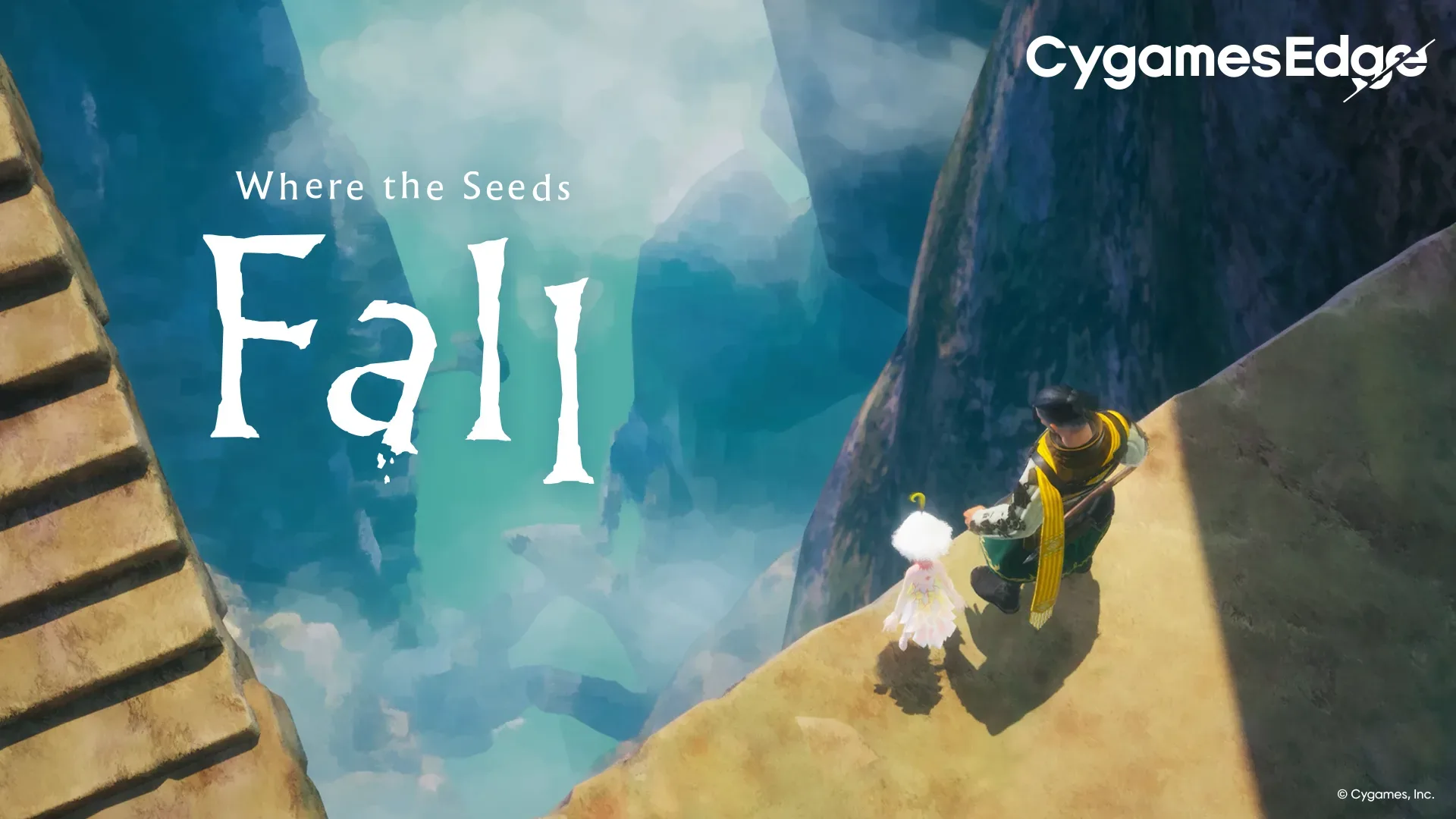
Developed by CygamesEdge and ZEREO, the game places its central dramatic idea and its playable challenge on the same vertical axis: survival means going down. Players travel with a mysterious character known as the Fell Child, descending through the immense branches of the World Tree while contending with broken footing, high winds and the basic but apparently unforgiving need to reach a stable landing spot.
That is a sharp setup for an action-adventure. Rather than framing upward movement, exploration or conquest as the obvious objective, Where the Seeds Fall makes descent the main direction of travel. The game’s World Tree is not just a setting detail; its branches are where humanity lives in a world devastated by Blight, and the route toward the surface is at the center of the story.
A fall with a destination
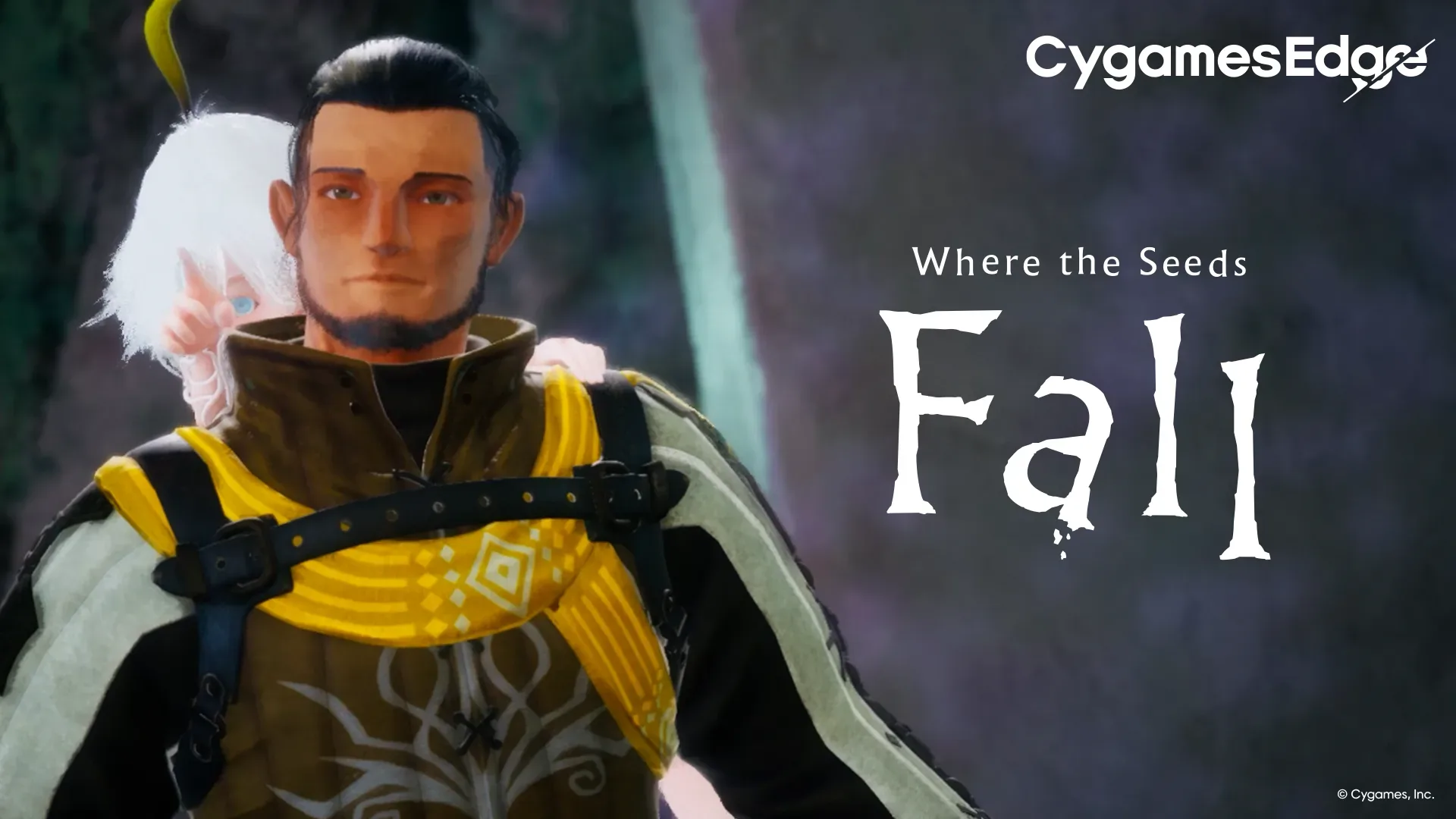
The premise follows a protagonist who has lost everything before encountering the Fell Child. She is marked as an omen of calamity, but he sees a resemblance to his deceased daughter. Against orders, he chooses to escort her toward the surface world.
For more context, explore DNX #4 Sets Up Cyclops and the Chairman’s Deadly X-Men Reckoning.
That choice gives the journey a personal motive beyond merely reaching the bottom. The protagonist is explicitly acting against instructions, while the child is already burdened by the meaning other people attach to her. “Fell Child” works as a deliberately loaded term: it describes someone associated with falling, but also implies a person cast out or regarded as dangerous. The available details do not explain the nature of her supposed connection to disaster, so that uncertainty remains part of the setup rather than a resolved plot point.
The setting adds pressure to that relationship. Humanity survives in the canopy because the wider world has been ravaged by Blight. In plain terms, the World Tree’s branches function as civilization’s remaining habitat, not simply as a scenic obstacle course. A trip down through that environment therefore suggests movement away from the protected spaces where people endure and toward a surface that is important enough to seek but not described as safe.
There is no indication that the game’s story is a sprawling, open-ended campaign. Instead, it is presented as a densely packed narrative experience. That phrasing matters for anyone considering a $9.99 game: the stated focus is a concentrated story and a specific traversal hook, with additional challenge content following completion, rather than an announced promise of a vast map or an extensive list of modes.
Related coverage includes Where the Seeds Fall Launches on PS5, Steam and Nintendo Switch 2.
What the action-adventure description actually tells us
The game is described as an action-adventure descent, but the currently available information is intentionally narrow. Its identified moment-to-moment hazards are precarious branches, crumbling platforms, strong winds and the effort to land on solid ground. Those details establish a game built around navigation under changing conditions, yet they do not confirm specific combat systems, upgrade trees, collectible sets, co-op options or any other feature sometimes assumed from the action-adventure label.
Still, the hazards point to a useful way of reading its core design. Each one complicates a different part of movement:
- Precarious branches suggest that routes may not be uniformly reliable, asking players to judge where they can safely travel.
- Crumbling platforms introduce impermanence. A surface may be usable only briefly, meaning timing and commitment matter as much as choosing a direction.
- Strong winds imply an outside force that can disrupt a jump, a fall or a planned landing.
- Steady ground is the stated objective in the middle of these threats, making successful landings a central measure of control.
Those are interpretations of the announced hazard list, not a substitute for unconfirmed mechanical specifics. The important practical takeaway is that the challenge is framed less as a freefall spectacle and more as managing a descent. Players are not merely dropping through the World Tree; they are navigating an unstable path through it.
The word descent is also doing more work than the word fall. A fall can be accidental and uncontrolled. A descent implies direction, decision-making and an intended endpoint, even if danger makes that endpoint difficult to reach. Where the Seeds Fall appears to locate its tension in the distance between those ideas: a character must keep moving downward, but must do so carefully enough to find secure footing along the way.
The World Tree as story structure
World Trees are a familiar fantasy image, but the specific role here is clear. People live on its branches, the journey travels downward through those branches, and the surface lies below. That arrangement turns vertical space into social and narrative space. Higher and lower are not abstract level-design directions; they divide the surviving human habitat from the destination the protagonist has chosen to pursue with the Fell Child.
Blight is similarly important even though its exact form is not detailed. It is the force that has ravaged the world, establishing why humanity’s life is confined to the World Tree. The announcement does not identify its origin, its effects beyond devastation, or whether it can be fought directly. It is best understood at this stage as the catastrophe shaping the world and the stakes of the descent, rather than as a named enemy type or a confirmed gameplay system.
The child’s branding as a disaster omen gives the story another layer of conflict. A character may be feared for what she is believed to represent, regardless of what she has actually done. The protagonist’s decision to protect and accompany her is consequently both emotional and defiant: he connects her to his own loss, then rejects the command to leave her behind or handle her differently. The available premise leaves open whether he is correct, whether the omen is mistaken, or whether the child’s reputation has a basis. Those unanswered questions are likely to be part of the narrative’s forward pull.
For players who prefer a clear premise before starting a game, the essentials are straightforward: a bereaved protagonist, a feared child, a society surviving above a ruined world, and a forbidden journey toward the surface. The game does not need an enormous cast or a complicated political outline to establish a reason to move forward. Its stated narrative stakes are intimate, while its physical route is immense.
What opens after the main story
Completing the main story does not end the available challenges. Where the Seeds Fall includes higher-difficulty maps and time trials after the narrative is finished.
A higher-difficulty map generally means a version of a route or scenario designed to demand more precise execution than the standard experience. The announcement does not specify exactly how these maps change the challenge—whether through tougher layouts, harsher hazards, adjusted rules or another method—so it would be premature to promise a particular format. What is confirmed is their purpose: they offer a post-story test for players looking beyond a first completion.
Time trials are easier to define from the name alone. They ask players to complete a task as quickly as possible, shifting attention from simply surviving a route to performing it efficiently. In a game whose premise highlights unstable platforms, wind and safe landings, timed challenges could put a premium on route familiarity and clean movement. That is an inference from the announced format, not confirmation of leaderboards, rankings, medals, ghost data or any other competitive feature.
The distinction is useful. The story mode is positioned as the concentrated narrative portion of the game, while the post-completion material creates reasons to revisit its traversal challenge. Players primarily interested in the protagonist and Fell Child’s journey have a focused entry point. Players attracted to demanding platform navigation have difficulty maps and time trials identified as the continuing destination after the credits.
Platforms, timing and rating
As of the release information provided, PlayStation 5 and Steam are the platforms where the game is available immediately. The Nintendo Switch 2 version is set to unlock at 12 a.m. PST on Nov. 5. That time is specifically given in Pacific Standard Time, so players outside that time zone should convert it locally rather than assume a midnight launch where they live.
The ESRB’s Teen rating is also part of the release information. ESRB ratings are age guidance for games sold in North America; a Teen rating identifies the title as intended for players 13 and older. The rating alone does not describe the precise content that led to it, and no content descriptors were provided alongside the rating, so no further claims about its causes should be read into that classification.
An opening movie introducing the game’s story and world is available to watch on YouTube. For players deciding whether the tone of this bleak World Tree journey is for them, it offers a direct look at the narrative presentation without making assumptions about the game’s full structure.
A compact release built around one clear hook
Where the Seeds Fall arrives with a notably direct proposition: guide a vulnerable, feared child down the branches of the last refuge of humanity, deal with terrain and weather that threaten each landing, then return for harder maps and faster clears after the story. The low stated MSRP, single central traversal concept and focused narrative framing all point to a game designed around concentration rather than excess.
There are still plenty of details that have not been established, including how long the story takes, the exact rules of its high-difficulty maps, and the extent of its action systems. But the elements that have been outlined are cohesive. The world’s vertical geography, the protagonist’s defiance, the Fell Child’s ominous status and the constant danger of falling all serve the same direction: down.