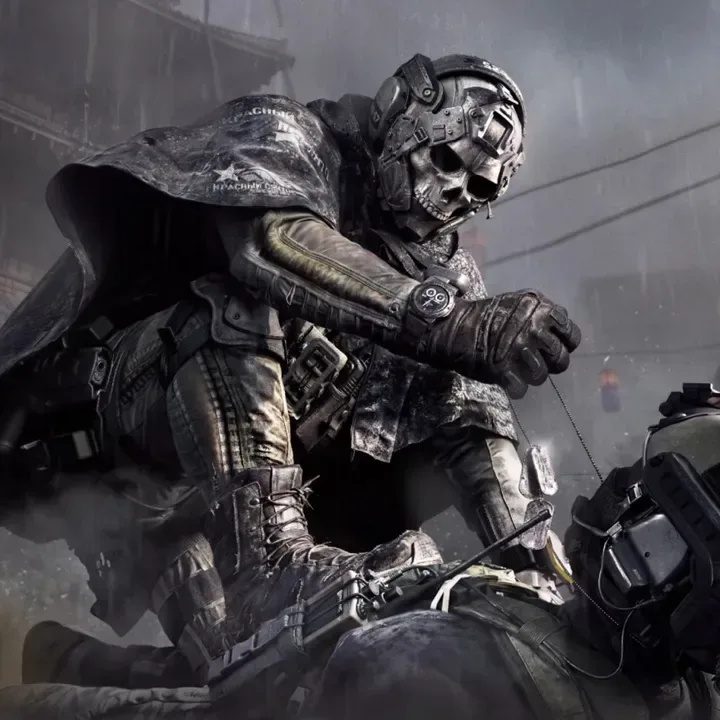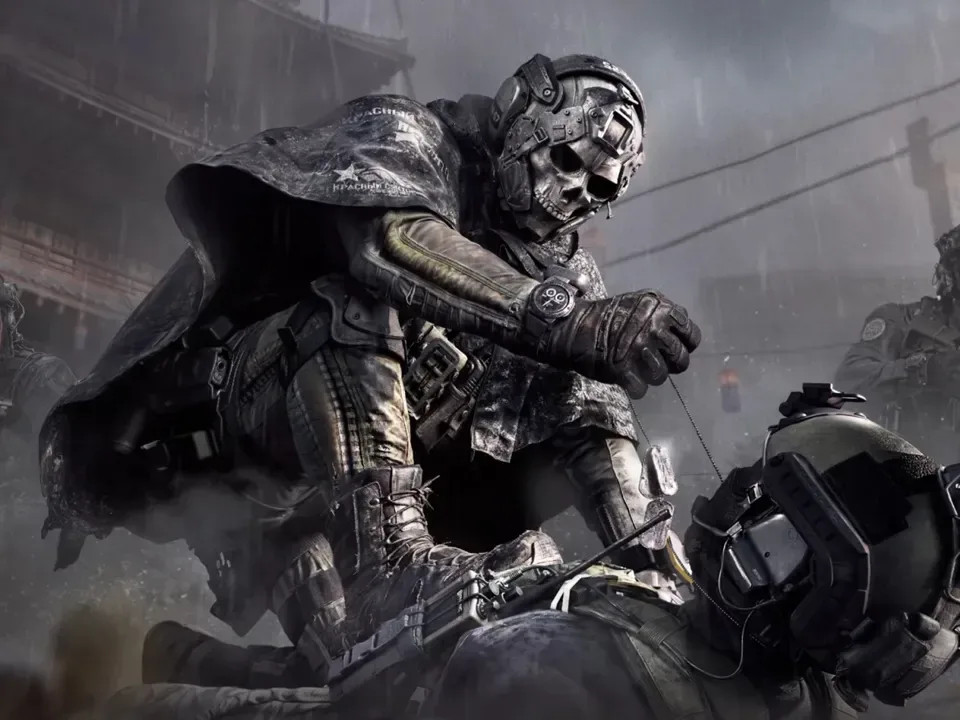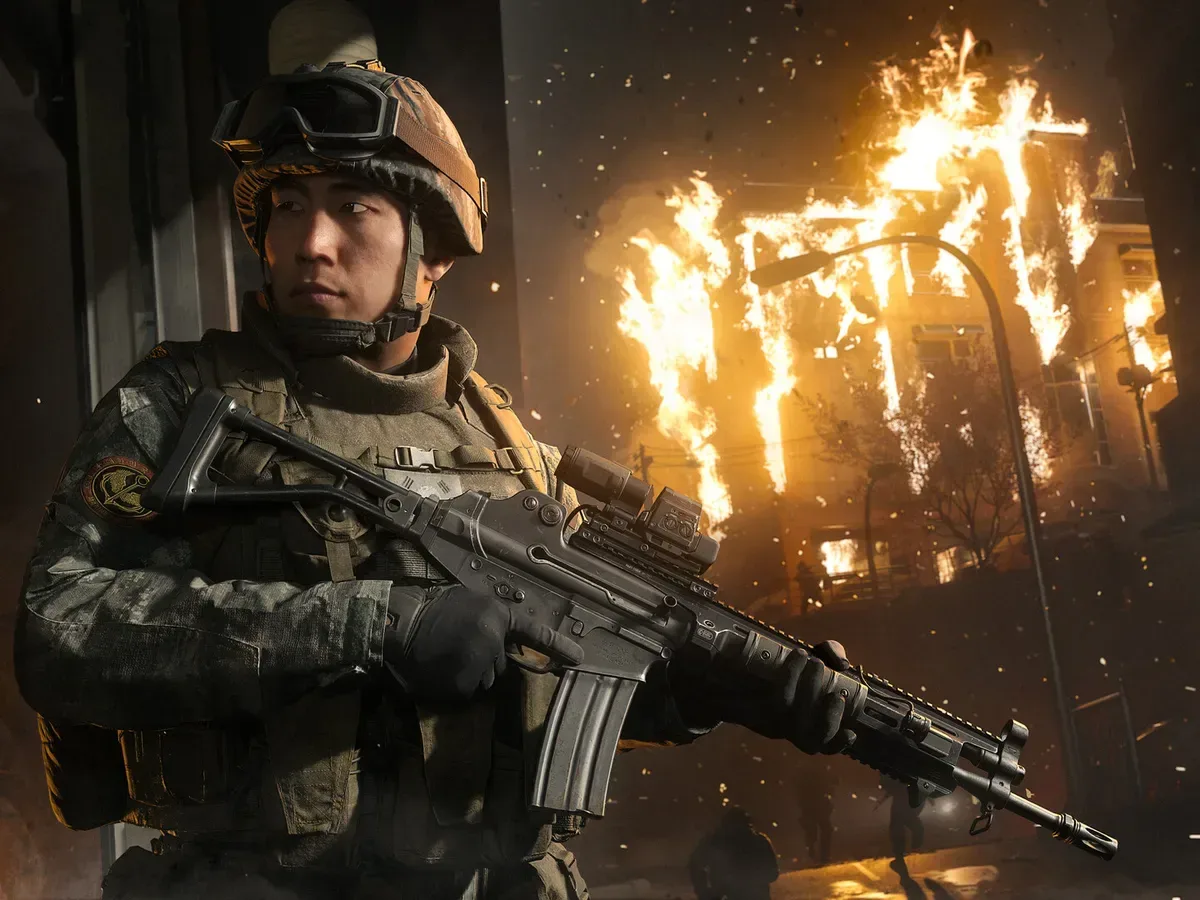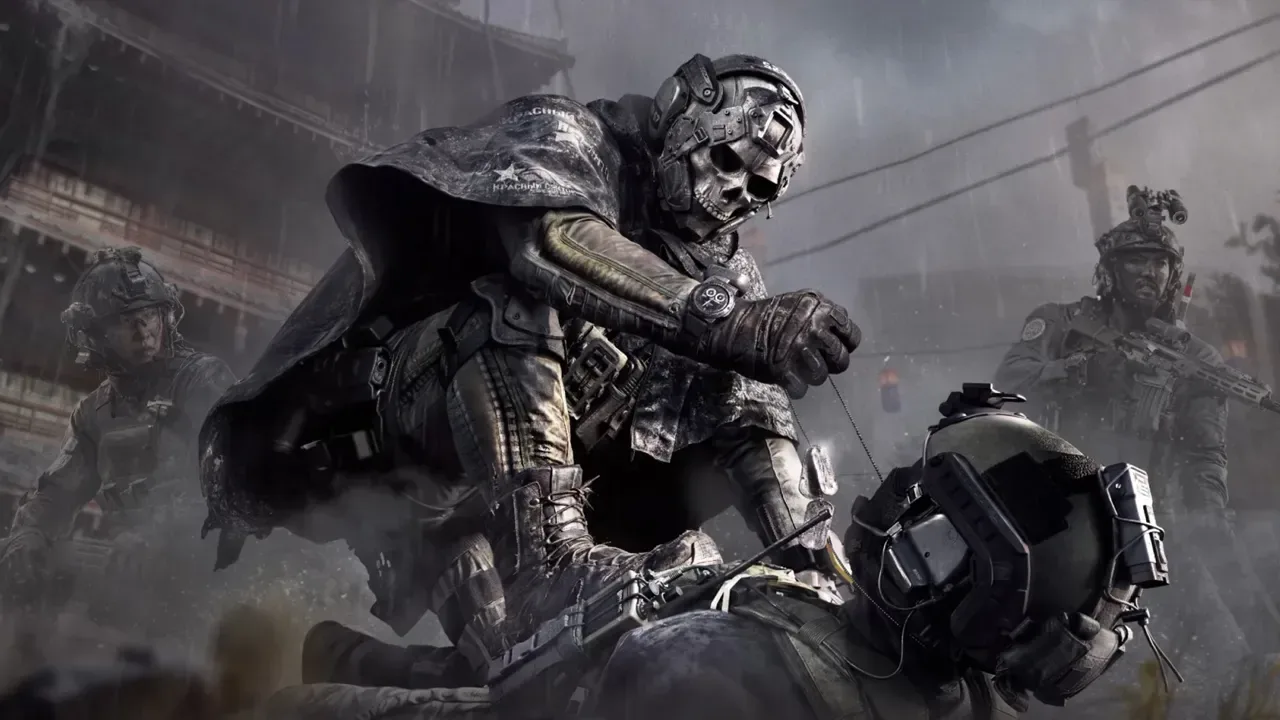
Call of Duty: Warzone is getting a weather system on November 6 as part of the Season 1 update tied to Call of Duty: Modern Warfare 4. The update is also set to add two new maps, while Raven Software’s weather addition aims to make the battle royale’s familiar spaces feel less fixed from one deployment to the next.
The important detail is that weather is expected to be decided before players enter a match. That means Warzone is not being positioned around a continuously changing forecast, where a clear round suddenly turns stormy halfway through. Instead, each match can begin under a particular set of conditions, potentially including rain, wind, or other environmental effects.
That distinction matters. A preset weather state gives every squad the same broad environmental problem to solve at the start of a round, while still allowing the next match to ask for a slightly different read of the map. In a battle royale, where spotting opponents, tracking sound, choosing routes and deciding when to engage all matter, even modest environmental differences can change how a familiar drop plays.
What is changing in Warzone?
Warzone’s maps have generally maintained the same weather presentation across matches for years. The new system is intended to break up that consistency without turning every game into an unpredictable mid-match climate event. Players should therefore think of weather as a match modifier: a condition established before the action begins rather than a cycle that progresses during play.
Rain is the clearest example of how the system could affect the feel of a round. Reduced visual clarity could make long sightlines harder to read, while puddles may make movement more audible through splashing footsteps. Wind and other effects have also been mentioned as possible conditions, though the precise gameplay rules, intensity levels, and full list of weather types have not been detailed.
It is worth keeping the confirmed information separate from sensible expectations. Weather is coming, and rain, wind, and other effects are part of the stated concept. Visibility and louder splashing are examples of potential gameplay consequences. But players should not assume every condition will have the same mechanical impact, nor that a storm automatically changes weapon behavior, movement values, circle rules, or every audio interaction. Those specifics have not been established.
Why preset weather could matter more than it sounds
Battle royale maps gain their competitive character partly through repetition. Regular players learn which rooftops have clean angles, which open areas are dangerous, where a distant silhouette is easiest to spot, and how loud particular surfaces sound. That knowledge does not disappear with weather, but it may become less automatic.
A rainy match, for instance, could force more caution around exposure if the environment makes enemy movement more difficult to pick out. Conversely, players who rely on close sound cues may need to account for environmental noise before deciding whether footsteps belong to an opponent or the setting. The effect is not necessarily about making a map unrecognizable; it is about creating small points of friction in routines players have spent years refining.
Related coverage includes Call of Duty: Warzone Weather System Set to Change Matches With Season 1.
Visibility refers to how easily players can visually identify opponents, routes, objects, and distant activity. In a shooter, it is not only about whether an enemy is technically on screen. Contrast, rain effects, haze, movement, and the visual clutter of a scene can all affect how quickly somebody is noticed. A small delay in recognition can be meaningful when a player is deciding whether to shoot, rotate, take cover, or call out a target.
Audio cues are sounds that provide usable information: footsteps, shots, doors, vehicles, and other signals that help a player infer location or intent. If puddle splashes make movement louder, a squad moving carelessly through wet ground could be easier to detect. At the same time, weather ambience could make it more important to distinguish player-generated sounds from background noise.
The underlying goal appears to be variation rather than wholesale reinvention. Warzone’s structure remains a battle royale structure, but the presentation and potentially some of the decision-making around a match may be less static. That could be especially welcome for players who know the maps well enough that their usual landing route and late-game movement have become highly rehearsed.
A practical checklist for the first weather-enabled matches
Because the conditions are expected to be visible before a match is loaded, players may have an opportunity to adjust their approach from the opening moments. Until the update’s final behavior is clear, these are reasonable things to watch rather than guaranteed strategies:
- Check distant sightlines early. Test how clearly opponents, rooftops, windows, and terrain read at range under the current condition before committing to a long-range fight.
- Listen for surface-specific movement. If rain creates audible puddle splashes, note which routes produce them and whether they reveal your own movement more readily.
- Reassess familiar rotations. A route that feels safe in clear conditions may be more exposed, harder to scan, or noisier in wet weather.
- Communicate what you can actually confirm. Calling out a visual uncertainty as certainty is risky in any match, and weather could make that problem more common.
- Expect adaptation, not a solved meta on day one. The practical consequences will depend on the final implementation and on how strongly each effect changes visibility or sound.
These points are less about chasing a special weather loadout and more about preserving good habits: verify what is visible, control noise where possible, and avoid assuming that a route plays exactly as it did in the prior round. If the system creates only slight changes, disciplined observation may still be its most meaningful effect.
Weather is not a day-and-night cycle
The arrival of weather does not confirm a day-and-night cycle. A day-and-night cycle would mean lighting changes over time within a match, potentially taking players from daylight into darkness or the reverse. The weather system described here is different: conditions are selected ahead of the match rather than shifting while the round is underway.
Players have also expressed interest in a day-and-night system, in part because it could give night-vision goggles a clearer role. Night-vision goggles, often shortened to NVGs, amplify limited visible light to help a wearer see in dark spaces. In Warzone’s DMZ extraction mode, NVGs are associated mainly with enclosed facilities that have lost power. A true nighttime battle royale environment could make that equipment concept more relevant across a broader map, but no such Warzone feature is confirmed by this update.
That distinction is useful because weather and time-of-day systems solve different design problems. Weather can refresh a map’s atmosphere and complicate perception while retaining broadly familiar lighting. Night conditions would transform lighting itself, potentially changing visibility, equipment priorities, and the value of illuminated interiors. For now, the confirmed change is the former.
Season 1 ties Warzone more closely to Modern Warfare 4
The November 6 rollout comes with Modern Warfare 4 Season 1 and is meant to bring Warzone content that better matches the newer game’s mechanics and tone. It follows the addition of weather to the fall multiplayer release Wardogs, where environmental conditions were described as having substantial gameplay effects.
That multiplayer precedent suggests why weather is being introduced as more than scenery. In a competitive shooter, an effect that looks dramatic but does not influence any decision can quickly become background decoration. The more interesting possibility is that Warzone uses environmental conditions to add replay variety while preserving competitive readability—enough variation to make a familiar match feel newly considered, but not so much that players cannot understand what happened in a firefight.
There is a balance to strike. If rain only changes the look of the map, it may not do much to address the sense of sameness that can develop after years on established battlegrounds. If it obscures information too aggressively, however, it could frustrate players who value clear sightlines and reliable audio. The strongest version of the system would make players adapt their attention and movement without making outcomes feel arbitrary.
The two new maps arriving with the same update may help emphasize that broader aim of renewed variety. New geography changes where players go; weather can change how they interpret where they are. Together, those additions could give Season 1 more ways to vary Warzone’s opening drops and late-game encounters without requiring every match to follow the same visual script.
Warzone players will get their first opportunity to see how consequential the weather is when Season 1 launches on November 6. The headline feature is not a live storm front rolling across a match, but a set of preselected conditions intended to ensure that the next drop does not look—and perhaps does not play—exactly like the last one. For more on how seemingly small game details can reshape player discovery, see our look at a long-hidden Easter egg in Star Wars Jedi: Survivor.