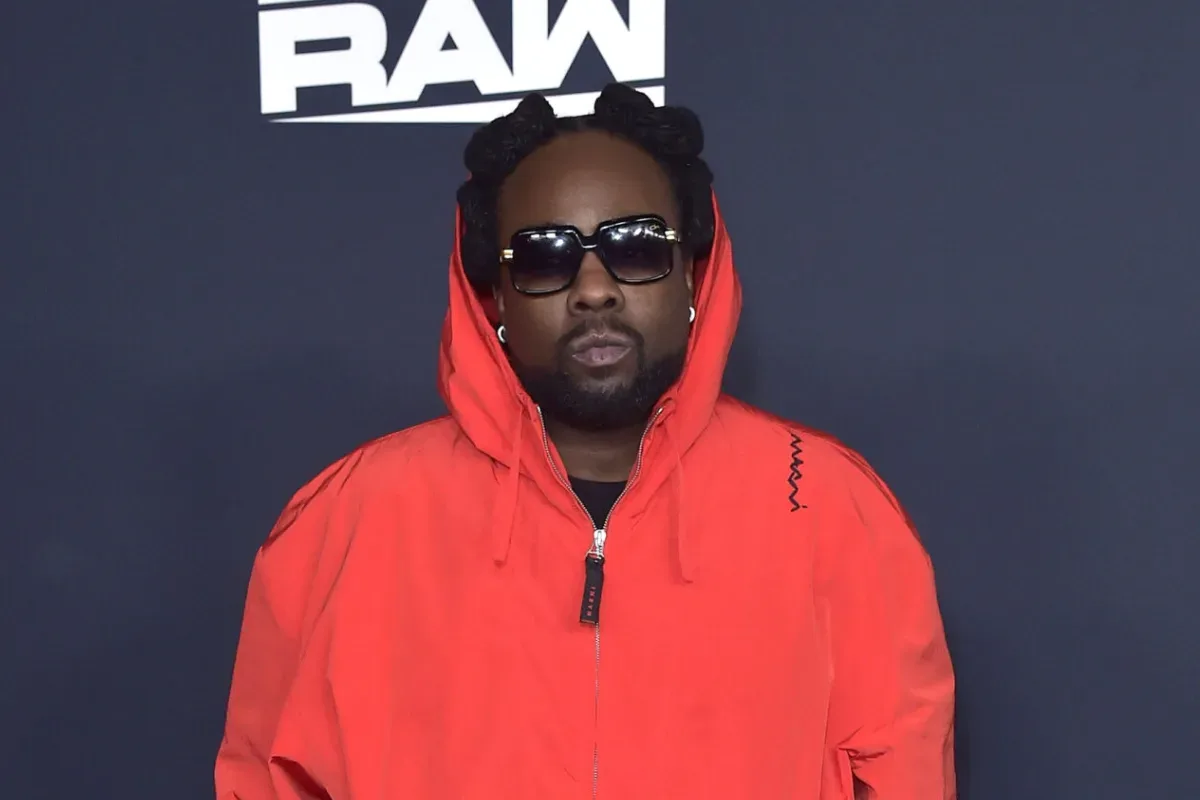
Wale has added a new track to the atmosphere around the 2026 WNBA Finals. “WYFL,” short for Who You Feeling Like?, arrived as the Atlanta Dream and Golden State Valkyries compete for their first championship. The song names players from both teams, including Atlanta forward Angel Reese and Golden State guard Gabby Williams, placing the Finals’ individual stars directly at the center of its promotional soundtrack.
The full track was released through Wale’s YouTube channel, where the WNBA is listed as a collaborator. Its rollout came before Game 2 at Chase Center in San Francisco, and the league introduced it on X with a message describing the record as made “for the W.” Rather than functioning as a generic postseason song, “WYFL” is built around the players and matchup defining this particular title series.
A Finals anthem attached to the players on the floor
Sports anthems can be a broad label. In this case, the significance is in the specificity: Wale identifies stars on each side rather than treating the Finals as a backdrop for an unrelated release. Reese and Williams are especially logical focal points because both have been prominent in the series and across the 2026 season.
Reese is in her first season with Atlanta and won the league’s Defensive Player of the Year award. She also led the WNBA in regular-season rebounding. In basketball terms, rebounding is the act of securing the ball after a missed shot. It ends an opponent’s possession on defense or creates a new chance to score on offense, making it an area that can heavily influence a close game even when it does not produce a highlight-reel basket.
Williams finished second in Defensive Player of the Year voting and became Golden State’s first All-Star starter this year. She scored 26 points in the Valkyries’ 68-64 Game 1 victory, an output that placed her squarely in the immediate story of the Finals. A player name-check in a Finals track carries more weight when that player has just been central to the result, and Williams’ Game 1 performance supplied precisely that context.
The song arrived during a series where defense is not merely a talking point. Reese and Williams were the top two finishers in the Defensive Player of the Year vote, while Game 1 ended with each team below 70 points. That does not prove a single cause for the scoreline, but it does underline why a track highlighting defensive standouts fits the identity of this matchup.
Atlanta responds to level the series
Golden State’s four-point Game 1 win gave the Valkyries an early advantage, but Atlanta answered in Game 2 with a 79-65 victory. The result tied the best-of-seven Finals at one game apiece and delivered the Dream’s first Finals win after three prior trips to the championship round.
A best-of-seven series is decided by the first team to win four games. At 1-1, neither club has an edge in the win column, and the scene changes as the series heads to Atlanta. Game 3 is scheduled for Wednesday, October 21, at 8 p.m. Eastern at State Farm Arena. It is set to air on USA Network and CNBC, with Peacock also carrying the game.
For Atlanta, the return home comes during its first Finals appearance since 2013. For Golden State, the trip is notable for a different reason: the Valkyries reached the Finals in only their second season. Both teams swept their respective semifinal series, so the split through the first two championship games represents the first real separation neither side had faced in the round before.
That backdrop gives “WYFL” a relatively unusual role. It is not looking backward at a championship already secured. It is a live piece of the Finals presentation while the central questions remain unanswered: whether Atlanta can convert home court into a series lead, whether Golden State can regain momentum, and which players emerge as the lasting faces of the matchup.
Wale’s history with sports presentation
Wale’s involvement is consistent with a longer record of music connected to live sports settings. The Washington Wizards named him a creative liaison in 2014, a role that linked an artist with a local professional team’s culture and presentation. In 2019, he made a team-focused song for the Sacramento Kings’ game introduction.
His sports appearances have extended beyond basketball. Earlier this year, he performed at halftime during D.C. United’s March 7 match against Inter Miami in Baltimore. That game drew 72,026 spectators, a club record. The relevant connection is not that every sporting event needs a music release, but that Wale has repeatedly worked in formats designed for arenas, game nights and team identity.
“WYFL” continues that approach on a league-wide stage. A game intro is tied to one team’s entrance; a Finals song can speak to the tension between two clubs while helping give the event a recognizable sound. The title itself, Who You Feeling Like?, frames the release around allegiance and player identification—the natural questions for fans choosing a side in a championship series.
Local music remains part of the Finals programming
Wale is not the only artist connected to this Finals’ entertainment slate. Bay Area rappers also featured in the San Francisco portion of the series. Too $hort was booked to handle the pregame drum for Game 2, LaRussell was on the halftime lineup, and Larry June performed at halftime for the series opener.
Those appearances are different from Wale’s recorded anthem, but together they show two complementary ways music can serve a major sports event. In-arena performers create a moment for people in the building, often tied to the host city. A released track can travel beyond the arena, giving the series a piece of audio branding that fans can revisit between games.
The Atlanta shift also puts more attention on the Dream’s home-market moment. The franchise is back in the Finals for the first time in more than a decade, and Reese is having a major first year with the team. The Game 2 win means the return is not simply ceremonial; Atlanta hosts with the series level and a path to establish its first lead.
Basketball audiences looking for Atlanta-related sports media context can also see how another local franchise is approaching distribution in the Atlanta Hawks’ Prime Video plan for local 2026-27 games. The Dream Finals broadcast, however, is separately scheduled for USA Network, CNBC and Peacock for Game 3.
Why the player focus matters
There is an important distinction between using athletes as a vague source of inspiration and making their current accomplishments part of a song’s premise. Reese entered the Finals after leading the regular season in rebounds and earning the league’s top defensive honor. Williams arrived after an All-Star starting selection, a runner-up finish in the defensive award race and a 26-point Game 1.
Those accomplishments give listeners clear reference points for the names in “WYFL.” Reese represents Atlanta’s defensive and rebounding presence. Williams represents a Golden State player who has earned recognition at both ends of the court and immediately delivered in the Finals. Their inclusion also reflects the series’ competitive balance: the song recognizes key figures on both sides rather than positioning the championship as a one-team showcase.
That balance remains appropriate after two games. Golden State claimed the opener 68-64; Atlanta then took Game 2 by 14 points. The records are even, the teams are seeking their first titles, and the series is now moving to the Dream’s floor. The music, like the basketball, is attached to a Finals still being written.
Game 3 will determine which club takes the next step toward four wins. Whatever happens on the court, “WYFL” now stands as a snapshot of this point in the 2026 Finals: a new championship matchup, two franchises chasing a first trophy, and a track built to recognize the players driving the moment.