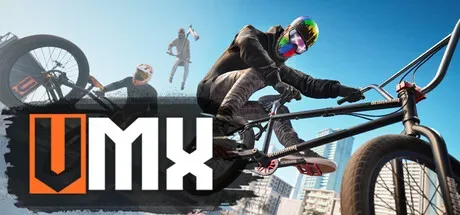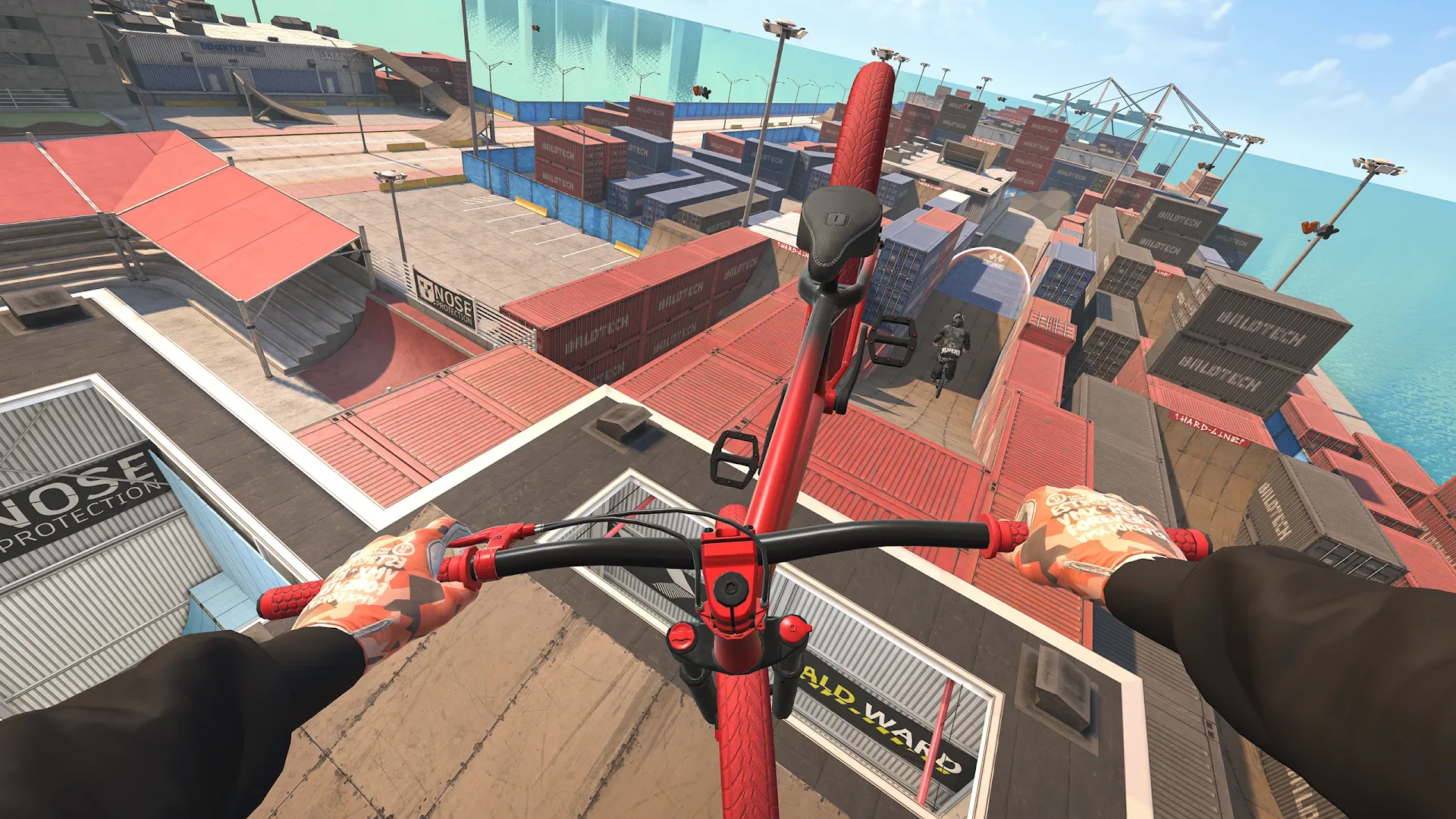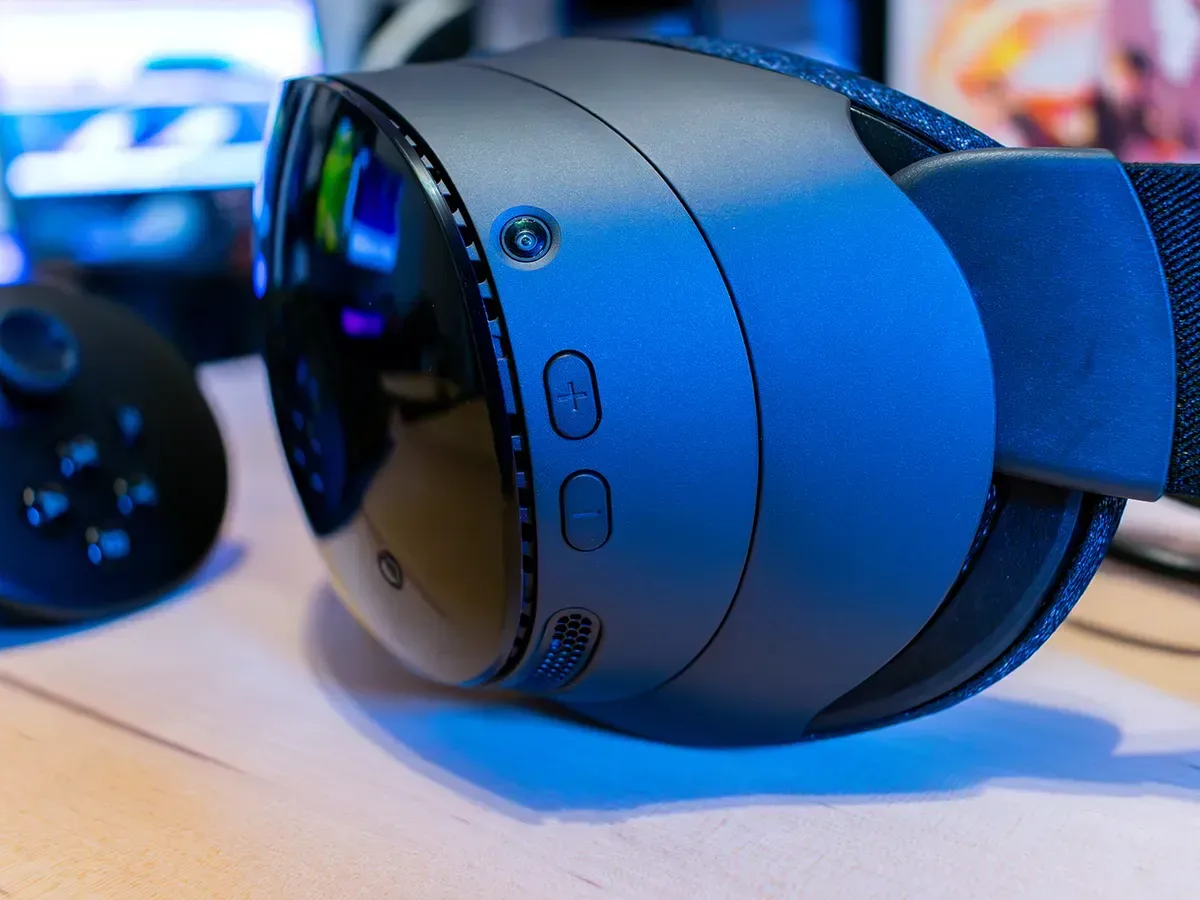
Virtual-reality riding game VMX is scheduled to launch on October 2, 2026 for Meta Quest 2, Meta Quest 3 and PCVR headsets. Developed by Break Free Interactive, the game combines BMX, mountain biking and scooter riding in a VR format built around motion-led controls, a dedicated physics system, multiplayer sessions and equipment customisation.
The central promise is not simply a game about selecting tricks from a command list. VMX is designed to have players physically perform gestures with their VR controllers, using their movements to establish a line, gain momentum, take off and attempt aerial manoeuvres. That puts the game’s handling, control clarity and comfort settings at the heart of what it will need to deliver.
A riding game built around physical input
In a conventional action-sports game, a player commonly combines buttons and stick directions to steer, accelerate and trigger a trick. VMX instead places substantial emphasis on gesture-based trick input. In practical terms, that means a trick is intended to come from a player’s tracked hand and controller movements rather than from a single abstract button prompt.
That approach has an obvious appeal in VR. Riding disciplines such as BMX, mountain biking and scootering are strongly associated with body positioning, timing and the feeling of committing to a line. A system that asks players to move their hands can make the act of launching and styling a trick feel more directly connected to their actions than a traditional gamepad layout might.
It also makes the underlying interpretation of motion especially important. VR tracking has to translate a real-world gesture into a readable in-game action while players are standing, turning, reaching and reacting quickly. VMX says it uses advanced VR controls alongside custom physics intended to provide precise, realistic handling. The game will ultimately need to balance responsiveness with consistency: riders need enough freedom to express a trick, but enough reliable feedback to understand why a landing or score did—or did not—work.
Physics, in this context, refers to the set of rules governing the virtual rider and vehicle: momentum, movement through the air, and the interaction between a bike or scooter and the surfaces of a park or track. A custom physics system does not by itself establish how simulation-heavy the finished game will be. What it does establish is that VMX is positioning its riding feel as a defining component rather than treating the sports merely as visual themes.
Three ride types, five distinct settings
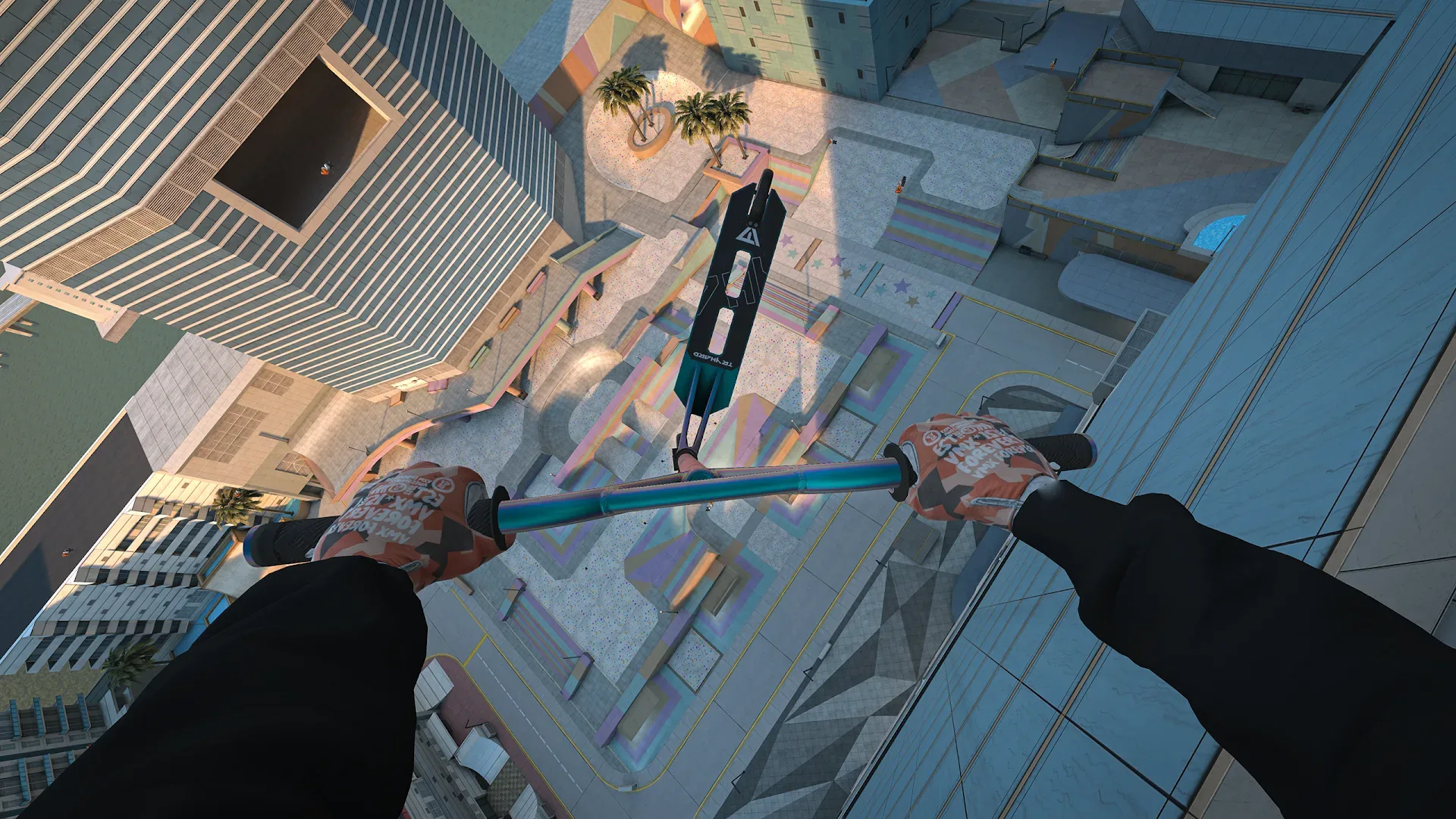
VMX supports BMX, MTB and scooters. BMX refers to bicycle motocross-style bikes commonly associated with compact frames, ramps and street or park riding. MTB is short for mountain bike, a broad category that here sits alongside dirt-track riding. Scooters complete the trio, giving the game three related action-sports formats under one VR roof.
The announced map selection covers five environments with deliberately different identities:
- An underpass bridge skatepark
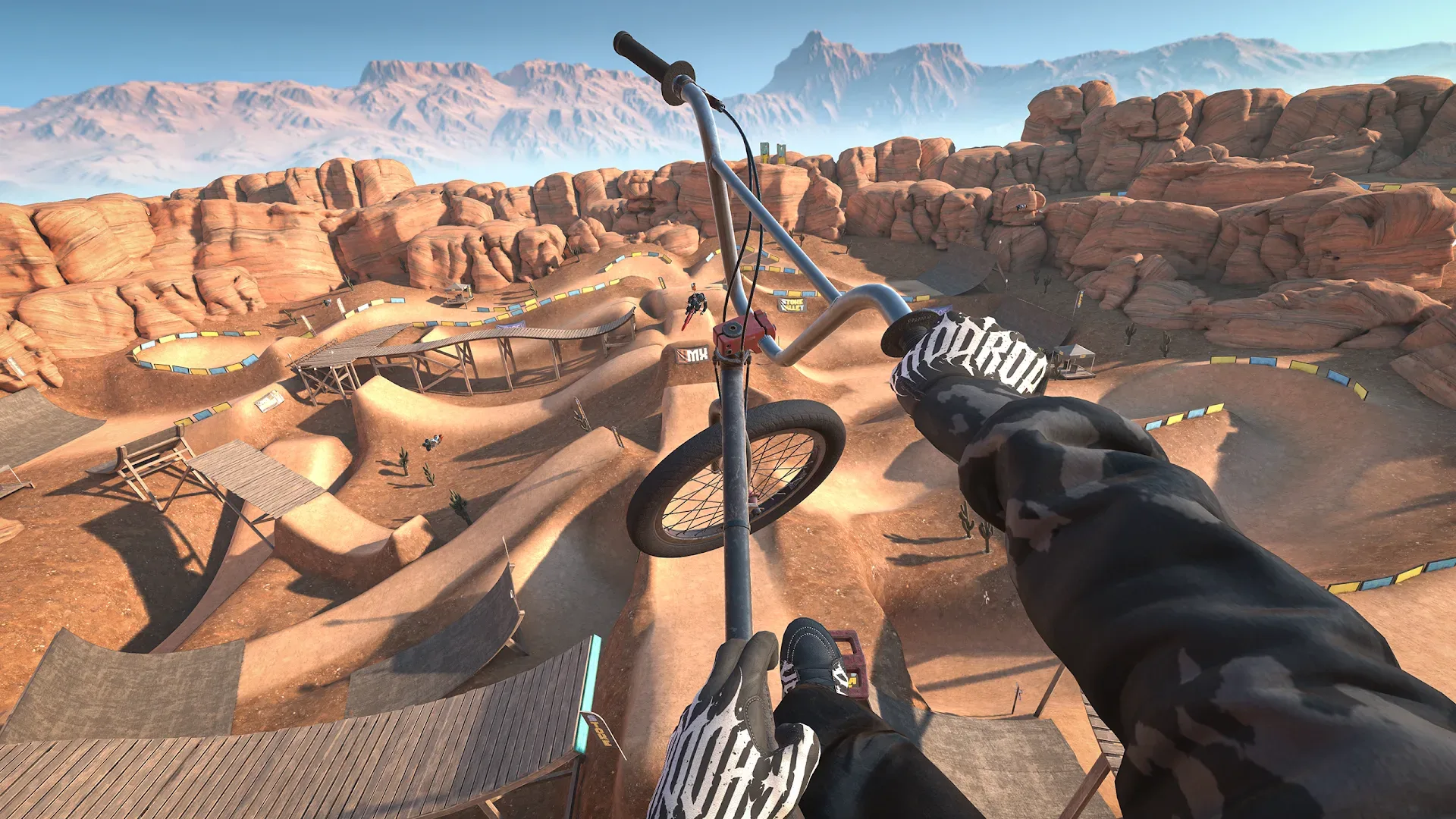
- A desert valley dirt track
- A Miami city skatepark
- A docks warehouse skatepark
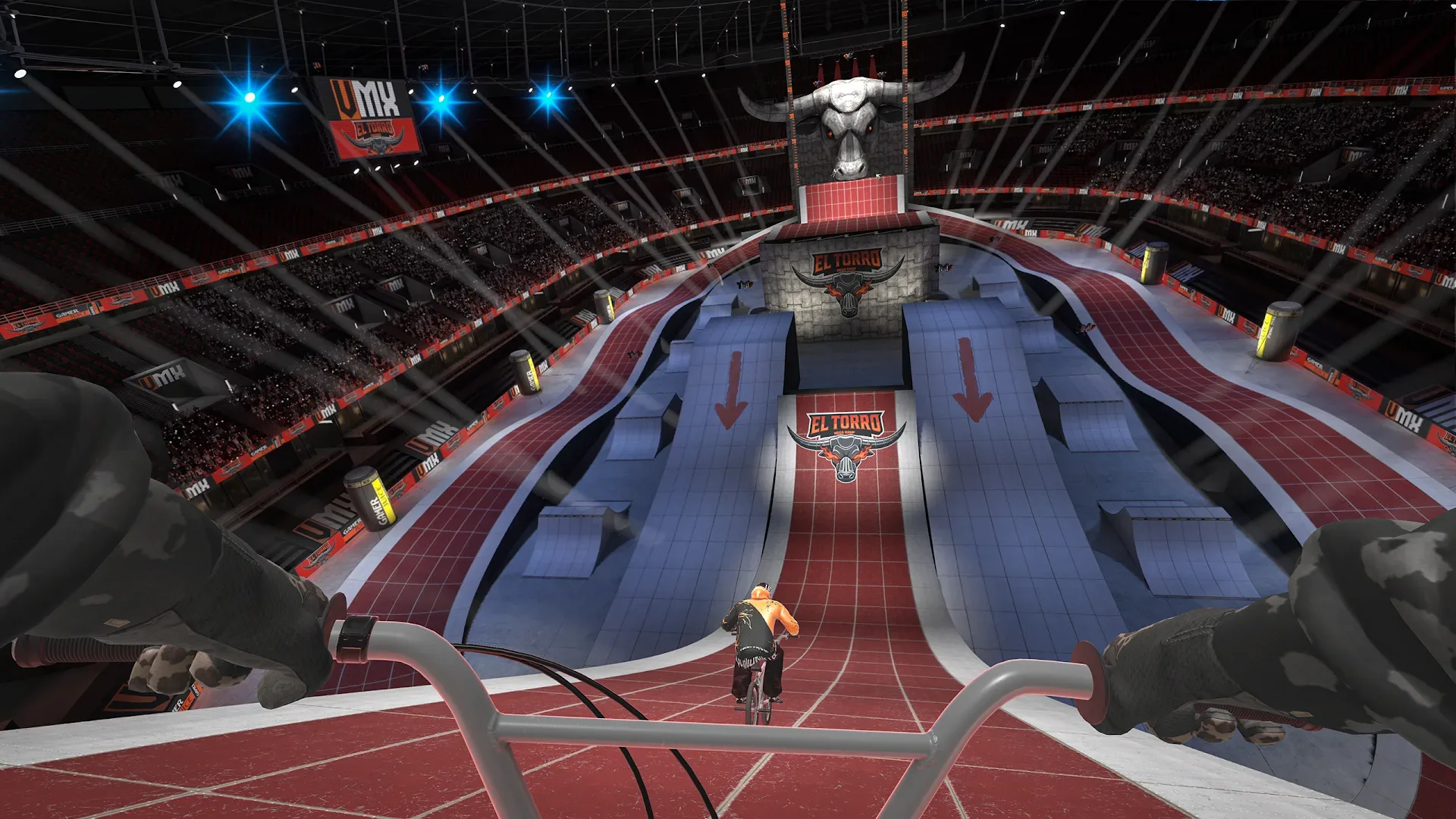
- A stadium with a megaramp and animated crowds
The desert valley is the clearest fit for a dirt-track setting, while the parks and warehouse suggest spaces made for repeated lines, air time and trick practice. The stadium’s megaramp implies a more dramatic scale, with the animated crowd adding event-like atmosphere to that location. No individual challenge types or map-specific disciplines have been detailed beyond the ability to take on challenges and ride freely with friends.
That split between structured activity and unstructured sessions is meaningful for a riding game. Challenges can offer goals and a reason to improve, while a park that can simply be ridden gives players room to experiment with routes, build familiarity and practise a movement without the pressure of a formal event. The announcement describes both uses, though it does not specify the number of challenges, scoring rules or progression structure.
Multiplayer is aimed at sessions as well as scores
VMX’s multiplayer plans include exploring maps together, riding skateparks, practising tricks, tackling challenges and competing for high scores. That breadth matters because the social side of these sports does not have to be limited to direct races or winner-takes-all competitions. The game is also being framed for relaxed freeride sessions, where the shared activity is riding the same space and watching other players attempt lines.
Freeride generally describes riding without a narrowly prescribed race route or objective, allowing players to choose where they go and what they try. In VMX, it appears to sit at the more laid-back end of multiplayer, opposite head-to-head score challenges. The available information does not say how many players can join a session, whether multiplayer supports cross-platform play, or how matchmaking and private groups will work.
For VR players, multiplayer also raises useful practical questions that have not yet been answered. Gesture-driven games can be compelling to watch because body motion is visible in the rider’s avatar, but the quality of that expression depends on how the game represents hand and head tracking. Similarly, social riding is best served by comfortable navigation and clear personal-space design, particularly in busy parks. Those are areas to watch for more detail closer to launch rather than features that can be assumed from the current announcement.
Comfort Mode is the default
Break Free Interactive says Comfort Mode will be VMX’s default option. It is intended to reduce motion discomfort and create a smoother riding experience. An Immersive Mode is also planned for experienced VR players who want a more intense and realistic-feeling ride.
This is one of the more consequential design choices outlined for the game. Motion discomfort can occur in VR when the motion presented to a player’s eyes does not align comfortably with what their body is sensing. Fast movement, vertical drops and rapid changes in direction can be particularly demanding in a game centred on ramps, jumps and aerial tricks. A riding title that wants players to feel speed and momentum therefore has to consider accessibility as carefully as spectacle.
The announcement does not explain precisely what changes between the two modes. It does not identify particular camera settings, movement assists or visual adjustments, so players should not infer a specific comfort solution. Still, making the comfort-focused option the default indicates that the game is not treating higher-intensity VR movement as the only intended way to play.
The two-mode approach also recognises that VR experience varies greatly. Some players prefer settings that reduce the intensity of perceived motion, while others seek the strongest available sense of speed and movement. Giving both groups an explicit starting point could be especially useful in VMX, where the appeal of physical trick gestures is paired with potentially demanding virtual movement.
The Workshop focuses on a personalised ride
Customisation will live in the game’s Workshop, where players can alter both their vehicle and rider. Bike customisation includes a spray-painting system with colours, blends, gradients and custom patterns. A gradient is a smooth transition between colours, while blends describe mixing colours or tones rather than using a single flat finish. Together, those options suggest players will have tools to create a more individual visual identity instead of choosing solely from fixed paint presets.
Riders can also be customised with clothing and riding gear. The selection is described as growing over time through gameplay unlocks. That confirms that at least some cosmetic items are tied to playing the game, although the exact unlock requirements, the size of the catalogue and whether all gear is earned in the same way have not been outlined.
For a multiplayer riding game, cosmetics are more than a menu extra. They help players identify their own rider in a group session and can make a shared park feel less uniform. The paint system is particularly suited to that goal because a bike’s colour treatment remains a visible part of a rider’s appearance during tricks and runs.
What is confirmed—and what remains open
VMX has a clearly defined foundation: a release date, Meta Quest 2, Meta Quest 3 and PCVR support; three ride types; five environments; physical gesture-based tricks; custom physics; multiplayer; Workshop customisation; and separate comfort and immersive options.
There are also important details still to come. The announcement does not state a price, list the PCVR storefronts, describe hardware requirements, establish whether Quest and PCVR players can ride together, or detail the game’s scoring systems. It also does not break down the available BMX, MTB and scooter models, explain each map’s activities, or specify what distinguishes the two VR comfort settings at a technical level.
That leaves the release-date trailer as the current best visual look at the project, while the October 2 launch will determine how its movement-first approach feels in players’ hands. Its pitch is straightforward but demanding: make virtual riding physical enough to feel expressive, yet comfortable enough that players want to keep chasing one more clean line with friends.
That focus on activities players can return to socially is also a useful lens for the broader games landscape. For another perspective on what helps a game retain an audience over time, see our look at GTA 5’s long Los Santos afterlife.