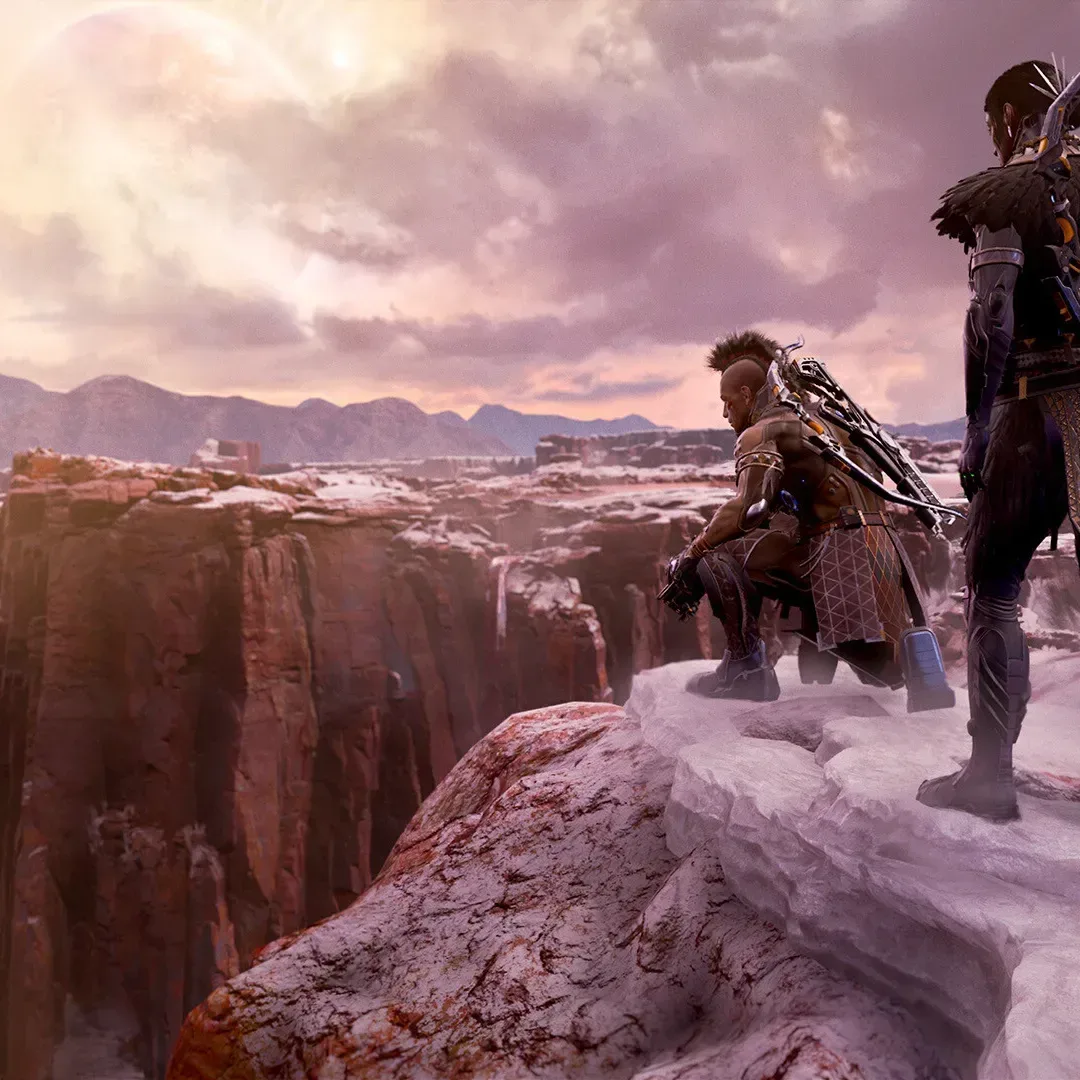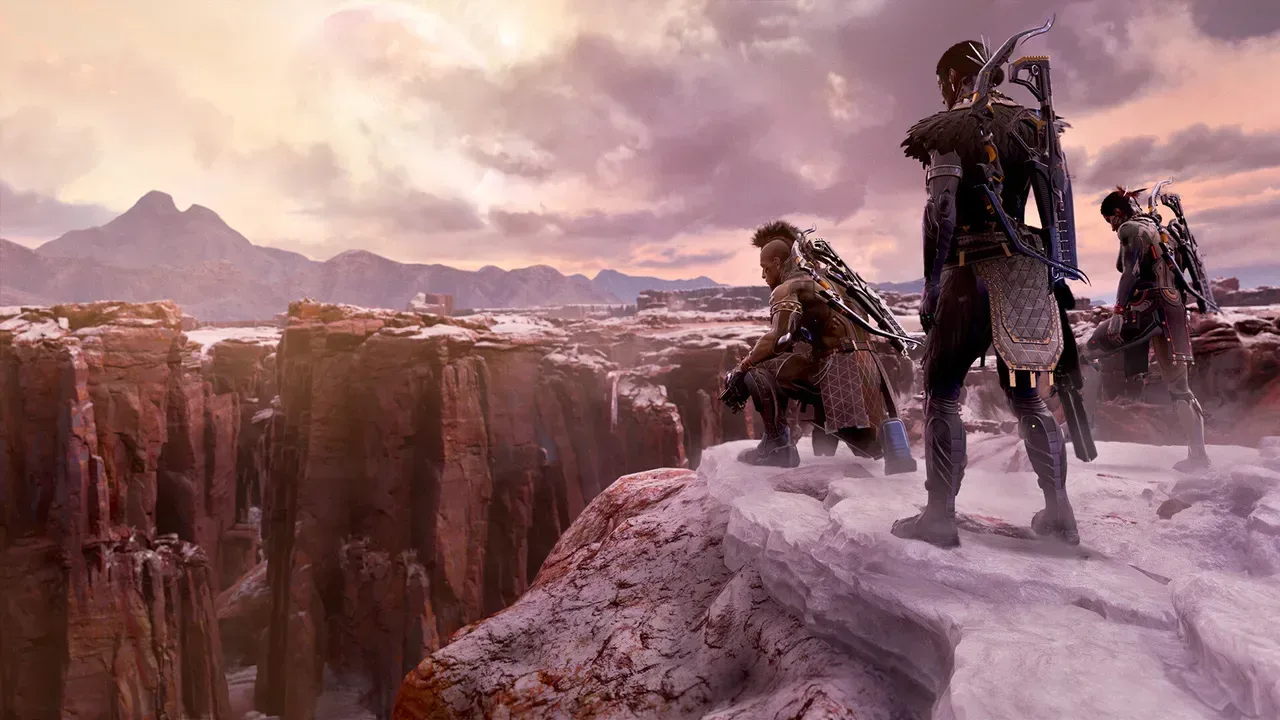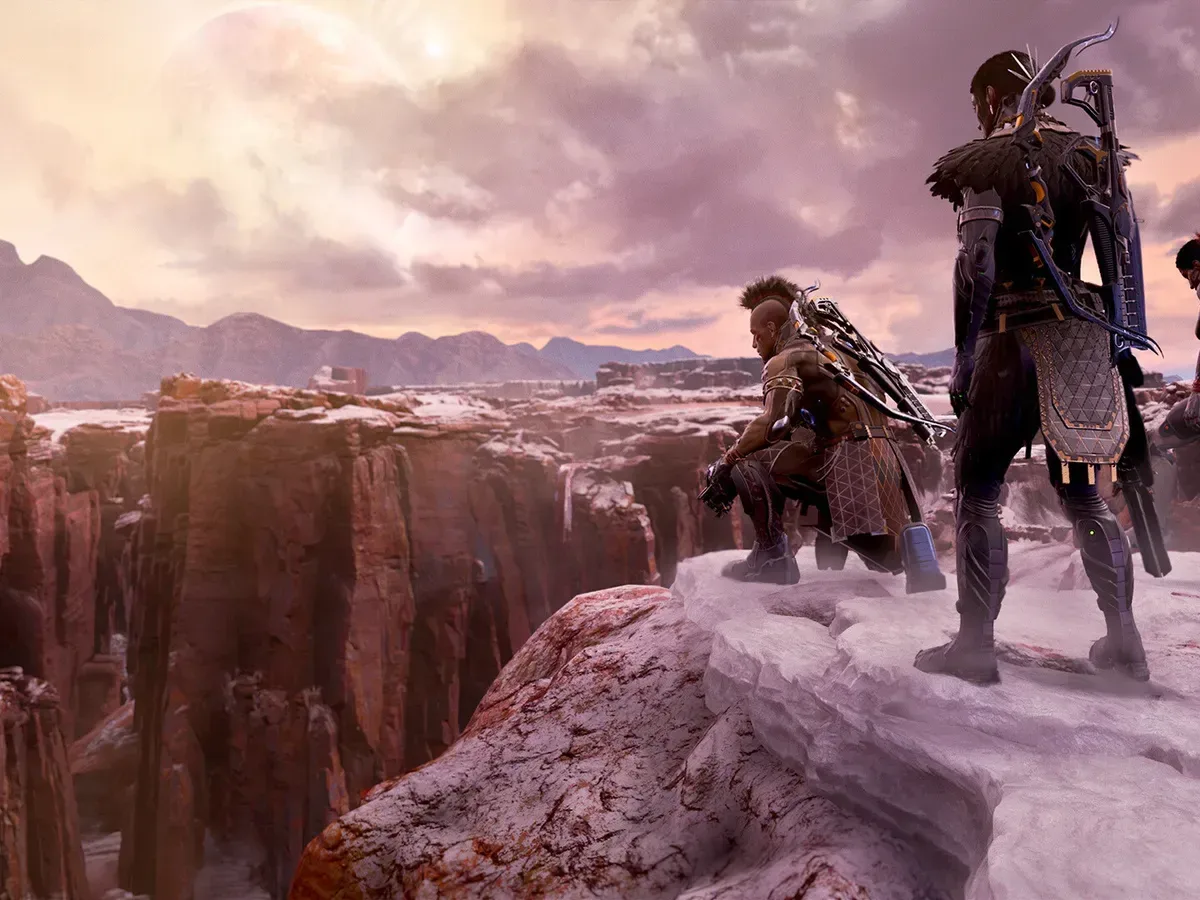
Turok has a straightforward challenge ahead of it: it is a name with serious recognition among players who remember the Nintendo 64, but far less built-in meaning for people who did not grow up with that era. Saber’s answer with Turok: Origins is not to make nostalgia do all the work. The upcoming dinosaur shooter is being positioned around flexibility: familiar callbacks for returning fans, an accessible-looking action hook for newcomers, and the ability to play solo or in a group of up to three.
Turok: Origins is scheduled for spring 2027 on PC, PlayStation 5, Xbox Series X|S and Nintendo Switch 2. That broad platform list matters because the game’s central pitch is not tied to one particular audience or one old machine. Saber development chief Tim Willits has described the design goal as a balancing act between recognizable Turok material and a game that still looks inviting to people with no existing attachment to the series.
A legacy name, but not a guaranteed audience
For many longtime players, Turok is closely associated with the Nintendo 64 and a particular kind of first-person shooter fantasy: futuristic weapons, dinosaurs and an aggressive pulp sensibility. That association is an advantage, but it can also create a design problem. A revival cannot assume that a reference alone explains why a player should care in 2027.
Saber appears to be addressing that problem in two directions. On one side are explicit nods for fans who know the older games, including the Cerebral Bore. On the other is a package built around choice and spectacle: first-person and third-person viewpoints, giant dinosaur bosses, collectible Echoes that unlock Turok powers, and the ability to bring one or two friends.
That combination is notable because it does not treat the legacy audience and the new audience as mutually exclusive. A returning player may recognize a weapon or appreciate the series connection. A first-time player does not need that recognition to understand the immediate proposition: team up, shoot laser-equipped dinosaurs, earn powers and confront huge bosses.
“Add things that people [who remember Turok] would appreciate and like, but build a game that could be attractive to new players.”
That is a sensible distinction. Fan service is material aimed at people already invested in a property. An onboarding hook is the part that makes the game legible without that investment. The Cerebral Bore belongs to the first category. Co-op, selectable perspectives and visually imposing boss encounters are intended to serve the second, even if veterans can enjoy them too.
Co-op is the clearest part of Saber’s strategy
Willits has put particular emphasis on cooperative play, arguing that playing with friends is an important part of how younger audiences use games. Turok: Origins can be played alone, with one friend, or with two friends, making it a three-player game at maximum party size.
In simple terms, co-op means multiple players taking part in the same game session rather than each person progressing separately. That does not automatically tell us how every mission, power or boss mechanic will work; those implementation details have not been established here. But the option itself changes the way the game can be considered. It gives a prospective player a social reason to try Turok even if the name means nothing to them beforehand.
It also avoids making co-op a requirement. Saber is presenting solo play and group play as parallel choices. That is important for a game with a shooter heritage. Someone looking for an individual action experience can play alone, while a group can approach the same dinosaur-filled premise as a shared activity. The value is in accommodating both habits rather than declaring one of them outdated.
The wider games business offers plenty of examples of social play becoming a major draw. Battle royale games such as PUBG and Fortnite, as well as Call of Duty: Warzone, have helped normalize games as places where friends meet and talk while pursuing objectives. Extraction shooters including Escape from Tarkov and Arc Raiders also lean into group coordination, while Helldivers 2 has shown how much of a co-op game’s identity can come from unexpected moments among friends.
Those comparisons should not be mistaken for confirmation that Turok: Origins shares their structures. It is not being presented as a battle royale or extraction shooter. The useful takeaway is narrower: a multiplayer option can be a front-door feature. For players who decide what to play through a group chat, “we can play this together” can be more persuasive than a decades-old franchise pedigree.
First-person and third-person options widen the entry point
Another piece of the plan is the choice between first-person and third-person perspectives. First-person puts the camera through the character’s eyes, conventionally emphasizing the weapon, aim and immediate view ahead. Third-person places the camera behind or around the character, letting players see more of their avatar and often more of the surrounding space.
Neither viewpoint is inherently better. They create different feelings and can appeal to different habits. First-person is a natural connective thread to Turok’s past. Third-person can make character movement, larger enemies and a three-player team easier to read at a glance. Offering both suggests Saber is trying to preserve one of the series’ key associations while not treating it as the only valid way to experience the new game.
This choice should also be read cautiously. It confirms a player-facing option, not a complete explanation of combat balance, camera behavior or how the viewpoints work in every situation. Still, it is a meaningful signal about audience design. The project is attempting to meet old expectations without demanding that unfamiliar players adopt them.
Boss runs and Echoes point toward a power-and-spectacle loop
Willits has also highlighted giant boss fights and described the game as having the feel of “boss run” games. The term was raised informally rather than defined as a formal genre label, so it would be premature to assign Turok: Origins a precise structure from that comment alone. What is clear is that large dinosaur encounters are expected to be a major attraction rather than a minor diversion.
Boss encounters are usually designed as set-piece challenges: enemies larger, tougher or more mechanically distinct than regular foes. In a three-player setting, they also create an obvious shared focal point. Everyone has the same enormous problem in front of them, whether that means concentrating fire, staying alive or simply reacting when a dinosaur turns a combat zone into a very loud workplace hazard.
The game will additionally feature Echoes, collectibles used to unlock Turok powers. Echoes are the clearest confirmed progression element so far. The practical implication is that collecting them is tied to player capability rather than being only a completionist side activity. Exactly how many powers exist, what they do, where Echoes are found and whether progress functions differently in co-op have not been detailed, so those questions remain open.
That restraint is worthwhile. “Collectible” can mean many things in games, from purely cosmetic pickups to resources that unlock major systems. In this case, the confirmed connection is specifically between Echoes and Turok powers. It gives players a reason to pay attention to progression, but it does not yet reveal the full depth or shape of that system.
The appeal is being built around an immediate elevator pitch
A useful shorthand for Turok: Origins is a three-player action game about shooting dinosaurs with lasers. That is deliberately more immediate than a history lesson about a Nintendo 64 shooter. The legacy remains present in the weapon callbacks and the Turok identity, but Saber’s broader pitch depends on features a new player can understand quickly: play from either camera perspective, hunt Echoes for powers, face huge bosses and join friends.
There is a practical platform angle, too. PC players planning ahead for a new game library may want to keep an eye on storage needs; a separate 5TB external drive listing is one option currently covered for expanding capacity. It does not establish Turok: Origins file size or system requirements, which have not been provided, but it is a reminder that a PC launch involves more than the game’s creative direction.
For now, the strongest confirmed message is one of flexibility. Turok: Origins wants returning fans to spot elements they remember, but it is not asking newcomers to study the past before they can enjoy the present. Saber is instead putting co-op at the center of its outreach, supported by alternate viewpoints, powers unlocked through Echoes and large dinosaur bosses. Whether that blend lands will depend on the game itself, but the intended bridge between generations is unusually clear.