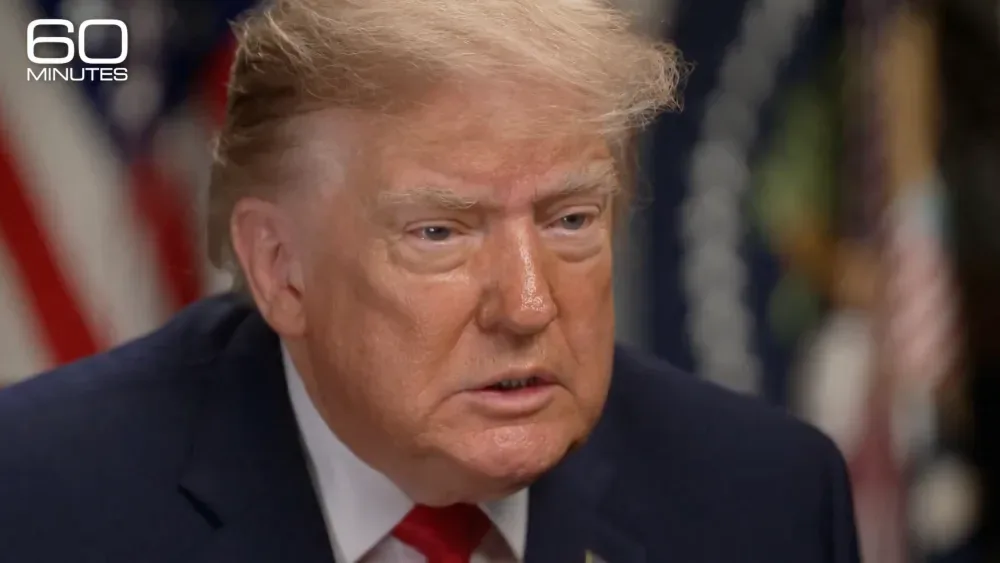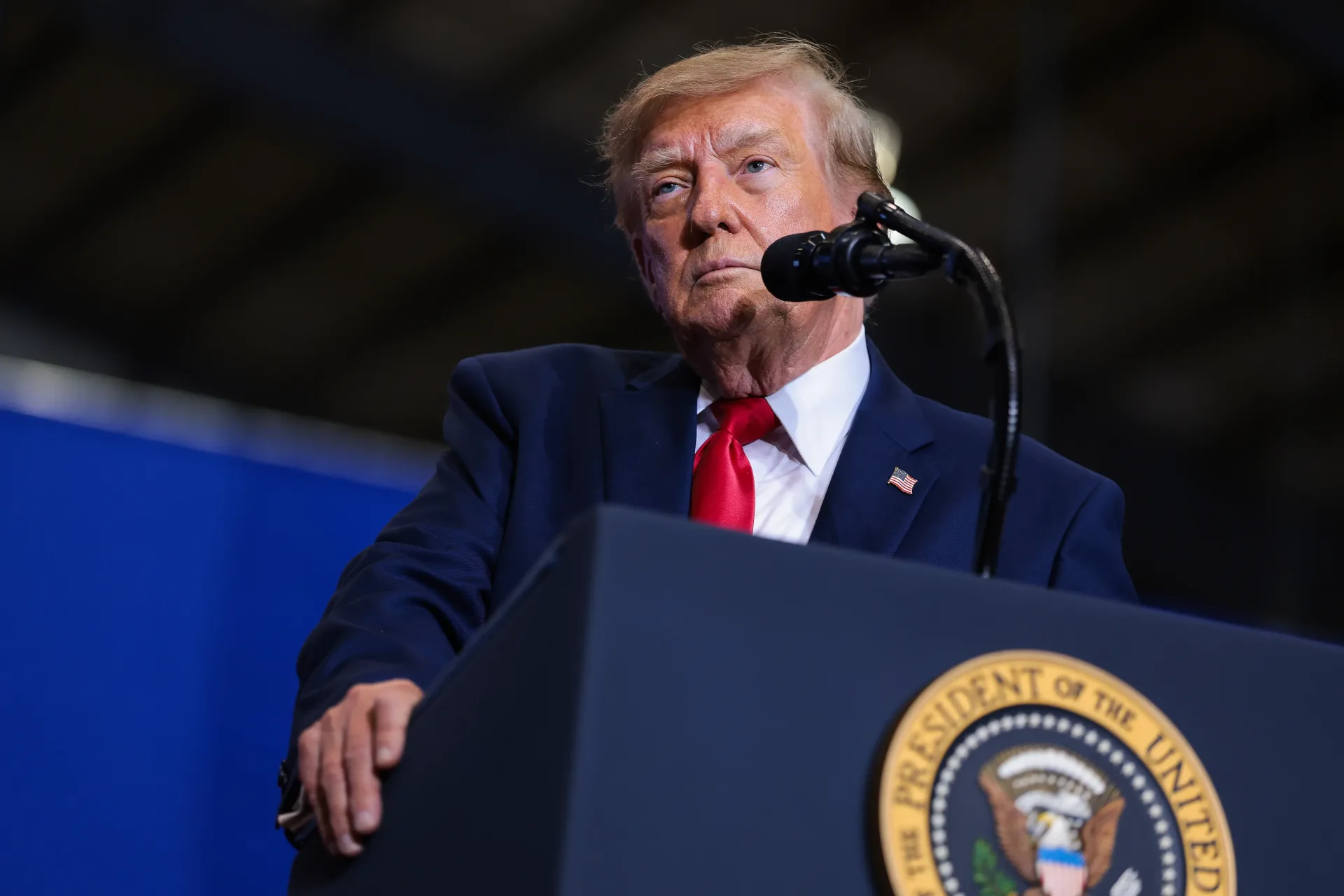
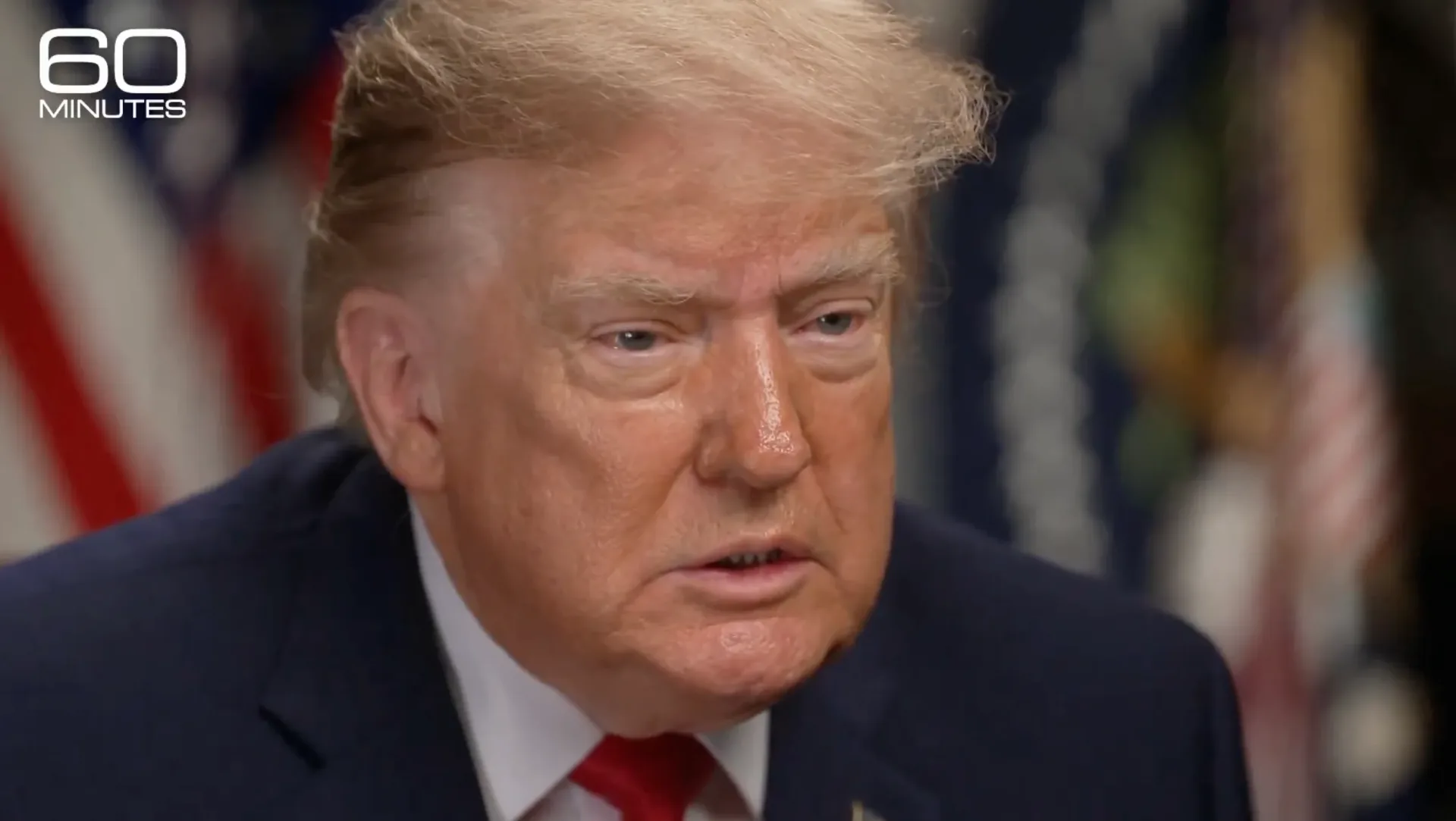
President Donald Trump’s appearance on 60 Minutes brought a striking set of subjects into one conversation: a Republican midterm defeat, the war in Iran, higher gasoline prices, immigration enforcement, Israel, personal wealth, UFOs, death and forgiveness. The result was not an interview built around one policy announcement. Instead, it offered a view of how Trump is publicly framing a major electoral setback while maintaining that he would largely make the same choices again.
Trump identified the Iran war and gasoline prices as key reasons voters rejected Republican candidates in the midterms. He also pointed to what he described as strong hostility toward Israel. At the same time, he argued that the candidates themselves bore blame for the result.
That explanation matters because it spreads responsibility beyond the White House while still acknowledging that voters reacted negatively to consequential issues tied to the administration’s record. Trump did not portray the midterm outcome as a mandate for a broad policy reversal. He said he would undertake the Iran war again, and he characterized his first two years back in office as the best in presidential history.
A narrow concession on deportation policy
The clearest note of reconsideration came on immigration. Trump said his mass-deportation approach had been “too tough” and that it might still be too tough. He also suggested he could work with Democrats on an immigration bill next year.
“Mass deportation” is a broad description of an enforcement approach aimed at removing large numbers of people from the country. In political terms, Trump’s acknowledgment was notable because it recognized the possibility that the policy’s severity had exceeded what some voters would support. But the interview did not establish what changes he would pursue, who would qualify for relief, or what a possible bipartisan immigration bill would contain.
The immediate staffing context further complicates any assumption of a softer direction. Shortly after the Friday interview, Trump elevated Stephen Miller, described as an immigration hardliner, to chief of staff. A chief of staff is generally the senior official who coordinates the president’s office and helps shape how priorities move through the White House. The promotion does not by itself define future policy, but it sits in clear tension with Trump’s expressed concern that deportation enforcement had become too punitive.
Analysis: The interview leaves two messages operating at once. One is rhetorical flexibility: Trump recognized a potential political cost in the deportation policy and floated cooperation with Democrats. The other is institutional continuity: the elevation of Miller signals that immigration will remain central to the administration’s power structure. Until specific legislation or policy changes are described, the former is an opening rather than a confirmed shift.
Iran, gas prices and Israel in Trump’s account of the midterms
Trump said voters did not like the Iran war and did not like gasoline prices rising from the lower level he said he had previously achieved. He also argued that antipathy toward Israel was a factor. His assessment places an overseas conflict and a highly visible household expense at the center of the party’s electoral losses.
Gasoline prices are politically potent because they are frequently encountered and plainly displayed. In an election narrative, they can become a shorthand for wider concerns about economic conditions, regardless of the many forces that may affect prices. Trump’s remarks treated the increase as a direct piece of the political backlash.
On Israel, Trump said the country would need to “pay us back” for the costs of the war and asserted that it would not exist without the United States and himself. These comments linked the war, U.S. support for Israel and the midterm aftermath, but Trump did not signal a defined change to his approach. His statement that he would repeat the Iran war is the more concrete indicator of his position in the interview.
There is a practical distinction between accepting that an issue hurt a party electorally and deciding that the underlying policy was mistaken. Trump did the first with the war’s political consequences; he did not do the second. That distinction is central to understanding the interview’s post-election posture. He acknowledged dissatisfaction without embracing a broader course correction.
Forgiveness, religion and an unusually personal line of questioning
The conversation also moved into personal and metaphysical territory. Ross Douthat asked Trump whether he could forgive political enemies including James Comey and Nancy Pelosi, presenting forgiveness as a possible condition for reaching heaven.
Trump said he regarded them as very bad and dishonest people, and argued that claiming forgiveness when he did not feel it would be inauthentic. Asked directly whether he could find forgiveness in his heart, Trump answered that he probably could not, adding that he hates some of his enemies and always would.
“I probably cannot do that, no, because I do hate some of my enemies, and I always will.”
Trump nevertheless described himself as religious and said he hopes to go to heaven. When asked what he believes happens after death, he replied that he hopes he is missed.
These exchanges are significant less as a policy matter than as an example of Trump’s favored political register: bluntly personal, resistant to conventional expectations of reconciliation and willing to cast refusal as honesty. The questions invited a discussion of religious ideals and self-reflection. Trump’s response redirected that discussion toward authenticity as he defines it—saying what he believes rather than offering a sentiment he considers performative.
Analysis: That answer may resonate differently with different audiences, but the contrast was unmistakable. The interview’s premise was that forgiveness could be a spiritual obligation. Trump’s answer treated enduring enmity as a more truthful position. It reinforced the combative style that has long been integral to his public persona, even in a conversation about mortality and faith.
Wealth questions and an unresolved accountability issue
Trump also deflected questions about a substantial increase in his wealth since returning to the White House. He said his son runs his company, said he did not know his net worth and conceded that it had presumably risen.
The response did not directly engage with the concern behind the question: how to assess financial growth connected to a president whose business interests are managed by a family member. No further details were provided in the interview material about the scale of the increase, the assets involved or the mechanisms for separating presidential duties from private business interests.
That absence is important. Trump’s answer supplied a personal explanation—his son runs the company—but not a substantive account of the wealth increase. For viewers, the exchange remains a statement of distance from day-to-day company management rather than a detailed resolution of questions around money and public office.
What the interview did—and did not—settle
The interview generated a handful of clear Trump positions: the Iran war was worth repeating; the Republican midterm loss was tied to the war, gasoline prices and candidate quality; his deportation policy may have been too harsh; and forgiveness of certain political adversaries is not something he believes he can offer.
It did not produce a detailed immigration proposal, a formal adjustment to the Iran strategy or an explanation of Trump’s increased wealth. The potential immigration deal remains only a possibility, while his chief-of-staff choice presents a counterweight to expectations of moderation.
For a different example of a public figure discussing the circumstances surrounding a major departure, see Omari Hardwick’s comments on the shift before his Power exit.
As television, the appearance stood out for moving from electoral politics to spiritual introspection and back to the machinery of federal power. As politics, it was more notable for its contradictions than its commitments: an admission that enforcement may be too harsh paired with a hardline personnel decision; an account of election-driven dissatisfaction paired with support for repeating the defining war; and a profession of religious hope paired with an explicit refusal of forgiveness.