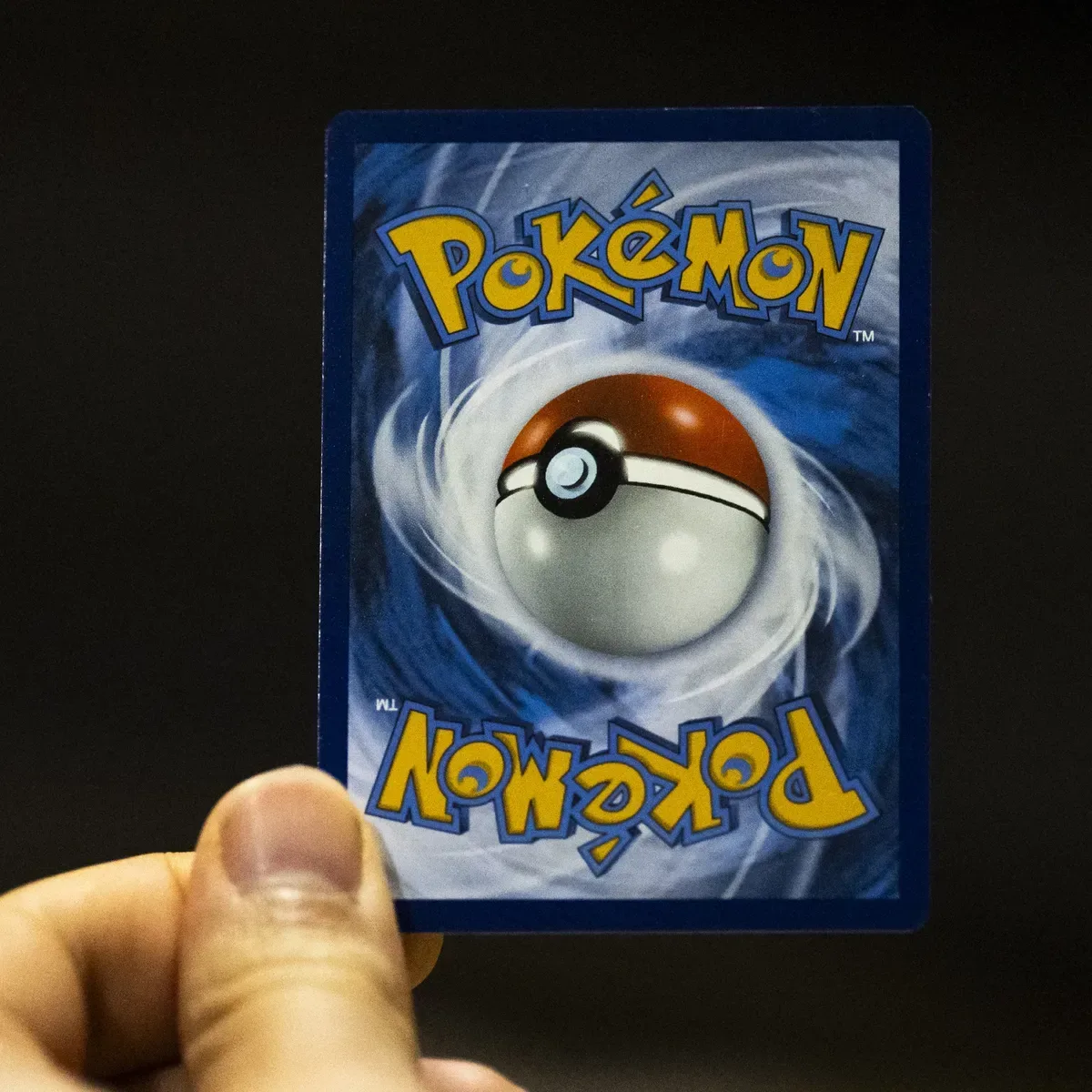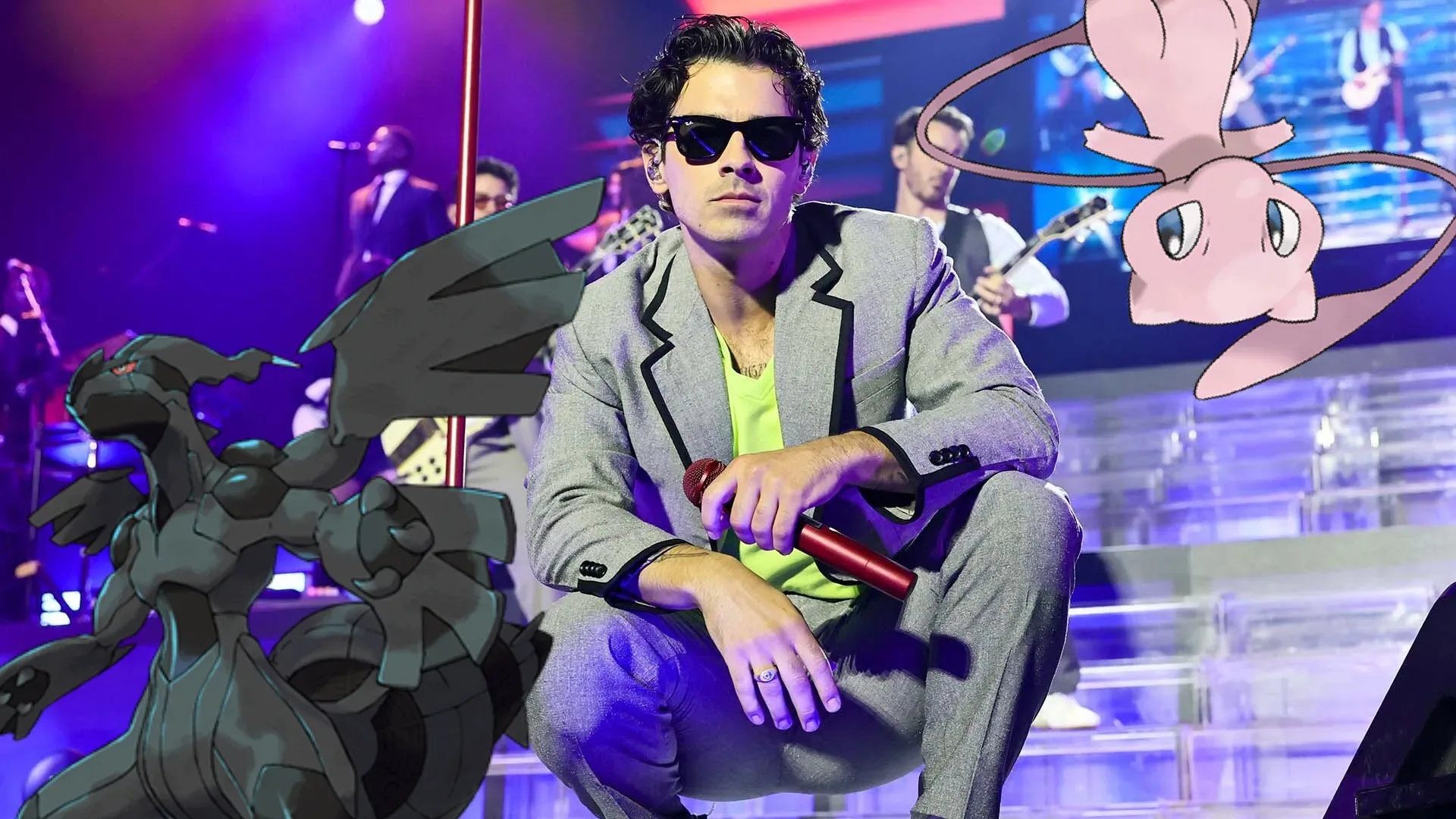
A Pokémon card can be many things at once: a game piece, a character collectible, a carefully preserved asset, or the perfect object to hold up at a concert in hopes of getting a tambourine from Joe Jonas. At recent Jonas Brothers shows, fans have done exactly that, offering cards directly to the singer and receiving one of his stage-played tambourines in return.
It is a small, joyous collision of fandoms, and it has already produced several highly shareable moments. Joe Jonas is a known Pokémon fan, and concertgoers appear to have picked up on that enthusiasm. Instead of merely bringing signs, some have turned up with Pokémon cards intended as personal trade offers. Jonas has reportedly accepted at least some of them, creating a new kind of concert souvenir: an instrument with a direct connection to the performance, exchanged for a piece of trading-card history.
The appeal is easy to understand. A tambourine caught or received at a show has the kind of story that ordinary tour merchandise cannot replicate. It is tied to a particular song, a particular venue, and a brief interaction between performer and fan. The card, meanwhile, is not simply payment. It gives the artist something selected for their stated interest. That makes the exchange feel more like a fan-to-fan trade than a conventional transaction.
Two reported Pokémon-for-tambourine swaps
Videos circulating online show fans making the exchange at multiple stops on the Jonas Brothers’ current tour. At the SNHU Arena in Manchester on September 26, Jonas traded a tambourine for a graded Zekrom card. At Capital One Arena in Washington, D.C., on September 30, another fan exchanged a 1999 Mew card for the instrument.
Those details matter because the cards involved are not interchangeable scraps of cardboard. Zekrom is a Legendary Pokémon whose cards have appeared in different sets and rarities over time. Mew is one of the franchise’s most recognizable mythical Pokémon, and “1999 Mew” describes a card with obvious vintage appeal, though that shorthand alone does not establish its exact printing, condition, edition, or market value.
The appearances have encouraged other attendees to consider bringing cards to later dates. That possibility is part of the fun, but it also turns a spontaneous gesture into something people may prepare for strategically. Anyone weighing a similar offer should decide beforehand what they would genuinely be happy to trade—not only what might attract attention in the moment.
What a “slab” means in trading cards
The Zekrom card was described as a slab, a common collector term for a card sealed in a rigid plastic holder after third-party grading or encapsulation. The holder is intended to protect the card and, when it carries a grading label, records an assessment tied to that specific copy.
That distinction is important. A card’s name alone rarely tells the whole financial story. Collectors generally consider the exact release, variant or edition, visible condition, whether it is professionally graded, and the grade assigned when estimating what a particular copy might be worth. A slab does not automatically mean a card is extremely valuable, but it does signal that someone has taken the time to preserve and document it as a collectible.
Related coverage includes Pokémon Cards Become Jonas Brothers Concert Trade Currency as Fans Swap for Tambourines.
Similarly, “1999 Mew” is evocative, but it is not a complete valuation. A prospective trader would need to identify the specific card before treating it as equivalent to any other Mew released around that period. The responsible move is to check the card’s details and make a personal decision about whether the exchange is worth it. No viral moment requires someone to surrender a card they would later regret losing.
A trade is not the same thing as a sale
These exchanges highlight a useful distinction in collecting: market value and personal value are related, but they are not the same. Market value is what a buyer may pay for a specific card under specific conditions. Personal value is the meaning an owner assigns to it. A fan might place more value on a tambourine handed over by Joe Jonas than on the card they offered, even if other collectors would prefer the card every time.
Neither perspective is inherently wrong. The issue is informed consent. A trade can be a great memory when the person making it knows what they are giving up and wants the return item more. It becomes much less charming if somebody acts on the assumption that an older card or a graded card is automatically disposable, only to learn later that it had more significance or scarcity than they realized.
There are practical considerations on the tambourine side, too. A stage-used item may be meaningful because of its concert provenance—the connection between the object and the event. For an owner, a video or photo of the exchange, the date, the venue, and a short written account can preserve that story. That is not a claim of financial authentication; it is simply sensible documentation for a personal memento. It can also make the item’s history easier to explain years later.
Why this moment works
Pokémon’s modern collecting scene can sometimes feel dominated by scarcity, grading, resale conversations, and the pressure to treat every notable pull as an investment. The Jonas exchanges offer a welcome counterpoint. Here, cards are facilitating a human interaction rather than sitting permanently in storage or being discussed only in terms of future return.
That does not mean collectible value should be ignored. It means that collecting has room for both care and play. A well-loved hobby can support preservation, research, and responsible spending while still allowing someone to say, “This is the card I traded for a story I will remember.”
There is also a distinctly Pokémon-shaped logic to it. Trading has been part of the franchise’s identity from the beginning, and the social element remains central whether the items are digital creatures, loose cards, or encased collector pieces. The broader creature-collection space continues to draw on that impulse in games as well; for example, Amiko Legends’ Steam demo combines creature collection with extraction-RPG systems. The Jonas Brothers exchanges are not a game mechanic, but they tap into the same basic pleasure: finding someone who values what you have and making a trade that feels memorable to both sides.
If fans bring cards to a future show
There is no indication that a trade will happen at every concert or that any particular card will guarantee Jonas’s attention. Fans should treat it as a possibility rather than a promise, and should follow venue rules and staff direction rather than trying to force an interaction.
- Bring only a card you can comfortably part with. Do not make a spur-of-the-moment decision with a sentimental, expensive, or poorly understood card.
- Know the exact card. Check its set, year, variant, condition, and any grading information before the show.
- Protect it. Use a sleeve, toploader, or other appropriate holder so it can be safely carried and handed over.
- Keep expectations modest. The performer may not see the card, may not be able to trade, or may simply choose not to take it.
- Document any successful swap. Record the venue and date, and retain any permissible photo or video that captures the exchange.
It is also worth resisting the urge to escalate. The charm of the reported trades is their specificity: Pokémon cards offered to an artist who likes Pokémon, in return for an instrument used during the same show. Trying to turn every concert interaction into a high-value barter opportunity risks losing the simple generosity that made the moment travel online in the first place.
More than a piece of tour gear
Joe Jonas’s Pokémon interest has been visible beyond these concert exchanges. The Jonas Brothers held a Pokémon-themed birthday celebration for him in August, including an oversized AI-generated card depicting Jonas with Pikachu and Charizard. Fans bringing Pokémon cards to the tour are responding to a recognizable interest rather than inventing a random gimmick.
For the people involved, the resulting tambourines are likely to become part concert keepsake, part Pokémon-collecting anecdote, and part proof that fandom can still create unscripted experiences. For Jonas, the incoming cards may amount to a very unusual collection by the time the tour concludes in December.
Whether a graded Zekrom or a 1999 Mew is the better side of any particular swap is impossible to answer without the full card details and the owner’s priorities. But the larger point is clearer: value is not always confined to a price guide. Sometimes a collectible’s best use is creating a moment worth keeping.