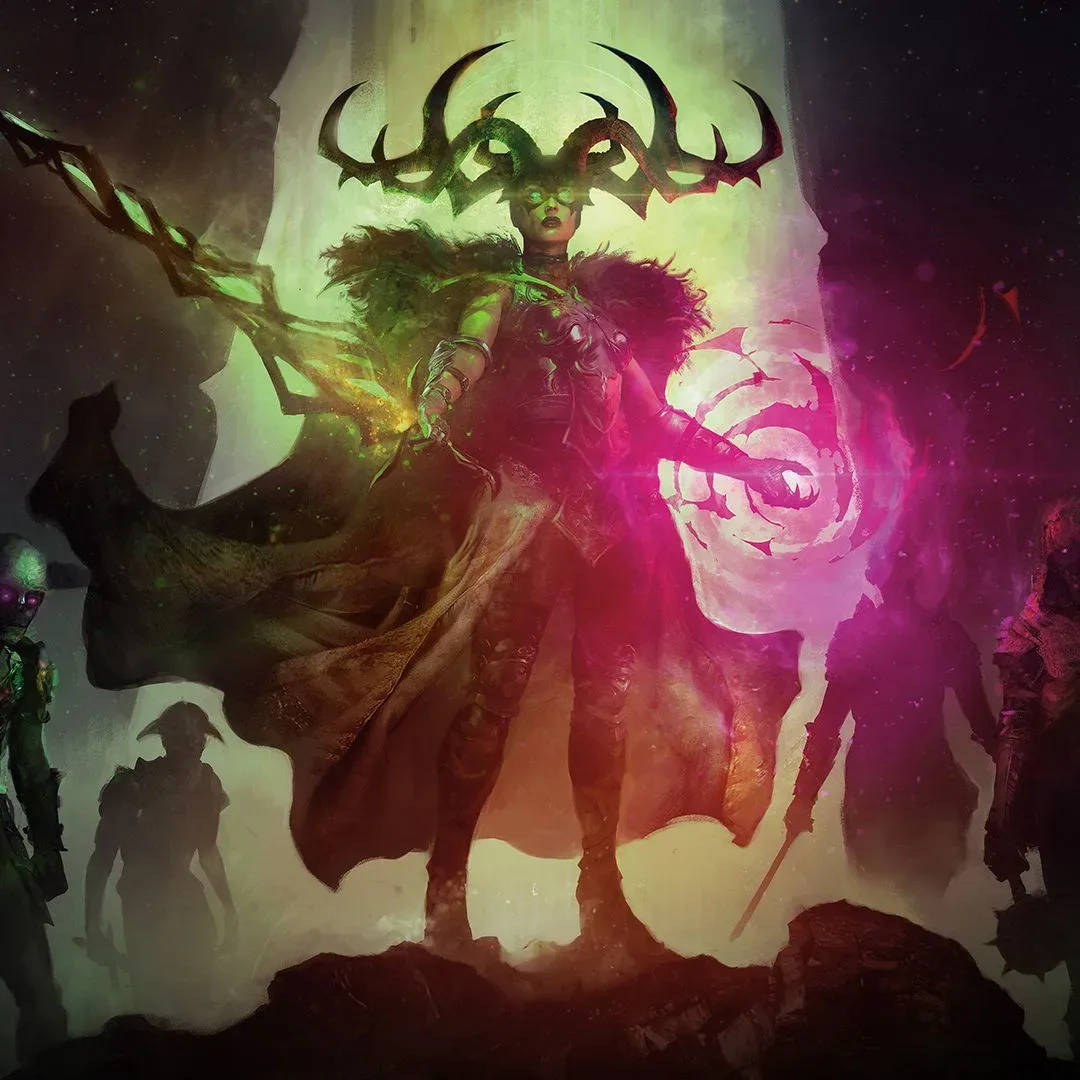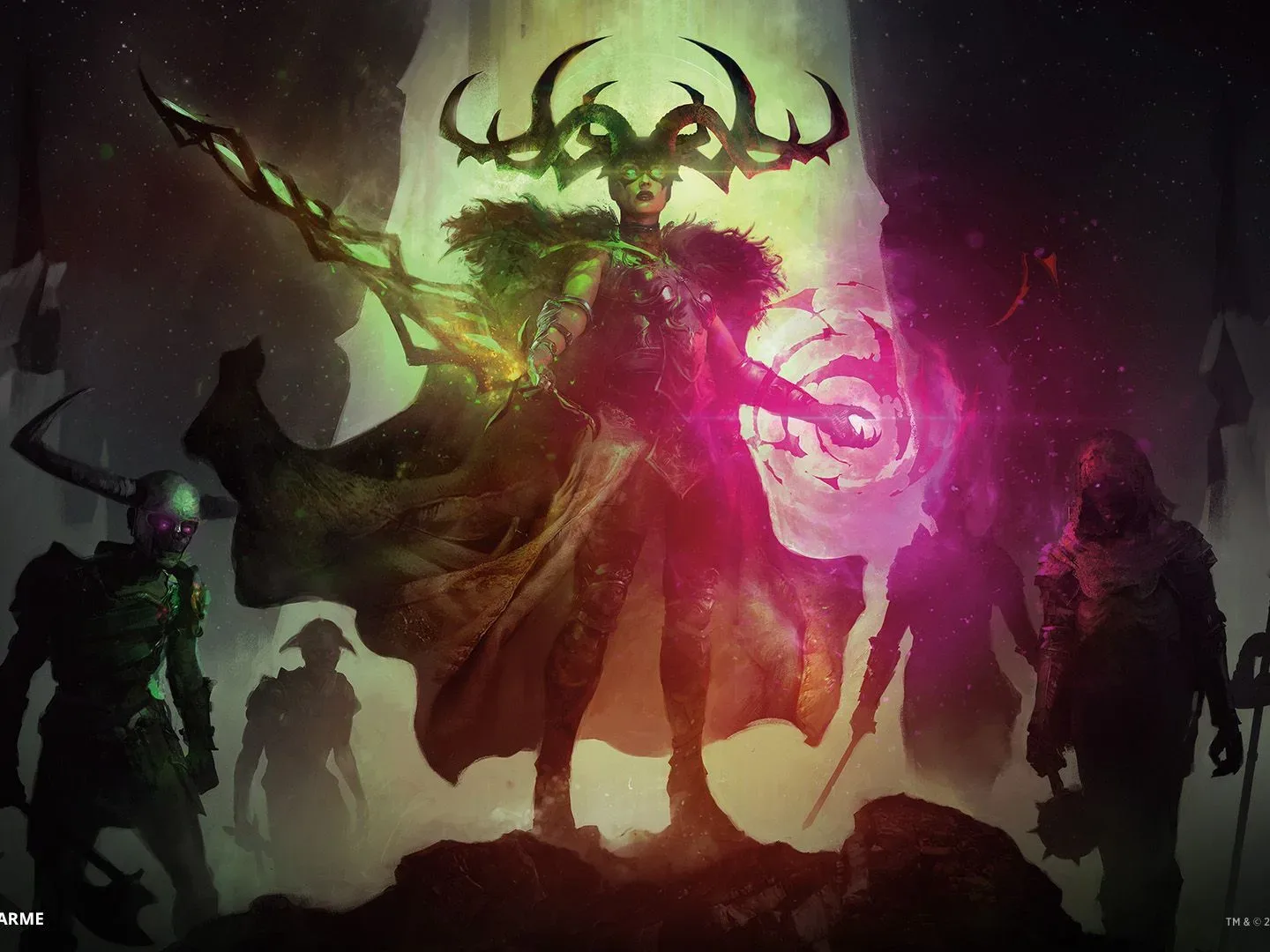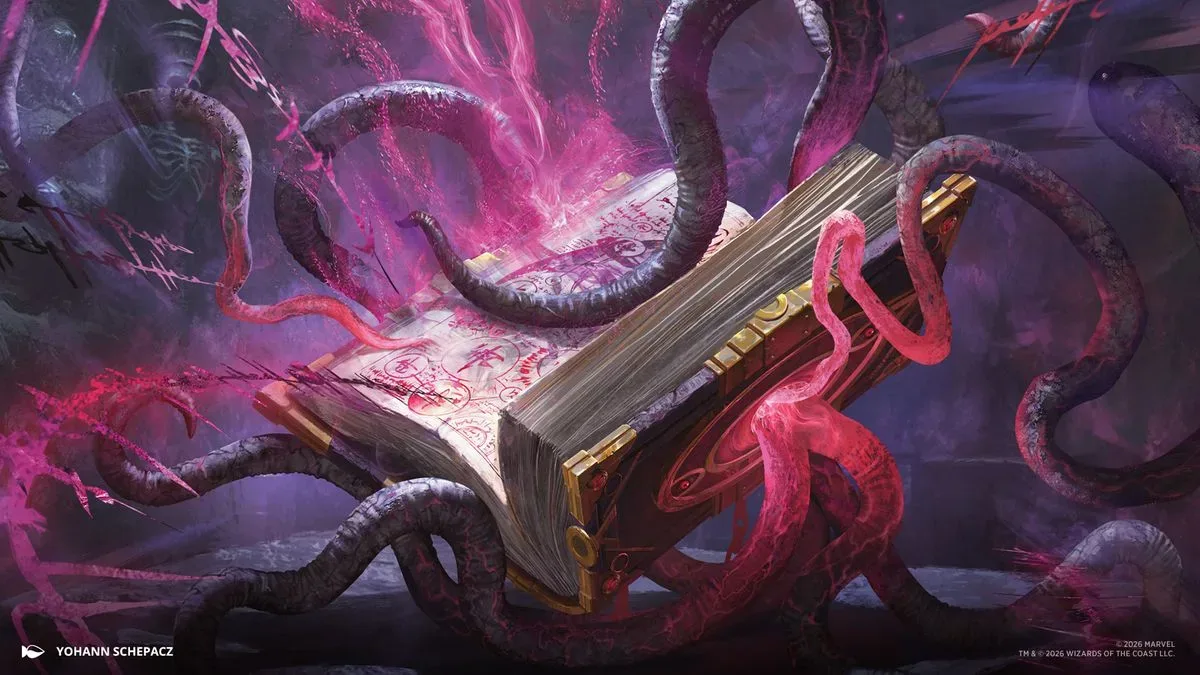
Magic: The Gathering’s next Marvel crossover, Marvel: Darkhold Destiny, has opened for pre-order ahead of a planned 2027 release. Revealed at New York Comic Con 2026, the set turns away from the broad superhero showcase approach and into Marvel’s supernatural territory: spells, alternate dimensions, horror-tinged threats, and characters for whom arcane magic is central rather than incidental.
That thematic decision could matter more than the simple presence of recognizable heroes. A Magic set is not only a stack of character cards; it is a game environment with its own visual language and implied fiction. Its players routinely summon creatures, manipulate life totals, sacrifice resources, and cast world-altering spells. Doctor Strange, Scarlet Witch, Blade, Thor and Hela can therefore feel less like visitors who took a wrong turn at a multiverse exit and more like participants in the kind of fantasy conflict Magic already depicts.
The new set also has a notable narrative distinction. It is set to include an original Magic story written specifically around Darkhold Destiny, along with an original character. That gives the release a stated purpose beyond assembling a catalogue of familiar Marvel faces, and it may give fans of either franchise a clearer reason to engage with its setting.
A Marvel setting built for Magic’s vocabulary
Crossovers are always balancing two audiences. One group may simply want a playable version of a favorite character. Another wants the crossover to preserve the feel of the game it enters. Darkhold Destiny appears designed to address the latter concern through subject matter rather than by asking players to overlook a tonal mismatch.
Magic’s core gameplay language is full of fantastical actions. Players use mana, represented through the game’s colors and lands, to cast spells and deploy permanents—cards that remain on the battlefield. Its conflicts can include wizards, undead armies, gods, beasts, artifacts and portals between worlds. A Marvel set focused on supernatural teams and reality-bending spellcasters has an immediate thematic bridge to those ideas.
That does not mean every crossover needs to imitate Magic’s traditional fantasy aesthetics. Different players enjoy different Universes Beyond releases precisely because the game can accommodate unexpected settings. But Darkhold Destiny’s selection of characters gives its mechanics and presentation an intuitive shared language: mystical knowledge, death, sacrifice, summoning, dangerous power and dimension-hopping.
Scarlet Witch is one obvious example of the tonal overlap. Her place in Marvel’s supernatural and multiversal storytelling makes the connection feel particularly direct; the character’s continuing emotional significance to White Vision is also a subject explored in recent comments about VisionQuest. Darkhold Destiny is not presented as a tie-in to that project, but it demonstrates why Marvel’s magic-focused corner has enough established character material to support a more cohesive card-set identity.
An original plot is the set’s most consequential promise
Darkhold Destiny is described as the first Marvel Magic release to receive a bespoke plot crafted for the set. That is important because story can bind a card release together even when its playable products serve very different audiences.
Related coverage includes Magic: The Gathering Marvel: Darkhold Destiny Pre-Orders Begin Ahead of 2027 Release.
A character celebration can be satisfying on its own: a player gets to build around a hero, a villain or a famous location. A set-specific narrative can do something broader. It can establish a conflict, provide reasons for unlikely characters to share a world, and make visual motifs feel connected rather than merely adjacent. The addition of an original character further suggests that the release will not exclusively rely on existing Marvel lore.
There are still major unknowns. No detailed plot outline is provided here, nor are the original character’s identity or role. It is also not possible to judge the final story from the product list alone. Still, the premise is a meaningful signal for players who care whether a crossover operates as a self-contained Magic setting rather than just a collection of licensed cards.
In practical terms, story is also useful for newer Marvel fans approaching Magic. A full game of Commander can involve four players, dozens of individual cards and a very large amount of card text. Shared narrative framing offers an easier entry point than expecting everyone to understand the game’s long-running lore or every mechanical interaction from the outset.
Four Commander decks point to distinct play styles
Four preconstructed Commander decks are part of the Darkhold Destiny lineup. Commander is a multiplayer-focused Magic format in which players build decks around a legendary creature or another card eligible to be their commander. The commander is a central, repeatedly accessible card, so putting recognizable Marvel figures at the head of ready-to-play decks is a natural fit.
The decks outlined so far have sharply differentiated color identities and strategies:
- Doctor Strange: A white, blue and black deck built around “blinking” creatures. Blinking means temporarily exiling a creature and returning it to the battlefield. This commonly reuses effects that trigger when a card enters or leaves play, making timing and sequencing important.
- Blade and the Midnight Sons: A white-and-black deck centered on gaining and spending life for high-impact results. In Magic, life is both a survival total and, in some strategies, a resource that can be traded for effects. The theme suits a supernatural team without requiring players to treat its horror flavor as purely cosmetic.
- Thor: A red, white and green deck focused on powerful cards and hitting hard. Those colors often support proactive battlefield play, and the stated goal is straightforward: bring substantial threats to bear.
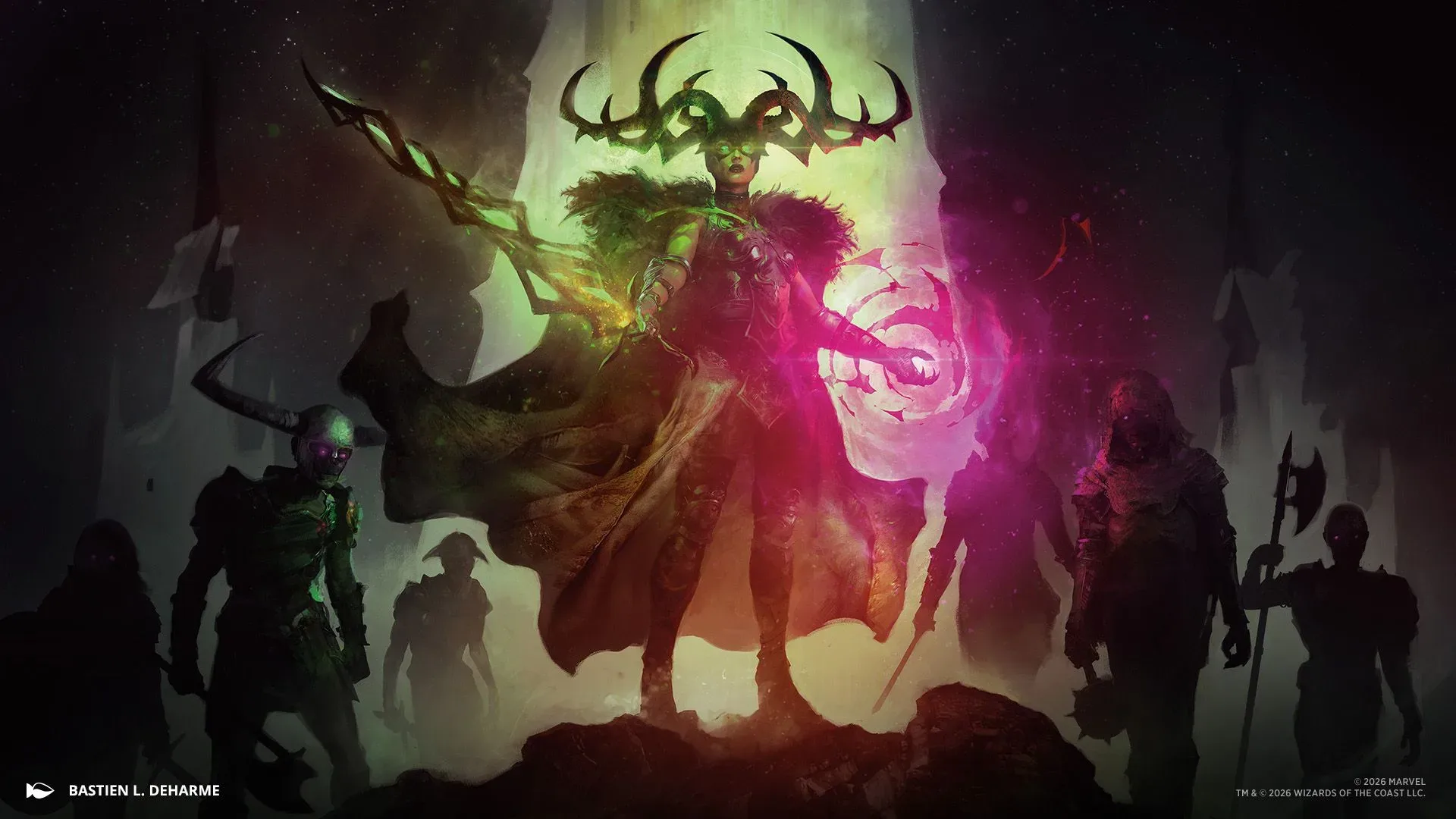
- Hela, Goddess of Death: A black-and-red deck based on sacrificing cards for major effects. Sacrifice strategies intentionally trade a creature or other permanent for a benefit, turning loss into fuel and making resource management central to play.
These are concise strategy descriptions, not complete decklists, so prospective players should avoid assuming details that have not been shared. The available information nevertheless makes the deck selection easier to parse. Players drawn to intricate enter-and-exit triggers may gravitate toward Doctor Strange; those who prefer aggressive board pressure have a clearer lead in Thor; life-resource gameplay belongs with Blade; and sacrifice synergies are Hela’s stated domain.
That separation is valuable for Commander products. A preconstructed deck can be an entry point, a casual multiplayer option, or the starting shell for later customization. Decks work best when their leading character, colors and expected play pattern tell a consistent story. Darkhold Destiny’s four announced concepts each appear to offer that kind of clear lane.
What the other products contain
Beyond the Commander decks, the Darkhold Destiny range includes products aimed at different ways of buying and playing Magic cards.
Bundle
The bundle contains nine Play Boosters, 30 lands, one foil mythic promo card, a storage box and a spindown life counter. A Booster is a sealed pack containing a randomized assortment of cards. Lands are the cards generally used to produce mana, while a spindown counter is a large die commonly used to track a player’s life total.
For someone who wants a mixed sample of the set plus basic play accessories, this is the most all-in-one option described in the lineup. It should not be confused with a guaranteed route to every card or a finished deck: booster contents are randomized, and the supplied information does not identify the promo card.
Scene Boxes
Two Scene Boxes are planned. Each includes cards that combine to create a larger visual scene, while still remaining playable in-game. These boxes sit at the intersection of display appeal and game use, offering a format for fans who appreciate connected card art without making the cards display-only.
That is a particularly sensible product type for a crossover with a strong visual identity. It allows Marvel art to be appreciated as one composition while retaining the basic promise that the pieces are still part of a functional trading card game.
Draft Night
Draft Night is intended to let a group play the Draft format from one box. Its listed contents are one Collector Booster, 12 Booster Packs and 90 lands.
Draft is a limited format: players open packs, select cards one at a time, pass the remaining cards onward and build decks from what they drafted. It is traditionally a social way to experience a new set, but arranging packs and lands can be a barrier for a group hoping to begin quickly. A single-box product built around that setup is aimed directly at reducing that logistical friction.
The included Collector Booster is a separate product type from the ordinary booster packs, though no specific card contents or pull guarantees are detailed here. Buyers interested in Draft should treat the product’s purpose as convenience for the format rather than assume it reveals the set’s full card distribution.
Play Booster Box
For purchasers seeking more packs, a Play Booster Box contains 30 Play Boosters. It is the bulk option in the announced range, but the essential caveat remains the same: randomized packs do not promise a particular character, rarity or deck component.
What to watch before release
Darkhold Destiny has a compelling announced direction, but pre-orders come before a number of details that matter to players. Card-by-card reveals, the identities of the Scene Box cards, the set’s new mechanics, decklists, the nature of its original character and the full story will all shape the final picture. For collectors and players alike, those details should be more useful than trying to infer a card’s strength or scarcity from its product category.
What is clear now is the set’s central pitch: Marvel material selected to mesh with Magic’s spellcasting and fantasy foundations, then given an original narrative frame. For a crossover line that can sometimes be judged solely on who appears in it, Darkhold Destiny is staking its case on where those characters fit—and what they are doing there.
Shop the products
Check current price, model and availability at the retailer.
- View Magic: The Gathering Marvel: Darkhold Destiny Commander Deck - Strange Academy on Amazon US on Amazon
- View Magic: The Gathering Marvel: Darkhold Destiny Commander Deck - Midnight Sons on Amazon US on Amazon
- View Magic: The Gathering Marvel: Darkhold Destiny Commander Deck - Gods of Asgard on Amazon US on Amazon
- View Magic: The Gathering Marvel: Darkhold Destiny Commander Deck - Lords of Hel on Amazon US on Amazon
- View Magic: The Gathering Marvel: Darkhold Destiny Bundle on Amazon US on Amazon
- View Magic: The Gathering Marvel: Darkhold Destiny Scene Box - Skirmish at the Sanctum on Amazon US on Amazon