Magic: The Gathering is heading below the surface for its first release of 2027. Nauctis, due February 5, 2027, is an original setting built around a planet covered entirely by ocean. The early outline is less “a coast with some merfolk nearby” and more “the whole planet is a nautical problem,” with civilizations, travel, survival and magic all shaped by a world with no known dry land.
The set is planned to arrive in booster products, bundles and four Commander decks. It is also presented as Magic’s first purely underwater set, a distinction that matters because the environment is not merely decorative. The setting’s zones range from shallows to the dark Abyss, where lower temperatures and extreme pressure make the ocean itself part of the danger.
That gives Nauctis a useful premise: the setting can make the sea feel vast without reducing it to one blue backdrop. Shallow water, open water, deep water and the Abyss can each support their own societies, hazards and visual language. For a card game, that potentially means a broader set of narrative spaces than the usual single aquatic kingdom. What remains unknown is exactly how those places will appear on cards and what the new mechanics will do during games.
An ocean planet with room to go deep
The central fact of Nauctis is simple: this world is covered by water. But its implications are expansive. The set’s setting material divides that ocean into distinct regions, including the shallows and the Abyss. The latter is described as cold and punishingly high-pressure, suggesting that depth is not just a matter of scenery but a boundary that changes how people live and what they can endure.
That layered structure is important for worldbuilding. An ocean world could easily feel uniform if every location were simply “underwater.” Instead, Nauctis has the foundation for contrasting cultures and conflicts: communities closer to light and surface conditions can have different needs from those living in the depths, while the Abyss can serve as a natural place for threats, secrets or resources that are difficult to reach.
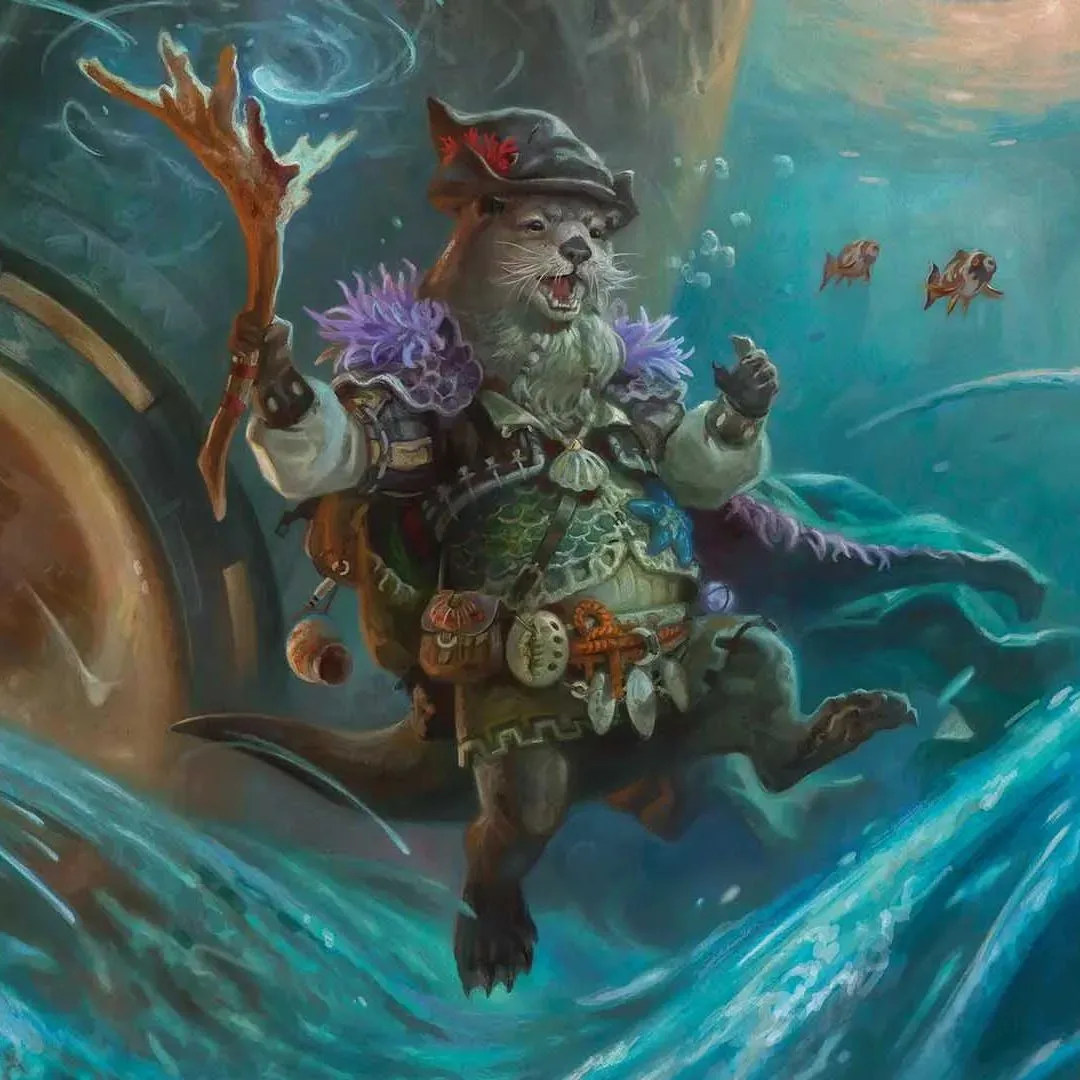
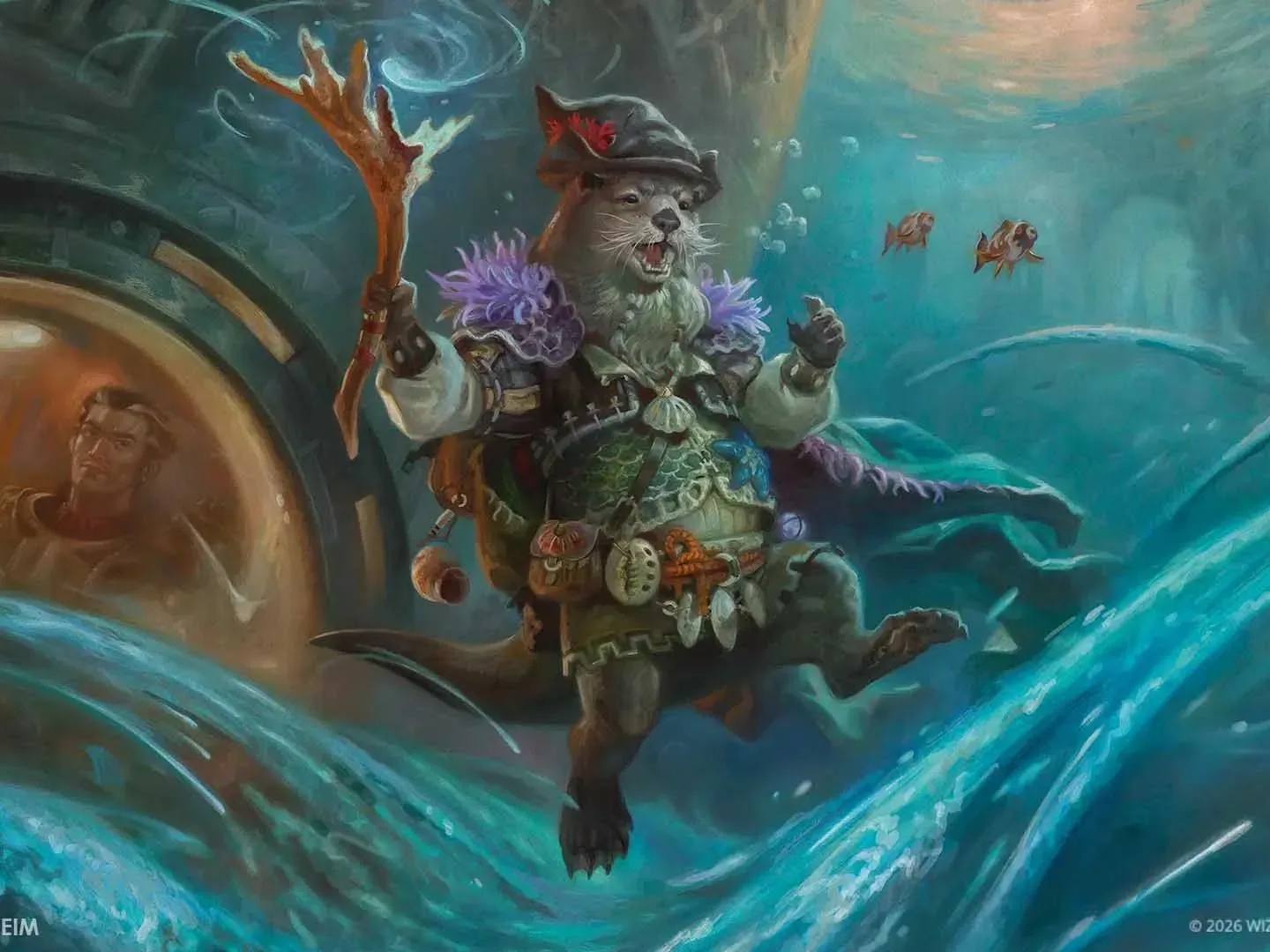
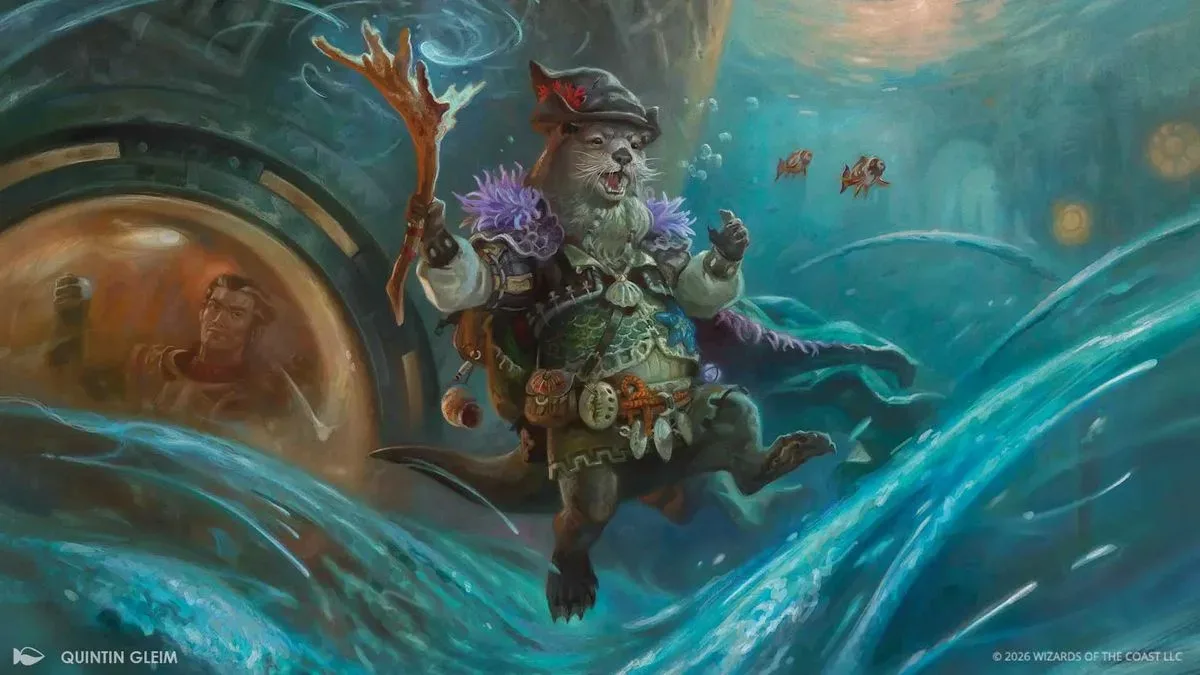
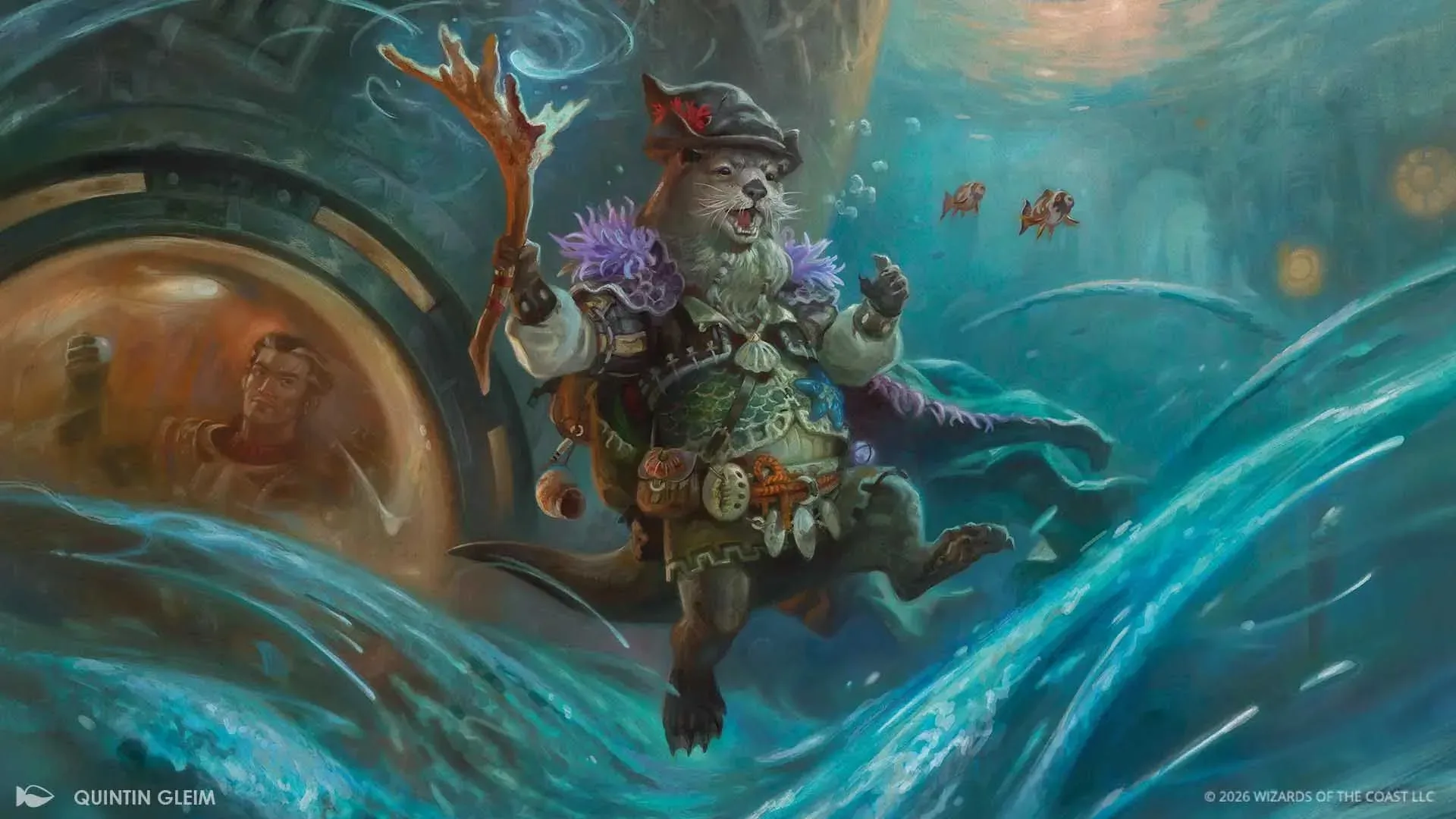
Early details point to several peoples sharing this world. Mermaids and sharkfolk are among the named underwater societies. There are also the Pinneons, sea-otter people described as master artisans who can move between the surface and the sea. That ability makes them especially intriguing within a setting where crossing between water and air is likely to be consequential rather than routine.
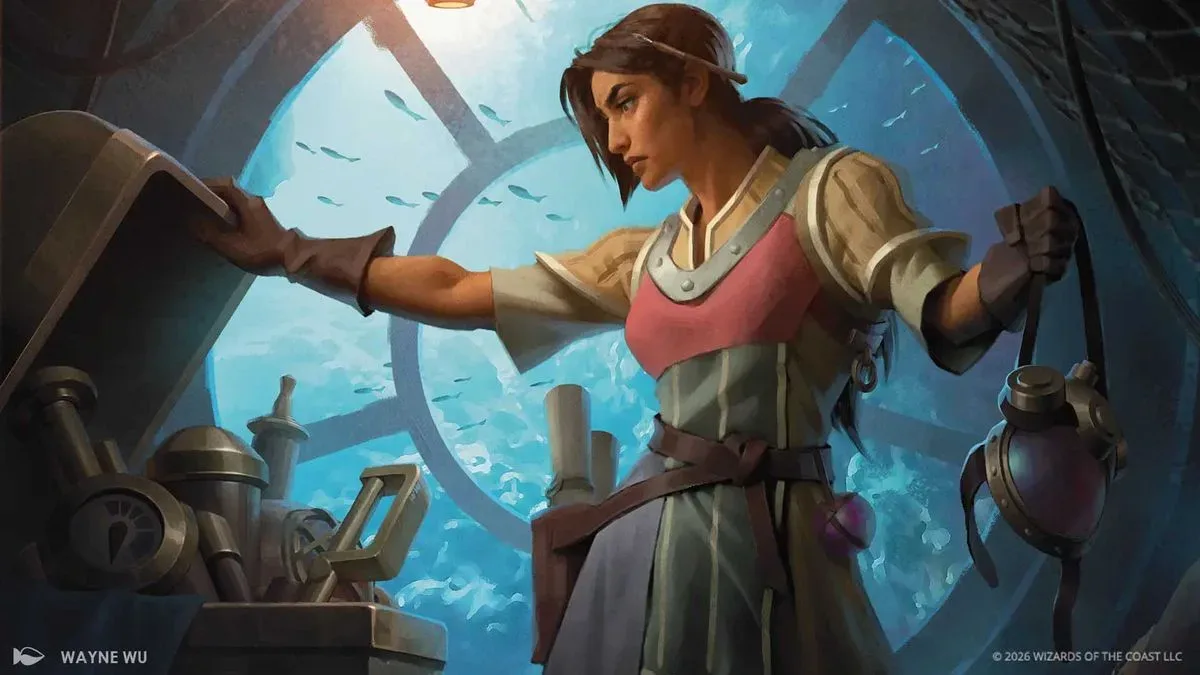
Humans are present as well, but their place in the world carries the set’s largest mystery. They say Nauctis once had dry land, and that it was lost for reasons not yet explained. Their current lives are built around stilt cities, ships and submarines, with scavenging forming part of their day-to-day survival. This is a strong narrative hook because it turns the absence of land into more than an environmental condition. It is a missing piece of history.
The vanished-land mystery could connect the setting
The human claim that dry land existed creates an immediate question: what happened to it? There is no confirmed answer yet, and that uncertainty should be preserved. Still, the premise gives Nauctis an effective throughline. The historical loss can affect the human communities directly while also touching every other society that inhabits the water-covered world.
Related coverage includes Magic: The Gathering's Nauctis Set Brings a New Ocean World to 2027.
Stilt settlements, vessels and submarines suggest adaptation rather than comfort. Humans on Nauctis are not described as having solved the problem of living on an ocean planet; they are making do amid it. Their scavenging also implies that objects from an earlier era may matter, whether as necessities, clues or symbols of a past they cannot fully recover.
For players who care about Magic’s settings as much as individual cards, that is the appeal of the material revealed so far. Nauctis is not only offering aquatic creatures. It is establishing a world where the terrain has history, where one population’s account of the past is incomplete, and where different societies may have very different relationships with both the sea and the surface.
It also leaves ample room for revelations without promising specifics that have not been shown. The cause of the missing land, the reliability of the human account, and the relationship between the world’s peoples are all open questions. Those gaps are currently part of the set’s attraction, not a reason to assume an answer.
Water, air, tides and algae are the early mechanical language
Nauctis’s themes are expected to carry into its gameplay, although individual card examples and finalized mechanics have not yet been detailed. The early explanation of the set’s magic describes water as central to its effects, with air, tides and algae also doing distinct kinds of work.
Air can apparently be used to trap opponents or interfere with vision. Tides may accelerate creatures. Algae may heal or hinder. These are thematic descriptions rather than confirmed card text, so players should not read them as a complete rules preview. They do, however, show the design direction: the set appears interested in treating an underwater environment as a system of forces, rather than simply assigning sea creatures to a familiar creature type.
That distinction could matter. In a trading card game, a mechanic is a repeatable gameplay idea expressed through rules text and interactions between cards. A setting theme is broader: it is the shared fantasy that helps the cards feel like they belong to the same place. Nauctis has revealed more of the second than the first. The water-based concepts give an impression of its intended identity, but they do not yet establish how decks will function, which strategies will be supported, or whether the set introduces new keyword abilities.
Thematically, the ideas fit the premise well. Air has a natural role in a world where breathing spaces and bubbles can be valuable. Tides convey movement and momentum. Algae can plausibly be restorative or obstructive. None of that confirms game balance or competitive relevance, but it does suggest that the set is trying to find fantasy functions for aspects of the ocean beyond fish, ships and storms.
What the product lineup tells players—and what it does not
Nauctis is scheduled for booster products, bundles and four Commander decks. That makes it a full Magic release with products for more than one kind of buyer, but the current information does not provide decklists, individual cards, product contents or pricing.
Commander decks are preconstructed decks associated with Magic’s Commander format. The announcement of four such decks means Nauctis will have a substantial ready-to-play component, but players should avoid guessing at themes, color identities or featured characters until those details are formally revealed.
Likewise, the presence of boosters and bundles confirms product categories, not collecting outcomes. Rarities, special treatments, chase cards and print details have not been established in the revealed information. Anyone interested in the set as a collector should distinguish between what is known—the February 5, 2027 release date and broad product lineup—and what has not yet been disclosed.
That restraint is especially useful around preorders. The products are listed for preorder, but early enthusiasm for an original setting is not a substitute for knowing the exact contents of a sealed product. Buyers who want to make informed choices will need to watch for official card previews and product breakdowns as release approaches. The broader lesson is similar to the one facing shoppers navigating uneven console inventory: availability pressure can make inflated or poorly understood listings look more appealing than they are.
Why Nauctis stands out before cards are revealed
Magic’s crossover strategy has produced mixed reactions, but Nauctis is positioned as a wholly original world. That gives it a different kind of burden and opportunity. It does not arrive with an outside cast or an established fictional universe to do the immediate recognition work. Its appeal will need to come from its setting, characters, art direction and card design.
Based on the information available, its strongest asset is coherence. A planet of water affects geography. Geography shapes civilization. Civilization informs tools, transportation, conflict and magic. The early details—abyssal pressure, surface-capable artisans, humans on stilt cities, submarines, scavenged remnants and a lost-land legend—feel connected to that central fact rather than scattered around it.
There is also a pleasingly strange quality to the setup. A pure underwater set could have been content to ask players to visit the sea. Nauctis instead asks them to consider a world that has no obvious place to stand. That is a more compelling problem for its inhabitants and a more distinctive piece of fantasy scenery for Magic.
Much is still to be shown, particularly the cards that will turn the setting’s atmospheric ideas into actual play patterns. But the foundation is clear enough to make Nauctis one of the more interesting early looks at Magic’s 2027 slate. Players will be able to see whether the ocean world’s mechanical ambitions match its narrative promise when the set launches on February 5, 2027.