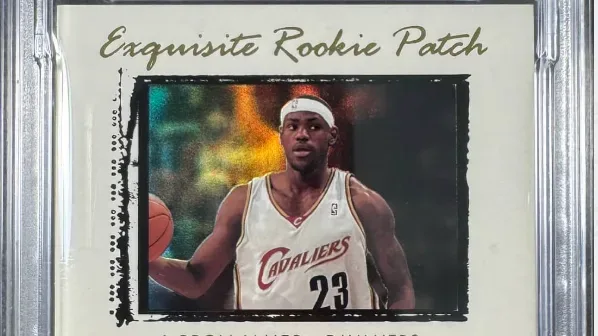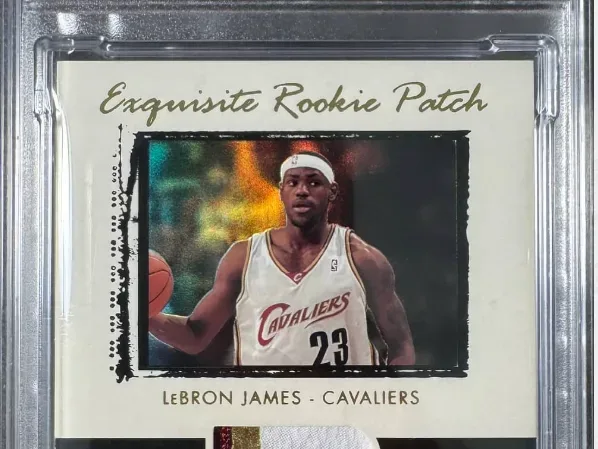
A landmark LeBron James rookie card has sold for $2,318,000, leading a high-end auction that also produced substantial and, in several cases, record-setting results for Steph Curry, Michael Jordan, Tim Duncan, Kobe Bryant, Kimi Antonelli and VJ Edgecombe.
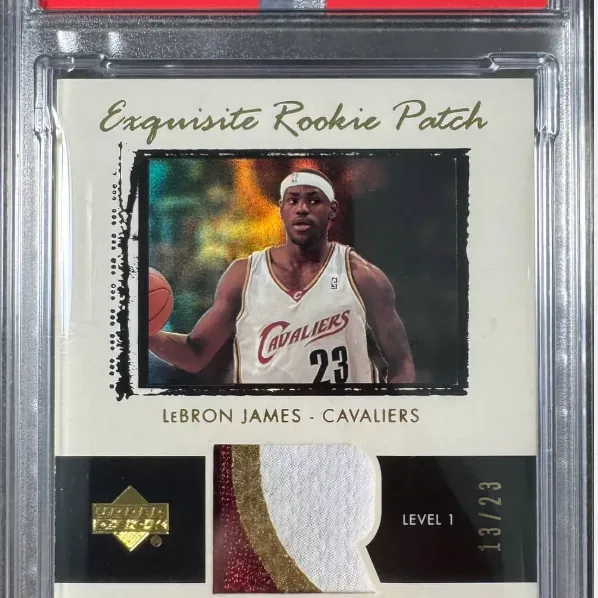
The headline lot was a 2003-04 Upper Deck Exquisite Collection Rookie Patch Auto Parallel #78, serial-numbered 13/23. The card received a PSA 6 grade, while its autograph carries a PSA/DNA 10 designation. The $2.318 million result is the highest public sale recorded for a copy of that specific card in PSA 6 condition.
That distinction matters. It identifies a record within a particular grade rather than claiming an all-condition record for every copy of the card. At the market’s highest levels, a card’s issue, serial number, condition assessment and autograph authentication can each be essential to how collectors compare one public result with another.
Why this LeBron card sits in a rarefied tier
The card combines several attributes that are central to premium modern sports-card collecting: it is a LeBron James rookie card; it comes from Upper Deck’s 2003-04 Exquisite Collection; it includes both a patch and an autograph; and it is limited to 23 numbered copies. The sold example is identified as No. 13 of those 23.
For more context, explore Hot Dogs, Horseshoes & Hand Grenades 2 Launches on Meta Quest 3 and 3S With Endless Roguelike Runs.
Rookie card is the hobby term for a player card issued during the season generally treated as that player’s rookie campaign. The designation is especially significant for players with lasting on-court stature, since collectors often view rookie-year issues as foundational items rather than later-career releases.
Patch auto, shorthand for patch autograph, describes a card that pairs an autograph with a piece of memorabilia material. A patch is typically valued differently from a simpler swatch because it can include a more distinctive section of material. The supplied sale details identify this card as a Rookie Patch Auto Parallel, but do not specify further characteristics of the patch beyond that product description.
Parallel refers to a variation of a card within a release, usually differentiated by a finish, color treatment, numbering or other design element. In this case, the parallel label and the 23-copy limitation immediately establish that the card is not a standard unlimited base issue.
Those elements do not create a fixed value on their own. What this result does show is that one bidder or group of bidders valued this particular graded and authenticated copy at $2.318 million in a public auction setting. Public results are useful reference points, but they are still individual transactions tied to individual cards.
Understanding the grades: PSA 6 and PSA/DNA 10
The LeBron card carries two separate assessments: PSA 6 for the card and PSA/DNA 10 for the autograph. The first concerns the physical card’s grade. The second refers to the autograph’s evaluation. They should not be collapsed into a single condition statement.
A numerical card grade is a third-party assessment of the card itself. For collectors comparing copies, the grade provides a common shorthand for condition, although it does not erase the importance of inspecting the exact item, its presentation and the wording of the certification.
An autograph grade is a different category. It addresses the signature rather than the condition of the card stock, patch or printed surfaces. Here, the PSA/DNA 10 notation signals a top autograph-grade designation for the signature on this example, while the PSA 6 remains the grade assigned to the card itself.
That split is a useful practical reminder for anyone reading marquee auction headlines. A card can have a card grade and an autograph grade that are not the same number, because they evaluate different things. When comparing sales, collectors should make sure they are comparing like with like: the same card, comparable grading company labels, and the same treatment of any signed component.
Curry, Jordan and Duncan establish their own marks
LeBron’s result was not the only notable basketball sale. A 2009-10 Topps Chrome Gold Refractor #101 Steph Curry rookie card, numbered 03/50, sold for $701,500. That price is a record for the card in its stated grade, though the grade itself was not provided in the available sale details.
A Gold Refractor is a parallel variation associated here with a 50-copy serial-numbered run. The No. 03/50 notation is part of the item’s identity: it tells buyers this particular Curry is the third copy within a stated edition of 50. Serial numbering is a concrete scarcity marker, but it is only one part of the comparison. Exact condition and grade still matter, as the grade-specific record language around this sale underscores.
Another Curry card went even higher: a 2025-26 Topps Chrome Update Sapphire Edition Autographs Padparadscha #TCA-SC sold for $732,001. The supplied information identifies it as a notable sale, rather than stating that it set a record. That distinction is worth retaining rather than assuming that every exceptional hammer result creates a new benchmark.
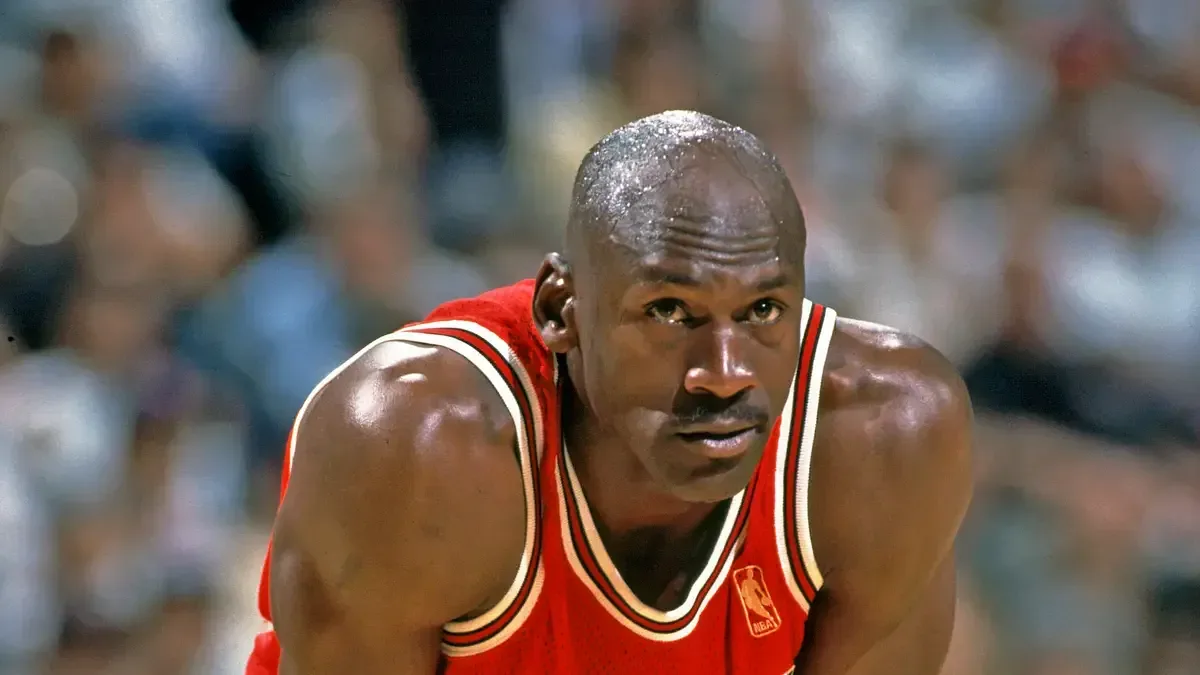
Michael Jordan’s 2007-08 Fleer Ultra Autographics Blue realized $495,591, the highest public sale for that card. The result illustrates the continued strength of autograph-driven Jordan material even outside the player’s rookie era. It also reinforces a broader point visible across the auction: collectible demand is not restricted to one generation of basketball stars or to rookie cards alone.
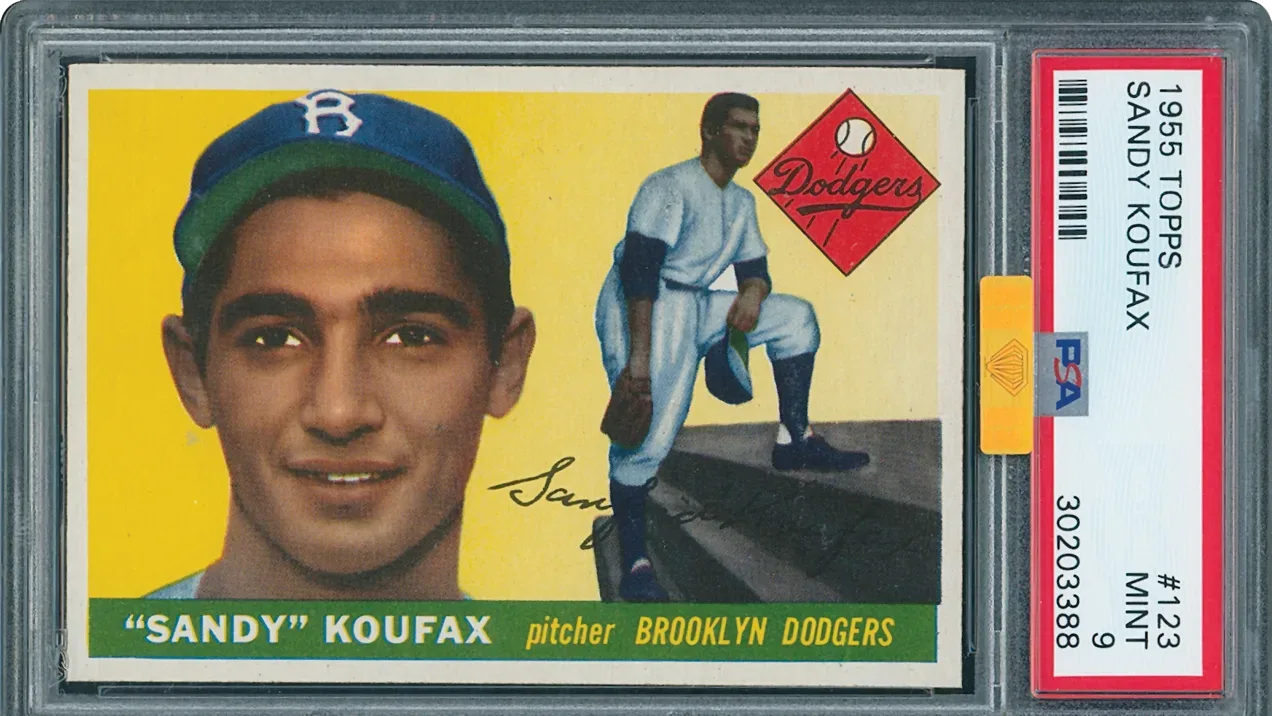
Tim Duncan’s 1997-98 Metal Universe Precious Metal Gems Green rookie card, graded BGS 8.5, sold for $396,500. Like PSA, BGS is a grading label collectors use when evaluating condition, but the numerical label belongs to that company’s scale and should be read as part of the full listing—not casually treated as interchangeable with a PSA label.
The Duncan sale also brings the auction’s emphasis on card-specific comparison into focus. It is a rookie card from a different product and era than the LeBron and Curry entries, with a different grading company and a different limited-card identity. Dollar totals can be compared at a glance; the cards themselves cannot be reduced to one shared checklist.
Kobe Bryant inscriptions bring added specificity
Two Kobe Bryant cards with signatures and inscriptions also posted major figures. A 2007-08 Upper Deck Exquisite Collection Inscriptions Kobe Bryant Black Mamba card sold for $184,220. A 2012-13 Panini National Treasures Notable Nicknames Autographs #6 featuring Bryant’s signed “Vino” inscription sold for $170,800.
An inscription is additional handwritten text associated with an autograph, such as a nickname. In these two cases, the descriptions specifically call out “Black Mamba” and “Vino.” For collectors, that wording makes the cards more individually identifiable than a signature-only example. It is also a reminder to read catalog descriptions closely: a player’s autograph, an inscribed autograph and an autographed card from a differently named insert can be distinct categories of item.
The Kobe results sit alongside the LeBron, Curry, Jordan and Duncan sales as evidence that the auction’s biggest basketball activity extended across multiple player eras and card formats. Still, each result should be treated on its own terms. A record tied to a particular grade or the highest public sale of a particular card is meaningful, but it is not a blanket valuation for every signed card from that player.
The slate extended beyond NBA cards
The sale also included a major Formula 1 result. A 2025 Topps Dynasty F1 Suit Nameplate Patch Auto Kimi Antonelli Rookie Patch Auto realized $256,200. Its title signals another multi-element premium-card format: rookie designation, suit nameplate patch and autograph.
The provided details do not establish the card’s edition size, grade or any record status, so those points should not be inferred from the price. What can be said is that the six-figure result placed an Antonelli rookie patch autograph among the event’s leading sales and alongside established basketball icons.
A newer basketball rookie also appeared on the record-breaker list. The 2025-26 Topps Chrome Update VJ Edgecombe Rookie Superfractor sold for $74,420. A Superfractor is a named premium parallel type; collectors should use the complete listing, including the player, set and release year, when distinguishing it from other Chrome Update versions.
How to read record-sale language responsibly
Several lots in the auction are described as records, but the language applies at different levels. The LeBron and Curry results are stated as records for their respective cards in the identified grade. Jordan’s sale is described as the highest public sale for that card. Duncan, Antonelli and Edgecombe are included among the record-breakers, while the other Curry autograph is described as a notable sale.
These categories matter because they answer different questions:
- Highest public sale for a card in a grade compares publicly documented sales of copies bearing that particular grade.
- Highest public sale for the card is broader in wording, addressing the card rather than only a stated grade tier.
- Notable sale identifies an important result without necessarily making a record claim.
For collectors, the practical takeaway is straightforward: preserve the complete description when noting a sale. “LeBron Exquisite rookie sold for $2.318 million” is accurate but incomplete without the card’s #78 identification, 13/23 serial number, PSA 6 card grade and PSA/DNA 10 autograph grade. Those details establish which version changed hands and why the result is being compared with a defined set of prior sales.
The same care applies to the Curry Gold Refractor, where the 03/50 numbering and grade-specific record language are integral, and to the Jordan result, where the claim concerns the 2007-08 Fleer Ultra Autographics Blue card specifically. Premium-card reporting is clearest when rarity, condition, autograph status and record scope travel together.
At the top of this auction, the $2.318 million LeBron result is the unmistakable centerpiece. But the wider sale tells a more detailed story: rare rookie cards, autographed parallels, inscribed cards and high-end patch formats all drew attention, with price records distributed across basketball and Formula 1. The numbers are large; the catalog-level details are what make them interpretable.