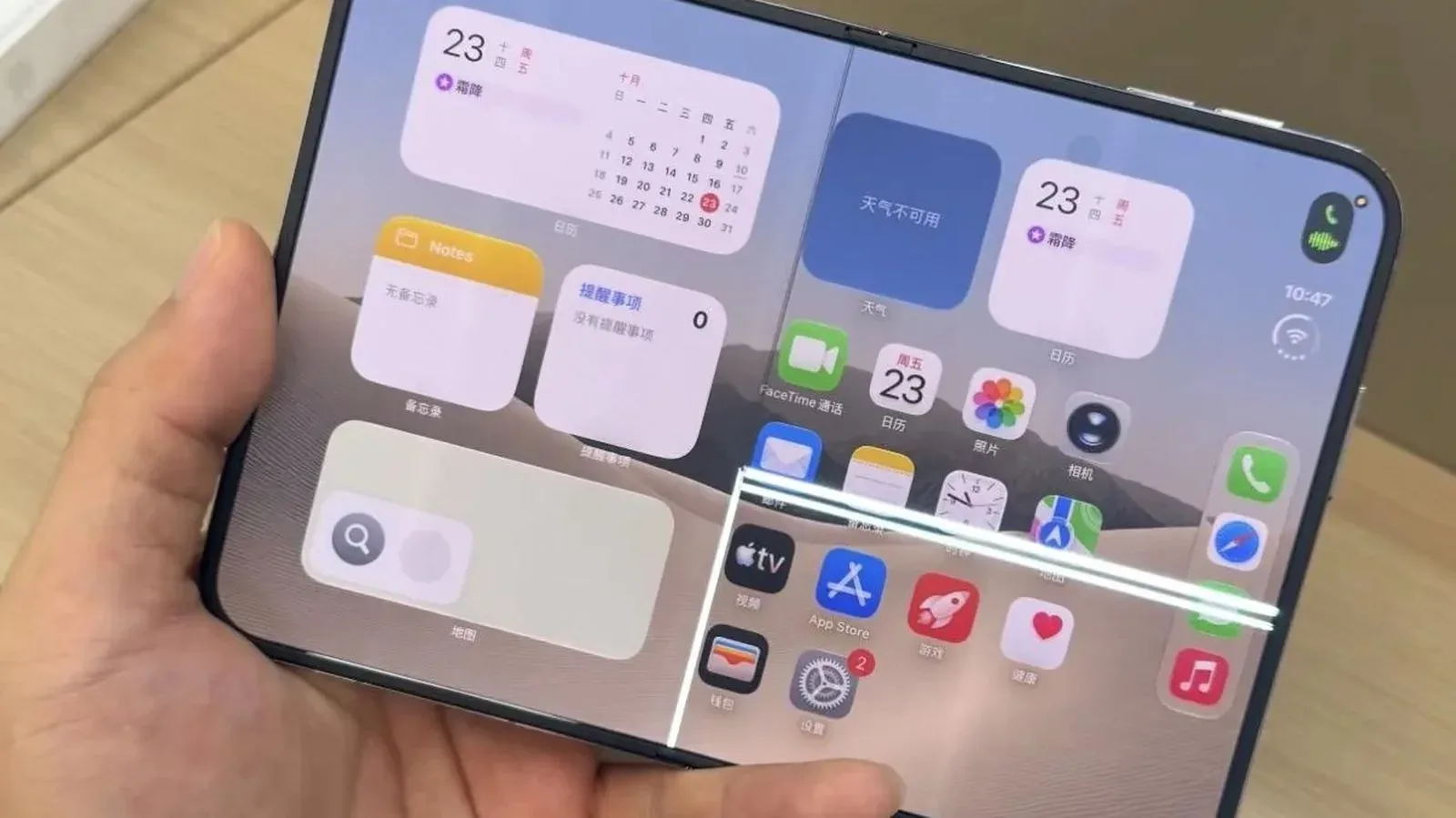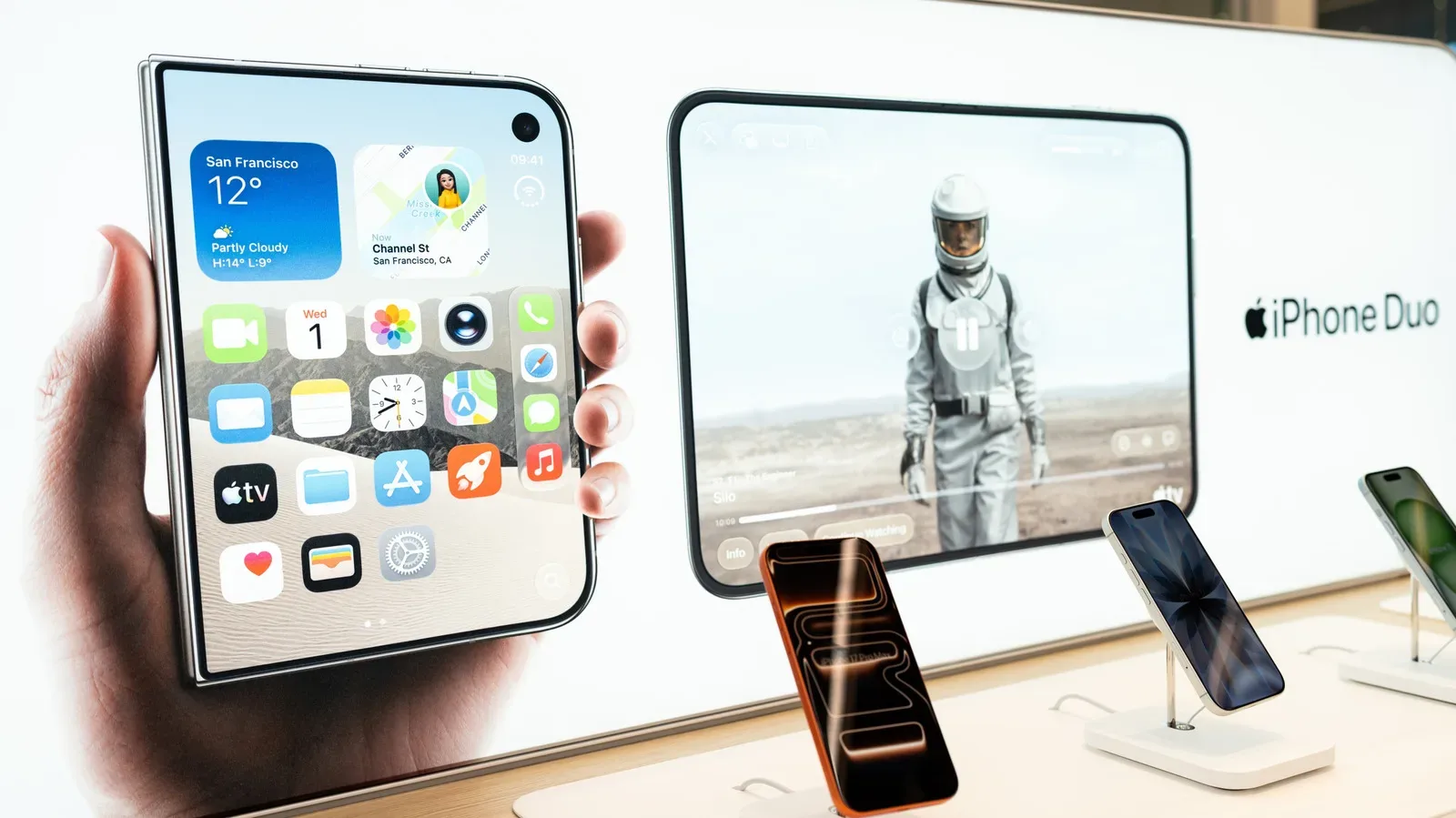
There are practical reasons to make a foldable phone. More screen space is the obvious one. New ways to simulate a grilled cheese sandwich by physically shutting a very expensive handset is not usually high on the list. Toastie, a $3 cooking game from Tom Szykulski and Cyprian Brytan, has nevertheless found a wonderfully silly use for the iPhone Duo’s signature hinge.
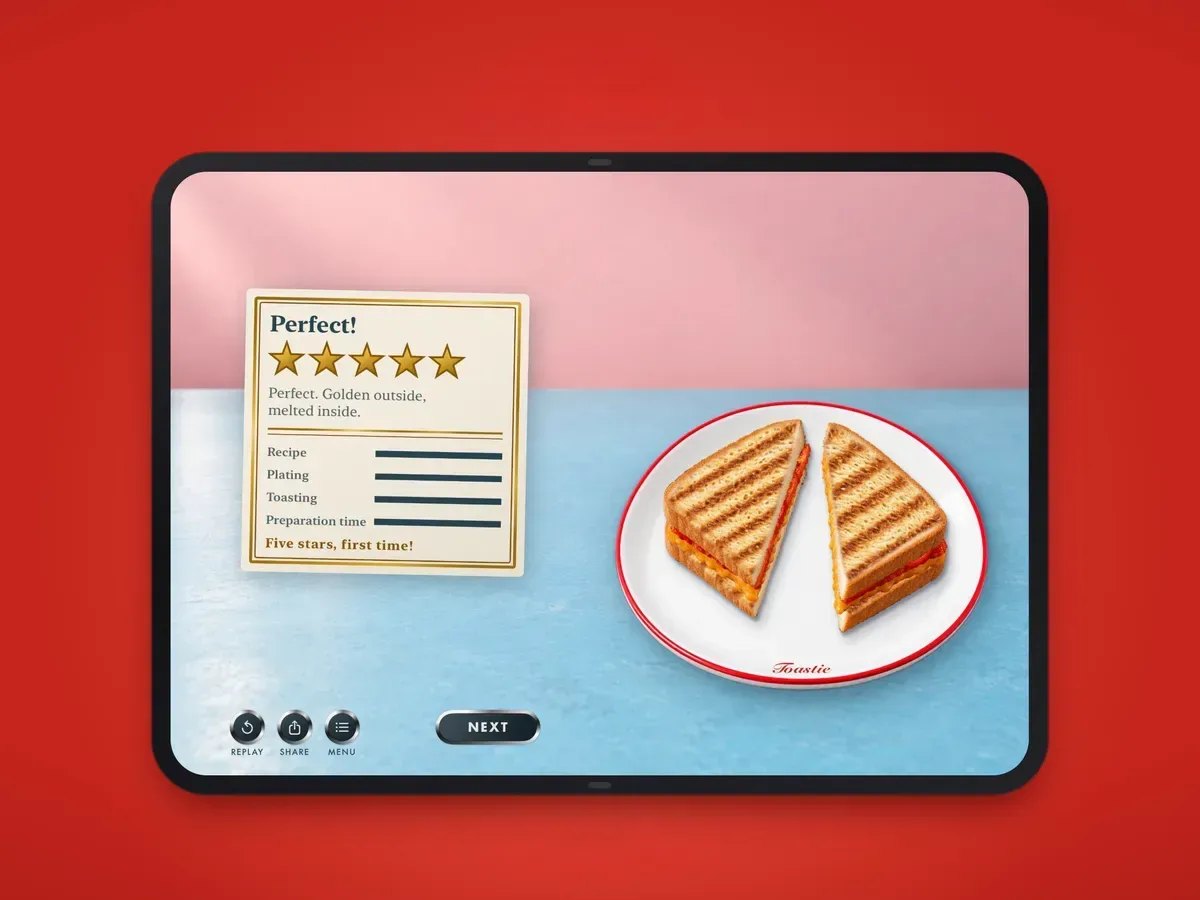
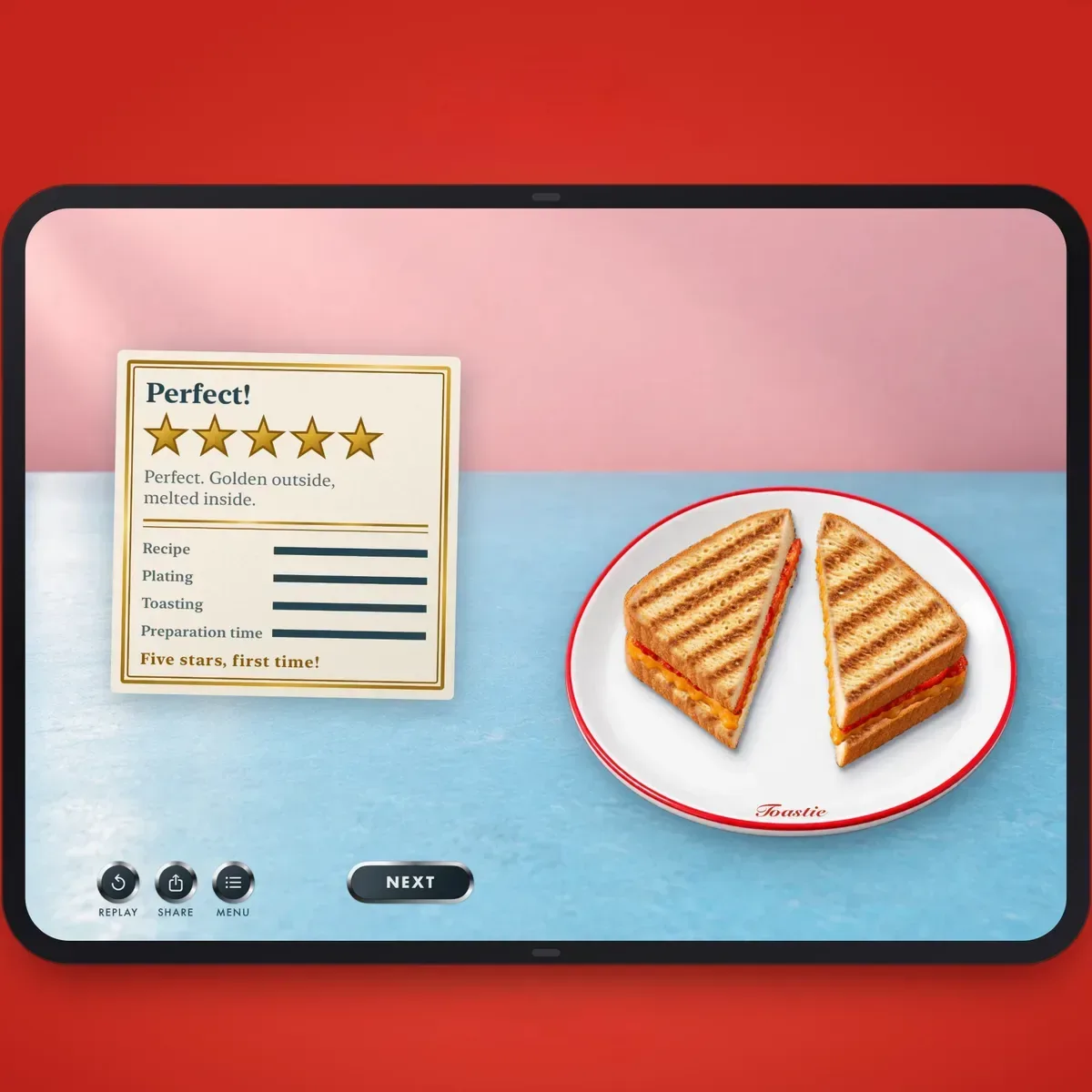
The premise is exactly as compact as its name suggests. Players select ingredients, build a sandwich, close an iPhone Duo, and let that physical closing action stand in for putting the creation into a toastie maker. Once the virtual sandwich is crisped, the game awards a star rating based on its recipe, plating, toasting and preparation time.
It is a joke with an actual game loop underneath it. Toastie is not simply an animation that plays when a phone folds; its ratings imply that ingredient selection, presentation, degree of browning and speed all matter. The result is an unusually literal piece of hardware-aware game design: the device’s most distinctive mechanical action is also the central cooking action.
A hinge as a cooking button
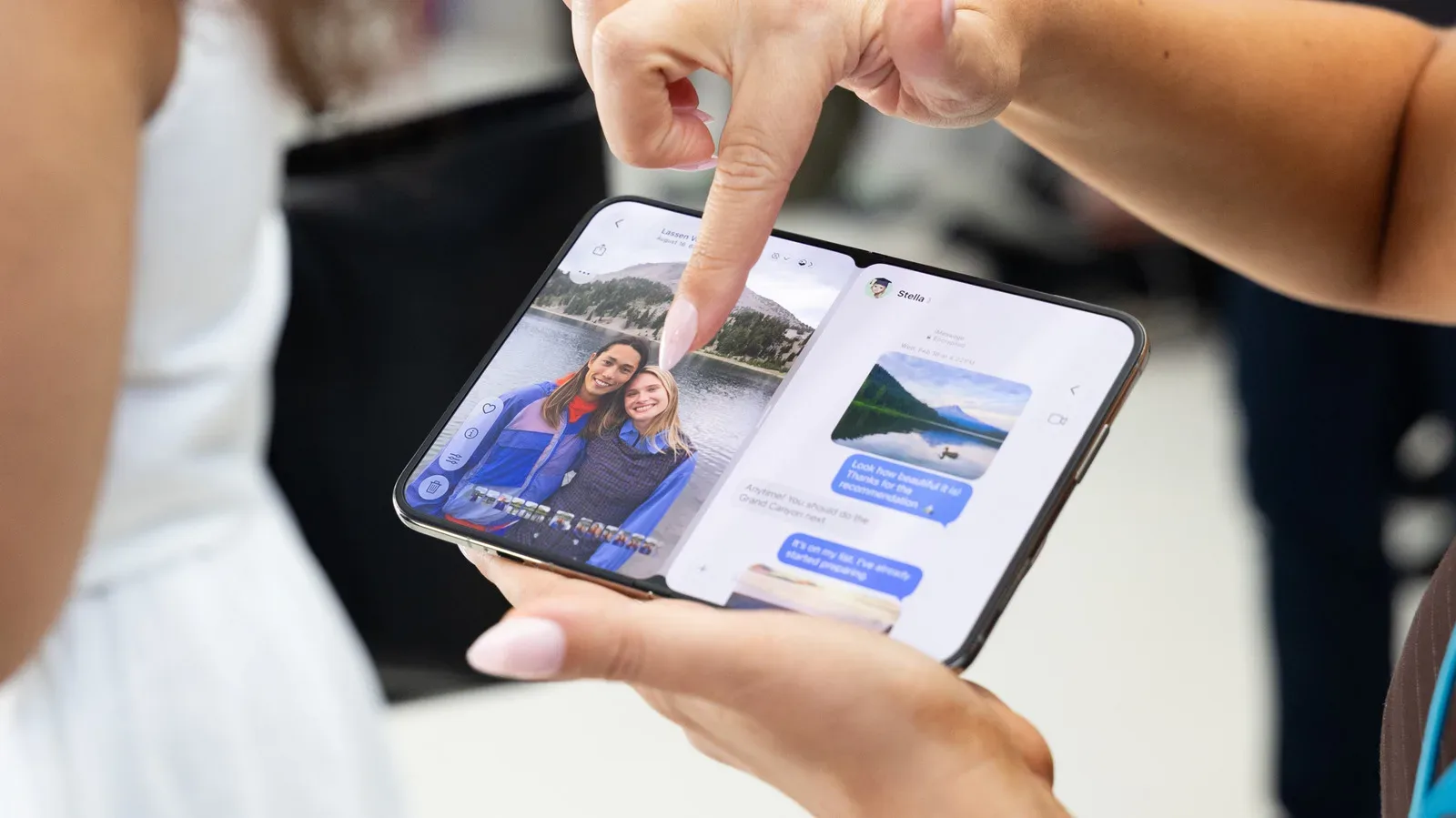
Foldable hardware gives developers an input that standard slab-style phones do not have. A conventional touchscreen can register taps, swipes, presses and motion, but it cannot normally be closed around an imaginary sandwich. Toastie turns that limitation into its whole gag. The iPhone Duo is treated less like a screen and more like a tiny digital press.
That matters because a fold is tactile. A player does not merely tap an on-screen toaster icon; they perform a small real-world gesture that matches the fiction of the game. It is deliberately absurd—particularly on a phone described as costing $2,000—but the absurdity is inseparable from the appeal. Closing premium technology to brown pretend bread is an easy joke to understand before a single ingredient is selected.
Toastie also illustrates a broader early question for foldable apps: what does an application do with the fold beyond accommodating it? Support alone can mean that an interface rearranges itself across different screen positions. Designing for the fold means giving that motion a meaningful role. Here, the hinge is not background hardware. It is the game’s most important piece of kitchen equipment.
What comes with Toastie
For its $3 price, Toastie includes 10 orders, three loaves and 14 fillings. Those numbers establish a focused, small-scale structure rather than an open-ended restaurant-management game. Orders give players specific targets; the bread and fillings provide the ingredients for meeting them; and the scoring system supplies the reason to care whether a sandwich is merely assembled or actually well executed.
- 10 orders: individual sandwich requests to prepare.
- 3 loaves: the available bread choices.
- 14 fillings: the ingredients placed between the bread.
- Four rating factors: recipe, plating, toasting and preparation time.
The four-part score is especially useful in clarifying what Toastie asks of players. Recipe concerns whether the sandwich matches the requested combination. Plating points to how the food is presented. Toasting is the cooking-result category, making the fold-to-toast trick more than decorative. Preparation time adds an efficiency component, asking players to work promptly as well as accurately.
Related coverage includes Toastie Turns the iPhone Duo's Fold Into a Tiny Grilled Cheese Game.
In other words, the game’s design appears to frame a grilled cheese as a short execution challenge: make the right thing, make it presentable, get the browning right, and do not waste time doing it. The premise may be gloriously unserious, but that set of criteria should be immediately familiar to anyone who has played a score-chasing cooking game.
The fold is optional, not a wall around the game
Toastie can also be played on iPhone and iPad. Those versions naturally cannot recreate the close-the-phone interaction, but their presence keeps the game from becoming a novelty that only works as a demonstration of one device feature. People who simply want to make virtual toasted sandwiches can still engage with the orders, ingredient choices and star ratings without owning foldable hardware.
That is a sensible distinction between the game’s core and its flourish. The core is preparing sandwiches against a set of scoring criteria. The flourish is being able to close the iPhone Duo as though it were a compact grill. On a Duo, the act of shutting the phone completes the joke; elsewhere, the cooking game remains accessible, even if it loses its most unusual physical punchline.
It also means the fold should be understood as an enhancement rather than a required competitive advantage. The supplied information does not establish whether platform versions score or control differently, so there is no reason to assume the Duo edition is mechanically superior. What is clear is that it has the bespoke gesture that Toastie was built to exploit.
A small early example of foldable-specific play
Apple revealed the iPhone Duo in September, and developers are already exploring how its foldable form can shape software. Toastie is an unusually clean example because it makes no attempt to disguise its reason for existing. The project looks at a folding phone, sees two halves that meet, and concludes that the obvious application is sandwich preparation.
That kind of clarity can matter in the earliest period of a new device format. Big productivity software may have more practical uses for added screen real estate, while games can more freely test whether a physical motion feels entertaining, funny, or memorable. Toastie’s answer is rooted in a familiar ritual: filling between bread, applying heat, and waiting for a browned result. The game translates that ritual into a few digital choices and one conspicuously expensive real-world action.
There is a practical edge to the silliness, too. A hinge is a moving hardware component, so owners may reasonably be cautious about treating a premium phone like a toy prop. Toastie’s concept is built around normal closing rather than any special action, but a foldable owner interested in safeguarding the device may want to consider the broader protection question outlined in this look at iPhone Duo repair considerations. The point is not that a sandwich game creates a special risk; it is that the joke lands precisely because the hardware involved is so valuable.
Built after more evenings than planned
Szykulski and Brytan have said Toastie took shape over more evenings than they originally intended. That detail suits a project whose apparent simplicity conceals a collection of distinct systems: orders, bread options, fillings, visual assembly, cooking, presentation, timing and scoring all need to cohere for a brief food game to feel satisfying.
It also reinforces why Toastie is more interesting than a one-line hardware joke. A closing animation could make people smile once. Ten orders and a multi-category star rating give players reasons to repeat the process, improve a result, and find out how carefully the tiny kitchen is judging them.
The game’s success as an idea will likely come down to whether those small decisions make the act of preparing each order engaging. But as a statement of intent, Toastie has already made its case. Foldable phones may be positioned around flexibility and larger displays; sometimes the most memorable use of flexibility is to close the thing and pretend it has made lunch.