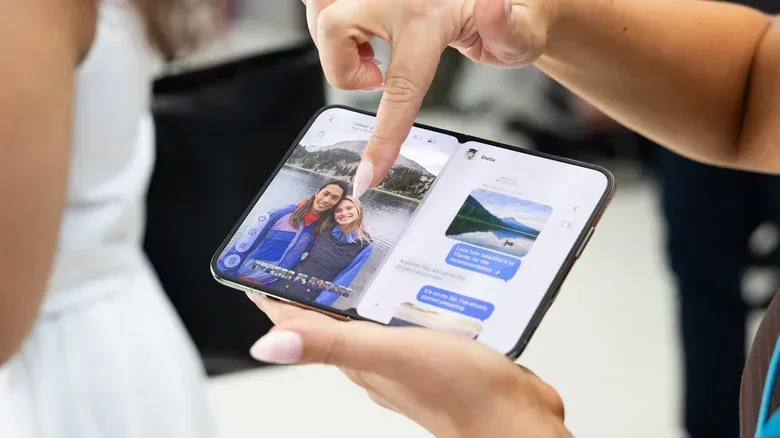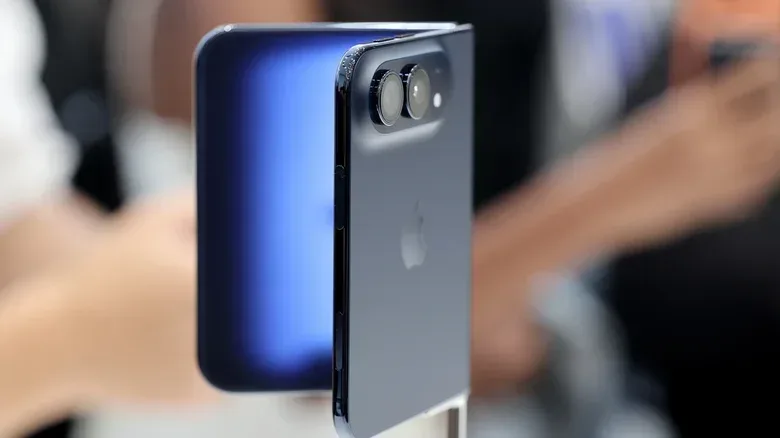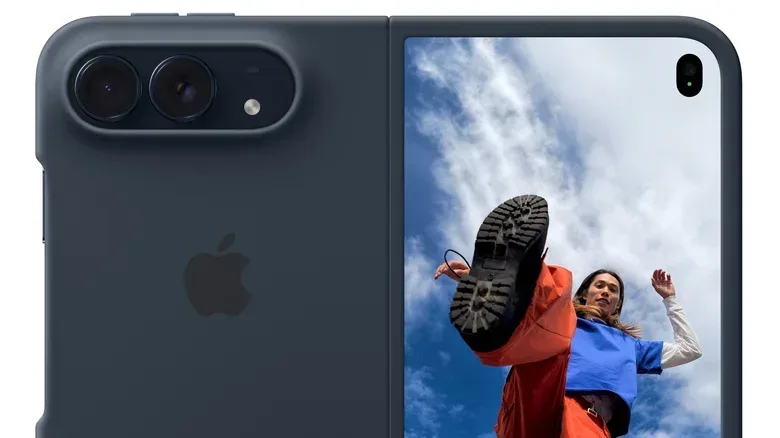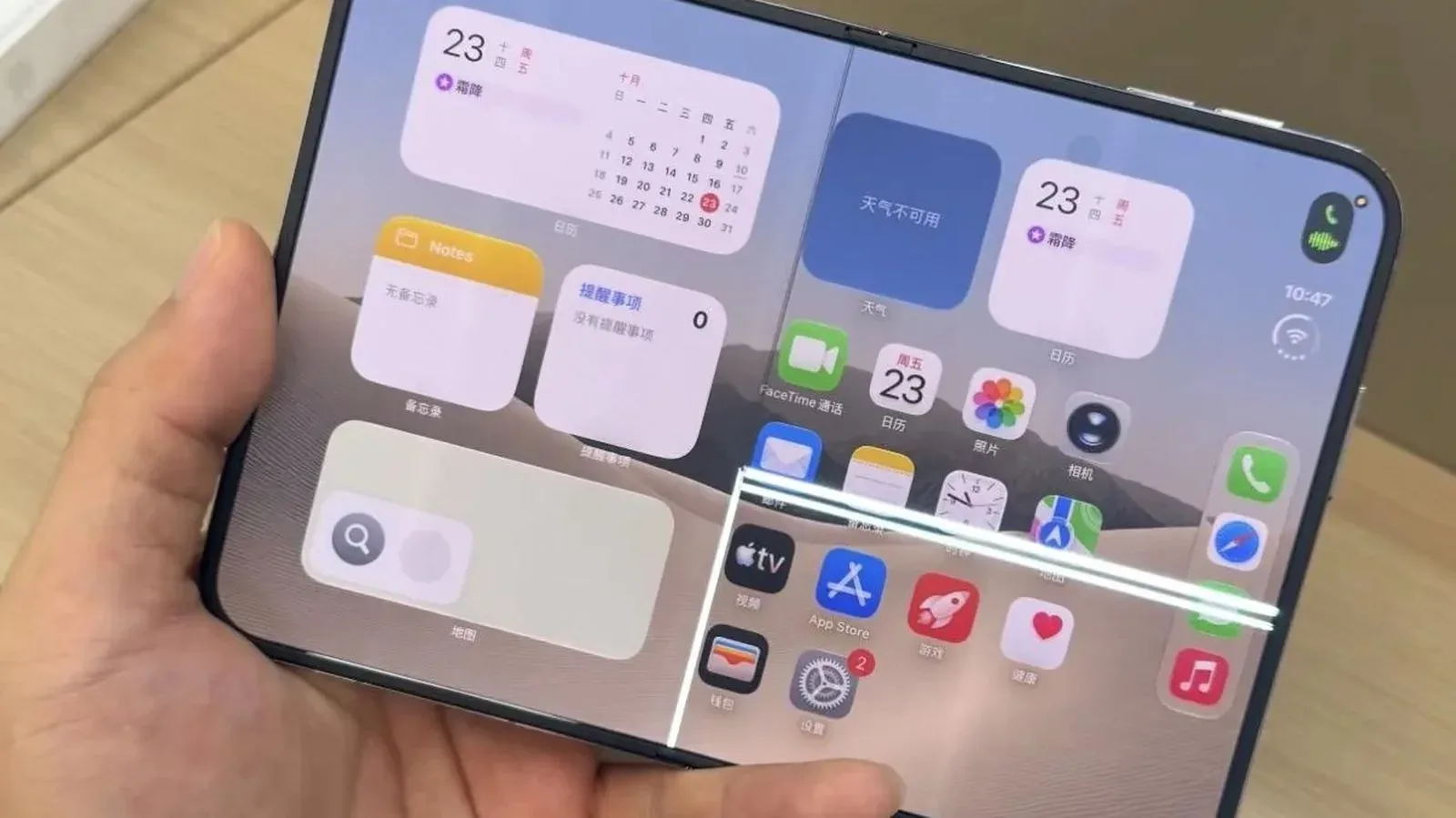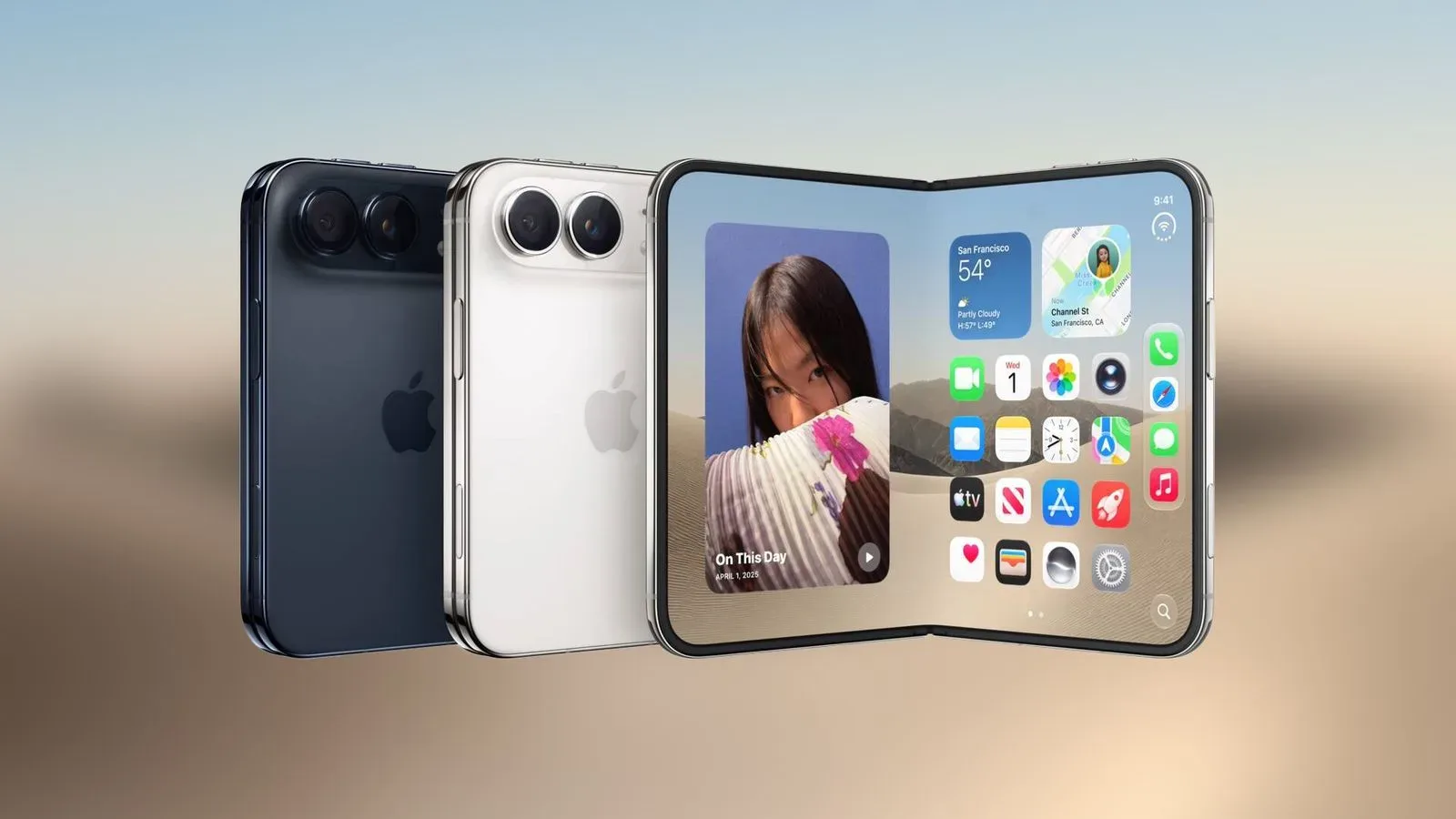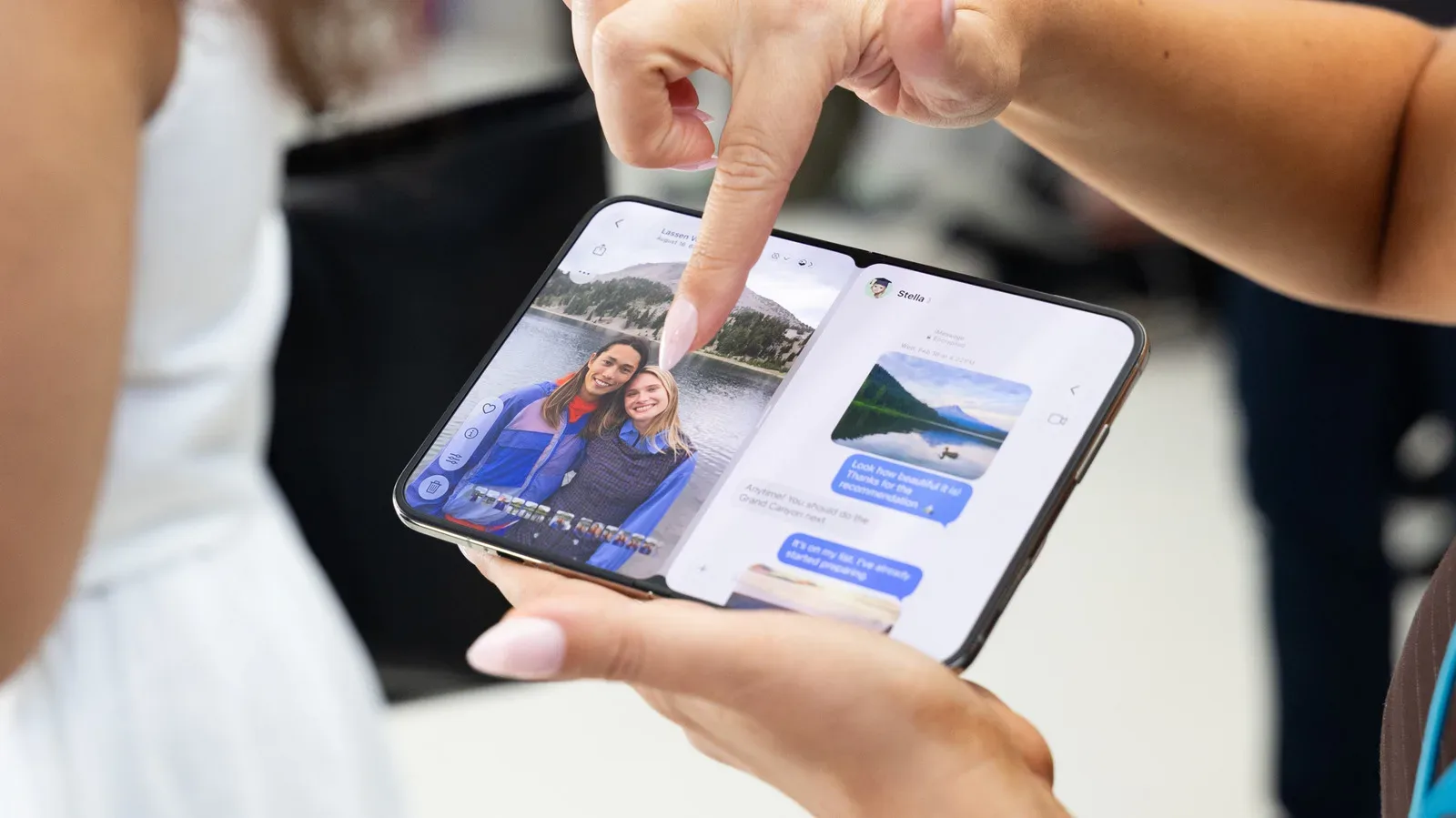
Apple’s iPhone Duo asks buyers to make an unusually large upfront commitment: $2,000 for a foldable handset designed around a 5.4-inch outer display and a 7.6-inch nano-textured inner screen. That price can make sense for someone who sees the device as a phone that can also fill some of the roles of a small tablet—reading, watching video, and handling more work away from a laptop.
But the purchase decision does not end at the checkout screen. The more important calculation may be what happens after an accident. Apple’s listed out-of-warranty repair prices put the iPhone Duo in a category where coverage is not merely a nice extra. For many buyers, AppleCare+ or AppleCare One should be treated as part of the device’s real cost.
That is not because every Duo will break. A case, careful handling, and the phone’s protective materials can all reduce everyday risk. The issue is that folding hardware introduces an expensive component that a case cannot fully shield: the flexible inner display. If a buyer would find a four-figure repair bill impossible to accept, skipping protection coverage is a gamble worth recognizing before buying the phone.
The repair figures change the value proposition
Apple lists a $379 out-of-warranty repair cost for the Duo’s 5.4-inch outer display. That is already a substantial bill, but it is eclipsed by the price attached to the 7.6-inch internal panel: $999. The inside screen is the feature that gives the Duo its tablet-like appeal, yet it is also the component whose repair cost most strongly reshapes the ownership math.
Other listed repair charges can accumulate as well. Back-glass repair starts at $199. Battery service is $229, as is repair of the rear cameras. Apple also lists $1,499 for “other damage.” The exact situations covered by that broad label are not detailed here, but the category could plausibly matter most on a foldable, where the hinge, bending-related damage, and internal components are especially consequential.
These numbers do not mean a buyer should assume disaster is inevitable. They do mean the iPhone Duo is not a device where the usual “I’ll just pay for a repair if something happens” attitude is necessarily inexpensive. A single repair to the inner display approaches half of the phone’s original purchase price. The “other damage” price comes far closer still.
Why folding screens require a different risk calculation
A conventional phone has a front display, a back panel, cameras, and internal electronics. The Duo has those familiar vulnerable areas, but its defining display must also bend. That flexibility is precisely why the interior cannot use Ceramic Shield protection in the same way as the external screen.
Ceramic Shield is Apple’s toughened glass technology. On the Duo, Ceramic Shield 2 covers the outside display, while Ceramic Shield glass is also used on the back. The device also has a titanium frame and hinge cover. Those are meaningful protective measures for the phone’s exterior, particularly when paired with a case that keeps surfaces slightly away from the ground during a drop.
Related coverage includes iPhone Duo Buyers Should Budget for Protection, Not Just the $2,000 Phone.
The inner display has a different constraint. A rigid glass layer suitable for a typical phone screen cannot simply be applied to a panel built to fold. Its nano-textured surface is central to the Duo’s larger-screen experience, but long-term durability against fingernails, debris, and an Apple Pencil remains an open question. Scratches are already a known concern on foldable devices generally, and there is no supplied evidence that the Duo eliminates that broader trade-off.
The practical takeaway is simple: exterior protection can reduce some hazards, but it cannot turn an open foldable into a conventional slab phone. A fall while the device is unfolded presents a different kind of exposure than a fall with the phone closed in a protective shell.
What AppleCare coverage costs beside a repair
AppleCare+ for the iPhone Duo costs $20 a month or $200 annually. AppleCare One is $20 per month for an individual plan and $50 per month for a family plan. Over two years, a buyer starting from scratch is looking at $400 through annual AppleCare+ payments or $480 through monthly payments.
There is an important exception for some AppleCare One customers. Someone who already has an AppleCare One family plan, or an individual plan attached to an older iPhone being replaced, can have the new Duo covered without an added charge. That makes the protection question substantially easier for those customers, although the plan’s ongoing monthly cost still belongs in their wider household budget.
Coverage does not make repairs free. Reduced AppleCare service fees range from $19 for cover-layer fixes to $99 for “other” damage. Still, the contrast with the $999 listed price for an out-of-warranty inner-display repair is stark. Even accounting for the plan cost and a service fee, a covered major repair can be materially less painful than paying retail repair pricing.
AppleCare+ also includes theft and loss coverage, subject to a $149 fee. That is a separate risk from accidental damage, and one a case cannot address at all. People who travel often, regularly use transit, or know they are prone to putting a phone down and forgetting it should consider that element separately from screen protection.
A case is useful, but it solves a narrower problem
Buying a case is still sensible. Cases—including Apple’s—can create a raised lip around displays and the camera bump. In a drop, that added clearance can allow the case to take some of the impact before a screen or camera assembly contacts the surface. For a closed Duo, that may be particularly valuable for the outer display and rear camera area.
But a case is risk reduction, not comprehensive financial protection. It cannot fully cover a flexible interior screen while the device is open, and it cannot settle questions about hinge durability or the internal effects of bending damage. It also offers no remedy for loss or theft.
That distinction matters because it is tempting to frame the choice as “case versus coverage.” It is better understood as a layered decision. A case addresses many common drops and scuffs. AppleCare addresses the repair bill after qualifying accidents and extends to theft and loss with the stated fee. Neither makes the Duo invulnerable; together, they address different parts of the risk.
How prospective buyers can decide before purchasing
The sensible approach is to budget for the iPhone Duo as an ownership package rather than as a $2,000 standalone phone. Start with the handset price, then determine whether a case and coverage fit comfortably into the same plan. A buyer who only has room for the base device should take the repair figures seriously before stretching further.
- Consider how often the Duo will be open outside the home. Heavy use on commutes, while traveling, or in busy public places increases opportunities for drops, bumps, and loss.
- Separate cosmetic worry from financial exposure. A case may be sufficient for someone mostly concerned about ordinary exterior scuffs. It does not remove the financial risk attached to the flexible inside panel or broader accidental damage.
- Check existing AppleCare One status. Buyers already covered by an eligible individual or family AppleCare One arrangement may not need to add a new charge for the Duo.
- Plan for service fees, not just subscription fees. Protection lowers the potential cost of a claim; it does not eliminate it.
- Be honest about loss risk. Theft and loss coverage can matter as much as accident coverage for people who routinely carry an expensive device through airports, hotels, offices, and public spaces.
For readers thinking about more general device upkeep, the same principle applies beyond foldables: expensive mobile hardware is easier to own when its likely service costs are understood in advance. That applies to battery habits as well; see our look at how heat and frequent high-power charging can affect battery wear for a related example of why long-term hardware care deserves a place in purchase planning.
The bottom line: protection is part of the Duo’s real price
The iPhone Duo’s design offers a compelling premise: a compact phone outside, a substantially larger canvas inside. Yet that dual-screen design also brings dual-screen exposure, with an especially costly inner-display repair listed at $999 and a $1,499 category for other damage.
AppleCare+ and AppleCare One are recurring expenses, and buyers should not pretend otherwise. But at $20 per month for an individual plan, or $200 annually for AppleCare+, the coverage costs less over two years than one listed out-of-warranty repair to the internal screen. Reduced service fees of $19 to $99 add another layer of potential savings when damage occurs.
A good case remains a practical purchase, especially for protecting the exterior glass, cameras, and frame during common drops. It is simply not a replacement for coverage on a device whose defining display has to remain flexible. Anyone who cannot comfortably budget for both the Duo and a plan for its worst plausible mishap may be better served by waiting than by hoping the $999 screen repair never becomes relevant.