Titanium Court will expand beyond its Steam release on October 29, when it reaches Nintendo Switch, Nintendo Switch 2, PlayStation 5, iOS and Android. The multi-platform launch gives a far wider audience access to a game with an unusually crowded genre label: it is a run-based roguelite, a strategic tile matcher, an RPG and a visual-novel-style story all at once.
That combination may sound like a cabinet full of game ideas tipping over, but the available details point to a clear core loop. Each run is called a “war,” and each war is divided into several battles. Players first manipulate a board of tiles, then defend their own base against the consequences of the battlefield they have created. It is a structure that makes the humble match-three format feel less like a brief puzzle break and more like the planning stage of a military campaign.
The game originally debuted on Steam in April. It also won the Seumas McNally Grand Prize at the Independent Games Festival Awards, a major recognition for an independent game. Titanium Court comes from developer AP Thomson, who was also part of the team behind Consume Me, another Seumas McNally Grand Prize winner in 2025.
A match-three board with tactical consequences
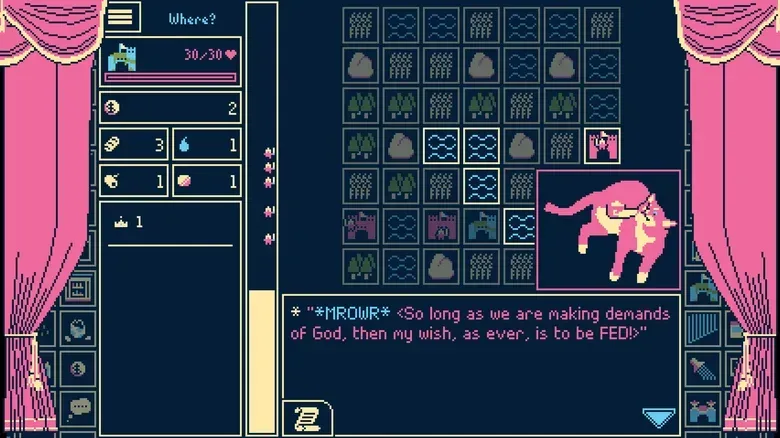
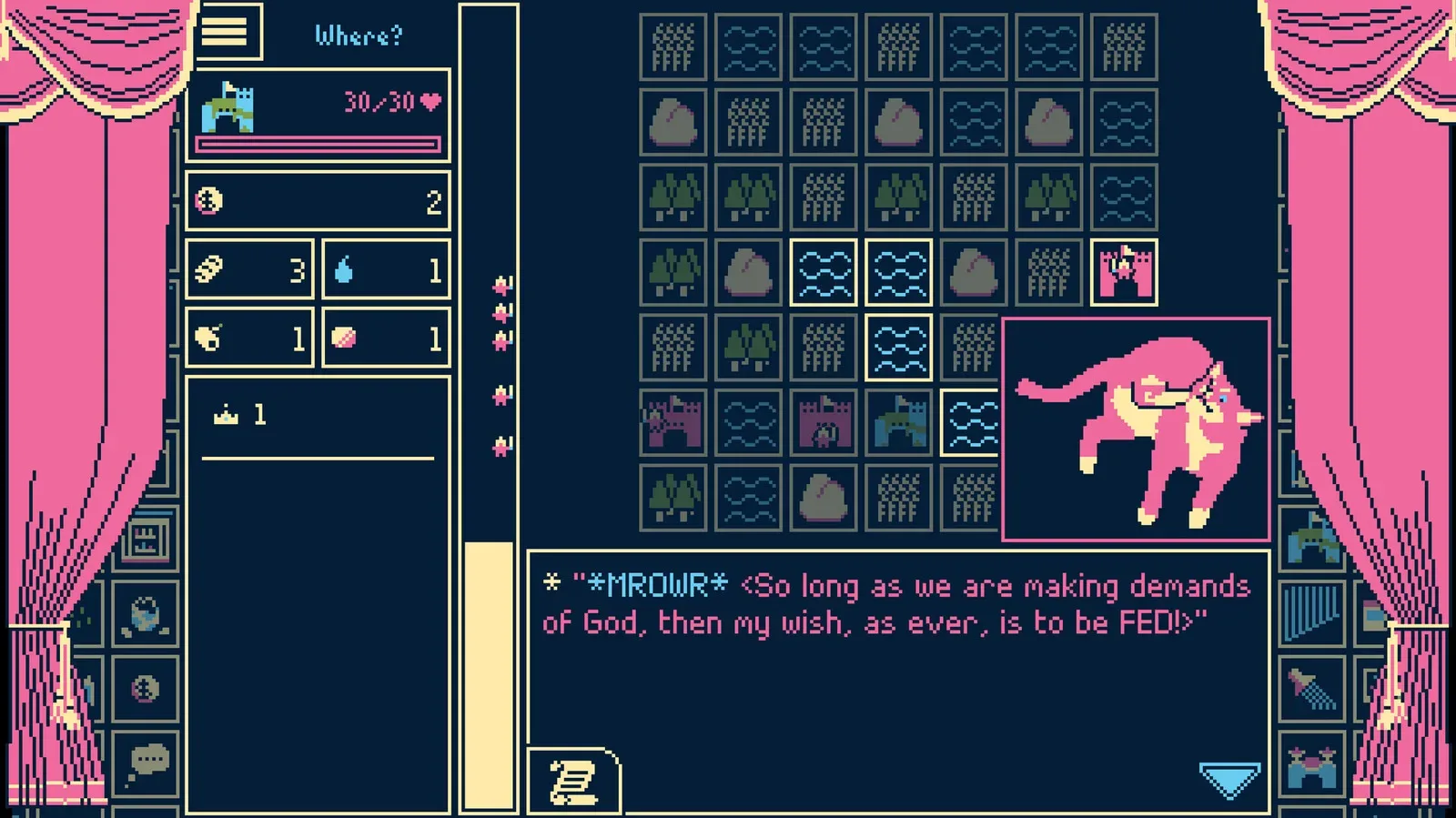
Titanium Court’s battles begin with a grid populated by tiles representing features and targets including wheat, rivers, forests and enemy castles. As in a traditional match-three game, lining up three matching tiles produces an effect. The important distinction is that the effect depends on the tile: matches can generate useful resources or remove enemy strongholds from the board.
But the player is not simply chasing the biggest chain reaction or the highest score. Every move also helps define the conditions of the next battle phase. Once the matching portion ends, enemies try to attack the player’s base, which is itself represented as a tile on the map. Resources gathered during the puzzle phase can be spent before that assault begins, including on soldiers and other workers intended to reinforce the player’s position.
That two-part rhythm explains why Titanium Court is better described as a strategy game with a match-three interface than as a conventional puzzle game with a few combat flourishes. Tile placement is both resource management and battlefield preparation. Removing an enemy castle may provide an immediate advantage, while creating access to wheat or other materials may matter because it enables recruitment and defense before the enemy turn arrives.
What “run-based” and “roguelite” mean here
A run-based game is organized around repeatable attempts rather than one uninterrupted campaign. In Titanium Court, a complete attempt is a war made up of multiple battles. A roguelite generally uses that repeated-run structure while mixing in systems that change how each attempt unfolds, often alongside progression or story that continues outside an individual run.
The supplied details make it clear that Titanium Court has an inter-run layer, but they do not spell out every permanent progression system or rule governing it. What is known is that the queen at the center of the story learns about a deeply odd kingdom between wars, and that understanding the game’s constraints is part of its larger design.
Related coverage includes Titanium Court Expands to Switch, PS5 and Mobile on October 29.
That last point is significant. Many run-based games invite players to find a wildly powerful combination and then repeat it until the numbers buckle. Titanium Court instead places limits on actions such as store trading and can prevent a strategy that appears, at first, to be the obvious winning line. Those restrictions are not merely obstacles around the edges of the game; discovering what the court permits, forbids or interrupts appears to be a central part of learning how it works.
A kingdom where the rules are part of the mystery
Titanium Court’s strategic limits connect to its fiction. The player character is a newly installed queen who begins the game with little understanding of how she arrived in this strange realm. Her goal is to get home, but the court she must navigate does not operate on familiar logic.
Its setting deliberately collides fantasy and modern reference points. Dragons share the world with road signs. Faeries do not believe that cars are real. The game can gesture toward baseball, Jenga and other pop-culture touchstones while still placing the queen in a kingdom governed by battles, castles and supernatural beings.
This is where the visual-novel side of Titanium Court matters. A visual novel typically emphasizes written scenes, characters and narrative choices or revelations over constant action. Titanium Court does not abandon its tactical board when a battle ends; rather, it uses the space between wars to develop the queen’s perspective and the world’s increasingly peculiar internal rules. The result is a game where the story’s uncertainty and the player’s mechanical uncertainty appear to reinforce each other.
For players, that setup may be especially appealing if they prefer games that resist being reduced to a single optimal build. The apparent promise is not total freedom to exploit a system, but a challenge built around adapting to the system’s limits. A failed plan can therefore be useful information: it may reveal an unspoken condition, a resource bottleneck or a restriction that will shape the next war.
Why the new platforms fit the format
The October 29 release is broad enough to cover console and phone play without treating mobile as a separate, stripped-down afterthought. Nintendo Switch, Switch 2, PlayStation 5, Android and iOS are all named for the launch, alongside the existing Steam version.
The format could translate naturally to portable devices, at least in principle. A battle’s first phase is based around moving tiles on a grid, an interaction that is easy to understand visually and potentially well suited to touch controls. The defensive follow-up creates a natural pause point: make moves, collect resources, prepare defenses, then see whether the plan holds. That does not confirm any particular control scheme or platform-specific feature, but it does make the game’s basic structure a sensible match for both handheld and mobile sessions.
Switch and Switch 2 players will have the option of taking the court’s compact board-game-like encounters away from a television, while iOS and Android bring the game to devices that are already in people’s pockets. PS5 supplies a living-room option for anyone who prefers the game on a larger display. Steam remains the game’s original home.
Players looking across this month’s PlayStation releases can also see the broader subscription-library picture in our look at the October PlayStation Plus Game Catalog additions. Titanium Court’s newly announced PS5 arrival is a separate release, and no subscription availability has been specified here.
What has been confirmed, and what has not
The concrete details are straightforward: Titanium Court arrives on October 29 for Switch, Switch 2, PS5, Android and iOS. Its Steam launch took place in April. The game uses wars as its run structure, with battles that alternate between a tile-matching planning phase and a defense phase. It stars a queen trying to understand an unfamiliar kingdom and find her way home.
Several practical details remain unconfirmed in the information available. There is no stated price, no announced pre-order program, no confirmation of cross-save or cross-progression, and no breakdown of differences between Switch and Switch 2. There is also no platform-by-platform performance information, controller support detail for mobile, or confirmed schedule for future updates. Prospective players should avoid assuming that the mobile and console editions will offer features beyond the shared October 29 launch.
Still, Titanium Court’s appeal is unusually easy to identify from the systems that have been described. Its board is not just a board; it is a shifting supply line and a map of looming danger. Its runs are not simply repetitions; they are part of a queen’s effort to interpret a court that seems determined to remain bizarre. And its restrictions are not a reason to stop experimenting, but an invitation to understand what kind of kingdom this is.
That makes the October 29 expansion notable for more than the number of platforms involved. It gives console and mobile players access to a strategy game willing to make a familiar puzzle language do unfamiliar work: matching three tiles may be the beginning of a plan, but it is never the whole war.