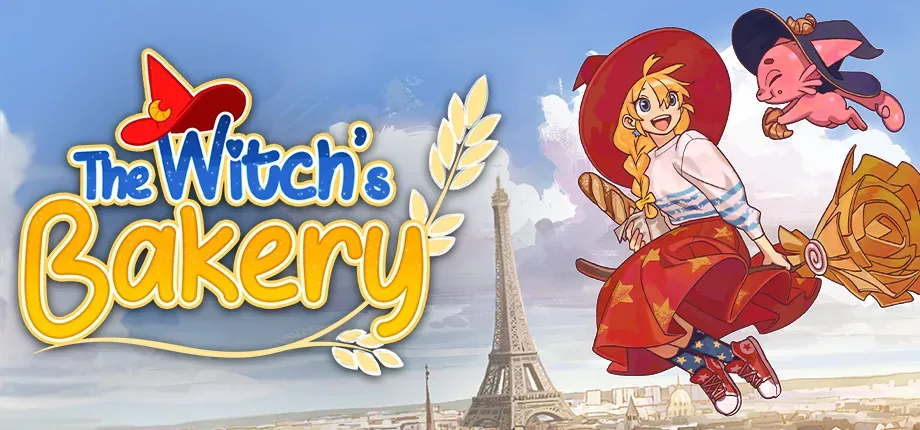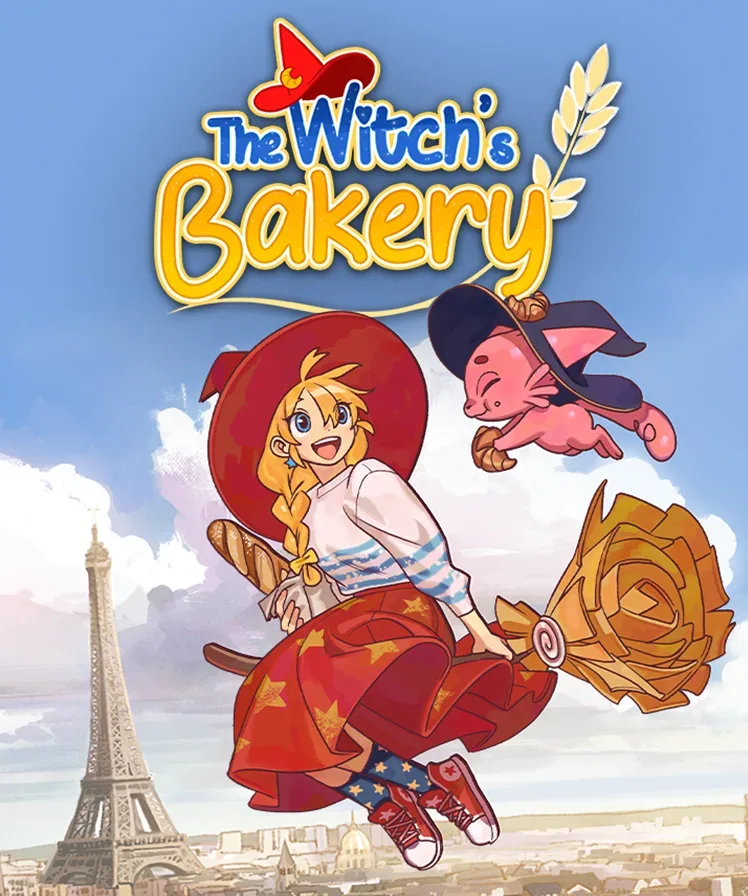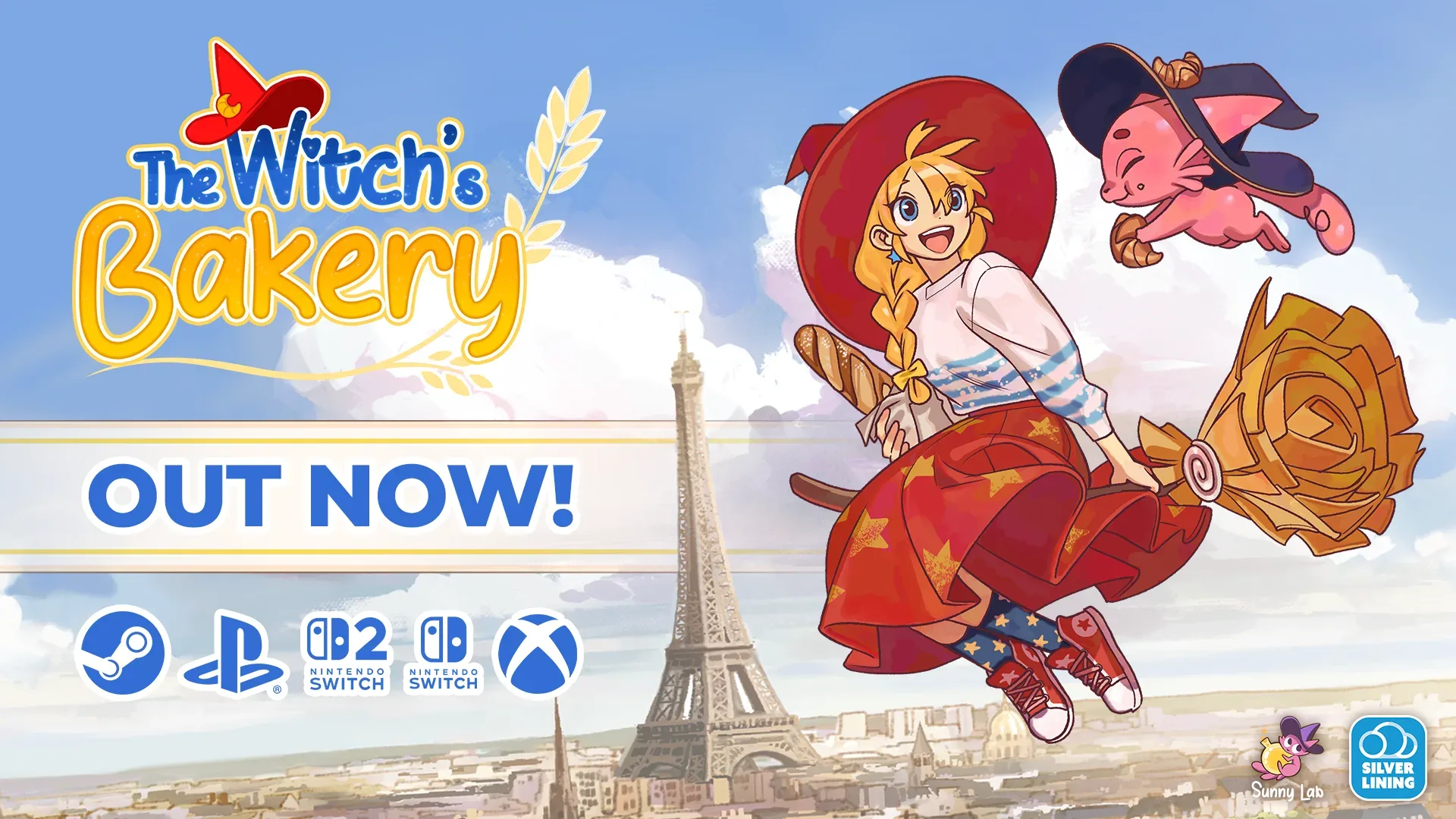
The Witch’s Bakery, the bakery-management and narrative adventure from developer Sunny Lab and publisher Silver Lining Interactive, is now available on PC via Steam, PlayStation 5, Xbox Series X|S, Nintendo Switch and Nintendo Switch 2.
The game puts players in the role of Lunne, a baker working amid a magical version of Paris. Its central premise joins the practical rhythm of serving customers with a story about helping people confront and recover from difficult emotions. Lunne is joined by Orio, a cat-like companion with the ability to morph.
That combination gives The Witch’s Bakery a deliberately broad structure: part service game, part character-focused exploration, and part fantasy maze adventure. Rather than keeping every activity inside the bakery, the game divides its play into daytime, evening and nighttime phases. Each period has a distinct purpose, giving the player’s work and relationships separate spaces within the wider routine.
A day in Lunne’s bakery
During the daytime phase, Lunne serves customers in the bakery. This is the most directly business-facing portion of the loop: customers arrive, and the player’s focus is on bakery service.
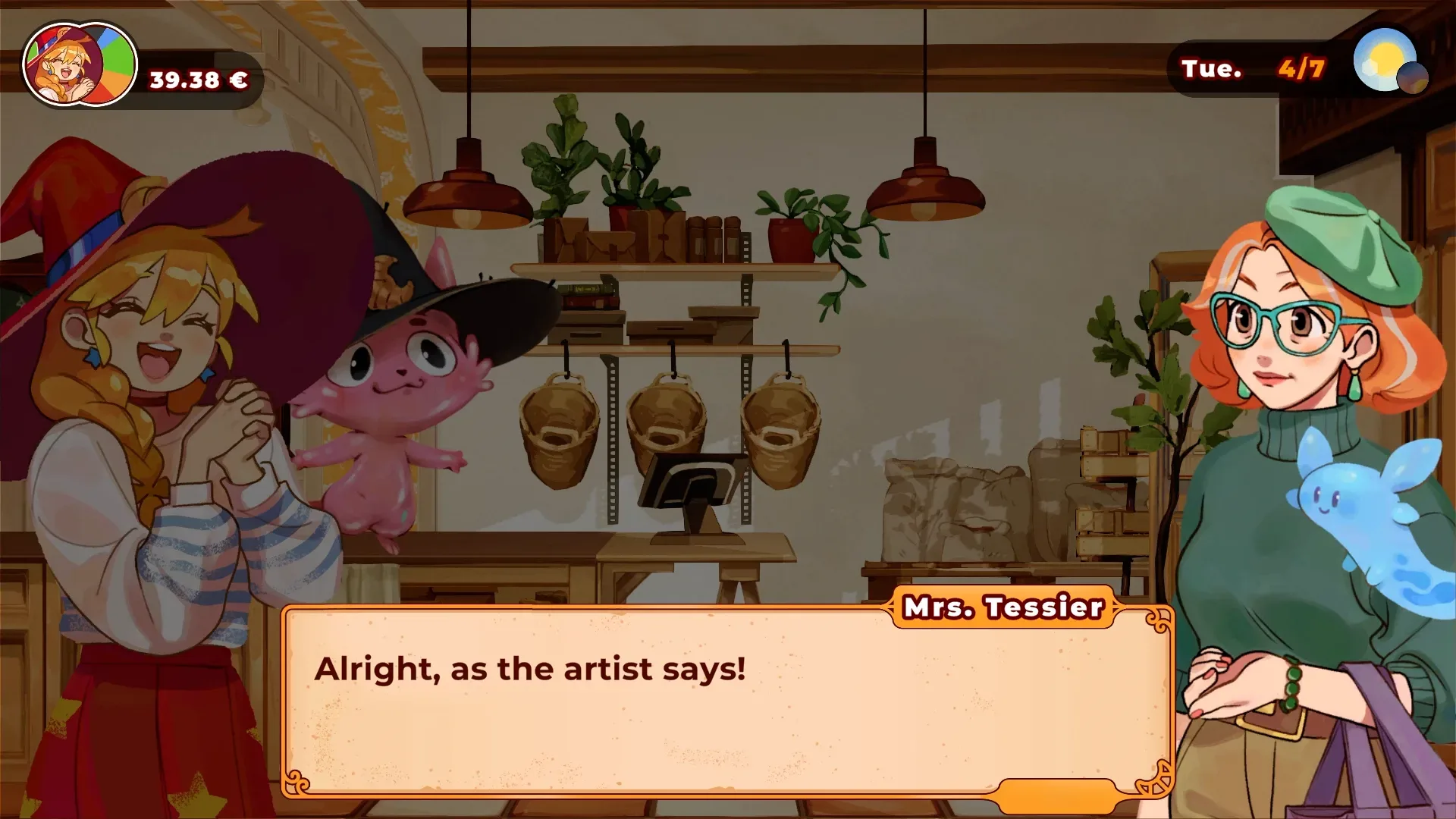
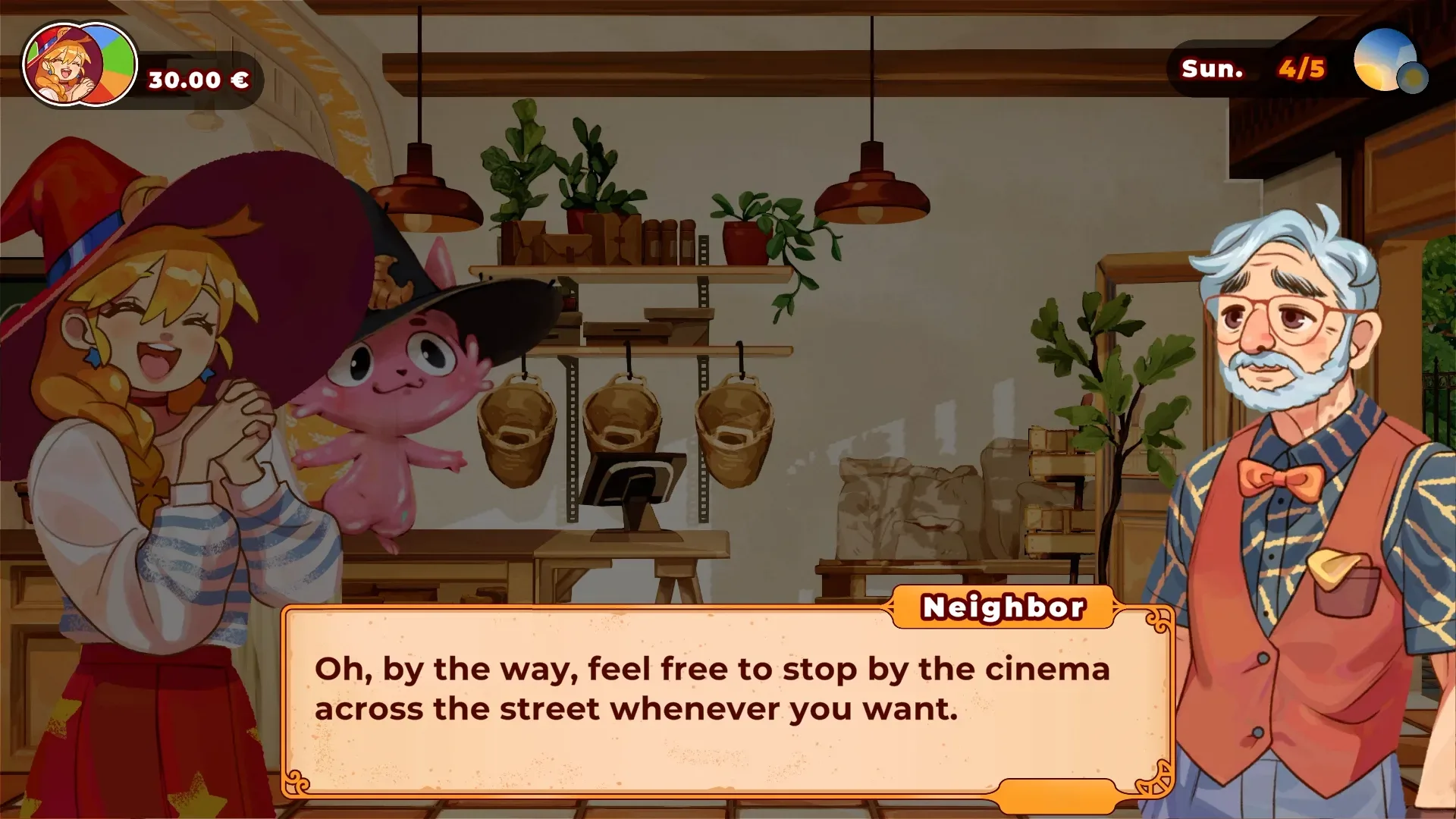
In the evening, the emphasis shifts outward. Lunne can explore Paris, meet its residents and develop relationships with them. That is where the game’s cozy shopkeeping setup connects to its emotional narrative. The people encountered around the city are not merely background for a bakery; their feelings and personal situations are tied to the magical work Lunne performs.
Nighttime sends Lunne back to the atelier, where she studies recipes and improves her baking skills. An atelier is traditionally a workshop or studio, and here it functions as a dedicated space for learning and development rather than customer service. Structuring recipe study and baking improvement as a separate nightly activity makes progression part of the routine instead of a one-off menu task.
- Daytime: serve bakery customers.
- Evening: explore Paris, meet characters and build relationships.
- Night: study recipes and develop baking skills in the atelier.
In practical terms, this three-part cycle means prospective players should expect the bakery to be a major component, but not the entirety of the game. Its stated design gives equal narrative importance to spending time in the city and working with recipes. Players drawn to a game that moves between a workplace routine and a cast of characters may find the structure especially appealing.
Heart Palaces turn emotions into magical mazes
The most fantastical element of The Witch’s Bakery is Lunne’s ability to enter Heart Palaces. These are magical realms in which emotions take a physical form. Lunne navigates their mazes to guide those emotions back to a character’s heart, helping that person heal.
Related coverage includes The Witch’s Bakery Opens on PC and Consoles.
The term is important because it describes more than a standard dungeon. A maze, in its conventional gameplay sense, is a navigational challenge with paths to trace and an objective to reach. Heart Palaces also carry the game’s narrative premise: they are spaces that literalize an emotional problem. Lunne’s goal is not described as defeating enemies or collecting loot, but restoring emotions to the heart.
That approach places the fantasy mechanics in service of the story’s compassionate angle. The game frames emotional healing as something players actively take part in through exploration. Its bakery service, relationship-building and magical realm navigation are therefore three different routes into the same overall theme: caring for the people who visit or live around Lunne’s bakery.
Orio’s morphing ability is another notable part of the game’s setup. The available details identify Orio as Lunne’s cat-like partner and establish that the companion can change form, although further specifics about how those transformations affect exploration or Heart Palaces have not been detailed.
Hand-drawn presentation and a Cécile Corbel opening song
The Witch’s Bakery uses a hand-drawn visual style, fitting its storybook-like blend of baked goods, magical powers and Parisian wandering. The opening song comes from composer Cécile Corbel, whose credited work includes The Secret World of Arrietty.
Music and art direction can do considerable work in a game built around a repeating daily routine. The day-to-night structure moves the player between a public-facing bakery, city exploration, a private learning space and surreal Heart Palaces. A hand-drawn aesthetic and an opening song by a composer associated with animated fantasy give those very different locations a shared tonal foundation.
Players looking for more newly released PC games can also see our coverage of Hubert’s Steam launch following its brief delay.
Platforms and physical edition details
The digital release is available now on the following platforms:
- PC via Steam
- PlayStation 5
- Xbox Series X|S
- Nintendo Switch
- Nintendo Switch 2
Physical editions for PlayStation 5 and Nintendo platforms are set for release on 16 October 2026. Those editions include a Digital Cookbook containing real-world recipes for French baked goods. The stated price is £29.99 / $34.99 / €34.99, with copies available through Silver Lining Direct and local retailers.
The cookbook inclusion is a real-world extra rather than an in-game collectible or a description of gameplay. Still, it closely reflects the game’s subject matter by extending Lunne’s baking premise beyond the screen. The information provided does not specify the cookbook’s individual recipes, format beyond its digital designation, or whether its contents differ between territories.
What a mobile edition means
A mobile version of The Witch’s Bakery is also planned through Crunchyroll Game Vault and is described as coming soon. No release date, supported mobile platforms, pricing details or feature comparison with the PC and console versions has been provided.
For now, the confirmed release establishes a wide initial platform footprint across current PlayStation and Xbox hardware, Nintendo Switch systems and PC. The physical editions then follow two days later for PS5 and Nintendo platforms, while the mobile version remains an upcoming release.
The game’s appeal will likely rest on how its systems connect: a bakery that serves as the foundation of Lunne’s routine, city encounters that build relationships, recipe study that improves her craft, and Heart Palaces that translate a character’s emotional state into a navigable magical place. For players seeking a hand-drawn, narrative-led game with a warmer premise than a conventional combat adventure, The Witch’s Bakery is now ready to serve.